Category Archives: AOA News Letter
FEDERAL OMBUDSMAN ANNOUNCES RENAMING OF IRD WING AS SARDAR IQBAL WING.
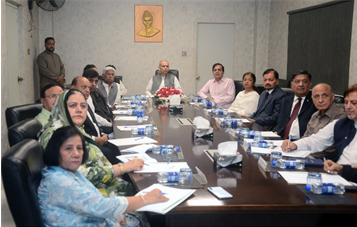
The Wafaqi Mohtasib (Federal Ombudsman), Mr. Naveed Kamran Baloch while chairing a meeting in Regional Office, Karachi said that the Informal Resolution of Disputes (IRD) Wing would be renamed as the Sardar Iqbal Wing to honour the first Mohtasib in the country Justice (R) Sardar Muhammad Iqbal, who initially proposed the idea in 1983 when the institution of Wafaqi Mohtasib was launched in the country.
Federal Ombudsman, Naveed Kamran Baloch chaired a meeting at the Wafaqi Muhtasib Office, Karachi, to review the different departments’ performance, complaints handling, and implementation of previous decisions. Speaking on institutional improvements, the Federal Ombudsman said the IRD (Informal Resolution of Disputes) Wing would be renamed as the Sardar Iqbal Wing, here it is to note that IRD concept was initially proposed by Sardar Iqbal in 1983, he highlighted.
During the meeting, he received updates from regional offices in Hyderabad, Nawabshah, Sanghar, Mirpurkhas, and Sukkur. Mr. Baloch expressed satisfaction over the performance and progress made by the regional offices.
Representatives from Mirpurkhas informed the meeting that all measures proposed in the previous meeting had been implemented. They also shared that the office had recorded a 20 percent increase in registered cases.
Highlighting the department’s overall progress, the Federal Ombudsman said the institution is moving in the right direction and stressed the importance of strengthening systems that uphold merit and the rule of law.
25TH ANNIVERSARY OF COMPREHENSIVE INTEGRITY ASSESSMENT, ACRC DISCUSSES FUTURE DIRECTIONS WITH THE KOREAN ASSOCIATION FOR PUBLIC ADMINISTRATION.
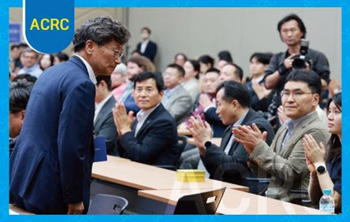
The Anti-Corruption and Civil Rights Commission (ACRC), Chairperson Jung Il Yeon announced on the occasion of the 25th anniversary of the Comprehensive Integrity Assessment for public institutions his participation in the “2026 Korean Association for Public Administration (KAPA) Summer Joint International Conference” for sharing the achievements of the assessment system and discussed its future development direction.
Co-hosted by KAPA, the National Research Council for Economics, Humanities and Social Sciences (NRC), the Ministry of Oceans and Fisheries, and the Busan Tourism Organization, the conference runs for three days from to the 22nd to the 24th at the Busan Port International Exhibition & Convention Center (BPEX) under the theme, “Public Administration for the People, Public Administration Looking to the Future: Technology, Growth, Balance, and Government.”
The event brought together around 2,000 public administration scholars and policy experts from 20 countries to review the academic achievements of Korean public administration and design future national governance paradigms through various discussions.
Today (the 22nd), the ACRC hosted two special sessions in collaboration with the Korean Association for Corruption Studies and the Korea Institute of Integrity. These sessions aimed to share the primary achievements and policy significance of the Comprehensive Integrity Assessment system while gathering diverse feedback from academia and field practitioners regarding its future development.
In the first session, participants focused on “An AI-Driven Integrity Assessment System and the Establishment of Dedicated Assessment Governance.” The discussion covered innovative approaches to the Comprehensive Integrity Assessment using new technologies, alongside the necessity of establishing a specialized institution dedicated to the assessment.
In the following second session, participants took stock of the achievements made over the 25-year history of the public institution integrity assessment system.
PUBLIC DEFENDER HOLDS MEETINGS WITH EUROPEAN INSTITUTIONS IN BRUSSELS.
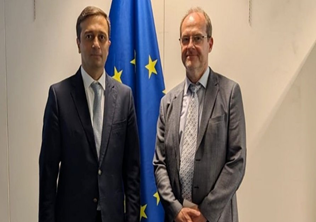
The Public Defender of Georgia, Levan Ioseliani, during a working visit to Brussels on July 6-7, 2026, held meetings with representatives of the European Commission’s Directorate-General for Enlargement and Eastern Neighborhood (DG ENEST), the European External Action Service (EEAS), including the Office of the EU Special Representative for the South Caucasus and the Crisis in Georgia.
As part of the meetings, the Public Defender briefed European partners on the human rights situation in the country and the assessments of the Public Defender’s Office. The Public Defender’s cooperation with international organizations and the importance of their support in the process of implementing international human rights standards were also discussed at the meetings.
The Public Defender once again confirmed the readiness of the Office to continue independent, objective and effective activities in the field of human rights protection and active cooperation with international partners.
GREATER COOPERATION BETWEEN OMBUDSMAN AND CONSTITUTIONAL COURT IN REVIEWING CITIZENS’ APPEALS DISCUSSED.
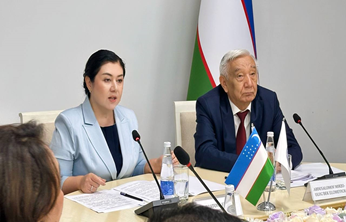
The Constitutional Court of the Republic of Uzbekistan and the Commissioner of the Oliy Majlis for Human Rights (Ombudsman) jointly held a conference entitled “Strengthening Cooperation between the Ombudsman and the Constitutional Court in Reviewing Citizens’ Appeals.” to discuss ways to better protect citizens’ constitutional rights and freedoms, improve mechanisms for reviewing appeals, strengthen practical cooperation between the Constitutional Court and the Ombudsman institution, and exchange best practices in the field of human rights protection.
The event brought together judges of the Constitutional Court, the Commissioner of the Oliy Majlis for Human Rights (Ombudsman), representatives of the Prosecutor General’s Office, the Ministry of Internal Affairs, the Council of the Federation of Trade Unions, the Chamber of Advocates, the Academy of the Ministry of Internal Affairs, the Academy of the Prosecutor General’s Office, the Commission on Ensuring Compliance with Constitutional Human Rights and Freedoms, members of scientific advisory councils, and representatives of the media.
In her opening remarks, Commissioner Feruza Eshmatova noted that citizens’ appeals constitute an important legal source for improving the performance of public authorities, emphasizing that their thorough analysis contributes to further development of legislation and law enforcement practice.
Chairman of the Constitutional Court Mirza-Ulugbek Abdusalomov stressed the importance of cooperation between the Constitutional Court and the Ombudsman in upholding the supremacy of the Constitution, ensuring effective protection of human rights, and addressing systemic legal issues identified through citizens’ appeals.
OMBUDSMAN PRESENTS PDHJ 2025 ANNUAL REPORT TO NATIONAL PARLIAMENT.
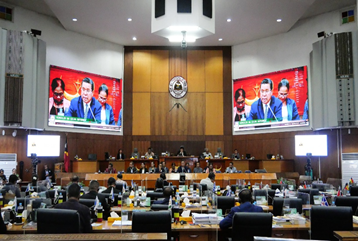
The Ombudsman for Human Rights and Justice, Virgílio da Silva Guterres “Lamukan”, accompanied by the Deputy Ombudsman for Good Governance, Rigoberto Monteiro, the Deputy Ombudsman for Human Rights, Maria Marília da Costa, members of the Executive Management and Directors, today formally presented the 2025 Annual Report of the Office of the Ombudsman for Human Rights and Justice (PDHJ) to the National Parliament.
The 2025 Annual Report provides a comprehensive overview of PDHJ’s work in implementing its constitutional mandate throughout the year. The report highlights the institution’s achievements in protecting and promoting human rights, strengthening good governance, handling public complaints, conducting investigations, monitoring detention facilities, prisons, hospitals and social institutions, promoting civic education, and reviewing public policies to ensure compliance with the Constitution and human rights standards.
Among the key achievements in 2025, PDHJ registered 179 complaints, processed 217 investigation cases, completed 194 investigations, monitored 34 health facilities across all municipalities including RAEOA, and carried out regular inspections of detention centres, prisons, and social welfare institutions. The institution also continued nationwide human rights education and awareness programmes, reaching thousands of citizens through training, community outreach, and public information campaigns.
STUDENTS FROM BAŞKENT UNIVERSITY SUCCESSFULLY COMPLETED THEIR EDUCATIONAL INTERNSHIP ORIENTATION PROGRAM.
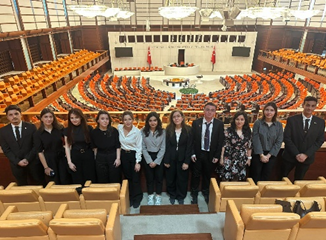
Students from Başkent University of Türkiye have successfully completed their training at the Ombudsman Institution under the Educational Internship Orientation Program on 3 July 2026. The students were awarded certificates by the Secretary General of the Ombudsman Institution Mr. Mehmet Doğan, in recognition of their participation.
Throughout the program, the students gained comprehensive knowledge of the structure, mandate, and functioning of the Ombudsman Institution as a constitutional institution affiliated with the GNAT. They also had the opportunity to closely observe the work carried out by the Ombudsmen and their respective units, while becoming familiar with the Institution’s role in protecting citizens’ rights and promoting good administration. As part of the program, the students also visited the GNAT, where they toured the Parliament and observed its facilities.
HUMAN RIGHTS OMBUDSMEN FOR ENSURING RIGHTS OF ELECTORAL PARTICIPANTS AND SHARING REGIONAL BEST PRACTICES.
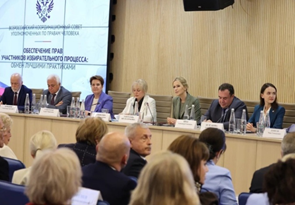
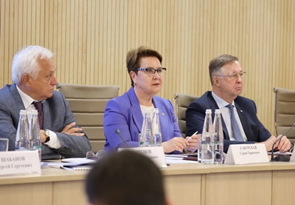
In his speech on “Securing the rights of participants in the electoral process in the regions of the Volga Federal District: exchange of best practices and role of the institution of human rights ombudsman”, the Commissioner for HR presented the experience of the human rights commissioners of Volga Federal District subjects in protecting citizens’ electoral rights.
Noted that in all regions of the district a system of interaction with voters is built, work of “hotlines” is organized, prompt response to incoming applications. Each case is reviewed in collaboration with the electoral commissions and other stakeholders.
Special attention is being paid to creating conditions for the exercise of electoral rights by citizens with limited health opportunities, as well as persons held in detention facilities. In this work, the commissioners actively interact with public monitoring commissions and regional public chambers.
The meeting produced recommendations aimed at further improving mechanisms for protecting citizens’ electoral rights. Proposals will be forwarded to the relevant public authorities for further consideration.
Ensuring the electoral rights of citizens is an essential element in protecting constitutional human rights and freedoms. In turn, sharing regional best practices contributes to further developing effective public oversight mechanisms and building citizens’ trust in the electoral system.
EXPANDING ANTI-CORRUPTION COOPERATION WITH AFRICAN CONTINENT BY INTRODUCING KOREA’S ANTI-CORRUPTION MEASURES TO ZIMBABWE.
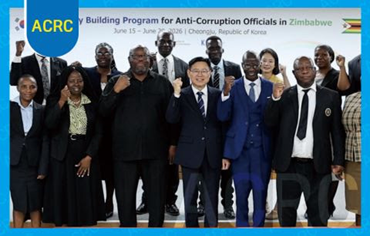
The Korea Integrity and Civil Rights Training Institute (KICTI) under the Anti-Corruption and Civil Rights Commission (ACRC, Chairperson Jung Il Yeon) reported that it will conduct a four-day Anti-Corruption Capacity Building Training Program for Zimbabwean public officials, together with the Korea International Cooperation Agency (KOICA) from June 16 to 19 as a follow-up measure to the Memorandum of Understanding on Anti-Corruption Cooperation signed in March last year between the ACRC and the Zimbabwe Anti-Corruption Commission (ZACC).
Twelve participants from ZACC include a minister-level commissioner as well as director general, director, and working-level officials. The delegation will join the training to learn Korea’s internationally recognized anti-corruption institutions and operational experience, and to help build capacity at every stage of anti-corruption policy, from formulation to implementation.
ACRC Chairperson Jung Il Yeon and ZACC Commissioner Patrick Tendai Mukorera also plan to hold a meeting to discuss in depth measures to expand anti-corruption cooperation between the two countries.
The Republic of Korea is regarded as an exemplary case that has achieved both economic growth and an improvement in its Corruption Perceptions Index (CPI) within a short period of time, and is continuously gaining traction from the international community regarding its anti-corruption policies and related experience.
OMBUDSMAN BRIEFS LEGISLATIVE COUNCIL MEMBERS ON RESULTS OF 2025-26 MEASURES.
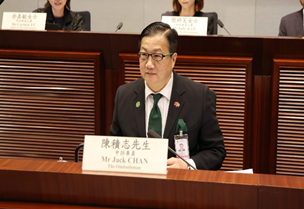
The Ombudsman, Mr. Jack Chan, attended the annual meeting with Legislative Council (“LegCo”) Members and briefed them on the progress and results of the Office of The Ombudsman’s work during 2025-26, with an overview of its work strategies and objectives. He also exchanged views with LegCo Members on issues of mutual concern and thanked them for their support of the Office’s work.
In 2025-26, the Office achieved remarkable results again in all three of its strategic focus areas. Regarding mediation, 1,145 complaints were resolved by this mode in this reporting year, more than doubling the number from 2024-25. Mr. Chan added that, “Over the past year, the Office resolved by mediation numerous complaints related to the eMPF Platform to promptly defuse social tensions and grievances. The recommendations we made for substantive improvement of the eMPF Platform can enhance public services and maintain social stability and public confidence.” Highly praised by the community, the Office’s mediation work has achieved remarkable results.
On the front of interdepartmental collaboration, the Office has further advocated the concept of “One Government”. Mr. Chan stressed that interdepartmental collaboration is crucial to achieving efficient, people-oriented good governance. He also shared cases to illustrate how it brought about tangible benefits for members of the public. During the year, the Office completed five direct investigation operations and processed 396 complaint cases involving interdepartmental collaboration. Mr. Chan said that he appreciated the support of departments and organizations, and their co-operation in implementing the recommendations made by the Office. He said that interdepartmental collaboration not only effectively resolves the difficulties faced by the public, but also enhances the overall efficiency of public administration.
OMBUDSMAN APPOINTS GRIEVANCE COMMISSIONER FOR BUSINESS COMMUNITY.
In a landmark development meant to dispense administrative justice for the trade and industry, the Wafaqi Mohtasib (Federal Ombudsman) has appointed Mr. Javed Ghani, a senior Officer as “Grievance Commissioner for Business Community” (GCBC). This unprecedented step is in response to sustained calls from Chambers of Commerce and Industry for a dedicated forum to resolve their grievances against the federal government entities.
He was chairing a monthly performance review meeting at the Wafaqi Mohtasib Head Office. It was attended by the senior officials belonging to the Registration, Investigation, Appraisal, Implementation, IRD, Media and Overseas Pakistanis Wings of the Secretariat. The officials of the Regional Offices attended online.
The Mohtasib said that the public trust and confidence in the viability of this institution is a precious asset, which must be preserved and maintained at all costs. ‘It has emerged as the premier organization of administrative accountability in the country as it protects citizens against maladministration, injustice and unfair administrative practices, while fostering transparency, accountability and excellence in public service’, he observed.
While urging the officials to work proactively for providing expeditious relief to the public, he underlined the need for greater reliance on digital and electronic means since nearly 48% complaints are being filed through the digital platforms. He also disclosed that an office of Grievance Commissioner for Business Facilitation is also being established in the Secretariat in consultation with the relevant stakeholders principally the Chambers of Commerce & Industry to promote and facilitate business activities across the country.
He further informed that a comprehensive media strategy is also being contemplated for the institution with a view to awareness raising for greater outreach. He also called upon all stakeholders to provide their relevant input in this regard within a week. The Wafaqi Mohtasib assured that all out efforts would be made to create a congenial working atmosphere and to equip the Regional Offices with latest office equipment and automation tools for better performance and expeditious disposal of public complaints.