Category Archives: AOA News Letter
PAK ENVOYS-DESIGNATE TO LIBYA AND GERMANY CALL ON OMBUDSMAN.
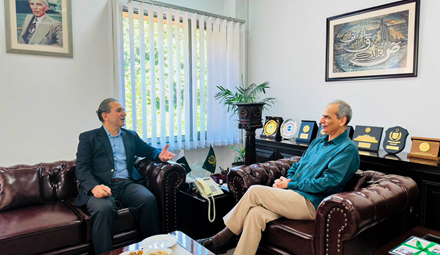
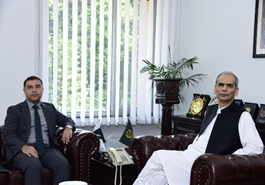
The Pakistan Ambassador-designate to Libya, Maj.Gen.(Retd) Mumtaz Hussain and Head of Mission-designate to Frankfurt, Germany, Mr. Ali Anser Zaidi called on the Wafaqi Mohtasib (Federal Ombudsman), Mr. Naveed Kamran Baloch separately at the Wafaqi Mohtasib Office and exchanged views with them regarding their new diplomatic assignments. The Mohtasib urged them to accord priority to promoting welfare of the Pakistani community in their respective countries.
He emphasised the need for placing greater focus on promoting the welfare and wellbeing of the Pakistani community in both the countries as well as to invest efforts in expanding Pakistan’s trade and economic relations with them. ‘Expansion in trade and economic relations would lead to further consolidation of relations between the two countries’, he added. He also apprised the Envoys-designate of the various initiatives undertaken by his Office for prompt redressal of the complaints lodged by the Overseas Pakistanis. Mr. Baloch wished the Envoys-designate all success in their new assignments.
The meetings took place as a follow-up of the decisions taken during the recent visit of Foreign Secretary to the Office of the Wafaqi Mohtasib that took place in June, 2026. During the meeting as reported in the August issue of the AOA’s Newsletter, it was agreed that the future Ambassador/Envoys-designate would call on the Wafaqi Mohtasib before assuming their respective assignments abroad with a view to enhancing cooperation between Office of the Wafaqi Mohtasib and Pakistan Missions abroad for redressal of complaints of the Overseas Pakistanis.
Customarily, all the new envoys call on the President and Prime Minster besides other dignitaries to seek guidance for their role in enhancing influence and goodwill for Pakistan in the host countries. A meeting with the Wafaqi Mohtasib before their departure has specifically been added to apprise them of their role and responsibilities in redressing the complaints and difficulties in their schedule of the Pakistani diaspora in their respective countries of accreditation.
SEEKING SOLUTIONS TO COLLECTIVE CONFLICT OVER POWER GENERATION FACILITY CONSTRUCTION.

The Anti-Corruption and Civil Rights Commission (ACRC, Chairperson Jung Il-yeon) co-hosted the “2026 Korean Association for Conflict Studies Summer Academic Conference” on July 9 at the Korea Institute of Energy Technology (KENTECH) in Naju, Jeonnam-Gwangju Special Self-Governing City, to discuss a government-wide paradigm shift for resolving collective petitions.
The conference was organized by the Korean Association for Conflict Studies, co-hosted by the Association, the ACRC, the Office for Government Policy Coordination, and the Korea Electric Power Corporation (KEPCO), among others. Held under the theme “Energy Governance and Regional Coexistence in the Age of AI and Energy Transition: Power Grid Conflicts and Social Consensus,” the event brought together 150 participants from academia, relevant ministries, and conflict-management experts.
The conference was organized to seek preemptive solutions to the social conflict due to the expansion of the artificial intelligence industry and the transformation of advanced industrial structures. Since the industrial changes require a surge in electricity demand, newly constructed power transmission and transformation facilities and power generation facilities often lead to resident opposition and social conflict.
The ACRC jointly held a dedicated session titled “Resolving Collective Petitions and Institutionalizing Social Mediation.” The session featured in-depth discussion of ways to institutionalize a shift from conflict management centered on reactive management toward preemptive prevention and early intervention.
The first presentation introduced a new, multifaceted approach — drawing an analogy to the structure of HBM (High Bandwidth Memory) semiconductors — for addressing multilayered collective conflicts with overlapping interests through negotiation, bargaining, and mediation. It also highlighted the need to introduce a “government-wide joint responsibility structure,” which enables early intervention of relevant agencies when collective conflict is anticipated, to minimize the overall cost to society.
The second presentation contributed to strengthening conflict-management capacity, by sharing research on conflict type analysis and the effectiveness of mediation, drawn from the ACRC’s various collective petition mediation cases.
In addition, a special comprehensive panel discussion in the afternoon brought together experts from relevant agencies — including the Ministry of Climate, Energy and Environment and KEPCO — as well as environmental groups, discussing practical and mutually beneficial approaches to resolve conflicts over power grid expansion.
In a written congratulatory address, Chairperson Jung stated, “The ACRC is responsibly leading mediation that reconciles complex interests so that all stakeholders can benefit, through the Collective Conflict Mediation Bureau established earlier this year.” He added, “I hope this conference will serve as an opportunity for the expertise of academia and the experience of practitioners to converge closely, helping our society advance toward a more mature, trust-based society.”
‘KOREA-UNDP INTERNATIONAL ANTI-CORRUPTION FORUM’ CHARTS OUT FUTURE ANTI-CORRUPTION STRATEGIES.
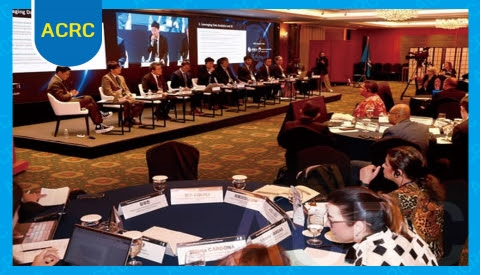
The Anti-Corruption and Civil Rights Commission (Chairperson Jung Il-yeon, hereafter “ACRC”) and the United Nations Development Programme (UNDP) Seoul Policy Centre jointly held the “Korea-UNDP International Anti-Corruption Forum” over two days, from 2-3 July, 2026, which was attended by a number of renowned experts in the field as well as senior officials.
Global experts and anti-corruption practitioners attending the forum highlighted the achievements of countries that learned from and replicated the Republic of Korea’s anti-corruption policies and systems through the ‘SDG Partnership’ anti-corruption technical cooperation Project programme* led by ACRC and UNDP, and discussed the direction and vision for sustainable anti-corruption strategies and integrity governance amid a rapidly changing global environment.
* ‘SDG Partnerships programme’ anti-corruption technical cooperation programme: A UNDP programme jointly carried out with ACRC since the signing of a Memorandum of Understanding (MOU) in 2015, and supported by Korea’s Ministry of Foreign Affairs. It provides technical advisory services, policy consulting, and capacity-building to help developing countries localize and apply Korea’s anti-corruption systems.
The participants identified five next-generation anti-corruption strategies to serve as a milestone for each country’s anti-corruption efforts: moving from initial reforms to deep institutionalization, accelerating and scaling progress through peer-learning and South-South and Triangular Cooperation* (SSTC), harnessing AI and digital innovations with robust, trust-building safeguards, building inclusive integrity ecosystems to leave no one behind, and strengthening partnerships for sustainable impact.
* South-South and Triangular Cooperation (SSTC): A cooperation framework in which a third party — such as a developed country or international organization — provides funding, technology, and know-how to promote cooperation among developing countries, thereby enhancing effective and sustainable cooperation.
Building on the strategies drawn from this event, ACRC and UNDP reaffirmed their commitment to serve as a powerful global catalyst for transparency, accountability, and sustainable development.
Held over two days, the event addressed cross-cutting anti-corruption efforts in depth — from building solid legal foundations and embracing digital innovation to promoting ethical business practices in the private sector — and served as a forum for South-South cooperation and exchange.
At the opening ceremony held on 2 July, ACRC Chairperson Jung Il-yeon stated that “our cooperation, which began as knowledge exchange, has evolved into a dynamic learning network in which one success story spreads to become a solution for other countries,” emphasizing the potential for global expansion of ACRC’s technical cooperation with UNDP under the SDG Partnership programme.
Former ACRC Chairperson Kim Young-ran, who made a significant contribution to the legislative process of Korea’s Improper Solicitation and Graft Act, delivered a powerful keynote message that “integrity is not a luxury afforded to advanced countries, but an indispensable condition for becoming one,” stressing that sustainable growth is only possible on a foundation of transparency and public trust.
Participating countries vividly demonstrated how Korea’s anti-corruption model and technical cooperation framework are being applied on the ground.
Montenegro, which has adopted the Comprehensive Integrity Assessment of public institutions, highlighted the role of integrity managers as key agents of change, while Sri Lanka placed the institutionalization of Internal Affairs Units at the center of its integrity assessment system. Uzbekistan, which introduced the Clean Portal, demonstrated that digital tools are most effective when backed by institutional reform.
Tajikistan is introducing a whistleblower protection and reward system, inspired by Uzbekistan’s experience of adopting a comprehensive Korea-inspired anti-corruption model combining both the Clean Portal and the Comprehensive Integrity Assessment of public institutions, and taking a systematic approach to corruption prevention and whistleblower protection alike.
A range of stakeholders — including national anti-corruption agencies, private companies, civil society organizations, the United Nations Development Programme (UNDP), the United Nations Office on Drugs and Crime (UNODC), and the World Bank Group — engaged in active discussion on the need to promote diverse partnerships to combat corruption and on strategies for responding to digital transformation in building good governance.
OFFICE OF THE OMBUDSMAN ANNOUNCES RESULTS OF DIRECT INVESTIGATION OPERATIONS.
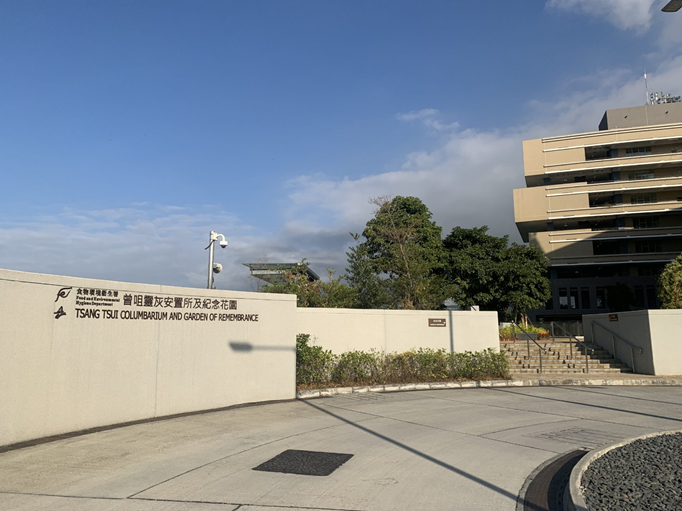
The Ombudsman, Mr. Jack Chan, announced the completion of a direct investigation operation into the allocation of public niches, with 19 improvement recommendations made to the Food and Environmental Hygiene Department (“FEHD”). The FEHD has accepted all the recommendations.
Over the past few years, more than 90 per cent of deaths in Hong Kong were cremated. In general, the families are inclined to place the ashes of the deceased in columbaria after cremation, or to scatter the ashes in the form of green burials. Since 2019, the public niches managed by FEHD adopted an extendable lease with a comprehensive allocation exercise conducted once a year. Since the completion of the Tsang Tsui Columbarium in 2020, a pilot scheme has been introduced for monthly allocation of niches there.
The Office of The Ombudsman has noted that if applicants for niches in a columbarium other than the Tsang Tsui Columbarium happened to miss the annual application period, they might have to wait nearly a year for the next allocation exercise. Against this background, the Office initiated an inquiry last year and recommended that FEHD conduct allocation exercises on a monthly or at least quarterly basis rather than once a year. After carefully considering the Office’s recommendation, FEHD has standardised the allocation of available public niches to a monthly basis with effect from August 2026.
Mr. Chan said, “Grieving families share the wish to make after-death arrangements for their loved ones respectfully without delay, so that the departed may rest in peace and the living may begin to heal. The Office commends FEHD for its pragmatic and responsive attitude in adopting our recommendation to conduct allocation exercises monthly rather than yearly. However, the pilot scheme for monthly allocation of niches in the Tsang Tsui Columbarium was introduced as early as 2020, but FEHD did not extend it to other public columbaria until we made this recommendation in 2025. The Office understands that FEHD has other considerations. However, with hindsight, if FEHD would have extended the pilot scheme to other columbaria earlier by, for instance, progressively increasing the frequency of allocations, the inconvenience caused to the public by waiting for the annual allocation could have been avoided, and allocations of the precious public niches could have been expedited. The Office recommends that FEHD conduct timely reviews with a comprehensive consideration from the perspective of the effective use of public resources as far as practicable and the fulfilment of public demands when introducing pilot schemes for other public services in future.”
The Office’s investigation also revealed that upon fulfilling specific criteria (one of the criteria is that the application for the cremation of the deceased and the application for a niche are made by the same person), the FEHD’s system can generally process applications for public niches made via an online platform and forms by “automatic approval” within one day. On the contrary, it takes an average of 50 days to process applications made by paper forms or email. The Office believes that there are a considerable number of applicants meeting the above specific criteria, but they might not be aware that “automatic approval” would be given to online applications, or the service of the “2 in 1 integrated Cremation and Ashes Handling Application” is available online. In this regard, the Office urges FEHD to step up its explanations to the public and the funeral industry about the benefits of online applications and the service of the “2 in 1 integrated Cremation and Ashes Handling Application”. Meanwhile, FEHD should review and explore any scope to further streamline the manual administrative procedures of data entry and verification, with a view to enhancing the efficiency of application processing.
Moreover, the FEHD’s “After-death Arrangements” thematic website launched in response to recommendations made in the Office’s direct investigation operation report on public services relating to after-death arrangements, has consolidated key information from various departments in the form of a simple and easy-to-understand roadmap, guiding bereaved families through the funeral planning process. It is a significant step forward from the perspective of facilitating public access to information, and is worthy of recognition. However, the FEHD’s website and the “After-death Arrangements” thematic website both contain information relating to public niches. While some of the information overlaps, the content and wording are not entirely consistent; the FEHD’s website provides relatively more information, but the presentation of the content is comparatively disorganised. In this light, FEHD should consider aligning and consolidating the content of the two websites in accordance with its original objectives in designing them to maintain consistency and improve clarity of the information contained therein.
Mr. Chan said, “The Office notes that under the co-ordination of the Digital Policy Office, FEHD is currently working with the Department of Health, the Immigration Department and the Hospital Authority to develop a one-stop e-service platform covering death registrations, applications for cremation permits and related services. It is a good example of interdepartmental collaboration. The Office highly commends the collaboration and believes that the one-stop function on the platform can achieve a synergistic effect in combination with the information on the ‘After-death Arrangements’ thematic website. The Office urges the departments concerned to continuously deepen collaboration and press ahead at full steam with this initiative for the benefit of the public.”
In the long run, apart from the new public columbarium projects on Lantau Island, in Kwai Chung and Fanling, FEHD also promotes green burials by providing free ferry services for the scattering of ashes at sea and gardens of remembrance for the scattering of ashes. In recent years, the percentage of ash disposals in the form of green burials has recorded a steady rise. While recognising the FEHD’s efforts, the Office encourages the Department to continuously enhance its public burial services and ancillary facilities, make effective use of public resources, and provide the public with efficient, high-quality and sustainable services.
The Office notes that the National 15th Five-Year Plan has proposed to enhance community care services, including the establishment of a comprehensive system for basic burial services. Burial services, touching the lives of countless families, are integral to public welfare. Optimising burial services and ensuring that the deceased are laid to rest with dignity are important measures in alignment with the National 15th Five-Year Plan.
MOHTASIB RECEIVES HIGHEST COMPLAINTS AGAINST POWER DISTRIBUTION COMPANIES.
The Office of the Wafaqi Mohtasib received the highest number of complaints against electricity distribution companies during the first seven months of 2026. The complaints against power companies accounted for more than 65,000 cases. Reported figures, however, reflected improvements in the disposal and implementation of complaints.
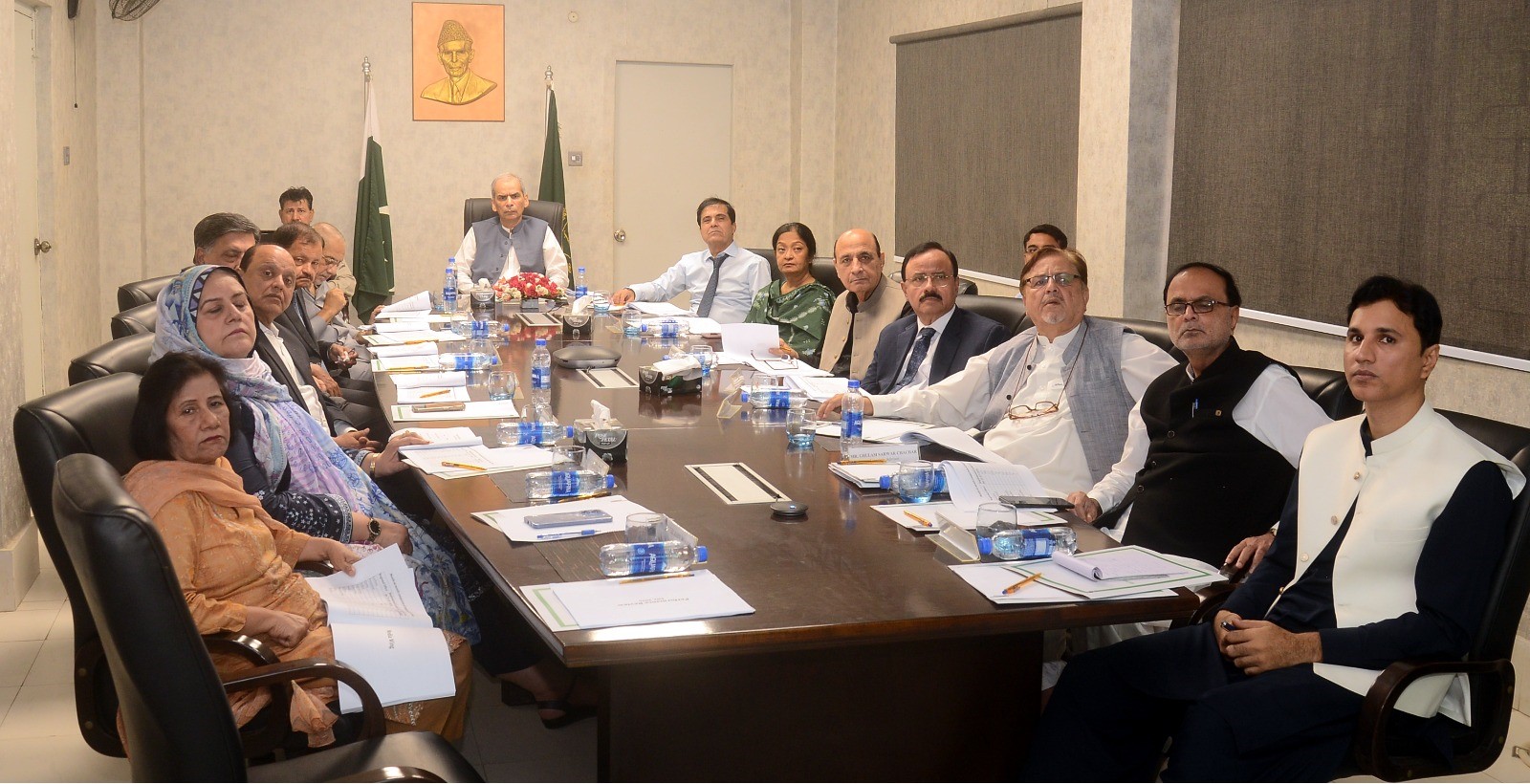
The Federal Ombudsman, Mr. Naveed Kamran Baloch presided over the monthly performance review meeting at the Wafaqi Mohtasib’s Regional Office in Karachi. It was attended in person by the senior officials concerned of the Regional Office, whereas the officials of the Head Office and the remaining Regional Offices were present online.
The performance review meeting chaired by the Wafaqi Mohtasib, Mr. Naveed Kamran Baloch stated that between January and July, the Wafaqi Mohtasib registered 162,514 complaints. Of these, 65,330 were against electricity distribution companies, 25,586 against gas companies and 15,997 against the Benazir Income Support Programme (BISP). The three categories alone accounted for 106,913 complaints. Together with NADRA and PLIC/PPOD, the five institutions were the subject of 122,838 complaints, or 75.6% of the total registered during the seven-month period.
Complaints against power companies mainly involved overbilling and other billing irregularities, delays in meter installation, defective meters, frequent load-shedding and tripping, as well as allegations of extortion and demands for bribes. For gas companies, the main grievances concerned fixed charges and meter rent, bills that did not reflect actual consumption, winter shortages and service outages.
The review found that the number of complaints received increased from 147,982 in January-July 2025 to 162,514 in the same period this year. Total disposals also rose, from 148,365 to 150,307. Karachi recorded the largest increase in complaints, receiving 7,807 more cases than in the corresponding period last year. It was followed by Dera Ghazi Khan, with an increase of 5,442, and Mirpur Khas, with 1,053.
Dera Ghazi Khan and Karachi also recorded the biggest increases in disposals, up by 5,681 and 5,516 respectively. Lahore, however, recorded the largest fall in disposals, down by 5,537 cases, followed by Multan, with 1,552 fewer, and Abbottabad, with 1,424 fewer.
From January to July, the number of implementable cases increased from 5,275 in January to 6,808 in July. A total of 38,331 cases were declared implementable during the period, against 33,711 cases that were actually implemented. The overall backlog declined from 10,317 cases carried forward at the start of the period to 8,721 by the end of July.
Gujranwala recorded the strongest implementation performance among the major offices, followed by Multan and Peshawar. Peshawar showed the sharpest improvement compared with its performance in 2025.
Muzaffarabad, Dera Ismail Khan and Swat recorded the weakest implementation performance. Swat nevertheless showed a substantial improvement over its 2025 position, while Dera Ismail Khan’s performance deteriorated.
Despite the rise in receipts, the net caseload fell from 47,668 cases in the first seven months of 2025 to 40,371 this year.
Lahore carried the largest net caseload, with 11,861 cases, followed by Karachi with 5,046 and Hyderabad with 3,087.
Review petitions remained a concern, however. Their pendency rose from 182 in May to 208 by the end of that month and reached 267 by the end of June. The office received 196 petitions in July, its highest quarterly figure, and disposed of 204, bringing pendency down slightly to 259.
FEDERAL OMBUDSMAN OF PAKISTAN APPOINTS GRIEVANCE COMMISSIONER FOR THE BUSINESS COMMUNITY.
In a landmark step to strengthen administrative justice for trade and industry, the Wafaqi Mohtasib (Federal Ombudsman) of Pakistan has, by notification, designated a senior officer as “Grievance Commissioner for Business Community (GCBC),” with immediate effect, based at the Wafaqi Mohtasib Secretariat in Islamabad. The initiative responds to sustained calls from chambers of commerce, trade bodies and industry associations for a dedicated, accessible forum to resolve their grievances against federal government departments.
Legal Foundation and Mandate
The designation was made in exercise of powers conferred under Article 20 of the President’s Order No. 1 of 1983 and Section 7 of the Federal Ombudsmen Institutional Reforms Act, 2013. The Commissioner is empowered, in line with Articles 9, 10, 11, 14, 19 and 33 of the Order and Section 7 of the 2013 Act, to investigate any allegation of maladministration relevant to the business sector, and to perform such other functions as the Wafaqi Mohtasib may specify. The core mandate is to investigate, redress and rectify injustice suffered by businesses at the hands of federal agencies, their officers or employees, restoring an efficient and fair administrative process for the private sector.
Scope of Jurisdiction
The Office covers grievances arising from unjust regulatory delays and procedural violations, maladministration in federal services essential to commerce such as licensing, permits and utilities, and arbitrary or inconsistent application of federal laws and rules affecting trade and industry.
How It Will Work
Complaints from companies, trade associations and individual entrepreneurs will be registered, investigated and diagnosed to their root cause, with the Commissioner favouring informal resolution, conciliation and mediation for prompt outcomes ahead of formal proceedings. Beyond individual cases, the Office will identify systemic bottlenecks within federal agencies and recommend concrete regulatory and administrative reforms. Multiple accessible channels, dedicated email, an online portal, post and fax, together with structured outreach and consultation with chambers of commerce, business councils and industry associations, will underpin accessibility, while modern complaint-management technology will support transparency and timely tracking.
By giving the business community a swift, credible avenue for administrative redress, the GCBC reinforces Pakistan’s ease-of-doing-business agenda and reflects the Wafaqi Mohtasib’s continuing commitment to accountable, citizen and business-centric governance an experience the Wafaqi Mohtasib looks forward to sharing with fellow members of the Asian Ombudsman Association.
135 CITIZENS RECEIVE RS.88M PENDING DUES AFTER OMBUDSMAN PUNJAB’S INTERVENTION.
The Office of the Ombudsman Punjab has facilitated the payment of more than Rs.88 million pending dues to 135 citizens from across the province after intervening in complaints regarding non-payment by government departments.
According to the spokesperson, the complainants had approached the Ombudsman Punjab after their outstanding dues remained unpaid by the relevant departments. Following the receipt of complaints, the Ombudsman Punjab took prompt notice of the matter and directed the authorities concerned to resolve the cases without delay.
As a result of the intervention, pending payments exceeding Rs88 million were released to 135 complainants, providing them with long-awaited financial relief.
The spokesperson said the Office of the Ombudsman Punjab remained committed to safeguarding citizens’ rights and ensuring the prompt resolution of public grievances. The institution would continue to take effective measures to provide people with swift, inexpensive and hassle-free administrative justice, the spokesperson added.
The citizens thanked the Ombudsman Punjab for her timely intervention and effective redress of their complaints, saying the institution’s efforts had enabled them to receive their long-pending dues.
OMBUDSMAN PUNJAB HOSTS INTERNATIONAL WEBINAR ON EVIDENCE-BASED CAPACITY BUILDING .
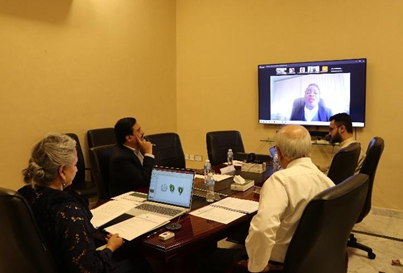
The Office of the Ombudsman Punjab, in collaboration with the African Ombudsman Research Centre (AORC) and the African Ombudsman and Mediators Association (AOMA), hosted an international webinar titled “Evidence-Based Capacity Building: Strengthening African Ombudsman Practice Through Data, Learning and Institutional Innovation.” The event brought together 165 participants from 35 countries and was conducted with simultaneous interpretation in French, Portuguese, and Arabic.
Ms. Ayesha Hamid, Ombudsman Punjab, inaugurated the webinar, highlighting the role of evidence-based capacity building, continuous institutional improvement, and the Office’s achievement of ISO 9001:2015 QMS Certification for the Ombudsman Punjab Management Information System (OPMIS). Mr. Ahmad Yar Khan, Advisor (Research), presented the Office’s evidence-based complaint management model, showcasing OPMIS, quality assurance mechanisms, the Mobile Outreach Complaint Van Initiative, and key institutional achievements, including a 105% increase in fresh complaints received and a 99.7% increase in complaints processed during 2025.
The interactive discussion focused on quality assurance and compliance monitoring. The webinar concluded with closing remarks by Mr. Kaiser Saleem, Secretary, Office of the Ombudsman Punjab, and a vote of thanks by Hon. Aimée Laurentine Kanyana, First Vice-President of AOMA, further strengthening international cooperation and the exchange of best practices among Ombudsman institutions.
GENERAL INSPECTION ORGANIZATION LAUNCHED TRAINING PROGRAM.
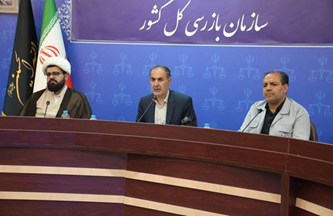
The Vice President of the General Inspection Organization Dr. Ahmad Rahmanian emphasized that the success of inspectors depends on specialized expertise and a preventive approach, stating that newly recruited personnel must prepare themselves to carry out oversight missions through specialized training and a spirit of dedicated service.
According to the Public Relations Department of the General Inspection Organization, Dr. Ahmad Rahmanian, Vice President of the General Inspection Organization, addressed the opening ceremony of the induction training program for newly recruited personnel, highlighting the significant position of the Organization within the country’s oversight system.
“The General Inspection Organization occupies one of the highest positions within the national oversight framework, and those who join this Organization must possess the qualifications and standards envisaged by the legislature for this institution,” said the Vice President.
Referring to the country’s current circumstances and the resilience of the Iranian people in the face of pressures and threats, Dr. Rahmanian described serving the people as a great honour and said:
“We are blessed with a noble and appreciative nation, and we must value their support and sacrifices. The people’s presence in various national arenas and their steadfast support for the Islamic Republic have demonstrated the strength of the Islamic Republic, the country’s social capital, and the people-centred nature of the system to the world, while disrupting the calculations of both domestic and foreign enemies and adversaries.”
“INCLUSIVE OMBUDSMAN” PROJECT DISCUSSED WITH CIVIL SOCIETY REPRESENTATIVES.
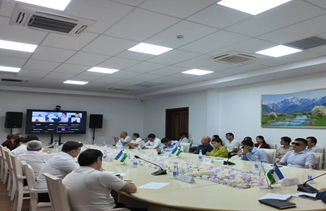
At the initiative of the Commissioner of the Oliy Majlis for Human Rights (Ombudsman), an open dialogue was held to discuss the implementation of the “Inclusive Ombudsman” project. The event brought together representatives of the Association of Persons with Disabilities, the Society of Persons with Disabilities, the Society of the Deaf, the Social Protection Agency, Tashkent State University of Law, the National University of Uzbekistan, as well as experts from other state bodies and organizations.
As a subject of parliamentary oversight, the Ombudsman pays particular attention to reviewing appeals submitted by persons with disabilities, assessing the protection of their rights and freedoms, improving legislation in this area, and monitoring the implementation of adopted legal acts.
To date, a number of measures have been taken to ensure the right of persons with disabilities to address state authorities. At the same time, there remains a need to create additional conditions enabling them to submit appeals to the Ombudsman, participate in personal and mobile receptions, access information, and make full and equal use of legal protection mechanisms.
The “Inclusive Ombudsman” project is a comprehensive initiative aimed at transforming the Ombudsman institution into a human rights institution that is physically, digitally and communicatively accessible to persons with disabilities.
The project provides for the development of a dedicated Telegram bot enabling persons with visual, hearing or speech impairments to submit audio and video appeals to the Ombudsman, as well as the adaptation of the official website in accordance with international accessibility standards.
The project also envisages conducting joint on-site assessments with civil society representatives to examine the conditions created for persons with disabilities, as well as organizing mobile receptions and monitoring activities in remote and rural areas.