
MOHTASIB RECEIVES HIGHEST COMPLAINTS AGAINST POWER DISTRIBUTION COMPANIES.
The Office of the Wafaqi Mohtasib received the highest number of complaints against electricity distribution companies during the first seven months of 2026. The complaints against power companies accounted for more than 65,000 cases. Reported figures, however, reflected improvements in the disposal and implementation of complaints.
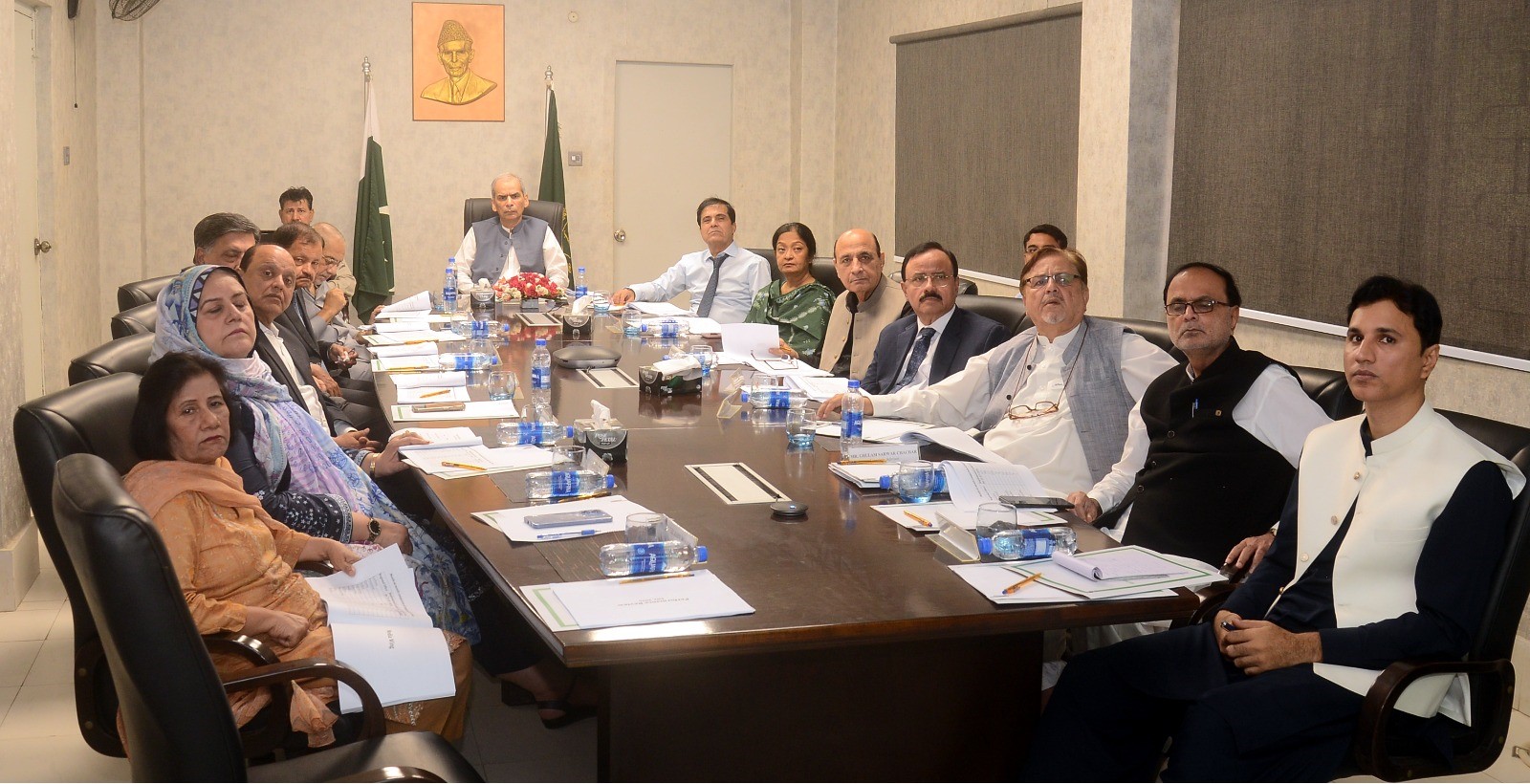
The Federal Ombudsman, Mr. Naveed Kamran Baloch presided over the monthly performance review meeting at the Wafaqi Mohtasib’s Regional Office in Karachi. It was attended in person by the senior officials concerned of the Regional Office, whereas the officials of the Head Office and the remaining Regional Offices were present online.
The performance review meeting chaired by the Wafaqi Mohtasib, Mr. Naveed Kamran Baloch stated that between January and July, the Wafaqi Mohtasib registered 162,514 complaints. Of these, 65,330 were against electricity distribution companies, 25,586 against gas companies and 15,997 against the Benazir Income Support Programme (BISP). The three categories alone accounted for 106,913 complaints. Together with NADRA and PLIC/PPOD, the five institutions were the subject of 122,838 complaints, or 75.6% of the total registered during the seven-month period.
Complaints against power companies mainly involved overbilling and other billing irregularities, delays in meter installation, defective meters, frequent load-shedding and tripping, as well as allegations of extortion and demands for bribes. For gas companies, the main grievances concerned fixed charges and meter rent, bills that did not reflect actual consumption, winter shortages and service outages.
The review found that the number of complaints received increased from 147,982 in January-July 2025 to 162,514 in the same period this year. Total disposals also rose, from 148,365 to 150,307. Karachi recorded the largest increase in complaints, receiving 7,807 more cases than in the corresponding period last year. It was followed by Dera Ghazi Khan, with an increase of 5,442, and Mirpur Khas, with 1,053.
Dera Ghazi Khan and Karachi also recorded the biggest increases in disposals, up by 5,681 and 5,516 respectively. Lahore, however, recorded the largest fall in disposals, down by 5,537 cases, followed by Multan, with 1,552 fewer, and Abbottabad, with 1,424 fewer.
From January to July, the number of implementable cases increased from 5,275 in January to 6,808 in July. A total of 38,331 cases were declared implementable during the period, against 33,711 cases that were actually implemented. The overall backlog declined from 10,317 cases carried forward at the start of the period to 8,721 by the end of July.
Gujranwala recorded the strongest implementation performance among the major offices, followed by Multan and Peshawar. Peshawar showed the sharpest improvement compared with its performance in 2025.
Muzaffarabad, Dera Ismail Khan and Swat recorded the weakest implementation performance. Swat nevertheless showed a substantial improvement over its 2025 position, while Dera Ismail Khan’s performance deteriorated.
Despite the rise in receipts, the net caseload fell from 47,668 cases in the first seven months of 2025 to 40,371 this year.
Lahore carried the largest net caseload, with 11,861 cases, followed by Karachi with 5,046 and Hyderabad with 3,087.
Review petitions remained a concern, however. Their pendency rose from 182 in May to 208 by the end of that month and reached 267 by the end of June. The office received 196 petitions in July, its highest quarterly figure, and disposed of 204, bringing pendency down slightly to 259.