Category Archives: AOA News Letter
OMBUDSMAN OF AZERBAIJAN SABINA ALIYEVA RECEIVED DELEGATION FROM THE TURKISH ASSOCIATION OF WOMEN IN THE LEGAL PROFESSION.
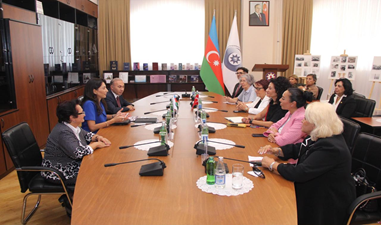
The Ombudsman of Azerbaijan, Sabina Aliyeva, received a delegation from the Turkish Association of Women in Legal Profession, which is currently on a visit to Azerbaijan at the invitation of the Bar Association of Azerbaijan.
The delegation was led by Zübeyde Aksay, President of the said Association, Vice-President of the International Federation of Women in the Legal Career, lawyer, and mediator.
The meeting was attended by Parviz Alakbarov, Deputy Chairman of the Bar Association, heads and staff of relevant departments from the corresponding state entity, members of the Presidium of the Bar Association, and representatives of the Association.
The Ombudsman stated that the protection of women’s and children’s rights, the promotion of gender equality, and the prevention of discrimination as the Institution’s priority areas of activity. She highlighted the importance of effectively ensuring women’s rights, raising their legal awareness, expanding their equal opportunities, and encouraging their active participation in decision-making processes.
The Ombudsman briefed the delegation members on Azerbaijan’s legal system, the activities of the Ombudsman Institution, and the work done to protect human rights and freedoms, guarantee the principle of equality, and prevent discrimination.
It was also noted that female lawyers in Azerbaijan are widely represented across various state institutions, the judicial system, the bar, and other legal fields, playing an active role in ensuring law and justice, as well as in public life.
During the meeting, it was emphasized that the existing friendly, brotherly, and strategic partnership relations between Azerbaijan and Türkiye lay a solid foundation for protecting human rights and advancing legal cooperation. Within this framework, the importance of expanding the exchange of experience and ideas between the legal systems of both countries, as well as strengthening cooperation among female lawyers, was highlighted.
Expressing her gratitude for the warm reception, Zübeyde Aksay provided information on the activities of the Association she leads since 1968, as well as its initiatives aimed at supporting the professional development of female lawyers, encouraging their active participation in the legal field, enhancing their knowledge and skills, and protecting women’s rights.
During the meeting, the sides exchanged views on current challenges in the field of women’s rights protection, increasing the role of female lawyers in human rights advocacy, mutual exchange of experience, implementing joint awareness-raising initiatives, and prospects for future cooperation.
THE FIRST MEETING OF THE PUBLIC COUNCIL WAS HELD AT THE INSTITUTE OF THE AKYIKATCHY OF THE KYRGYZ REPUBLIC.
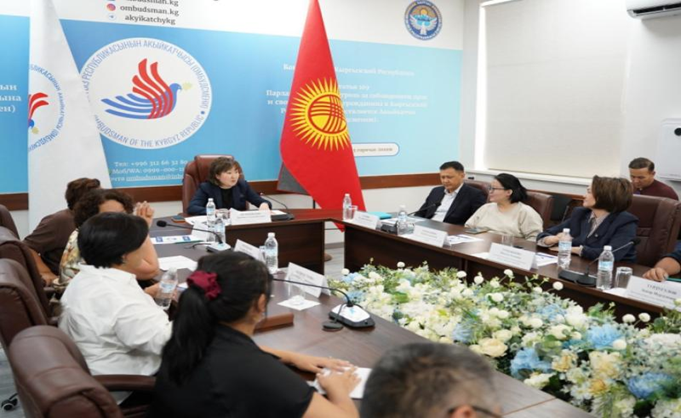
The first meeting of the Public Council was held at the Institute of the Akyikatchy (Ombudsman) of the Kyrgyz Republic.
During the meeting, the members of the Council discussed the priority areas of its further activities, as well as current issues in the field of protection and ensuring human rights and freedoms.
Akyikatchy (Ombudsman) Dzhamilia Dzhamanbaeva noted that the establishment of the Public Council is aimed at strengthening cooperation between the Ombudsman Institution and civil society, the expert community, and human rights organizations.
“Today, the Council includes people with significant experience in public and human rights activities. I am confident that the professional knowledge, practical experience, and pluralism of opinions of the Council members will allow us to consider more deeply and objectively the problems related to ensuring and protecting human rights and freedoms,” she said.
During the meeting, Nazgul Turdubekova, Director of the Public Foundation “League of Child Rights Defenders,” was elected Deputy Chairperson of the Public Council.
Nazgul Turdubekova noted the active work of the Institute of the Akyikatchy (Ombudsman), including its prompt response to citizens’ appeals and effective work to restore violated rights. She also emphasized the promptness of the Institute’s field monitoring visits to social and closed institutions.
She proposed that the Akyikatchy (Ombudsman) conduct joint monitoring visits with members of the Public Council, particularly in the regions.
Human rights defender Gulshaiyr Abdirasulova noted the need to implement the recommendations of the UN Human Rights Committee.
Gulshaiyr Abdirasulova proposed that the Institute pay attention to issues related to the protection of personal data and the observance of citizens’ environmental rights.
Dzhamilia Dzhamanbaeva assured that the proposals of the Public Council would be of great importance to the Institute and would be taken into account when preparing recommendations for state bodies and taking concrete measures to protect citizens’ rights.
The Council includes Zulfia Kochorbaeva, Director of the Public Association “Agency for Social Technologies” and Co-Coordinator of the Alliance of Women’s Legislative Initiatives; Ulugbek Azimov, lawyer and human rights expert; Nazgul Turdubekova, Director of the Public Foundation “League of Child Rights Defenders”; Ukey Muratalieva, expert on issues concerning persons with disabilities; Askar Turdugulov, civil activist on labor rights; Asel Koilubaeva, Chairperson of the “Lawyers for Human Rights” Foundation; and Gulshaiyr Abdirasulova, human rights expert and human rights defender.
The Public Council will function as an independent advisory, consultative, and expert body under the Institute of the Akyikatchy (Ombudsman), tasked with promoting open and constructive interaction with civil society.
DISSEMINATION SESSION FOR STUDENTS HELD ABOUT STATE INSTITUTIONS.
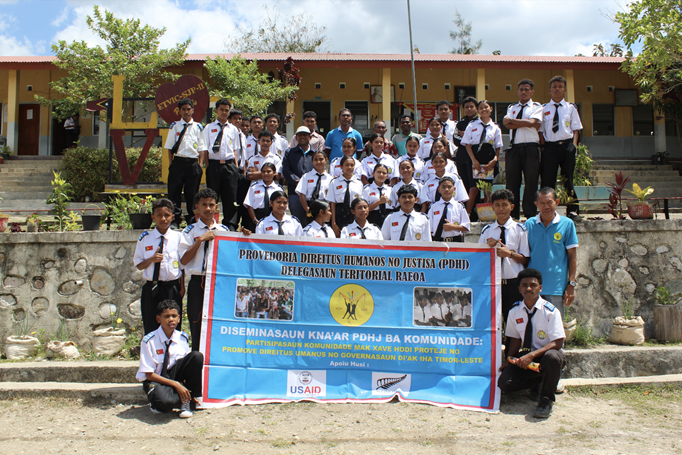
Oé-Cusse, 3 September 2026 — The Territorial Delegation of the Provedor for Human Rights and Justice (PDHJ) in the Special Administrative Region of Oé-Cusse (RAEOA), led by Director Bartolomeu Gonçalves, conducted a dissemination session for students at Escola Técnico Vocacional Lifau, in Pante Macassar Administrative Post, on 3 September 2026. The session focused on the role and mandate of the PDHJ, fundamental principles of human rights, human trafficking, and the procedures for submitting complaints to the PDHJ. The delegation was accompanied by Promotion Officer Jose Tefa and Administration and Finance Officer Domingas D. Paixão Quefi.
The session brought together 54 participants, including students and teachers, comprising 38 males and 16 females. The students actively participated in the session and expressed appreciation for the opportunity to learn more about the work of the PDHJ. In particular, they gained a better understanding of how the PDHJ contributes to the protection and promotion of human rights and good governance, how to submit complaints when their rights are violated or when they experience maladministration, as well as the risks and prevention of human trafficking.
During the opening and closing sessions, the Coordinator of ETV Lifau, Adriano Lelan Elo, welcomed the PDHJ delegation with appreciation, noting that this was the first dissemination activity of its kind conducted at the school. He emphasized the importance of providing students with information about State institutions and their respective responsibilities, as such knowledge can broaden students’ understanding and strengthen their ability to engage with public institutions. Following the presentations, several teachers also encouraged the PDHJ to continue conducting similar awareness-raising activities for students.
The dissemination activities form part of the PDHJ’s continued efforts to bring human rights education and information closer to communities and young people in Oé-Cusse. Previously, on 31 August 2026, the PDHJ team conducted a similar dissemination session at Escola Técnico Vocacional Industrial Católica São João Paulo II, in Passabe, reaching 63 participants, including students and teachers. The participants comprised 31 males and 32 females.
PROTECTING THE RIGHTS AND INTERESTS OF VULNERABLE GROUPS WELFARE AND CIVIL PETITION OFFICIALS CAME TOGETHER TO STRENGTHEN THEIR CAPACITY.

– ACRC held group training on Jul. 15th to strengthen government officials’ capacity to protect the rights and interests of vulnerable groups
– Officials in charge of grievance petitions and social welfare from central and local governments participated, laying the foundation for cooperation on rights protection
The Anti-Corruption and Civil Rights Commission (ACRC, Chairperson Jung Il-yeon) held “Group Training to Strengthen Capacity on Grievance Petition Handling for the Protection of Vulnerable Groups’ Rights and Interests” on July 15 at the Daejeon Youth WeCan Center.
The training was organized to protect vulnerable groups who, despite the continued expansion of the welfare system, have limited access to information and difficulty expressing their need for support, and therefore require active rights protection. Approximately 300 people participated, including grievance petition officials from the central government, local governments and metropolitan and provincial offices of education nationwide, as well as members of Local Ombudsman.
There have been recurring, regrettable cases in which citizens in urgent need of help have fallen through the cracks of the welfare system, unable to even request the support they need.
Against this backdrop, the ACRC organized the training so that front-line officials who are the first to encounter the difficulties faced by vulnerable groups can ensure that these difficulties are not overlooked and are properly connected to rights-protection systems.
Therefore, the social welfare officials who directly counsel, receive, and process petitions from vulnerable groups were included in the training, alongside the government officials who are in charge of grievance petitions.
This was to ensure that difficulties raised by vulnerable groups in the field to be naturally connected to the grievance petition resolution system, thereby establishing a tightly integrated response system that channels vulnerable groups toward rights protection no matter which platform they approach.
For this, central government officials participated in this joint training session as the ACRC sought to lay the foundation of cooperation on rights protection spanning both the central and local levels.
Since grievance petitions from vulnerable groups often require the responsibilities of multiple agencies, sharing common standards for handling such petitions between central and local governments is expected to help reduce administrative blind spots.
The training consisted of three parts: the definition of vulnerable groups and the need to support them; an explanation of the grievance petition handling system and response techniques; and presentations of best practices by institutions.
An expert from the Korea Institute for Health and Social Affairs (KIHASA) also presented research findings on the current status of vulnerable groups and the need to support them, and best-practices of successfully resolved grievance petitions involving vulnerable groups so that participants can directly apply them in the field.
ACRC Chairperson Jung Il-yeon stated, “Protecting the rights and interests of vulnerable groups depends on the capacity of the officials who are the first to encounter their petitions on the field.” He added, “The ACRC will continue to provide active support to ensure that citizens most in need of help are not left out of rights protection systems.”
STRENGTHENING INFORMATION SECURITY, CYBER SECURITY AND PRIVACY PROTECTION.
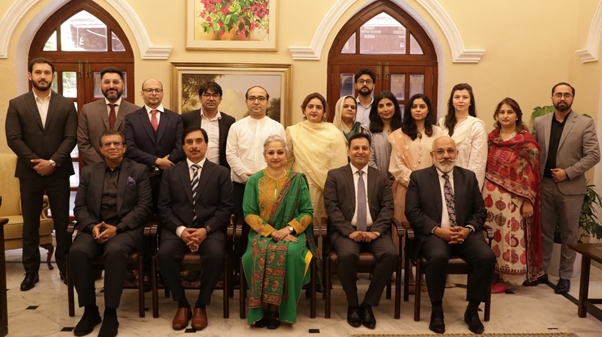
OFFICE OF THE OMBUDSMAN PUNJAB, PAKISTAN ACHIEVES ISO/IEC 27001:2022 INFORMATION SECURITY MANAGEMENT SYSTEM CERTIFICATION FOR HEAD OFFICE AND 39 REGIONAL OFFICES OF OMBUDSMAN PUNJAB, PAKISTAN FROM SGS UNITED KINGDOM LIMITED ALONG WITH ACCREDITATION BODY UNITED KINGDOM ACCREDITATION SERVICE (UKAS) AGAINST THE CERTIFICATION NO. PK26/00000111.
The Office of the Ombudsman Punjab achieved a significant institutional milestone by attaining ISO/IEC 27001:2022 Information Security Management System (ISMS) certification from SGS United Kingdom Limited and United Kingdom Accreditation Service (UKAS) through Certification No. PK26/00000111, strengthening its framework for information security, data/information protection, and cyber security.
The internationally recognised certification provides a systematic framework for identifying, managing and mitigating information-security risks, while supporting the continual improvement of institutional information-security practices. For the Office of the Ombudsman Punjab, the Information Security Management system covers the Head Office and all 39 Regional Offices of the Ombudsman Punjab, Pakistan.
The certification encompasses key digital and information systems supporting the Office’s statutory mandate, including the Ombudsman Punjab Management Information System (OPMIS), 24/7 Helpline 1050, Ombudsman Punjab Typing Test System (OPTTS), in-house software development, testing, maintenance and quality assurance, ICT infrastructure, cloud-hosted services, electronic communications, networks and associated data/information and IT services.
Speaking at the ceremony marking the achievement, Ombudsman Punjab Ms. Ayesha Hamid appreciated the efforts behind strengthening the institution’s information-security systems and thanked SGS United Kingdom Limited for awarding the certification. Mr. Kaiser Saleem, Secretary, Office of the Ombudsman Punjab, also congratulated the IT Infrastructure & Development team and acknowledged its commitment and hard work.
SGS Pakistan Managing Director Mr. Usman Asif appreciated the Office of the Ombudsman Punjab for achieving ISO/IEC 27001:2022 Information Security Management System certification, saying the institution has secured an international standard for information security, data protection and cybersecurity.
Managing Director, Delta X, Pakistan, Mr. Siraj Ud Din congratulated the Ombudsman Punjab IT Infrastructure & Development team for this remarkable achievement.
The achievement reflects the Office’s continued efforts to align its institutional systems with internationally recognised standards and best practices, particularly in protecting information and strengthening the security of the digital infrastructure that supports public grievance redressal.
‘KOREA-UNDP INTERNATIONAL ANTI-CORRUPTION FORUM’ CHARTS FUTURE GLOBAL ANTI-CORRUPTION STRATEGIES.

– ACRC and UNDP successfully conclude ‘Korea-UNDP International Anti-Corruption Forum’, convening anti-corruption experts from partner countries of the ‘SDG Partnerships’ programme, international organizations, civil society, the private sector, and academia
– Forum highlights the impact of Korea’s anti-corruption technical cooperation efforts and the strengths of Korea’s anti-corruption model, while charting next-generation anti-corruption strategies for a rapidly changing global policy environment
The Anti-Corruption and Civil Rights Commission (Chairperson Jung Il-yeon, hereafter “ACRC”) and the United Nations Development Programme (UNDP) Seoul Policy Centre (Director Anne Juepner) jointly held the “Korea-UNDP International Anti-Corruption Forum” over two days.
Participating global experts and anti-corruption practitioners highlighted the achievements of countries that learned from and localized the Republic of Korea’s anti-corruption policies and systems through the ‘SDG Partnership’ anti-corruption technical cooperation Project programme* led by ACRC and UNDP, and discussed the direction and vision for sustainable anti-corruption strategies and integrity governance amid a rapidly changing global environment.
* ‘SDG Partnerships programme’ anti-corruption technical cooperation programme: A UNDP programme jointly carried out with ACRC since the signing of a Memorandum of Understanding (MOU) in 2015, and supported by Korea’s Ministry of Foreign Affairs. It provides technical advisory services, policy consulting, and capacity-building to help developing countries localize and apply Korea’s anti-corruption systems.
The participants identified five next-generation anti-corruption strategies to serve as a milestone for each country’s anti-corruption efforts: moving from initial reforms to deep institutionalization, accelerating and scaling progress through peer-learning and South-South and Triangular Cooperation* (SSTC), harnessing AI and digital innovations with robust, trust-building safeguards, building inclusive integrity ecosystems to leave no one behind, and strengthening partnerships for sustainable impact.
* South-South and Triangular Cooperation (SSTC): A cooperation framework in which a third party such as a developed country or international organization provides funding, technology, and know-how to promote cooperation among developing countries, thereby enhancing effective and sustainable cooperation.
Building on the strategies drawn from this event, ACRC and UNDP reaffirmed their commitment to serve as a powerful global catalyst for transparency, accountability, and sustainable development.
Held over two days, the event addressed cross-cutting anti-corruption efforts in depth from building solid legal foundations and embracing digital innovation to promoting ethical business practices in the private sector and served as a forum for South-South cooperation and exchange.
At the opening ceremony held on 2 July, ACRC Chairperson Jung Il-yeon stated that “our cooperation, which began as knowledge exchange, has evolved into a dynamic learning network in which one success story spreads to become a solution for other countries,” emphasizing the potential for global expansion of ACRC’s technical cooperation with UNDP under the SDG Partnership programme.
Former ACRC Chairperson Kim Young-ran, who made a significant contribution to the legislative process of Korea’s Improper Solicitation and Graft Act, delivered a powerful keynote message that “integrity is not a luxury afforded to advanced countries, but an indispensable condition for becoming one,” stressing that sustainable growth is only possible on a foundation of transparency and public trust.
Participating countries vividly demonstrated how Korea’s anti-corruption model and technical cooperation framework are being applied on the ground.
Montenegro, which has adopted the Comprehensive Integrity Assessment of public institutions, highlighted the role of integrity managers as key agents of change, while Sri Lanka placed the institutionalization of Internal Affairs Units at the center of its integrity assessment system. Uzbekistan, which introduced the Clean Portal, demonstrated that digital tools are most effective when backed by institutional reform.
Tajikistan is introducing a whistleblower protection and reward system, inspired by Uzbekistan’s experience of adopting a comprehensive Korea-inspired anti-corruption model combining both the Clean Portal and the Comprehensive Integrity Assessment of public institutions, and taking a systematic approach to corruption prevention and whistleblower protection alike.
A range of stakeholders including national anti-corruption agencies, private companies, civil society organizations, the United Nations Development Programme (UNDP), the United Nations Office on Drugs and Crime (UNODC), and the World Bank Group engaged in active discussion on the need to promote diverse partnerships to combat corruption and on strategies for responding to digital transformation in building clean governance.
Furthermore, governance expert Dr. Daniel Kaufmann*, Co-founder and President Emeritus of the Natural Resource Governance Institute, reiterated the importance of the ACRC and UNDP’s role in the SDG Partnership Programme against the backdrop of an evolving anti-corruption and institutional reform landscape.
* An economist and expert in governance and anti-corruption who devised the Worldwide Governance Indicators (WGI), which quantify countries’ institutional quality.
Dr. Anne Juepner, Director of the UNDP Seoul Policy Centre stated, “We remain committed to strengthening the SDG Partnerships programme as a platform for cooperation, knowledge exchange, and practical solutions that respond to countries’ priorities and needs.”
ACRC Chairperson Jung Il-yeon stated, “Building on the discussions and strategies that emerged from this forum, we will do our utmost to support partner countries’ substantive efforts to combat corruption and to help Korea move forward as a global leader in the fight against corruption.”
THE HUMAN RIGHTS COMMISSIONER OF AZERBAIJAN, SABINA ALIYEVA, PARTICIPATED AT THE “BRAVE 2026” SECOND BUSINESS AND HUMAN RIGHTS FORUM HELD IN STRASBOURG, FRANCE.
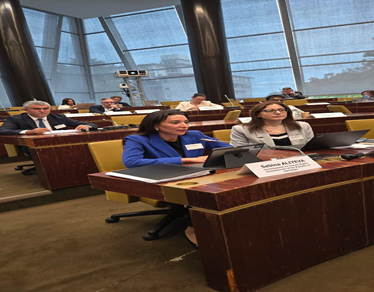
The purpose of the Forum had brought together representatives of foreign government agencies, the business sector, international organizations, and experts, alongside ombudspersons and NHRIs was to promote international cooperation in combating forced labour and to discuss innovative solutions to address forced labor and find innovative solutions.
During a panel session titled “Forced Labor in the Green and Digital Transitions: New Risks, New Responsibilities,” Ombudsman Sabina Aliyeva emphasized that NHRIs, can make significant contributions to preventing and identifying early risks associated with forced labor.
The Ombudsman noted that the fight against human trafficking is one of the priority areas of activity for the Ombudsman Institution in Azerbaijan. She highlighted that together with measures taken for expanding cooperation with public stakeholders and civil society organizations to strengthen preventive measures in the field of concern, monitoring visits to relevant institutions, confidential meetings with potential victims, and awareness-raising activities are also conducted regularly.
Furthermore, it was emphasized that the Ombudsman’s recommendations were incorporated into the process of drafting of the “National Action Plan on Combating Human Trafficking for 2026–2030”, which has already been adopted.
Within the framework of the event, Ombudsman Sabina Aliyeva held bilateral meetings with the Council of Europe Secretary General, Alain Berset, the Director General of Human Rights and Rule of Law of the Council of Europe, Gianluca Esposito, the Executive Secretary of the CoE Group of Experts on Action against Trafficking in Human Beings (GRETA), Petya Nestorova, and other high-level officials and international experts.
During these meetings, discussions focused on prospective cooperation in the field of human rights and institutional partnerships with ombuds institutions. The Commissioner provided comprehensive information on her ongoing activities in the protection and promotion of human rights and fundamental freedoms.
FORUM FOR THE EXCHANGE OF EXPERIENCES OF OMBUDSMEN FROM THE BALKAN REGION AND NEIGHBORING COUNTRIES WAS HELD IN ISTANBUL HOSTED BY THE OMBUDSMAN INSTITUTION OF TÜRKIYE.
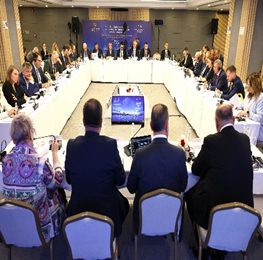
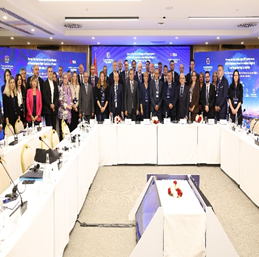
Hosted by the Ombudsman Institution of the Republic of Türkiye, in cooperation with the Turkish Cooperation and Coordination Agency (TİKA), the Forum for the Exchange of Experiences of Ombudsmen from the Balkan Region and Neighboring Countries was held in Istanbul on 3–4 September 2026.
Held under the theme “The Role of Ombudsman Institutions in Protecting Human Rights and Strengthening Good Administration: Exchange of Experiences among the Balkans and Neighboring Countries”, the Forum brought together Ombudspersons, senior representatives of Ombudsman and Human Rights Institutions, as well as academicians from 14 countries: Türkiye, Albania, Bosnia and Herzegovina, Bulgaria, Czechia, Croatia, Montenegro, Kosovo, North Macedonia, Hungary, Romania, Serbia, Slovakia, and Slovenia.
The opening session featured addresses by Dr. Ali Ercan, Vice President of TİKA; Mr. Davut Gül, Governor of Istanbul; and Mr. Mehmet Akarca, Chief Ombudsman of the Republic of Türkiye.
Over the course of two days, participants exchanged institutional experiences and national practices and discussed common challenges. Key topics included the role of Ombudsman and Human Rights Institutions as a bridge of trust between citizens and the state; the protection of the rights of people living in rural and hard-to-reach areas; the promotion of the principles of good administration; common regional challenges faced by ombudsman institutions; and the strengthening of regional cooperation in the field of human rights.
CCAC LAUNCHES THE PILOT DUAL-TRACK TRAINING PROGRAMME ON CORRUPTION PREVENTION IN THE PRIVATE SECTOR.
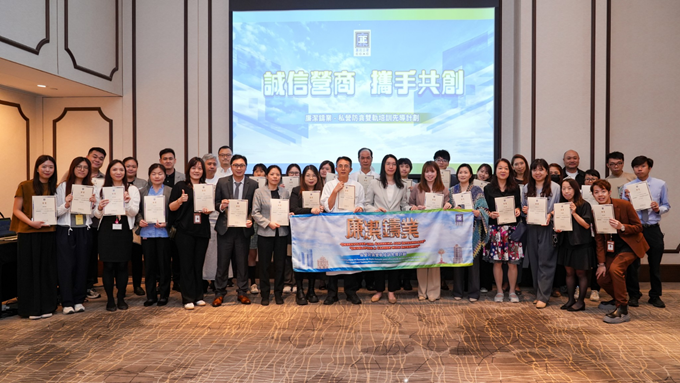
The CCAC has launched the “Developing a Career with Integrity” – Pilot Dual-Track Training Programme on Corruption Prevention in the Private Sector, with a hope to gradually raise the awareness of integrity and law-abidingness among the personnel of private companies through the dual-track training programme, which includes “online self-learning” and “face-to-face training”, and assist the companies to create, step by step, a well-established integrity management system.
In the first phase of the programme, trainees of private companies have to complete the preparation course through online self-learning to gain basic theoretical knowledge. Subsequently, they have to attend the face-to-face training session in the second phase to deepen their knowledge of the application of corruption prevention techniques. Upon completion of both phases of training courses, trainees will be able to obtain certificates awarded by the CCAC.
Today (17th September), the CCAC organised the first session of a special training programme for the personnel of Lisboeta Macau and Regency Art Hotel. All trainees successfully completed the programme and received certificates. During the face-to-face training session, the CCAC explained in detail to the trainees about the key points of the law of Prevention and Suppression of Bribery in the Private Sector, particularly through case studies, scenario-based exercises and in-depth discussions. The aim was to enable trainees to understand that conflicts of interest arising from work easily lead to corruption acts and that developing habits of integrity in the workplace is the key to staying away from the risks of criminal activities. During the discussion session, the trainees raised their opinions actively and identified the integrity risks from the perspective of a manager, experiencing situations that are not limited to their own positions and thus identifying the grey areas concerning the operation of the company. The CCAC also guided the trainees in reflecting upon the content of their activities through the training course, enabling them to consider integrity management in a more comprehensive way and to clearly understand the ripple effect of individual actions on the work team and even the company. This not only helped strengthen individual awareness of risk prevention but also assisted companies in building incorruptible teams, thus reducing corruption risks and promoting corporate integrity.
“Developing a Career with Integrity” – Pilot Dual-Track Training Programme on Corruption Prevention in the Private Sector will be held continuously. The CCAC welcomes different sectors to participate in the programme. Companies wishing to obtain the relevant information or register for the programme may contact Ms. Leung of the Community Relations Department of the CCAC during office hours (Tel: 8395 3121).
CIVIL PETITION DELAYED BY SILOS BETWEEN THE PUBLIC INSTITUTIONS — NOW ADDRESSED THROUGH THE “CITIZEN’S ACTIVE ADMINISTRATION APPLICATION” SYSTEM.

– ACRC actively coordinated to reach agreement on a petition regarding road-damage compensation filed through the Citizen’s Active Administration Application system on July 14
– When delayed due to unclear responsibility for petition handling, inter-agency coordination will immediately begin
The Anti-Corruption and Civil Rights Commission (ACRC, Chairperson Jung Il-yeon) drew agreement on complex civil petitions that were filed through its “Citizen’s Active Administration Application” , which had stalled because multiple administrative agencies were involved, by actively coordinating among the agencies.
* Citizen’s Active Administration Application System: A system through which a petitioner may ask the head of the competent administrative agency to actively handle a matter by making use of active-administration support mechanisms (such as review by an audit institution). The ACRC reviews such requests and puts forward recommendations for improvement of the current situation to the competent agency. Applications can be filed through the e-People portal or the ACRC website.
The first resolved petition was filed by a driver whose vehicle wheel was damaged by a traffic delineator on a road near Gwacheon Citizens’ Plaza in Gwacheon, Gyeonggi Province.
When damage is caused by a facility belong to the government while driving, compensation should be provided by the central or local government concerned. In this case, however, responsibility for managing the road was unclear between the Government Employees Pension Service (GEPS), which owns the road, and the Gwacheon Government Complex Management Office and the City of Gwacheon, which occupy and use it. As a result, disputes over the responsibility arose five times, and processing of the petitioner’s compensation claim was delayed for an extended period.
Judging that the public should no longer have to bear the burden of inconvenience caused by disagreements between public institutions, the ACRC actively coordinated the case with officials from the relevant agencies. After extensive discussion, the City of Gwacheon and the Gwacheon Government Complex Management Office agreed to lay proceed with compensation procedures.
The second case resolved through the Citizen’s Active Administration Application concerned property damage suffered by residents nearby the railway land along the Gyeongui Line in Goyang, Gyeonggi Province, due to trees left around the land. Large acacia trees near the railway land caused fences to collapse and damaged the walls of private property, requiring urgent action. Action was delayed because the relevant regulations on the scope and authority of railway facility maintenance were unclear.
The ACRC confirmed the background of the petition and coordinated actively, by requesting cooperation from the relevant agencies. The Ministry of Land, Infrastructure and Transport, the Korea Railroad Corporation, and the National Railway Administration convened an emergency meeting and agreed to remove the trees by August of this year and to revise the Landscaping Facility Management Guidelines to clearly define the scope of tree management in the next maintenance and management contract.
With these cases, the ACRC has decided to devise measures for swift handling of civil petitions— such as immediate inter-agency coordination whenever petition processing is delayed due to the unclear division of responsibility among the relevant agencies.
Secretary General of the ACRC Han Samsuk stated, “Close communication and cooperation are significantly important for petitions involving multiple administrative agencies.” He added, “The ACRC will continue to faithfully fulfill its role as the ‘control tower for active administration,’ resolving problems from the public’s perspective by dismantling the silos between institutions through active coordination.”