Category Archives: AOA News Letter
INTERNATIONAL INTERNSHIP PROGRAMME 2026: BATCH V.
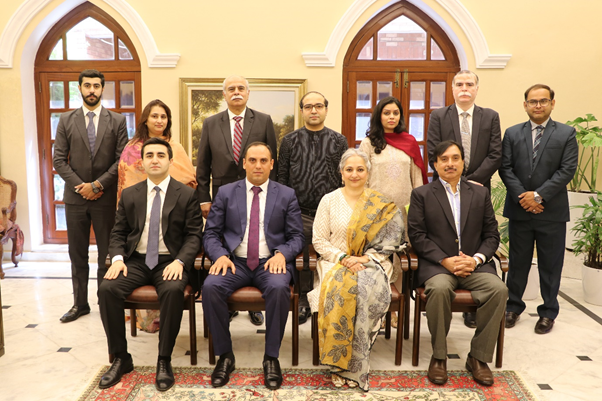
The Office of the Ombudsman Punjab hosted the fifth batch of the International Internship Programme 2026 from 7–11 September 2026, welcoming a delegation from the Commissioner for Human Rights (Ombudsman) of the Republic of Azerbaijan. The delegation comprised Mr. Sabuhi Abbasov, Head of the Ombudsman’s Western Regional Center, and Mr. Elvin Hajiyev, Senior Adviser of the Department on Protection of the Right to Access Information.
The five-day programme was designed to provide practical insight into the institutional framework, complaint management systems and citizen outreach mechanisms of the Ombudsman Punjab. It commenced with an orientation on the Ombudsman Act, 1997, followed by an in-depth briefing on the Office’s ISO 9001:2015 Certified Quality Management System and Complaint Management Information System, including a visit to the IT Wing.
The delegation also explored the Office’s Helpline 1050, media strategy, social media and public awareness campaigns, alongside a Research & Development Wing workshop featuring a comparative analysis between the Ombudsman Punjab and the participants’ home institution.
A key element of the internship was field-based learning. The participants observed the Awami Khidmat Programme Mobile Outreach Van operating in remote areas of Rawalpindi and interacted with local complainants. They subsequently visited the Regional Office Attock, where they received an orientation on regional operations and observed live hearings with the Advisor.
The programme concluded at the Head Office with presentations by the interns on their findings, recommendations and learning experience, followed by a certification ceremony addressed by Ms. Ayesha Hamid, Ombudsman Punjab, and Mr. Kaiser Saleem, Secretary. The programme also included cultural engagement through visits to Lahore’s historic landmarks and the Wagah Border flag-lowering ceremony.
The fifth batch further strengthened the Office of the Ombudsman Punjab’s growing network of international institutional partnerships, providing a platform for comparative learning, exchange of practices and continued cooperation between ombudsman institutions.
OMBUDSMAN INTERVENES TO RESTORE SANDAL EXPRESS BETWEEN SARGODHA-MULTAN. PEOPLE IN BOTH AREAS ERUPT INTO JUBILATION BY THE DECISION.
The Pakistan Railways has restored Sandal Express operating between Sargodha and Multan with immediate effect, owing to the intervention by Wafaqi Mohtasib (Federal Ombudsman), Mr. Naveed Kamran Baloch. The decision is likely to benefit very large number of people in both the cities as well as the adjoining areas and districts.
It may be recalled that the Pakistan Railways some time back abruptly closed down the said express train plying between these two cities without assigning any reason. The closure was badly affecting a large number of people, particularly the businessmen, government servants, the students besides the general public and they have been appealing for its restoration to the authorities concerned for a very long time but to no avail.
One, Mr. Muhammad Ramzan approached the Office of the Wafaqi Mohtasib in this connection. The Incharge Regional Office, Sargodha summoned the relevant officials from Pakistan Railways belonging to Rawalpindi and Multan divisions for hearing. During the course of proceedings, the Railway Authorities were unable to provide any cogent reason for doing so and rather opined that restoration of any railway route was the prerogative of Railway Headquarters, Lahore. Henceforth it was also taken on board and after due consideration of all aspects of the matter, the Wafaqi Mohtasib Office instructed the Pakistan Railways to restore the said express train on the above mentioned route. The Pakistan Railways subsequently complied with the decision.
It brought great joy and jubilation to the people in Sargodha, Multan as well as the adjoining areas as they would be greatly benefiting from it. They have expressed their profound gratitude to the Wafaqi Mohtasib for having fulfilled one of their long standing demands.
OMBUDSMAN LEADS DELEGATION ON OFFICIAL VISIT TO SHANGHAI MUNICIPAL COMMISSION FOR DISCIPLINE INSPECTION AND COMMISSION OF SUPERVISION, ATTENDS FIRST TRAINING PROGRAMME ON NATIONAL 15TH FIVE-YEAR PLAN.
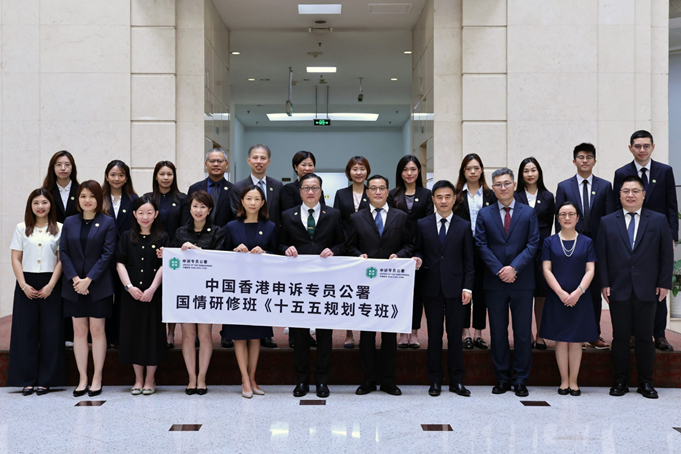
The Ombudsman, Mr Jack Chan, led a delegation from the Office of The Ombudsman (“the Office”) to visit Shanghai and attend a specialised national studies programme.
Mr Chan this morning (21 September) attended the opening ceremony of the Office’s first specialised training programme on the National 15th Five-Year Plan at the Shanghai Administration Institute. The ceremony was also attended by Vice President of the Shanghai Administration Institute Mr Wang Yongjie, Level II Bureau Rank Official, Department of International Cooperation, National Commission of Supervision of the People’s Republic of China (“NCS”), Mr Chen Long and a representative of the Liaison Office of the Central People’s Government (“LOCPG”) in the Hong Kong Special Administrative Region (“HKSAR”). The four-day programme, participated in by 15 staff members of the Office, combines thematic lectures with site visits to offer deeper insights into the country’s major policies and development strategies.
In his opening speech at the ceremony, Mr. Chan expressed special gratitude to the NCS, the LOCPG, the Shanghai Municipal Commission for Discipline Inspection and the Commission of Supervision, and the Shanghai Administration Institute for their strong support and meticulous arrangements, and highlighted the significance of this training programme. Mr Chan said, “This year marks the beginning of the National 15th Five‑Year Plan. Last week, the Chief Executive of the HKSAR announced Hong Kong’s First Five-Year Plan to actively align with the National 15th Five‑Year Plan. The Office will fully support and dovetail with Hong Kong’s First Five-Year Plan. Playing an independent supervisory role over public administration in Hong Kong, the Office has exercised professionalism and diligence to monitor and support the HKSAR Government in advancing good governance and improving people’s livelihood.” He added that the Office has attached importance to talent development, encouraging staff to support the HKSAR Government in better integrating into and serving the overall national development through their daily work. Mr Chan hoped that through this training programme, participants would gain first-hand insights into the country’s situation and development experience, and in particular grasp the key priorities of the 15th Five‑Year Plan. Participants were also urged to actively reflect on how to apply what they learn in the Office’s work, thereby contributing to the HKSAR’s alignment with the 15th Five‑Year Plan.
In the afternoon, Mr. Chan led the delegation to meet and exchange views with the Secretary of the Shanghai Municipal Commission for Discipline Inspection and the Director of the Shanghai Municipal Commission of Supervision, Mr Chi Yaoyun, together with several senior officials of the Commission. Mr. Chan briefed Mr. Chi on the Office’s functions, strategic focuses and work results. He expressed his pleasure of visiting Shanghai in the opening year of the National 15th Five-Year Plan to acquire knowledge of the country’s latest developments and governance practices. The Office, he noted, will endeavour to strengthen supervision and promote good public administration, while supporting the HKSAR Government in improving governance and public services, with a view to enhancing the public’s sense of fulfilment and happiness.
At the meeting, Mr Chi shared the work and governance experiences of the Shanghai Municipal Commission for Discipline Inspection and the Commission of Supervision, and recognised the Office’s strategic initiatives and achievements. He also encouraged the Office’s staff members to seize this opportunity to enhance their awareness of national policies while cultivating a strong sense of patriotism. Conveying his thanks to Mr. Chi for his recognition of the Office’s work and guidance, and to the Commission for the thoughtful arrangements during this visit, Mr Chan noted his anticipation of maintaining close co-operation and exchanges between the two sides.
The delegation and programme participants subsequently visited the Memorial Hall of the First National Congress of the Communist Party of China. Immersed in the rich collection of cultural relics and historical exhibits, they developed a deeper appreciation of the Party’s glorious history of struggle and remarkable achievements. The visit reinforced their understanding of the Party’s founding vision and mission, inspiring them to press ahead with their responsibilities in mind, and work together in contributing to the country’s prosperity and development, and a better life for fellow countrymen.
Later on, the delegation and programme participants will tour cutting-edge technological venues and public facilities, including the Exhibition on Shanghai’s Sci-tech Innovation, Zhangjiang Robotics Valley, Shanghai Urban Planning Exhibition Hall and the Party-mass Service Centre. These activities will facilitate their fuller grasp of Shanghai’s latest progress and achievements in municipal governance, technological innovation and public services.
OMBUDSMAN TEAM FOR QUALITATIVE IMPROVEMENT IN AIRPORT SERVICES, PROMPT REDRESSAL OF PASSENGERS’ COMPLAINTS.
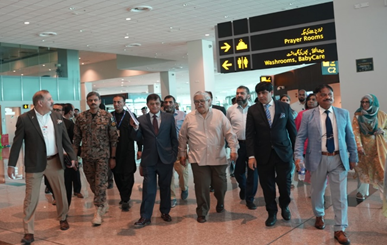
Taking strong exception to persistent complaints of substandard quality of services, mismanagement, negligence and maladministration at the Islamabad International Airport, a Wafaqi Mohtasib Inspection Team visiting the airport today, instructed the Airport Authorities to put their act together and take immediate steps for bringing about qualitative improvement in all areas.
Headed by Senior Advisor, Wafaqi Mohtasib Office, Mr. Ahmad Farooq, the Team went round various sections and areas of the airport including passenger lounges, immigration counters and also interacted with the departing and arriving passengers. The Team particularly called for a more dynamic and vibrant role on part of the officers and officials performing duties at the “One Window Facilitation Desks (OWFDs)” established at all International Airports of the country with a view to ensuring on the spot redressal of the complaints. These included officials from 12 key government agencies including FIA, NADRA, Civil Aviation, OPF and ANF.
The Team noticed a sort of disconnect and lack of coordination among various government agencies and organizations performing duties at the airport, which may hamper their smooth functioning and may result into any untoward incident. It also asked the ASF to take tangible steps for improving coordination amongst all concerned. It found that the washrooms lacked sanitation and no one was on duty at the counter which allocate wheelchairs to senior citizens. It also directed that senior citizens, the weak and infirm may be extended due care and courtesy and facilitated in all respects. The Team once again directed that no passenger should be offloaded without assigning solid reasons of doing so in writing. Proper record must be maintained of all such cases, it observed.
The Team further instructed that all out efforts may be made to facilitate the Pakistani diaspora during their visit to the homeland in view of their pivotal role in boosting the country’s economy through the foreign remittances besides services in other areas of national importance. During the course of interaction with the incoming and outgoing passengers, it was found out that a majority of complaints pertained to long delays in immigration, mishandling and occasional loss of luggage and highhandedness on part of the some of the immigration officials and other authorities.
The Inspection Team expressed its displeasure over continued negligence and non-implementation on its earlier recommendations regarding seating arrangements near the cargo centre and opening of a bank branch nearby to facilitate businessmen and the general public. It instructed that needful may be done within one week. The people in general complained that the airport canteen and other stores/shops there are charging exorbitantly and their rates are much higher than the market.
The Inspection Team included Maj. Gen. (R) Haroon Sikandar Pasha, Advisor, Wafaqi Mohtasib Office, Pervaiz Haleem Rajput, Consultant, Wafaqi Mohtasib Office and Khalid Sial, Consultant, Wafaqi Mohtasib Office.
COMMISSIONER AO IEONG SEONG VISITS CHENGDU AND CHONGQING FOR EXPERIENCE EXCHANGE ON INTEGRITY BUILDING.
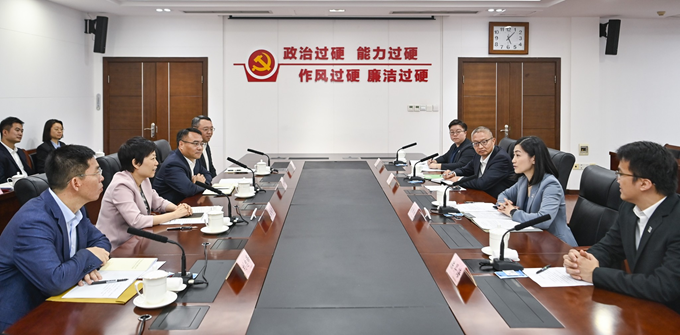
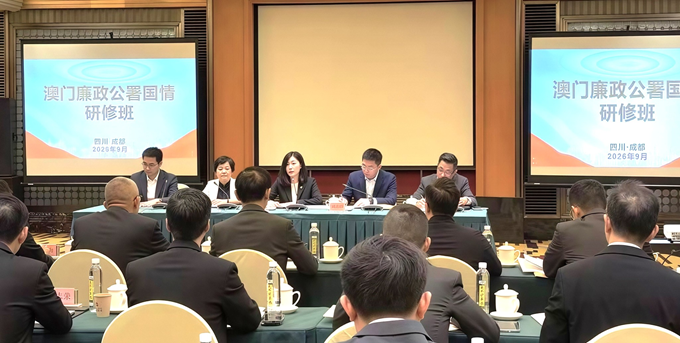
Recently, the Commissioner Against Corruption, Ao Ieong Seong, led a CCAC delegation to Chengdu, the provincial capital of Sichuan Province and Chongqing municipality. The delegation met with personnel from discipline inspection and supervision organs of the two places to exchange experience on integrity building.
Ao Ieong Seong and the delegation first visited Chengdu to attend the opening ceremony of a national studies course organised locally. She stated that sending the CCAC’s personnel for exchanges and training in the Chinese mainland aims not only to enhance their professional skills but also to allow them to learn from the anti-corruption experience of the Chinese mainland and have deeper understanding of the national development and its magnificent culture. Following the opening ceremony, Ao Ieong Seong and the trainees subsequently attended a lecture on President Xi Jinping’s socialism with Chinese characteristics.
The delegation subsequently met and exchanged views with the Deputy Secretary of the Commission for Discipline Inspection and Deputy Director of the Commission for Supervision of Sichuan, Kai Xuan. Ao Ieong Seong expressed her gratitude to the aforesaid commissions for their arrangements and coordination for the course, expressing hopes to continuously strengthen exchanges and cooperation and learn from each other’s experience in the future. Kai Xuan introduced the anti-corruption efforts in Sichuan and pointed out that there is room for cooperation with the CCAC of Macao in personnel training as well as information and technology, hoping that both sides will maintain close exchanges and contact in these areas.
In addition, the delegation also visited Chongqing, where they met with the Secretary of the Commission for Discipline Inspection and Director of the Commission for Supervision of Chongqing, Song Yijia. Ao Ieong Seong stated that the CCAC attaches great importance to the discipline of public servants and strives to assist the SAR Government in building an incorruptible and efficient public service team. She also hoped that both sides will maintain a good partnership to jointly combat cross-border corrupt acts. Song Yijia introduced the latest situations of corruption fighting in Chongqing, including the establishment of a big data resources centre and a case handling centre in order to enhance the efficiency of case handling. She added that although the two places have different legal systems, they can draw on the experience of each other and strengthen the exchange and cooperation.
During the trip, the delegation visited the planning exhibition pavilions, the integrity education bases and the academic institutions in Sichuan and Chongqing, where they had a comprehensive understanding of the modernisation and the achievements of the fight against corruption in the two places in the new era.
Accompanied by representatives of agencies including the Hong Kong and Macao Work Office of the Central Committee of the Communist Party of China and the Liaison Office of the Central People’s Government in the Macao SAR, the members of the CCAC delegation included the Chief of the Cabinet of the Commissioner Against Corruption, Chan In Chio, and the Acting Head of the Investigation Department 2 of the Anti-Corruption Bureau, Chan Seng Hoi.
OMBUDSMAN ACADEMY HOLDS THEMATIC TALK FOR LEGISLATIVE COUNCIL MEMBERS’ OFFICES AND ASSISTANTS.
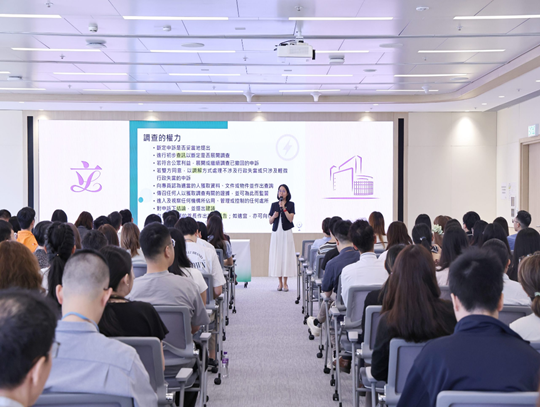
The Hong Kong International Ombudsman Academy (“HKIOA”) under the Office of The Ombudsman (“the Office”) today (11 September) held a thematic talk titled “From Supervision to Good Governance – Interplay between Policy Deliberation and Supervision” at the Legislative Council (“LegCo”) Complex.
The talk marked the HKIOA’s first engagement activity organised for LegCo Members’ offices and their assistants. The response was enthusiastic, with nearly 100 assistants and representatives in attendance. Speaking at the talk, the Office’s Chief Investigation Officer, Mrs Kitty Cheng, elaborated on the Office’s supervisory role and functions, and discussed with participants how policy deliberation and supervision can be combined to enhance the governance effectiveness of the Government of the Hong Kong Special Administrative Region (“HKSAR”), thereby fostering prosperity and stability, and improving people’s livelihood and well-being.
Participants were also briefed on the three strategic focuses championed by the Office under the leadership of the Ombudsman, Mr Jack Chan, namely making effective use of mediation to resolve complaints, promoting interdepartmental collaboration and fostering a positive complaint culture. The HKIOA also explained how the Office proactively exercises its supervisory functions to prevent maladministration at source and alleviate public concerns and difficulties. Participants actively expressed views on livelihood issues they encountered during their daily work, shared their experiences, and raised questions while taking part in discussions on public administration supervision and complaint handling.
Mr. Chan said, “Our Office proactively supports the HKSAR Government in enhancing governance effectiveness, addressing people’s concerns and difficulties, and aligning with the National 15th Five‑Year Plan by assisting government departments and public organisations in leveraging Hong Kong’s strengths to better integrate into and serve the overall national development. The HKIOA’s thematic talk for LegCo Members’ offices and their assistants will contribute to the achievement of these objectives, and we extend our appreciation to the LegCo Secretariat for its meticulous arrangements in organising this talk.”
Mr. Chan reiterated, “With tireless dedication, the Office will continue to explore multiple avenues aimed at enhancing the governance effectiveness of the HKSAR Government for better alignment with national development strategies.”
FEDERAL OMBUDSMAN MEETS AMBASSADOR (DESIGNATE) OF AZERBAIJAN, DISCUSSES MATTERS RELATING TO AOA.
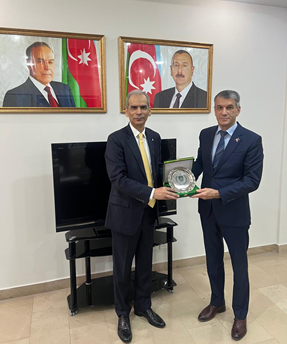
The Wafaqi Mohtasib (Federal Ombudsman), Mr. Naveed Kamran Baloch met with the Ambassador (Designate) of the Republic of Azerbaijan, H.E. Mr. Irfan Davudov, here today and exchanged views with him on matters of mutual interest with particular reference to the Asian Ombudsman Association (AOA). The two sides expressed their willingness to intensify cooperation in this regard.
Mr. Baloch apprised the Ambassador of the various initiatives his office has taken in connection with prompt disposal of public complaints relating to maladministration, adding that a large number of people are utilizing its services which are free, fast and reliable. The two sides agreed that a vast scope exists for exchange of experiences and best practices in the field of ombudsmanship between Pakistan and Azerbaijan.
It may be informed that Pakistan is the current President of the 47-member strong Asian Ombudsman Association, whereas the Republic of Azerbaijan is the Vice President of the Organization.
CHIEF OMBUDSMAN OF TÜRKIYE AND PRESIDENT OF OICOA PARTICIPATED IN 13TH BOARD MEETING OF THE OIC OMBUDSMAN ASSOCIATION .
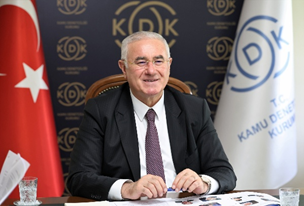
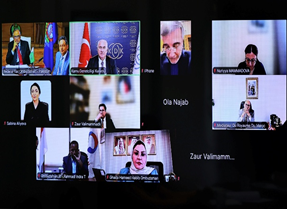
The Chief Ombudsman of Türkiye and President of the OIC Ombudsman Association (OICOA), Mr. Mehmet Akarca, participated in the Association’s 13th Board of Directors Meeting, held online on 14 September 2026. During the meeting, he exchanged views with fellow Board members on the Association’s ongoing activities and future agenda. The participants expressed their resolve to intensify efforts for realising the goals and objectives of the Association.
PAK OMBUDSMAN CHAIRS REVIEW MEETING, SUGGESTS LONG TERM REFORMS TO IMPROVE SERVICE DELIVERY.
The Federal Ombudsman, Mr. Naveed Karman Baloch has initiated a series of measures to bring about long term improvements for enhancing the core capacities and public service delivery operations of the organization. Specific directions were issued to the officials concerned alongwith the timelines to report concrete progress with regard to the proposed Health Centre, IRD Library and early recruitment of staff for the vacant positions.
The HWM was informed that one contract for the Health Centre had been received and another was expected shortly; work was likely to commence within a few days and take approximately three weeks. The official concerned reported that four final 3-D designs for the Clinic had been prepared and approved in principle. The dispensary estimate was approximately Rs. 8.5 lac. It was decided that building-related works, including washrooms, would be undertaken by OWM from its own funds through the prescribed quotation procedure.
The HWM sought an update regarding the proposed inauguration of the IRD Library. Dr. Syed Asif Hussain, Executive Secretary, AOA and Head IRD/GCOP, informed the meeting that all installations and arrangements, including plates, library displays and frames, had been completed and the programme was ready, subject to finalization of the date. Coordination with the concerned officers would be completed accordingly.
The DG Coordination, reported that the National Assembly MOU had been prepared, approved and forwarded to the National Assembly and was presently with its legal team. Digital connectivity was 100% complete: the portal had been installed and training/testing completed; the manual had been supplied and the MOU forwarded. The HWM directed that a review meeting be held at the National Assembly office with the Office’s team to finalize inauguration arrangements. The Office’s part was complete and action/response from the National Assembly was awaited.
Preparations for presentations were reviewed. The activity would commence from the first week of September 2026. It was decided that presentations would be prepared separately according to the relevant audience/function, rather than as one generic presentation, with the concerned officers contributing their respective functional portions.
The DG Administration, presented the revised floor-wise office reorganization plan to consolidate scattered Wings, improve coordination, facilitate complainants/visitors and optimize space. The plan covered the proposed placement of Administration, Registration, Appraisal, Implementation, Investigation, Media, IRD, Business Facilitation and AOA Secretariat functions, including the conference/committee rooms and Executive Secretary’s office. It also incorporated departed/new officers and took into account room sizes, security, crowd management and functional requirements.
Two options were considered: completion of workstations before shifting, or immediate Wing-wise reorganization while workstation procurement proceeded separately. Full workstation procurement could take 2-3 months. The Consultant concerned reported that the earlier contractor had declined after approximately 21 days. Complete renovation was estimated at approximately Rs. 5 million, while the proposed minimum essential option was approximately Rs. 2.4-2.5 million. The HWM directed that the workspace should be simple, functional, clean and economical, with proper workstation placement and transparent procurement. Three/four design and material options, with comparative cost and durability, were to be presented by Tuesday. A prototype could be replicated. Shifting was to be undertaken step-wise, preferably using weekends/temporary arrangements.
The DG Administration further reported total HR of 919, comprising 408 Article 8 and 511 Article 20 employees (approximately 44% and 56%, respectively). Regular sanctioned strength was 778, comprising 408 working and 370 vacant posts. Of the vacant posts, 285 were for direct appointment and 85 for promotion. After exclusions relating to litigation, outsourcing/dying cadre and other adjustments, approximately 80 posts were potentially advertisable; after further adjustments, approximately 73 posts could be advertised. The recruitment process would cover identification/quota verification, approval and recruitment/testing mode, advertisement/shortlisting, interviews and finalization. Indicative timelines were 3 weeks pre-advertisement, 3 weeks advertisement, 5-6 weeks shortlisting, 4 weeks interviews and 2 weeks finalization/offer letters, i.e. approximately 4-5 months overall.
Re-designation of posts, particularly APS/Stenographer posts, was considered due to shortage of suitable shorthand candidates; approximately 15 posts had remained vacant in the previous exercise. Data Entry Operator posts were identified for consideration. The HWM observed that such isolated re-designations could be processed under the existing rules without comprehensive amendment. DG Admin was directed to submit the proposal within the week.
Against the foregoing HR position, the HWM recalled that the extensive HR/cadre restructuring exercise was aimed at balancing the regular and contractual sides, addressing manpower gaps, strengthening the institutional character of the Office and providing a structured career path for regular officers. The existing reliance on Advisors/Senior Advisors for additional manpower further highlighted the need for a stronger regular cadre. The HWM emphasized that the structure should enable officers to progress beyond BS-20, rather than reach a career ceiling without a corresponding higher channel.
The restructuring exercise accordingly examined the streams and posts to be retained, re-designated or created and ways of strengthening the regular cadre. It was discussed that, in the longer term, regular officers recruited at BS-17/18 and onwards could provide a feeder stream for Investigation and gradually replace Article 20 employees performing Investigation functions, where appropriate. The HWM, however, clarified that this was a long-term objective and should not delay recruitment. Recruitment would therefore commence immediately under the existing Service Rules, with complete transparency, merit and procedural defensibility. The HWM directed Secretary OWM, DG Admin and DG Coordination to work out and proceed with the recruitment proposal, utilizing the existing service rules for direct recruitment.
OMBUDSMAN ANNOUNCES RESULTS OF DIRECT INVESTIGATION OPERATION INTO UNSUCCESSFUL DELIVERY OF ELECTRONIC TAX RETURNS.
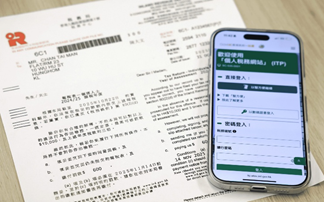
The Ombudsman, Mr Jack Chan, announced the completion of a direct investigation operation into the unsuccessful delivery of electronic tax returns submitted by members of the public to the Inland Revenue Department (“IRD”), with 18 improvement recommendations made to IRD. The IRD has accepted all the recommendations. Given the increasing prevalence of electronic tax returns, the service should be more efficient, convenient and reliable, said Mr. Chan.
The National 15th Five-Year Plan has dedicated a chapter to the advancement of digital China, proposing strategic planning to elevate the level of digital intelligence development and digital government infrastructure. The current-term Government of the Hong Kong Special Administrative Region is also committed to promoting digital government and smart city operations. IRD has actively promoted electronic filing of tax returns in recent years, encouraging the public to use its online platform, eTAX, for individual submission of tax returns. The prevalence of electronic filing is reflected by the continuous increase in the number of taxpayers opting for this service.
However, in 2025, after the deadline for filing individual tax returns for the 2024/25 year of assessment, there was an emerging number of taxpayers who had made submissions via eTAX reported to have been notified by IRD for non-receipt of their tax returns, and some taxpayers even received penalty notices for late filings.
Mr Chan said, “Given the increasing prevalence of electronic tax returns, the service should be more efficient, convenient and reliable. Yet, the cases of unsuccessful deliveries of electronic tax returns submitted by members of the public occurred time and again last year. As the electronic service is widely used, we are highly concerned that such a problem might cause an extensive impact on the public. Our investigation revealed that between May 2025 and January 2026, IRD did not receive the tax returns filed by over 33,000 taxpayers via eTAX using a digital signature completed with ‘iAM Smart’.”
IRD explained that the problem originated from an incomplete submission process. In short, after some users confirmed submitting their tax returns via eTAX, they were redirected to “iAM Smart” and digitally signed the document through the “iAM Smart” application, but they did not return to eTAX thereafter to complete the submission procedures. To this end, IRD pointed out that after completing the digital signature with “iAM Smart”, users must return to eTAX until a confirmation page showing a 16‑digit transaction reference number appears, indicating that the tax return submission process has been completed.
The investigation revealed that the wording on the submission and signature interface of eTAX was unclear, making it easy for users to mistakenly believe that successfully signing via “iAM Smart” within eTAX was equivalent to a successful submission of their tax returns. The large number of taxpayers affected clearly indicated that the problem was not merely due to operation errors of individuals. The incident caused a great deal of inconvenience to those affected. Apart from the need to resubmit their tax returns, several thousands of taxpayers were even subject to estimated assessments by IRD unilaterally, or penalties for late filing, and some were even prosecuted by IRD. However, IRD initially failed to take the initiative to contact the taxpayers affected to offer support. The incident not only caused distress to those taxpayers, but also resulted in extra workload for IRD staff, such as responding to enquiries and complaints, allaying the grievances of taxpayers, and processing applications for penalty waivers and objections to tax assessment. The significant amount of additional work had an adverse impact on the efficiency of public administration.
The Office also found that IRD had already received public reports on similar problems as early as 2022. IRD stated that it had explored with the Digital Policy Office (“DPO”) to identify areas of improvement in both parties’ systems, and that DPO revised the wording on the signature confirmation page of “iAM Smart” the following year. Unfortunately, the revised wording was still unclear and did not resolve the problem. When the problem emerged again in 2025, IRD was not initially alarmed and only suggested that taxpayers resubmit their tax returns upon receiving enquiries.
Following the Office’s intervention and urging for remedial and improvement measures, IRD was receptive to the recommendations and proactively liaised with the DPO to obtain records of digital signatures for analysis. Eventually, IRD identified all the taxpayers affected and implemented a series of measures before the bulk of individual tax returns for the 2025/26 year of assessment were issued, thereby preventing the problem from recurring. The Office urges IRD to learn from this incident, strengthen daily monitoring, and intervene early and decisively when noticing irregularities that may have extensive implications to ensure that the electronic filing service is convenient and at the same time more reliable and more trustworthy.