Category Archives: AOA News Letter
WOMEN’S LEADERSHIP IN DECISION-MAKING: NATIONAL AND INTERNATIONAL WOMEN LEADERS SHARES ONE TABLE.
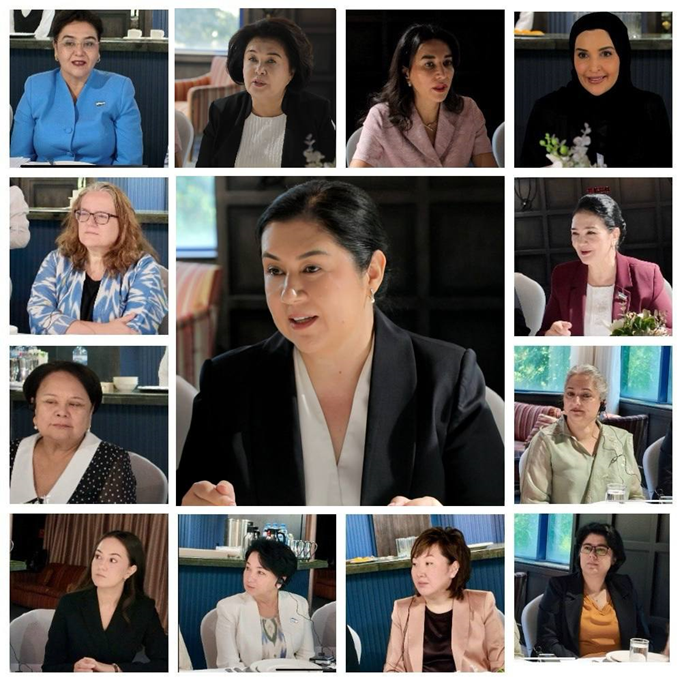
On 20 August 2026, a Breakfast Dialogue on “Women’s Leadership in Decision-Making” was held in Tashkent. The event brought together women holding leadership positions in parliament, government bodies and organisations, as well as Ombudspersons, heads and representatives of national human rights institutions from Qatar, Azerbaijan, the Kyrgyz Republic, Pakistan, Tajikistan, Egypt, Malaysia, Türkiye and Oman, along with representatives of United Nations entities.
The event focused on supporting the professional and leadership potential of women working in the field of human rights and further expanding their participation in state and public governance, particularly in the development and adoption of strategic decisions.
Today, women’s participation in state and public governance is one of the key indicators of gender equality. This involves not only increasing the number of women in leadership positions, but also ensuring their meaningful and effective participation in the discussion, development and adoption of important decisions.
In recent years, Uzbekistan has implemented systemic reforms aimed at ensuring the rights and interests of women and increasing their political, social and economic participation. In particular, legal mechanisms have been introduced to take gender considerations into account when adopting laws, decrees and resolutions. As President Shavkat Mirziyoyev noted at the ceremony marking International Women’s Day on 6 March 2026, from now on, no law will be adopted without assessing its impact on the rights and interests of women.
These reforms are also reflected in international rankings. In particular, Uzbekistan rose by 92 positions to rank 36th in the Inter-Parliamentary Union’s “Women in Parliament” ranking and moved from 103rd to 52nd place in the “Gender Equality and Governance Index”. In the World Bank’s “Women, Business and the Law” report, Uzbekistan improved its position by 43 places, rising to 48th.
At the same time, women’s participation in the economy, science and education continues to expand. Today, the country has nearly 230,000 women entrepreneurs, 12,000 women farmers and more than 6,000 women scientists. The number of female students enrolled in higher education institutions has exceeded 904,000, accounting for 54 per cent of all students, while women make up 61 per cent of trainee researchers and doctoral students.
More than 20 national and international women leaders participated in the Breakfast Dialogue, including parliamentary representatives and women parliamentarians, senior officials in public administration, Ombudspersons from foreign countries, and representatives of international organisations and prominent foreign institutions.
Held in an informal and open dialogue format, the event featured discussions on “The Role of Women in Public Administration and Strategic Decision-Making: Opportunities and Prospects” and “Strengthening Women’s Leadership: Cooperation, Exchange of Experience and Support for a New Generation of Leaders.”
Participants exchanged professional experiences and effective governance practices and discussed ways to strengthen women’s influence in decision-making processes, as well as support young women professionals aspiring to leadership roles.
Particular attention was paid to expanding platforms for professional dialogue and exchange of experience for young women lawyers, drawing on the experience of successful women leaders at the national and international levels, and fostering a new generation of leaders.
At the conclusion of the dialogue, participants emphasized the importance of further developing professional ties between national and international women leaders, supporting the leadership potential of young women professionals, and continuing cooperation aimed at expanding women’s active and meaningful participation in decision-making processes.
DEPUTY OMBUDSMAN CONTRIBUTES TO AICHR CONSULTATION ON ASEAN HUMAN RIGHTS INDEX.
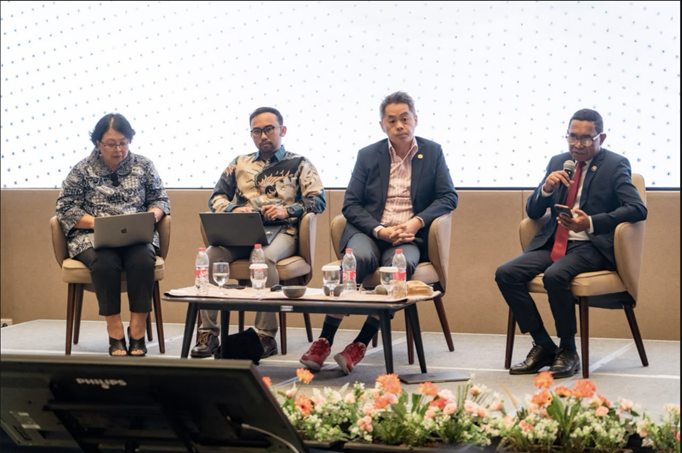
Deputy Ombudsman for Good Governance of the Provedoria dos Direitos Humanos e Justiça (PDHJ), Rigoberto Monteiro, participated as a speaker at the AICHR Consultation on Human Rights Index 2026, held in Tangerang, Banten, Indonesia, from 28–29 July 2026. Organised by the Indonesian Representative to the ASEAN Intergovernmental Commission on Human Rights (AICHR).
The consultation brought together representatives from ASEAN Member States, National Human Rights Institutions (NHRIs), civil society organisations, academia, and regional experts to advance discussions on the development of an ASEAN Human Rights Index. The consultation builds on the initial discussions launched in 2024 and aims to develop a regional mechanism for measuring human rights progress across Southeast Asia.
Speaking from the perspective of PDHJ as Timor-Leste’s National Human Rights Institution and Ombudsman, Deputy Ombudsman Rigoberto Monteiro highlighted the critical role of reliable and evidence-based data in advancing human rights protection and good governance. He stressed that accurate data enables NHRIs to conduct effective advocacy, monitor public policies, identify emerging human rights concerns, and formulate recommendations that contribute to better governance and accountability.
The consultation explored technical and methodological approaches for developing the proposed ASEAN Human Rights Index, including discussions on indicators, data sources, institutional arrangements, and regional human rights data ecosystems. Participants also exchanged experiences on how existing ASEAN mechanisms and national practices could contribute to a regionally owned framework that supports evidence-informed policymaking while remaining consistent with the ASEAN Human Rights Declaration and AICHR’s mandate.
The two-day consultation concluded with breakout group discussions to identify priority issues and possible indicators for the future ASEAN Human Rights Index. The outcomes and recommendations from the consultation will inform AICHR’s continued consideration of a regional human rights measurement framework that promotes dialogue, strengthens regional cooperation, and supports the protection and promotion of human rights across ASEAN.
OMBUDSMAN MS. FATMA BENLI YALÇIN ATTENDED MEETING OF PARLIAMENTARY INQUIRY COMMITTEE.
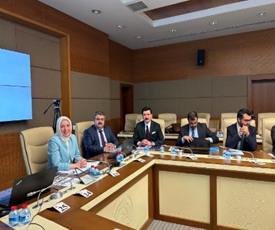
Ombudsman responsible for Children’s Rights, Ms. Fatma Benli Yalçın, participated in the meeting of the Grand National Assembly of Türkiye (GNAT) Inquiry Committee on School Incidents in Şanlıurfa and Kahramanmaraş and Digital Risks on 10 August 2026. As the first institution for seeking legal remedies to receive direct applications from children, the Ombudsman Institution of Türkiye shared with the Committee its key findings and recommendations regarding digital risks and school incidents.
UZBEKISTAN HOSTS INTERNATIONAL CONFERENCE ON “HUMAN RIGHTS IN THE CONTEXT OF DIGITAL TRANSFORMATION: MODERN APPROACHES”.
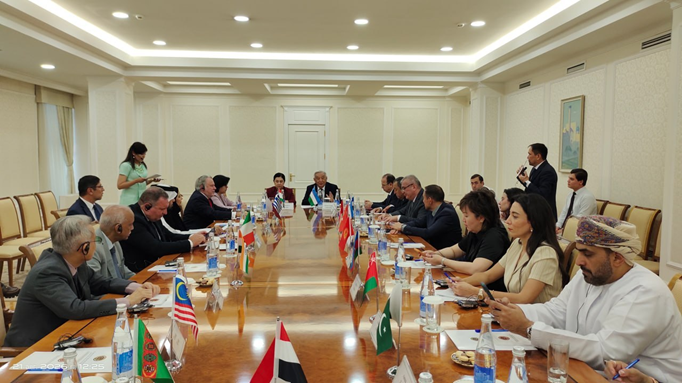
On 21 August, 2026, the Constitutional Court hosted a meeting with foreign participants of the international conference entitled “Human Rights in the Context of Digital Transformation: Modern Approaches”, organized at the initiative of the Commissioner of the Oliy Majlis for Human Rights (Ombudsman). The meeting brought together Ombudspersons, heads of national human rights institutions and representatives from 17 countries including Pakistan, Qatar, Russia, Egypt, Türkiye and Malaysia.
The meeting was also attended by the Commissioner of the Oliy Majlis of the Republic of Uzbekistan for Human Rights (Ombudsman), F. Eshmatova, judges of the Constitutional Court and staff members of its Office.
The meeting was opened with welcoming remarks by M. Abdusalomov, Chairperson of the Constitutional Court of the Republic of Uzbekistan. He noted that the theme of the international conference “Human Rights in the Context of Digital Transformation: Modern Approaches”, organized by the Commissioner of the Oliy Majlis for Human Rights, is today not only relevant to every country and every sector, but is also of strategic importance from the perspective of the future of human rights.
At a time when digital technologies are becoming deeply integrated into almost all areas of public and state life, artificial intelligence, electronic public services, databases and digital platforms are helping to make people’s lives easier, improve the efficiency of public administration and create new opportunities.
At the same time, digitalization is also creating new challenges in the field of human rights protection. Issues such as the protection of personal data, privacy, information security, and ensuring fairness and transparency in AI-based decision-making are becoming increasingly important.
In this context, it is essential that the main criterion of digital transformation should not be the speed at which technologies are developing, but the extent to which such progress ensures human rights and freedoms.
The Constitution in its new edition recognizes the human being, their life, rights and freedoms, honour and dignity as the highest value. It also more clearly and firmly establishes that the primary responsibility of the State is to ensure human rights and freedoms. These constitutional provisions define the legal and institutional foundations for the activities of all state bodies.
In the context of digital transformation, the importance of this constitutional approach is increasing further. Technologies change, digital platforms evolve, and the capabilities of artificial intelligence expand. However, the fundamental essence of human rights must remain unchanged. On the contrary, new technologies should become new instruments for the realization of human rights and should serve not as means of restricting them, but as mechanisms for ensuring them more effectively.
In this regard, new tasks are also being set before the Constitutional Court. In particular, Presidential Decree No. PF-253 of 18 December 2025 “On Measures to Further Improve the Activities of the Constitutional Court of the Republic of Uzbekistan and Introduce Modern Digital Technologies” is aimed at increasing the effectiveness of constitutional review, strengthening guarantees of access to justice and fully digitalizing the Court’s activities.
It was emphasized that, in the context of digital transformation, cooperation among constitutional courts, Ombudsman institutions, and national and international human rights organizations is an important factor in developing appropriate legal responses to emerging challenges.
Particular attention was drawn to the important role of the Constitutional Court and the Ombudsman institution in ensuring human rights and freedoms. It was noted that the signing on 10 July of this year of a Memorandum of Cooperation between the Constitutional Court of the Republic of Uzbekistan and the Commissioner of the Oliy Majlis of the Republic of Uzbekistan for Human Rights (Ombudsman) is of particular significance.
During the meeting, Georgios Katrougalos, UN Independent Expert on the promotion of a democratic and equitable international order and Professor of Public Law at the Democritus University of Thrace (Greece), and Sultan Hassan Al-Jamali, Secretary-General of the National Human Rights Committee of Qatar, expressed their gratitude for the meeting, asked questions concerning the powers of the Constitutional Court of Uzbekistan, and put forward proposals for further cooperation.
The meeting was held in a friendly atmosphere conducive to an open exchange of views and the further strengthening of mutual cooperation. Experts from the following countries attended: Greece, Italy, Qatar, the Kyrgyz Republic, Kazakhstan, Malaysia, Egypt, Azerbaijan, Pakistan, Russia, Slovakia, Thailand, Tajikistan, Türkiye, Turkmenistan, Oman and India.
OMBUDSMAN’S OFFICIAL VISIT TO UZBEKISTAN TO ENHANCE COOPERATION.
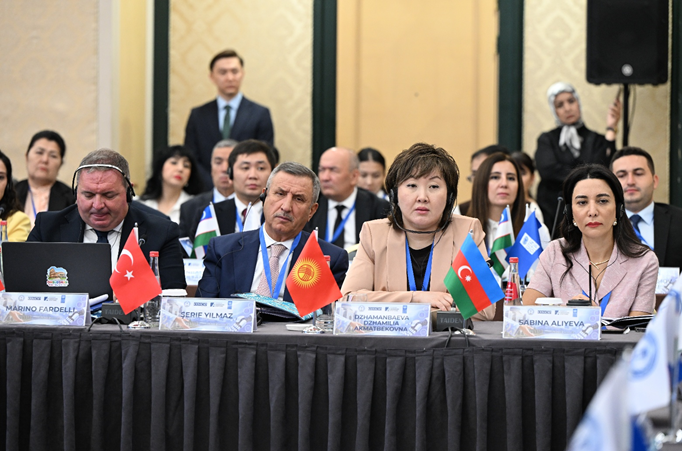
Azerbaijan’s Human Rights Commissioner, Sabina Aliyeva attended an international scientific-practical conference entitled “Human Rights in the Context of Digital Transformation: Modern Approaches” held in Tashkent, Uzbekistan recently to explore possibilities of utilizing technology for achieving shared goals and objectives.
Speaking at the panel session titled “Women’s Rights and Gender Equality in the Digital World: Protection and Opportunities,” the Ombudsman noted that ombudspersons and NHRIs play a vital role in promoting the safe application of AI aligning with human rights. She emphasized the importance for states to identify the protection of women’s rights in the digital environment and the creation of a safe digital space as key priorities.
The Ombudsman stressed that developments in the field of information technology have significantly expanded women’s access to education, entrepreneurship, and public services. She noted that digital platforms have become an important tool for boosting self-confidence and promoting active participation in public life, particularly for women facing social or physical limitations.
The Ombudsman noted that recent national reforms have made significant contributions to ensuring digital development and innovative governance. She said that recently adopted strategic documents focus on promoting the safe, ethical, transparent, and human-rights-oriented use of AI.
The Ombudsman emphasized that it is of paramount importance to create a reliable legal and institutional environment that ensures women feel safe in the digital space, to integrate the principle of gender equality into the development and application of AI and other innovative technologies, and to foster cooperation among NHRIs in this direction.
Within the framework of the conference, the Ombudsman also attended an event on the topic “Women’s Leadership in Decision-Making.” During her speech, she emphasized the importance of creating real opportunities for women’s equal participation in decision-making processes. She noted that by bringing distinct experiences and perspectives to the decision-making process, women can contribute to more inclusive and human-centered governance.
As part of the visit, the Ombudsman also held official meetings at the Senate of the Oliy Majlis, the Legislative Chamber of the Oliy Majlis, and the Constitutional Court of Uzbekistan. During the meetings, participants emphasized the necessity of advancing cooperation between ombuds institutions, parliament, and judicial bodies in order to protect human rights and freedoms and ensure the rule of law, while engaging in discussions regarding mutual exchange of experiences.
OMBUDSMAN MR. ŞERIF YILMAZ AND SECRETARY GENERAL OF THE OMBUDSMAN INSTITUTION ATTENDED CONFERENCE ON “HUMAN RIGHTS IN THE CONTEXT OF DIGITAL TRANSFORMATION: CONTEMPORARY APPROACHES” .
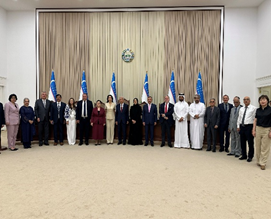
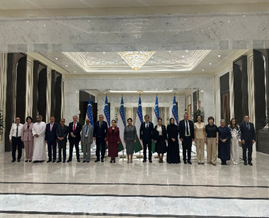
Ombudsman Mr. Şerif Yılmaz and Secretary General of the Ombudsman Institution of Türkiye, Mr. Mehmet Doğan participated in the conference titled “Human Rights in the Context of Digital Transformation: Contemporary Approaches” hosted by Ombudsman of Uzbekistan Ms. Feruza Eshmatova on 21-22 August 2026. They underlined the need for absorption of latest technology for prompt redressal of public complaints.
Addressing the conference, Mr. Yılmaz emphasized that digital transformation is one of the most comprehensive and rapid processes of change in human history, noting that the internet, artificial intelligence and mobile technologies have become integral parts of daily life. He highlighted the shared responsibility of states, technology companies, educators, parents, and Ombudsman Institutions in protecting digital rights and stressed the importance of international cooperation and timely action.
During their working visit to Uzbekistan, Ombudsman Mr. Şerif Yılmaz, together with the heads of the other delegations participating in the international conference, paid official visits to Ms. Tanzila Kamalovna Narbaeva, Chairperson of the Senate of the Oliy Majlis; Mr. Nuriddin Ismailov, Speaker of the Legislative Chamber of the Oliy Majlis and Mr. Mirzo Ulugbek Abdusalamov, Chairperson of the Constitutional Court of Uzbekistan.
PROVINCIAL OMBUDSMAN SINDH PRESENTS ANNUAL REPORT 2025, MARKING A LANDMARK YEAR OF DIGITAL TRANSFORMATION .
Provincial Ombudsman Sindh, Mr. Muhammad Sohail Rajput, presented his Office’s Annual Report 2025 to the public, alongside the latest edition (Vol. XXI) of the Quarterly Newsletter separately to the Governor and Chief Minister Sindh respectively. The reporting year proved transformative for the Office, marked by record complaint redressal, digital innovation, and expanded international engagement.
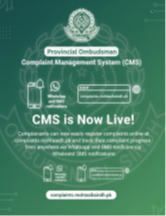
In December 2025, the Office became the first institution in Sindh to launch a Web Based Complaint Management System (CMS), moving from paper based processes to a fully integrated digital platform for filing, tracking, and resolving grievances. The shift was accompanied by a redesigned website, an upgraded mobile application, and outreach through social media platforms reaching citizens across the province.
Citizen engagement reached unprecedented levels, with the Office receiving 25,217 complaints during the year, a 236% increase over previous annual averages. Of these, 12,308 were formally investigated and decided, while 2,660 grievances were resolved informally through direct engagement at the community level, including 423 open house meetings held across Union Councils and Talukas.
Between January and June 2026, the Office delivered tangible relief across a range of citizen concerns, including safeguarding patient rights at the National Institute of Child Health, Karachi, restoring proprietary rights for a charitable hospice in Korangi Township, facilitating the release of long pending salary arrears and pension entitlements, and protecting residents of Orangi Town from unlawful industrial activity.
On the international front, Provincial Ombudsman Sindh, Mr. Muhammad Sohail Rajput was elected Director on the IOI Board and appointed Vice Chair of the IOI United Nations Working Group, reflecting Pakistan’s growing influence within the global ombudsman community.
The full Annual Report 2025 and Quarterly Newsletter (Vol. XXI) may be accessed at:
https://mohtasibsindh.gov.pk/knowledge/Annualreport9.pdf https://mohtasibsindh.gov.pk/newsletters/v21.pdf
OMBUDSMAN PUNJAB PROVIDES RS64.1M RELIEF TO CITIZENS ON WASA COMPLAINTS.
LAHORE – The Office of the Ombudsman Punjab has secured financial relief amounting to Rs.64.1 million for citizens by taking effective action on complaints lodged against the Water and Sanitation Agency (WASA). The complaints primarily related to the correction of water bills, installation and restoration of water connections, and installation of water meters.
According to a spokesman for the Ombudsman Punjab, the office received 38 complaints of various nature against WASA authorities. Following thorough investigations, orders were issued in accordance with the law, leading to the resolution of the grievances.
The spokesman said the Ombudsman Punjab’s timely intervention and effective directives ensured Rs64.1 million Rs64.1 million to citizens.
The complainants expressed their gratitude to the Ombudsman Punjab for the prompt redressal of their grievances, transparent handling of their cases, and the provision of effective administrative justice. They also reaffirmed their confidence in the institution for safeguarding citizens’ rights through swift and impartial complaint resolution.
PROTECTING THE RIGHTS AND INTERESTS OF VULNERABLE GROUPS — WELFARE AND CIVIL PETITION OFFICIALS CAME TOGETHER TO STRENGTHEN THEIR CAPACITY.
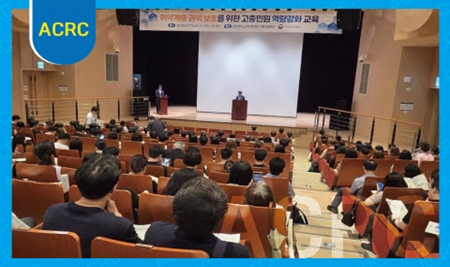
The Anti-Corruption and Civil Rights Commission (ACRC, Chairperson Jung Il-yeon) held “Group Training to Strengthen Capacity on Grievance Petition Handling for the Protection of Vulnerable Groups’ Rights and Interests” on July 15 at the Daejeon Youth WeCan Center. The training was organized to protect vulnerable groups with limited access to information and difficulty expressing their need for support.
Approximately 300 people participated, including grievance petition officials from the central government, local governments and metropolitan and provincial offices of education nationwide, as well as members of Local Ombudsman.
There have been recurring, regrettable cases in which citizens in urgent need of help have fallen through the cracks of the welfare system, unable to even request the support they need.
Against this backdrop, the ACRC organized the training so that front-line officials — who are the first to encounter the difficulties faced by vulnerable groups — can ensure that these difficulties are not overlooked and are properly connected to rights-protection systems.
Therefore, the social welfare officials who directly counsel, receive, and process petitions from vulnerable groups were included in the training, alongside the government officials who are in charge of grievance petitions.
This was to ensure that difficulties raised by vulnerable groups in the field to be naturally connected to the grievance petition resolution system, thereby establishing a tightly integrated response system that channels vulnerable groups toward rights protection no matter which platform they approach.
For this, central government officials participated in this joint training session as the ACRC sought to lay the foundation of cooperation on rights protection spanning both the central and local levels.
Since grievance petitions from vulnerable groups often require the responsibilities of multiple agencies, sharing common standards for handling such petitions between central and local governments is expected to help reduce administrative blind spots.
The training consisted of three parts: the definition of vulnerable groups and the need to support them; an explanation of the grievance petition handling system and response techniques; and presentations of best practices by institutions.
INTERNATIONAL INTERNSHIP PROGRAMME 2026: BATCH III & IV Organized.
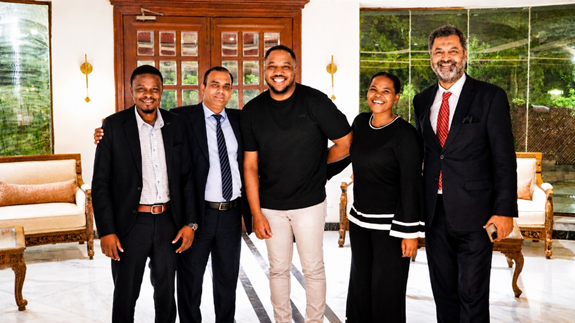
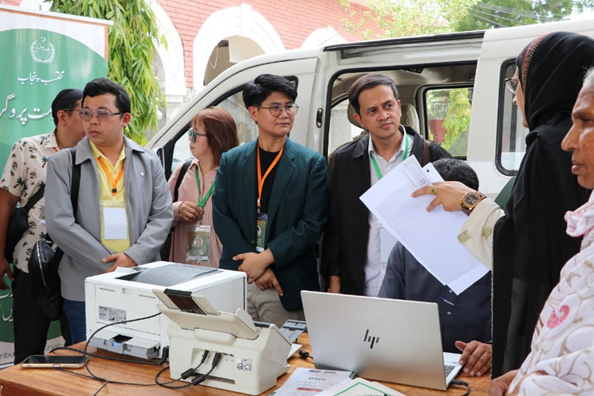
The Office of the Ombudsman Punjab in line with its commitment to international cooperation and knowledge exchange, organized the III and IV Batches of the International Internship Programme 2026. Attended by representatives from Ombudsman institutions in Zambia, South Africa and the Philippines. Batch III was held from 27–31 July 2026. The programmes provided participants with a comprehensive understanding of the Office’s institutional framework, complaint management systems, digital governance and public outreach mechanisms.
Sessions covered the Punjab Office of the Ombudsman Act, 1997; the ISO 9001:2015 Quality Management System (QMS); the Ombudsman Punjab Management Information System (OPMIS); Helpline 1050; media and public awareness strategies; and comparative institutional practices.
Practical exposure formed a key component of both sessions. Participants of both batches accompanied the Awami Khidmat Mobile Outreach Van in Sargodha, interacted with citizens, and observed complaint registration and grievance redressal. They also visited the Regional Office, Sialkot, where they observed complaint handling and live hearings.
The programmes also promoted cross-cultural learning, with the Philippine delegation visiting Wazir Khan Masjid, Shahi Hamam, Lahore Fort, Badshahi Masjid and Wagah Border. Both sessions concluded with participant presentations, reflections and recommendations, followed by certificate distribution ceremonies, reinforcing the Office’s role in fostering international learning, institutional cooperation and the exchange of best practices within the global Ombudsman community.