Category Archives: AOA News Letter
Ombudsman spoke about assistance to citizens who arrived from Ukraine
On April 1 and 3 of this year, the first organized groups of forced migrants from the Donetsk and Lugansk People’s Republics arrived in our republic.
The number of internally displaced persons is 1,380, of which 327 are children. 905 people are accommodated in 8 temporary accommodation centers.
In the Republic of Tatarstan, for this purpose, in 2020, a WeTogether headquarters was created, which included large volunteer organizations: Medical Volunteers, Youth of the ONF, the republican branch of the Russian Red Cross and others. The Information and Resource Center for Volunteering of the Republic of Tatarstan unites municipal resource centers for volunteering throughout the republic, which made it possible to quickly mobilize more than 1,000 volunteers to provide assistance to internally displaced persons.
More than 300 tons of humanitarian aid have already been collected. Everyone can get involved in the work, because at the moment there are many options to help: donate funds, bring the necessary items to humanitarian aid collection points, become a volunteer, organize a cultural event. Dealing with any situation is easier when we do it together.
Ombudsman Sindh calls for implementation of recommendations
Sindh Education & Literacy Department (SE&LD) is being vigorously pursued by the Secretariat of the Provincial Ombudsman Sindh (POS) on the implementation of the study on the “issues of girl’s education in sindh”.
The main findings of the Study conducted by Sindh Education Foundation (SEF) on initiative of POS from the Regional subsidy of International Ombudsman Institute (IOI) for the year 2018-19 were limited accessibility of girls to post primary schools, non-availability of female teachers in the schools, poor quality education, lack of functional and secure washroom and the boundary walls etc. The recommendations were mainly to provide incentives to increase girls’ education, awareness to all the stakeholders on the importance of girls’ education, gender balance and reviewing policies from gender perspective and analysis of the intervention undertaken for increasing girls enrolment to gauge their effectiveness.
The Study was launched by the Chief Minister Sindh who fully agreed with all the recommendations with special emphasis on mothers to lead the School Management Committees (SMCs) and involving the local administration at all levels to ensure proper functioning of girls schools in their areas and to retain girls in school and also bring back to school.
The SE&LD is being vigorously pursued by the Provincial Ombudsman Secretariat for implementation of the recommendations and SE&LD has made headway by issuing a notification for female (mother) heading the SMC, the already notified out of school enrollment committees at Divisional, District & Taluka level have been made active to assist and monitor efforts of the SE&LD, GoS, for universal enrollment of out of school children.
An out of school children Emergency Center established in Reform Support Unit (RSU) has become active and started working on awareness, upgraded 54 Primary Girls School into Elementary Schools of rural areas in Sindh with JICA assistance, localized recruitment is being done to avoid transport problems for female teachers, operationalization of Non-Formal Education in 5 districts with the highest out of school children (OOSC) in Sindh at Umerkot, Mirpurkhas, Tharparkar, Jacobabad and Kashmore to enroll 90,000 children through opening of 3000 NFE Centers, SEF signed an MOU to establish 50 centers, having enrolment of 1800 girls at post primary level in the most challenging areas of Shikarpur through Adult and Adolescent Program (AALTP).
The Secretariat of the POS is in constant touch with SE&LD to expedite action on the implementation of recommendations and also involved its Regional Directors in School Enrolment Committees at all level and to conduct awareness on importance of girls’ education with all stakeholders.
Federal Ombudsman presented Annual Report, 2021 to the President of Pakistan.
- The President urged the Federal Ombudsman to enhance outreach of Federal Ombudsman to far-flung areas by using latest IT tools.
- The President stresses to provide speedy justice
President Dr. Arif Alvi has urged the Wafaqi Mohtasib of Pakistan to increase the outreach of his office to far-flung areas of the country and utilize the latest IT tools for quick redressal of people’s complaints against maladministration of government departments at their doorsteps. He especially asked the Mohtasib to provide speedy justice to the complainants against the high-handedness of utility companies as most of the complaints were related to excessive billing by DISCOs and gas companies. The President made these remarks while talking to the Wafaqi Mohtasib (WM) of Pakistan, Mr Ejaz Ahmed Qureshi, who called on him and presented the Annual Report-2021 of the organization, at Aiwan-e-Sadr. Secretary to the Wafaqi Mohtasib Secretariat, Mr Ejaz Ahmed Khan, also attended the meeting.
The Wafaqi Mohtasib briefed the President about the performance and achievements of the institution during the year 2021. He highlighted the fact that last year, his office received 110,398 complaints out of which 106,732 were resolved whereas 92.7% of these findings were implemented during 2021. It was further highlighted that out of the total complaints, 42,000 were received online. He also apprised the President of the steps taken to redress the grievances of the people of remote areas by establishing Complaint Cells and Regional Offices in different areas of the country. He also stated that under the Integrated Complaint Resolution (ICR) System, 180 different agencies of the Federal Government have so far been integrated with the CMIS of the WMS for facilitating quick disposal of complaints.
Underlining the need for providing quick and free-of-cost justice to the common man, the President asked the Mohtasib to increase outreach of WMS using modern IT tools, create awareness through media about its functions and services, and establish more linkages with various government departments. He asked the Mohtasib to hold meetings with government organizations to dispose of people’s complaints expeditiously in accordance with the principles of justice and discourage the practice of frivolous complaints as it increases the workload of government departments as well as the Wafaqi Mohtasib.
The President appreciated the performance and expansion in outreach and scope of activities of the Mohtasib and assured him of his support in further strengthening the institution and broadening his role in providing speedy justice to the aggrieved citizens.
The Ombudsman held a reception of citizens
On March 30, 2022, the Authorized Person of the Oliy Majlis for Human Rights (Ombudsman) Feruza Eshmatova held another reception of citizens.
During the reception, which was attended by about 100 citizens, appeals on judicial, pension, housing, employment, social assistance, alimony, credit and other issues were accepted and taken under control. According to some appeals, citizens were given appropriate legal advice and explanations. According to some appeals, citizens were given appropriate legal advice and explanations.
The Ombudsman received all citizens who came that day for a personal reception.
For reference: Reception of citizens is held on Mondays and Fridays from 10:00 to 13:00 and from 15:00 to 17:00 according to the schedule established by the specialists of the Authorized Person of the Oliy Majlis for Human Rights (Ombudsman).
Ombudsman paid a visit to the Vocational Rehabilitation Center for persons with disabilities
Human Rights Commissioner (Ombudsman) of Azerbaijan, Ms. Sabina Aliyeva paid a visit to the Vocational Rehabilitation Center for Persons with Disabilities under the Social Services Agency of the Ministry of Labor and Social Protection of the Population.
During the visit, the Ombudsman got acquainted with the activities of the rehabilitation facility, vocational preparedness of persons with disabilities (PWDs) and the organization of the vocational rehabilitation and social services rendered to them.
The chief of the Agency Mr. Vugar Behbudov gave the information to the Ombudsman about the activity of the Center and services provided for the PWDs.
Ms. Aliyeva familiarized with the conditions in the facility, held talks with the PWDs engaged in the vocational courses there, listened to their views and made her recommendations.
Furthermore, Ombudsman also got acquainted with the training process of the National Team of the Boccia Sports Federation involved in the training, met with the team members and wished them success.
World Down Syndrome Day
On 21 March 2022, marks the World Down Syndrome Day. By the decision of the UN General Assembly, on March 21 of each year, since 2012, states, international organizations, citizens, representatives of civil and private sectors plan and implement various measures to raise awareness of the Down Syndrome.
In 2022, as part of the World Down Syndrome Day campaign, a question was asked: What is inclusion? The campaign gives anyone the opportunity to express his/her views on the inclusion of people with Down Syndrome, their integration with society and barriers that keep this group of society segregated.
It is well known that the full and effective participation and inclusion of persons with disabilities in society is one of the main principles of the United Nations Convention on the Rights of Persons with Disabilities (UN CRPD). Yet what does this mean in practice and what are the barriers that prevent individuals with Down Syndrome from becoming full members of society? The theme of the 2022 World Down Syndrome Day – #inclusionmeans – aims to open a discussion and gather information about inclusion.
Proper realization of the rights of people with Down Syndrome in the country still faces many obstacles, the elimination of which requires more efforts from the State.
The Public Defender once again calls on the authorities to promote the inclusion of people with Down Syndrome, which primarily means creating equal opportunities for them, providing conditions for their full inclusion in daily life, introducing services tailored to their individual needs, ensuring their access to education, health care, social protection, all aspects of social life, creating modern services and facilities to support functional and social skills needed for independent living, strengthening the families of people with Down Syndrome, combating stigma and stereotypes in society, and promoting respect for the rights and dignity of people with Down Syndrome.
Public Defender Presents Annual Report on Human Rights Situation in Georgia
On March 31, 2021, the Public Defender of Georgia presented the 2021 report on the situation of human rights and freedoms in Georgia to the Parliament of Georgia. Here is a summary of the main findings of the report on the significant trends of the protection of human rights in the country, which required appropriate and timely responses from the authorities.
In 2021, the human rights situation did not improve significantly. Moreover, there was even a significant deterioration in a number of areas.
2021 was marked by the Government decisions that breached the independence of state institutions overseeing/responsible for the protection of human rights in the country. In particular, in 2021, the State Inspector’s Service was abolished. The Public Defender considers that the purpose of the changes relating to the Inspector’s Office was to interfere in and influence the activities of an independent body; Other legislative changes were also made, which drastically worsened the degree of independence of judges, the state of the justice system and the right to a fair trial; There were also cases of obstruction of activities of the Public Defender and verbal attacks and threats against her.
On December 30, 2021, the Parliament of Georgia adopted a package of legislative changes in an expedited manner, which abolished the State Inspector’s Office. The discussion of the bill in an expedited manner – in 4 days – made it impossible to involve the public in the process. Moreover, not only interested organizations, but even the State Inspector was not involved in the preparation of the bill. The Public Defender believes that such changes should have been implemented within the framework of an open and transparent process, with substantive, wide-ranging debates, involving civil society and the State Inspector’s Office itself. These legislative changes were negatively assessed by the OSCE/ODIHR as well.
In December 2021, the Parliament of Georgia speeded up the adoption of another legislative change, which put the individual independence of judges in danger. Last year, the Government refused to implement fundamental reforms in the judiciary. It continued and completed the process of fully staffing the Supreme Court despite the calls from the Public Defender, OSCE/ODIHR and other international partners. In September 2021, the EU did not transfer € 75 million under its additional macro-financial assistance to Georgia due to the unfulfilled commitments in the judiciary.
Although one of the arguments for the hastened appointment of judges to the Supreme Court was the overcrowding of the Court and delays in the hearing of cases for that reason, it still remains problematic to uphold the principles of prompt and effective justice at the cassation stage. According to the information obtained by the Public Defender’s Office, out of 835 cases that were declared admissible by the Civil Cases Chamber of the Supreme Court, proceedings have been completed in only 25 (2.9%) cases within the 6-month period established by law. The situation is much worse in the Chamber of Administrative Cases, where out of 722 cases that were declared admissible, the Supreme Court of Georgia considered only 1 case within 6 months.
As for the Constitutional Court of Georgia, it delivered only 10 judgements in 2021. The number of cases registered with the Constitutional Court in 2015-2020 reached 70; the consideration of the cases on their merits has been completed, although no judgements have been delivered yet.
Speaking of independent institutions, unfortunately, it should be noted that the recent decisions of the Constitutional Court of Georgia raise questions about the independence and impartiality of the judiciary. Special attention should be paid to the decision relating to the abolition of the State Inspector’s Office, by which the Court, using incomprehensible and unsubstantiated arguments, did not suspend the process of abolition of an independent state agency. The above contradicts the OSCE/ODIHR opinions, according to which it was necessary to suspend the law.
One of the main bodies determining the country’s criminal policy is the Prosecutor’s Office of Georgia. Establishing a politically neutral prosecutorial system remains a major challenge in the country. According to the Public Defender, the investigation of a number of cases conducted by the Prosecutor’s Office revealed significant shortcomings that do not meet the principles of effective investigation. For example, the so-called cartographers’ case, the investigation of which is obviously politically motivated and which contains serious legal shortcomings. Like previous years’ parliamentary reports, the Public Defender focused on the need for the implementation of reforms in the Prosecutor General’s Office in the 2021 parliamentary report as well.
For the protection of human rights, it is especially important that the Public Defender, as an independent monitoring body, be able to conduct his/her activities freely. Unfortunately, representatives of the Public Defender, in the beginning of 2021, like 2020, became targets of numerous verbal attacks in various penitentiary institutions. We saw the archived video footage showing the day of the attack on the territory of the penitentiary institutions, which clearly proved that the illegal actions of a small group of prisoners against Public Defender’s representative had been directly or indirectly organized by the prison administration. The case is being investigated by the Prosecutor’s Office, but no responsible persons have been identified so far.
In recent years, there has been a tendency to further restrict the space for freedom of expression in the country. The threatening and hostile environment, in which journalists, civil society activists and human rights defenders have to work is disturbing. The number of cases of physical assaults on representatives of critical media organizations increased in 2021, including in the pre-election period. It is common practice for political officials to have a cynical attitude towards journalists, especially towards representatives of critical media organizations, to prevent them from attending the events organized by the state agencies and to make statements to discredit them.
Protection of freedom of expression is directly related to the smooth exercise of the right to assembly. As in previous years, law enforcement officials used disproportionate force during managing and dispersing assemblies, and cases of administrative detention of assembly participants largely failed to meet the requirement of necessity and took the form of unjustified interference with the freedom of assembly. It is noteworthy that such interference and use of force by the State were observed during the rallies organized by the opposition, civil activists and human rights activists, but the State’s reaction to the rallies organized by far-right violent groups was much more lenient. The State used the Administrative Offences Code, which was adopted in 1984 and is inconsistent with the current constitutional order, for unjustified interference with the right to assembly. The above raises a reasonable suspicion that the reason for the failure of the repeatedly announced reform of the Criminal Procedure Code is the use of mechanisms that do not comply with human rights standards against demonstrators, which makes it easier for the law enforcement agencies and the court to make decisions that breach the rights of demonstrators, by bypassing human rights standards.
July 5, 2021 was one of the saddest days in the country’s recent history, when the State responsible for protecting human rights and security was actually not operating. The events of July 5 show that the authorities not only failed to prevent violence against journalists, LGBT+ community, their activists or citizens in general, which posed a real threat to their health and lives, but the discriminatory statements made by high-ranking officials even incited that violence. It is noteworthy that in the 16 December 2021 judgment of the European Court of Human Rights concerning the attacks on the LGBT community and supporters in Tbilisi on 17 May 2013, the Court noted that the scale of violence on May 17, 2013 was influenced by the Government’s inaction and failure to conduct a timely and objective investigation into the previous attacks on the LGBT+ community.
Unfortunately, in connection with large-scale violence of July 5, the Georgian Prosecutor’s Office has not prosecuted any of the individuals for organizing or inciting group violence, despite the fact that according to the Public Defender, the publicly available evidence meet the standard of probable cause for charging at least two individuals. This exacerbates the environment of impunity and obviously further incites violence against members of the LGBT+ community, activists and journalists, which is a result of the above-mentioned policies pursued by the authorities.
Against the background of the restricted democratic space in the country, the leakage of surveillance materials relating to the representatives of civil sector, journalists, politicians, clerics and diplomats on September 13 was alarming. The leaked files contain an unprecedented amount of personal data, allegedly obtained through illegal wiretapping and surveillance. In addition, the files allegedly contain cases of sexual abuse of minors, information about non-reporting of crimes and abuse of office by law enforcement officials.
The Public Defender considers that the purpose of illegal surveillance is to collect and disseminate discrediting information. Illegal and large-scale surveillance creates the threat of total control in the country and it can have a significant negative impact on each stage of the country’s democratic development that, unfortunately, lacks institutional oversight and control.
The deteriorated standard of the protection of political rights was observed in the realization of the right to vote. Unfortunately, the 2021 local elections were not held in a free or equal environment. It is particularly noteworthy that in the pre-election period, the unfortunate trend of interference with the labour rights on political grounds was evident in both private and public sectors. The local self-government elections made it clear that one of the main goals of the civil service reform – depoliticization – had not been achieved. According to the information available to the Public Defender’s Office, in the pre-election period of the 2021 local self-government elections, 69 persons were dismissed or harassed allegedly in a discriminatory manner, for political views. The Public Defender was also informed of 4 cases when employment contracts were not extended with acting principals of public schools for alleged political reasons. It is disturbing that the reasons for the dismissal of individuals in some cases were their statements posted on social networks in support of opposition political parties or their critical comments about the Government.
The situation in penitentiary institutions has been a major challenge for years. Unfortunately, the penitentiary system is focused on silencing prisoners in various ways. The main problem in this regard is the informal governance in the penitentiary institutions, which aims at silencing prisoners, banning them from talking about problems and maintaining illusory order in the institutions. Prisoners, who are victims of violence, often do not talk to the administration or medical staff about the real causes of their injuries in order to avoid the expected retaliation. Influenced by the criminal subculture, prisoners also refrain from sending complaints. This is proved by the number of applications received by the Public Defender’s Office from semi-open penitentiary institutions, which has been decreasing from year to year. There are cases when prisoners are placed by the prison administration in de-escalation and solitary (secure) confinement rooms for long periods, without grounds provided by law, for the purpose of punishment. The Public Defender considers that the above equals inhuman and degrading treatment.
I also want to talk about an important problem for prisoners – parole. Local parole boards often make different decisions in identical cases. The motivational part of the decisions is formal and nor properly substantiated. No one knows why one prisoner was released when a negative decision was made against another prisoner in a similar case. Several years of observation of the process clearly shows that decisions are not based on the requirements of law or logic.
I would also like to call on the Ministry of Justice and the Government of Georgia to timely publish the 2021 visit report of the European Committee for the Prevention of Torture, which reflects the Committee’s assessments and recommendations regarding the situation in Georgian penitentiary establishments.
Deinstitutionalization of large institutions has remained an unresolved problem for years. The above is problematic both in relation to psychiatric establishments and large institutions for children and persons with disabilities. In particular, the long-term hospitalization of patients in psychiatric establishments remains a challenge. Patients, who do not require active treatment, are unable to leave the facility as they have nowhere to go and there is a scarcity of community services.
Systemic violations of children’s rights, years of degrading and inhuman treatment equaling torture, and signs of alleged sexual abuse of minors were revealed at the Ninotsminda boarding school last year. Over the years, the Public Defender has been indicating that the monitoring of the Ninotsminda boarding school was significantly hampered, jeopardizing the protection of the rights situation of the juveniles and increasing the already high risk of institutional violence. However, unfortunately, the State did not take effective steps to protect the rights of children. Moreover, significant and substantial shortcomings were identified in the investigation of alleged crimes committed against children in the Ninotsminda boarding school. Although a number of criminal proceedings were launched in 2016, the investigation is still pending and no one has been prosecuted yet.
The challenges relating to gender-based killings (femicide) remain unresolved; The trend of decreasing cases of femicide and attempted femicide has still not been observed. Unfortunately, compared to previous years, the number of cases pushing women to commit suicide or attempt suicide has increased. 22 cases of femicide and 31 cases of attempted femicide were reported in 2021.
The country’s difficult socio-economic situation has a negative impact on human rights situation. Poverty remains one of the major challenges in the country. According to the National Statistics Office of Georgia, as of 2020, the share of the population below the absolute poverty line in Georgia was 21.3% (about 800 thousand people). This data increased compared to 2018-2019. In particular, the share of the population below the absolute poverty line was 20.1% in 2019 and 19.5% – in 2018. The number of children receiving subsistence allowance increased in Georgia in the period from January to December 2021. In particular, in 2021 the number of children receiving subsistence allowance reached 235,252, compared to 186,131 in 2020. Unfortunately, the State offers insufficient targeted services to meet the needs of children living in poverty.
The rights situation of persons with disabilities, homeless and older persons, IDPs and conflict-affected people is also dire. Unfortunately, it is still an unresolved issue to introduce a fair system of granting the disability status, which in addition to the medical aspects, focuses on the psychological and social factors of the person. The amount of the social package defined according to the current model, in addition to not being tailored to the individual needs of persons with disabilities, fails to satisfy even their minimum needs. The geographical coverage of the services provided by the State Programme for Social Rehabilitation and Childcare is still problematic. The sub-programmes are still not based on statistical or research data. The closure of inpatient and outpatient psychiatric units operating in multi-profile hospitals in 2021 should be assessed negatively. As for the positive developments, it was welcomed in the reporting period that the Parliament of Georgia ratified the Optional Protocol to the UN Convention on the Rights of Persons with Disabilities. The establishment of an Interagency Coordination Committee for the Implementation of the Convention on the Rights of Persons with Disabilities by the Government of Georgia should also be welcomed.
Unfortunately, as in previous years, there is no full-fledged legislative definition of a homeless person or the framework legislation necessary for the realization of the right to adequate housing. The country has no unified homeless databases or local databases in a number of municipalities. Each municipality has a different standard and approach to homelessness. The development of the rule of registration of homeless persons and provision of housing by the Tbilisi municipality should be positively evaluated, which, unlike other municipalities, represents an exception.
In 2021, compared to 2020, far fewer internally displaced families were resettled from high-risk facilities. The so-called special rules for the resettlement of IDPs living in damaged buildings have not been developed so far. The State does not proactively inspect the sustainability of buildings in poor condition.
Unfortunately, the practices of illegal detention and ill-treatment of citizens, as well as illegal “borderization”, continue in the occupied territories. The de facto authorities have completely closed the so-called checkpoint in the direction of occupied Akhalgori from September 4, 2019; As a result, the situation in this area is still difficult and there is a humanitarian crisis. The most important challenge remains access to education in the mother tongue in the occupied regions, due to which the number of students in both regions is decreasing every year. In order to continue their education in the Georgian language, parents have to leave their permanent residence and move their children to schools located on the Georgian-controlled territory.
Cases of proselytism/religious indoctrination in schools and their proactive detection, as well as access to the right to education for national minorities, remain problematic.
The highest daily number of deaths since the start of the pandemic was reported in 2021. The management of the Covid 19 pandemic was problematic, which posed a real threat to the protection of the rights to life and health by the State. The decisions on the introduction or lifting of regulations were not based on scientific evidence or international best practices. Inter alia, the statements made by the highest officials of Georgia, which clearly damaged both the vaccination process and the pandemic management, should be evaluated negatively. As a result, the vaccination rate is very low in Georgia. The goal of the Covid 19 vaccination national plan was to vaccinate 60% of the population over the age of 18 by the end of 2021. However, as a result of the ineffective information campaign, delayed financial, motivating and other measures by the Government, as of January 2022, this figure was 47%. In this context, it should be noted positively that the vaccination rate in the penitentiary system is high among both prisoners and staff.
In order to eliminate the violations identified in this report, the Public Defender’s Office drew up 67 recommendations/proposals for state agencies. 20 special reports, 17 constitutional claims, 13 amicus curiae briefs and 4 communications to the Committee of Ministers of the Council of Europe were prepared throughout 2021. In the reporting period, the Public Defender applied to the European Court of Human Rights for the involvement in 3 cases. The Public Defender’s Office made a number of visits to various institutions to identify and monitor human rights violations and challenges, which are reviewed in detail in the report.
Improving Supervision Capacity in Health Sector, RI Ombudsman Holds Internal Discussion
Jakarta – In order to increase supervisory capacity in the health sector, the Indonesian Ombudsman held an online discussion with the theme “Public Services Towards Health Transformation Post-Covid-19” which was attended by Ombudsman personnel both at the center and representatives, Thursday (31/3/2022) .
RI Ombudsman member Robert Na Endi Jaweng in his speech said that health issues are crucial issues, especially in terms of public services. Especially at this time the Main Assistant VI as his competence has received new responsibilities to handle health substances.
“The Ombudman wants to continue communication and dialogue with research institutions to get a perspective in seeing the phenomenon in a more complete and comprehensive manner to see how policies are drawn up and how public services are carried out,” said Robert.
According to Robert, there are three issues that need to be discussed together, namely the transition plan from pandemic to endemic, the roadmap for the six pillars of health transformation, and global health issues where Indonesia is currently hosting the G20.
“This is a testing period, where health insurance will be an important warning. What preparations can be made to get to the endemic period and what response patterns need to be done by the community when living side by side with this virus,” added Robert.
Also present as resource persons were the Secretary of the Directorate General of Public Health and Spokesperson for Covid Vaccination of the Ministry of Health Siti Nadia Tarmizi, Chief Strategist of the Center for Indonesia’s Strategic Development Initiatives (CISDI) Yurdhina Meilissa, Researcher of the Center for Innovation Policy and Governance (CIPG) Klara Esti. (ix)
Federal Ombudsman directs Investigation Officers to hold Khuli Katcheris in remote areas for providing immediate relief to the general public.
- Mohtasib’s Office to undertake inspections of select agencies to identify shortcomings in their operations and addressing the difficulties faced by the people.
- Wafaqi Mohtasib to launch system of informal resolution of disputes for resolving public complaints at grass roots level.
- Wafaqi Mohtasib emphasises the need for early corrective measures by the Agencies to rectify malfunctioning in their operations.
The Federal Ombudsman Mr. Ejaz Ahmad Qureshi addressing a meeting of Senior Advisors and Investigation Officers directed them to hold open hearing of complaints (Khuli Katcheris) in remote tehsils/districts to provide speedy and inexpensive justice on the doorsteps of the complainants. He added that, in the first phase, Khuli Katcheris will be organized in tehsils/districts falling within the jurisdiction of the existing Regional Offices. This will afford the general public an opportunity to raise their grievances in the presence of the representative of the Federal departments, closer to their homes and get immediate relief. Currently, the institution of Wafaqi Mohtasib in addition to its Head Office in Islamabad, is extending services to general public through 14 Regional Offices operating at Lahore, Karachi, Hyderabad, Bahawalpur, Quetta, Sukkur, Multan, Peshawar, Faisalabad, D.I. Khan, Gujranwala, Abbottabad, Kharan and Sargodha.
The Wafaqi Mohtasib’s Office in terms of legal provisions governing its establishment, is empowered to constitute Inspection Teams for the performance of any its functions. Mr. Ejaz Ahmad Qureshi stated that Inspection Teams headed by Senior Advisors would be constituted for the purpose of inspections which would include notables from the civil society to visit select institutions like NADRA, Government Hospitals, Passport Office etc. He added that the proposed inspection visits will help improve the service delivery of such organizations and provide necessary relief to the general public.
Wafaqi Mohtasib Mr. Qureshi stated that the Regional Offices, in addition to the existing complaint resolution system, will soon start redressing grievances of the general public through the medium of Informal Resolution of Disputes (IRD). The relevant legal provisions empower the Wafaqi Mohtasib to informally conciliate, amicably resolve or settle any grievance without any written memorandum without the necessity of docketing any complaint or issuing any official notice. The introduction of IRD system will greatly benefit common citizens in remote areas particularly those who cannot afford to hire expensive legal services or face lengthy litigation process.
Wafaqi Mohtasib (Ombudsman) stated that the institution has earned public acclaim for its role and the commendable services that it has rendered during the last 38 years. He expressed satisfaction over the disposal of more than 110,000 complaints during the last year with an impressive implementation rate of 92% of its decisions/findings within the stipulated time frame of 60 days. He stressed that many of the public complaints would not even arise if the Federal agencies were to undertake internal review of their practices and introduce an affective mechanism for self correction as well as punishment to the delinquent officials for their negligence and inefficiency. He directed his Investigation Offices and staff to work closely with the representatives of the Federal agencies with a view to addressing systemic flaws and early redressal of public grievances and timely implementation of decisions without the necessity of invoking punitive legal provisions.
Public Defender’s Representatives Hold Meetings with Italian National Preventive Mechanism
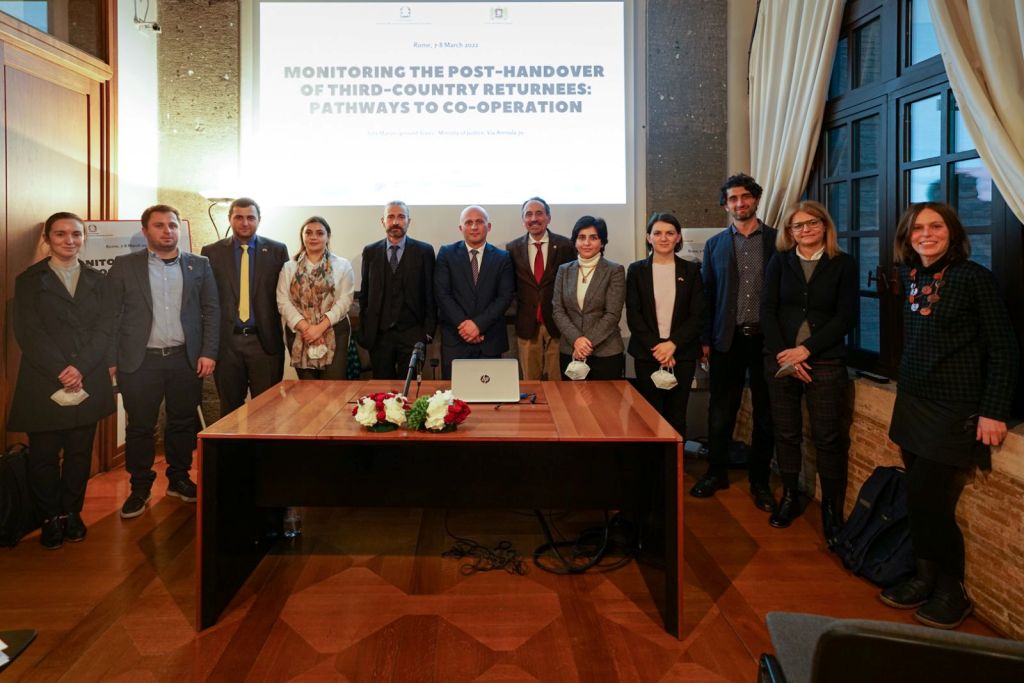
On March 7-8, 2022, representatives of the Public Defender of Georgia visited Rome at the invitation of the Italian National Guarantor for the Rights of Persons Detained or Deprived of Liberty, where a bilateral working meeting was held with the Italian National Preventive Mechanism and a cooperation agreement was signed.
Future cooperation between the National Guarantor for the Rights of Persons Detained or Deprived of Liberty and the Public Defender of Georgia, the methodologies used during the forced return operations and other relevant issues related to the preventive function of monitoring were discussed at the meetings. Representatives of the Public Defender’s Office also visited one of the prisons in Rome.
On March 7, Mauro Palma, National Guarantor for the Rights of Persons Detained or Deprived of Liberty, and Tamar Gvaramadze, First Deputy Public Defender of Georgia, signed a cooperation agreement on the monitoring of return operations, under which both institutions will exchange information and actively cooperate with each other during the forced return of citizens from Italy to Georgia, as well as during the subsequent phase in Georgia. The signing was also attended by Natalia Kordzaia, Consul of Georgia in the Republic of Italy.
The agreement reached between the Italian National Preventive Mechanism and the Georgian Public Defender’s Office is a new and unique format of cooperation. This type of agreement enables the parties to jointly control the protection of human rights at all stages of the return operation and the proper fulfillment of obligations by state agencies.
The meetings were organized by the Office of the National Guarantor of Italy as part of the “Implementation of a forced return monitoring system” project of the Asylum, Migration and Integration Fund (AMIF).