Category Archives: AOA News Letter
Assessment of the needs of women and girls with disabilities and the state of protection of their rights in Georgia
The present report provides the assessment of the needs and legal status of women and girls with disabilities, taking into account the national and international obligations and standards of the Government of Georgia. The assessment of the needs of women with disabilities and the protection of their rights is based on the United Nations Convention on the Rights of Persons with Disabilities (UN CRPD) and its general comments. As well as the United Nations Convention on the Rights of the Child (UN CRC), its general comments and the Convention on the Elimination of All Forms of Discrimination against Women (CEDAW).
According to the research, the protection of the rights of women and girls with disabilities, at the policy level, is not a priority. Some positive changes, which are reflected in the creation of appropriate regulations or programs to improve the standards of protection of the rights of persons with disabilities, can not be considered as an effective way to protect the rights of women and girls with disabilities. These approaches and programs fail to see the needs of women and girls with disabilities, which for the most part may differ from the needs of men with disabilities. The state does not have a systemic vision of how to improve the protection of the rights of women and girls with disabilities in all areas of life. In this regard, the lack of production of segregated statistics is particularly problematic, without which, in fact, it is impossible to see the full picture of the scale of the problem we are dealing with in this or that area of life of women and girls with disabilities. The study also found that in certain areas, such as protection of the right to health and protection from violence, the standard of protection deteriorated during the Covid-19 pandemic.
This publication was prepared by the Public Defender’s Office of Georgia with the support of UN Women in the framework of the project “Good Governance for Gender Equality in Georgia generously funded by the Norwegian Ministry of Foreign Affairs.
Click here to open electronic version of the report
Ombudsmen of Uzbekistan and Kyrgyzstan identify areas of cooperation
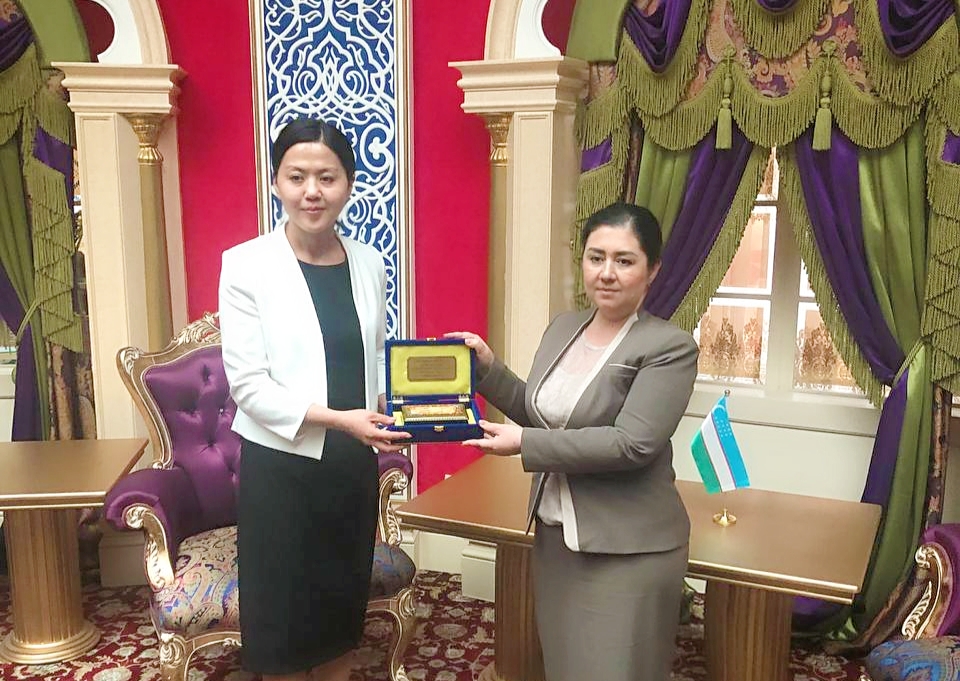
On March 25, 2022, as part of a regional conference to study the existing practice of applying alternative measures to deprivation of liberty in Kyrgyzstan, Tajikistan, Uzbekistan and Kazakhstan, a meeting was held between the Authorized Person of the Oliy Majlis for Human Rights (Ombudsman) Feruza Eshmatova and the newly appointed Ombudsman of the Kyrgyz Republic Atyr Abdrakhmatova. It is noteworthy that this is the first visit of the Ombudsman of Kyrgyzstan to foreign countries since his appointment.
During the dialogue, the main areas of cooperation were identified, such as increasing the legal literacy of the population, promoting the rights of employee migrants.
The Ombudsmen also exchanged views on the ongoing reforms in the country in the field of human rights, ensuring gender equality, creating favorable conditions for people with disabilities and new mechanisms created by the Ombudsmen for work with citizens.
Public Defender of Georgia Meets with New Head of NATO Liaison Office
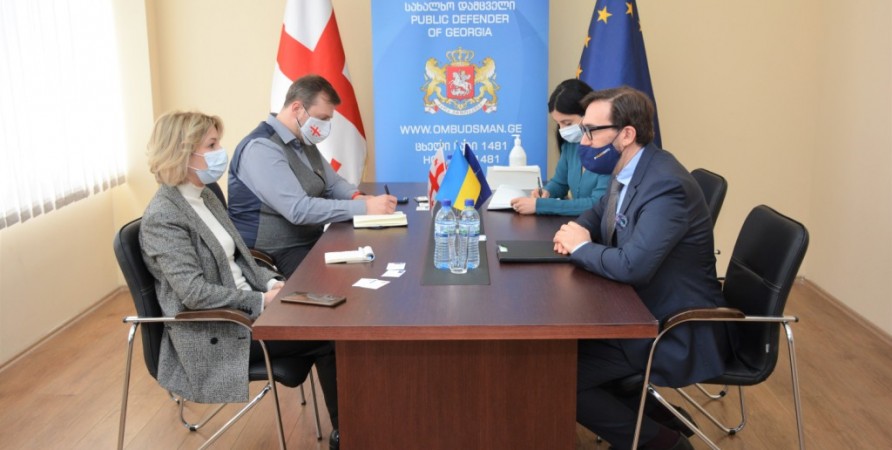
On March 21, 2022, Nino Lomjaria, Public Defender of Georgia, met with Alexander Vinikov, new Head of the NATO Liaison Office.
Alexander Vinikov spoke about the mandate of the NATO Liaison Office and the plans to be implemented in Georgia. The Public Defender briefed the Head of the NATO Liaison Office on the activities of the institution and stressed the duty imposed on the Office by the Constitution – to take all measures within its authority to ensure full integration into the North Atlantic Treaty Organization.
The parties discussed the recent human rights developments in Georgia, degree of democracy, challenges in the judiciary, importance of improving the oversight mechanism of the activities of the law enforcement agencies, as well as the Russia-Ukraine war and the dangers and effects of the war in the context of the protection of human rights.
The Public Defender and the Head of the NATO Liaison Office agreed to continue cooperation in the future.
The meeting was also attended by Giorgi Burjanadze, Deputy Public Defender of Georgia, and Gvantsa Loladze, Political Officer of the NATO Liaison Office.
CCAC unveils case of alleged passive bribery and power abuse involving a deputy sergeant
The CCAC has earlier received a report that a deputy sergeant of the Traffic Department of the Public Security Police Force allegedly received bribe. According to the report, the deputy sergeant leaked information about the police to a gaming room owner, who offered accommodation in luxury hotel suites to the deputy sergeant and his wife in return.
Following an investigation, the CCAC found that the deputy sergeant was very close to some persons associated with VIP gaming rooms and visited the VIP gaming rooms many times in violation of law. During the visits, he allegedly leaked information about the police to the owner and received advantages such as money and free hotel accommodation in return.
Earlier, the CCAC took investigative action against the involved deputy sergeant and people associated with the gaming rooms. A large quantity of cash as well as some communication equipment and documents were seized at the home of the deputy sergeant. Also, mobile phones, documents and computers related to the case were seized at the premises involved.
The deputy sergeant was suspected of committing abuse of power and passive bribery to perform illicit acts provided for in the Penal Code. The VIP gaming room owner was suspected of committing active bribery.
The case has been transferred to the Public Prosecutions Office (MP) for follow-up. Following the suggestion of the MP, the judge of the Court of Criminal Instruction approved that coercive measures would be adopted against the aforesaid persons, including provision of guarantee and periodic presentation.
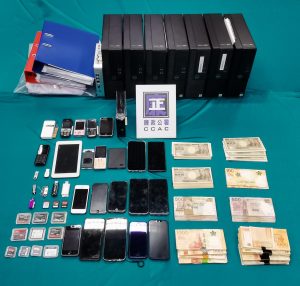
Cash, mobile phones, documents and computers seized by the CCAC
Ombudsman emphasizes upon Investigating Officers to intensify their efforts to ensure maximum relief to complainants.
The Hon’ble Federal Ombudsman, Mr. Ejaz Ahmad Qureshi has emphasized upon his Investigating Officers of Wafaqi Mohtasib Secretariat to intensify their efforts to provide maximum relief to complainants. He directed his officers to ensure transparency, fair play and quick disposal of their work. He made it clear that only the efficient, hardworking and honest officers would be appointed and contracts of the officers currently working would be renewed only if they demonstrate these qualities. He said that strict measures should be taken against those officials of the agencies who fail in implementation of Ombudsman orders. He was addressing the Investigating Officers of WMS at Regional Office, Peshawar.
Addressing the Peshawar Chamber of Commerce & Industry, he said that the Institution of Wafaqi Mohtasib is a poor man’s court and strives to expeditiously resolve small and petty cases / disputes of the lower strata which cannot afford to go to courts or afford a lawyer; and to address systemic issues. He said that the WMS will ensure protection of public rights by taking new initiatives and through suo motu actions. He said that the primary mandate of the WMS is to redress public grievances against maladministration of more than 200 Federal Government Agencies. He further said that Wafaqi Mohtasib Secretariat has disposed of 1.7 million complaints since its inception 39 years ago. He said that his Office received 110, 398 complaints and disposed of 106,732 complaints during 2021 and 92.7% findings were implemented by the Federal Government Agencies. Besides, on the advice of the Honourable President the Wafaqi Mohtasib Secretariat has initiated a number of innovative techniques through traditional and social media to increase awareness among the general public about the use of services being offered by the Wafaqi Mohtasib. He said that WMS received 42,240 online complaints. He said that every case in WMS is disposed of within 60 days. He further said that to resolve the public grievances at their door step of the aggrieved persons our regional offices in KP are working at Peshawar, D.I.Khan & Abbottabad and more Regional Offices of WMS are being established at Swat, Gilgit-Baltistan, Mirpur Khas and at Khuzdar. He called upon the business community and general public to avail the facility of the cost free and easily accessible system of the Office of Wafaqi Mohtasib for resolution of their grievances against the Federal Agencies. Assuring best services to the public at large, he stated that the Helpline of the Wafaqi Mohtasib Secretariat was available for the aggrieved citizens. He further informed that he took charge of the position of Wafaqi Mohtasib only about two months before; and during this short period more than 16,500 complaints have been disposed of. Moreover, under the Outreach Complaint Resolution Programe (OCR), around 1300 complaints have been disposed of near the door steps of the complainants since 1.1.2022.
The Report of the Commissioner for Human Rights in the Republic of Tatarstan was presented to deputies at a meeting of the State Council
At the meeting of the State Council, the deputies were presented with the Report of the Commissioner for Human Rights in the Republic of Tatarstan “On the observance of the rights and freedoms of man and citizen.”
Separately, Saria Saburskaya dwelled on examples of human rights practices on violation of the labor rights of citizens in terms of wages. “Residents complained about untimely wages, about the amount of wages,” she said, “we analyzed departmental control over compliance with labor laws in terms of ensuring safety and labor protection requirements. Proposals have been prepared for executive authorities and local self-government within the framework of the work of territorial interdepartmental commissions to improve living standards and legalize incomes.”
According to Saria Saburskaya, the issue of organizing an accessible environment remains topical. Last year, the Commissioner for Human Rights, together with the Ministry of Labour, Employment and Social Protection of the Republic of Tatarstan, public activists, conducted a number of checks in shopping centers and adjacent territories, underground and surface passages – a total of 250 objects. The analysis showed that not everywhere, even if this infrastructure has been created, it is maintained in the proper form.
A large block of questions received by the ombudsman’s service is related to the education system. In particular, the problem of understaffing of kindergarten teachers was revealed.
JIACC holds a participatory meeting on the role of religious awareness against Corruption
The Integrity and Anti-Corruption Commission held a participatory meeting today with several Muslim imams and preachers along with Christian clerics, entitled “The Role of Religious Awareness in Preventing Corruption”.
This meeting came as part of the Commission’s endeavor to enhance cooperation with religious bodies in raising public awareness on the scourge of corruption and the crimes that fall under it, in addition to its devastating effect on societies.
JIACC’s chairman, Mohannad Hijazi, stressed that fighting corruption requires concerted national efforts to bring people together to condemn corruption, and motivate them to dry up its sources as religion and ethics are closely linked.
Activity of the Ombudsman in 2021 was analyzed and plans for 2022 were outlined
On 31 January 2022 there was held a regular online meeting of the members of the Commission on the Observance of the Constitutional Human Rights and Freedoms under the Office of the Authorized Person for Human Rights (Ombudsman).
The agenda of the regular meeting of the Commission under the Ombudsman included the outcomes of the activities of the Authorized Person of the Oliy Majlis for Human Rights (Ombudsman) in 2021, the objectives set for the Ombudsman’s team in 2022, and identified the main directions of activities in ensuring human rights and other issues.
Speaking at the meeting the Authorized Person of the Oliy Majlis of the Republic of Uzbekistan for Human Rights (Ombudsman) and Chairman of the Commission Feruza Eshmatova noted that 2021 occupies a special place in the history of the Ombudsman’s institution and this year there have been big changes. These reforms are important not only for the Ombudsman’s activities, but also for the protection of human rights and interests. In particular, the fact that two presidential documents concerning the activities of the Ombudsman were adopted last year demonstrates the priority of ensuring legitimate human rights and interests in our country. In response, the Ombudsman’s team was able to work on a number of issues, including complaints handling, combating torture, improving legislation, developing international relations and ensuring transparency. When analyzing the activities of the Authorized Person for Human Rights (Ombudsman) in 2021, we can see that the use of measures and their effectiveness has increased by 2.4 times compared to 2020. I think that within the framework of the New Development Strategy of Uzbekistan for the next 5 years the Ombudsman will strive to increase these indicators every year. Of course, this requires wide introduction of information and communication technologies in the activities of the institution, development of new advanced methods of ensuring human rights, increasing the status of regional representatives, who started working on a permanent basis in 2022, effective use of the right of legislative initiative.
At the meeting it was noted that in 2021 the Ombudsman received 18,738 appeals from citizens of the Republic of Uzbekistan, citizens and ombudsmen of foreign states, stateless persons, public organizations and other legal entities (in 2020 – 14,975). In particular, 16 559 appeals were received from citizens, 2 120 from persons held in pre-trial detention facilities and penitentiary institutions, and 59 from foreign states.
Most appeals were received from the city of Tashkent (2,588), Qashqadaryo region (2,530), Surxondaryo region (2,000), Tashkent region (1,658) and Samarqand region (1,302).
In 2021 the Ombudsman sent 36 conclusions (16 in 2020), 14 petitions (13 in 2020) and 44 claims (11 in 2020) to state bodies and organizations to restore the violated rights of citizens.
In addition, the members of the Commission were provided with information about the results achieved by reviewing the appeals and monitoring visits to places of detention by public groups on the detection and prevention of torture in accordance with the Decree of the President of the Republic of Uzbekistan of 26 June 2021 “On additional measures to improve the system for detecting and preventing cases of torture”.
During the meeting members of the Commission commented on the changes and results of the work of the Ombudsman. The meeting also discussed the tasks facing the Ombudsman in 2022, as well as the work plans and made proposals on these issues. At the end of the event a relevant decision of the commission was adopted.
ACRC to share Korea’s ant-corruption policy achievements with the world at ‘OGP global summit 2021’
-On the 17th (Fri.), ACRC will hold anti-corruption breakout sessions which can be watched at YouTube channel ‘OGP Korea’ – –
- The Anti-Corruption and Civil Rights Commission (Chairperson Jeon Hyun-Heui, ACRC) will hold breakout sessions at the Open Government Partnership Global Summit 2021 to share with countries around the world Korea’s anti-corruption policy achievements and future direction on December 17, the last day of the summit.
The Open Government Partnership (OGP) is a global public-private partnership which was established to promote government transparency, anti-corruption, citizen participation, cooperation between government and civil society organizations.
The Korean government, as chair of the 11th OGP, holds OGP Global Summit 2021 at COEX, Seoul, for three days from December 15 to 17 under the theme of civil space and public participation, tackling corruption, and promoting inclusive digital innovation.
- The ACRC hosts a breakout session on the morning of the 17th under the name of “The Achievements and Lessons of Korea’s Anti-Corruption Policy.
The current government set anti-corruption as the priority in running the state and has carried out anti-corruption policies in a comprehensive manner with the ACRC taking the helm by enacting the Act on the Prevention of Conflict of Interest Related to Duties of Public Servants and the Act on the Prohibition of False Claims for Public Funds and Recovery of Illicit Profits and tackling employment irregularities in public organizations. The government’s achievements so far and measures for improvement will be discussed at the breakout session.
In the afternoon of the same day, the ACRC organizes another breakout session under the theme of “Implementation of Anti-corruption and Integrity Policies through the Establishment of Public-Private Partnership.” The session will talk about achievements in the operation of the Public-Private Council for Transparent Society which consists of representatives of civil society organizations, the media, and the academia. The session will also share ideas on the role and prospect of the public-private governance in anti-corruption policy implementation.
ACRC Chairperson Jeon Hyun-Heui, in her welcoming speech at Anti-Corruption Plenary Session on December 16, explained the Korean government’s anti-corruption framework and efforts and achievements of the government’s action to enhance integrity in the public and private sector. She said, “I hope that OGP Global Submit 2021 will be an opportunity for the world to share insight and wisdom and settle a culture of integrity throughout the world.
- To prevent the spread of COVID 19, the OGP Global Summit 2021 allows for online participation and discussions will be accessible in real time at OGP website and YouTube channel for anyone in the world
CCAC reveals case of alleged passive bribery and money laundering involving another former leader of DSSOPT
Having detected a case of alleged passive bribery involving a former leader of the Land, Public Works and Transport Bureau (DSSOPT) recently, the CCAC took investigative action in a case of alleged passive bribery and money laundering involving another former leader of the DSSOPT and referred the case to the Public Prosecutions Office for follow-up.
The investigation revealed that the former leader allegedly received advantages including huge sums of money and immovable properties and allegedly abused his power during his tenure by committing illicit acts during the vetting and approval processes for the applications for construction project permits made by the businesspersons involved. Knowing that some pending projects went against the administrative instructions issued by the authority or the relevant procedures, the former leader still abused his power by drastically changing the original street alignment plans and then issuing the revised ones, issuing the construction works licenses by way of exception and granting approval for adjustment of the content of the works with special burden, so that the developers could maximise the profits they would gain from the projects.
In the course of investigation, it was also found that the former leader allegedly received advantages including huge sums of money and immovable properties from the businesspersons through his relatives and friends in a circuitous way. The acts of the former leader have allegedly constituted passive bribery to perform illicit acts and money laundering; while the businesspersons involved and relevant individuals have allegedly committed active bribery and money laundering respectively.
The former leader and the relevant relatives have hid in places outside the territory for a long time to evade investigation and have not yet come back to Macao. A number of their immovable properties have previously been seized by the relevant agency.