Category Archives: AOA News Letter
OMBUDSMAN COMMENDS PUBLIC ORGANISATIONS AND PUBLIC OFFICERS FOR EXEMPLARY SERVICE AND PUTS FORWARD THREE STRATEGIC FOCUSES TO ENHANCE PUBLIC ADMINISTRATION.
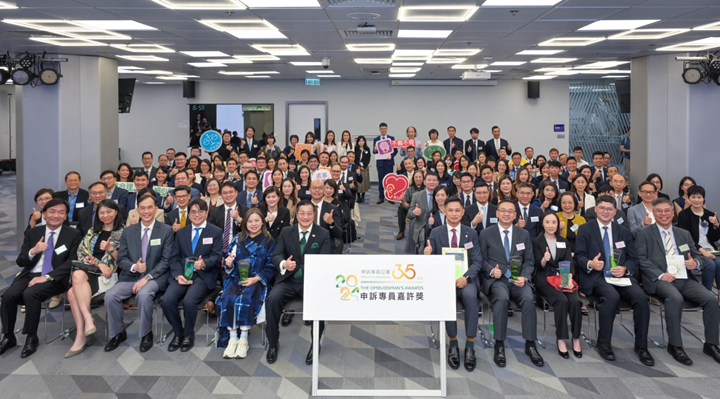
At the 27th Presentation Ceremony of The Ombudsman’s Awards today (31 October), The Ombudsman, Mr Jack Chan, presented the Grand Award to the Hong Kong Fire Services Department (“FSD”), an Award for Public Organisation to both the Social Welfare Department (“SWD”) and the Water Supplies Department (“WSD”), the Award on Mediation to the Housing Department (“HD”), the Customer Services Award to the Immigration Department (“ImmD”), and the Information Technology Application and Creativity Award to the Hospital Authority (“HA”). Individual Awards were also given to 79 public officers.
For the live broadcast of the Awards Ceremony, please click here for the replay.
Mr Chan commended the award-winning organisations and public officers for their proactive use of mediation, their endeavours in achieving synergy through interdepartmental collaboration, and their positive attitude in complaint handling. During the ceremony, Mr Chan also discussed the three strategic focuses put forward since he assumed office: The Office of The Ombudsman will go full steam ahead with the use of mediation to resolve complaints from the public, promote interdepartmental collaboration, and instil a positive complaint culture in society. Mr Chan said, “With concerted efforts, we will definitely meet the objectives of improving people’s livelihood, fostering harmonious development in our society and raising the quality standards of public administration.”
This year’s recipient of the Grand Award, FSD, has committed to providing effective fire and ambulance services for years. In 2023-24, 94 per cent of fire and ambulance calls were handled within the targeted response time, which is a standard higher than the performance pledge. FSD’s dedication and professionalism in protecting public life and property are essential for ensuring the normal operation of society. The Department has also been proactive in promoting fire safety and public education on first aid.
SWD has been positive and practical in handling complaints. In response to the Office’s inquiries and investigations, SWD has been active and efficient in providing comprehensive and useful information. In the Office’s direct investigation operation regarding the Pilot Scheme on Community Care Service Voucher for the Elderly, SWD fully co-operated and was willing to accept and implement all of the Office’s recommendations.
WSD has maintained its performance pledge to adopt a customer-oriented approach in providing services. The Department’s complaint handling shows its conscious efforts to provide clear, prompt and detailed replies. WSD staff explain complicated technical issues to the public in plain language and are forthcoming in providing details to the Office to account for incidents. The WSD’s positive attitude has enabled the Office to process complaints efficiently.
HD received the Award on Mediation this year. HD has actively used mediation as a mode of complaint handling. On many occasions, HD staff have suggested using mediation to quickly resolve fundamental problems leading to complaints and have made practical recommendations to address complainants’ discontent.
The Office has introduced two new awards this year: the Customer Services Award and the Information Technology Application and Creativity Award.
ImmD is the first winning department of the Customer Services Award. Throughout the years, ImmD has worked hard to provide services that best suit public needs, such as introducing the
e-Channel Service and conducting the Territory-wide Identity Card Replacement Exercise. The procedures for applying for services and collecting documents are simple, flexible and efficient.
HA is the first recipient of the Information Technology Application and Creativity Award. HA spares no effort in exploring innovation methods and technology to enhance service quality and improve patients’ experiences. Such efforts of HA can be seen in the launch and ongoing improvement of the “HA Go” app, and the extended coverage of the Medication Delivery Service to all specialist clinics to provide more efficient and convenient services to the public.
At the presentation ceremony, Mr Chan also commended recipients of the Individual Awards and recognised their contributions. He said, “Government departments and public organisations rely on their committed and diligent staff to provide quality public service. This year, 79 public officers received the Individual Awards, which is a record high. I am very pleased to see that more officers are being commended for their professional and excellent services. They have earned recognition and commendation from the general public, their respective departments or organisations, as well as my Office.”
A full list of the recipients of the Individual Awards this year and the experiences and thoughts from some of them about receiving these awards can be found in Appendices 1 and 2 respectively.
The Ombudsman’s Awards Scheme was introduced in 1997. In 1999, the Scheme was extended to honour individual public officers. In 2018, an additional Award on Mediation for a public organisation was introduced. In 2024, two new awards, namely the Customer Services Award and the Information Technology Application and Creativity Award, were added.
“K-INTEGRITY, NOW EXPANDING TO LATIN AMERICA!”.
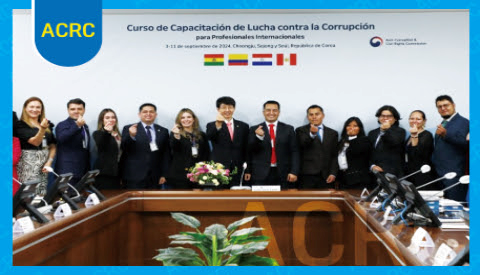
- ACRC launches anti-corruption training for Spanish-speaking Latin American countries starting Sep.3 for 9 days
- Sharing Korea’s leading anti-corruption policies and systems, including the Comprehensive Integrity Assessment for public institutions and Clean Portal, with officials from Colombia, Peru, Bolivia, and Paraguay
Korea’s advanced anti-corruption policies and systems, such as the Comprehensive Integrity Assessment for public institutions and the Clean Portal, are being shared with public officials from Latin American countries including Colombia, Peru, Bolivia, and Paraguay.
The Anti-Corruption and Civil Rights Commission (ACRC, Chairperson Ryu Chul Whan), through its Anti-Corruption Training Institute, is conducting the first-ever ‘Multinational Anti-Corruption Capacity-Building Training’ in Spanish from September 3 to 11, lasting a total of 9 days.
A total of 15 public officials from anti-corruption agencies in Colombia, Peru, Bolivia, and Paraguay—including Colombia’s Presidential Office, Peru’s Prime Minister’s Office, Bolivia’s Ministry of Justice and Transparency, and Paraguay’s Audit Office—are participating in the program.
Notably, high-level officials such as Roberto Idarraga, Colombia’s Transparency Secretary (ministerial level), are attending the training, and Peru’s Ambassador to Korea, Paul Fernando Duclos Parodi, will be present at the closing ceremony, reflecting a strong interest in Korea’s anti-corruption policies.
The training program focuses on Korea’s internationally recognized anti-corruption measures, including the Comprehensive Integrity Assessment for public institutions, which won the UN Public Service Award in 2012, as well as ▴the Corruption Impact Assessment ▴and the whistleblower protection system.
The program also introduces Korea’s key e-government systems, such as the Clean Portal, the online public official asset disclosure system, and the public procurement platform “KONEPS” (Korea Online E-Procurement System), which are highly effective in preventing corruption. In addition, audit techniques to detect corruption in public contracts and procurement, areas where developing countries are often vulnerable, will also be shared.
Since 2013, the ACRC has been running anti-corruption training programs annually as part of Official Development Assistance (ODA) efforts, aimed at strengthening the anti-corruption capabilities of public officials from around the world.
Korea is regarded as a model case for simultaneously achieving economic growth and resolving corruption issues. It has implemented practical anti-corruption policies across various administrative areas through cutting-edge digital platforms, such as Clean Portal and KONEPS.
Developing countries, in particular, have shown great interest in Korea’s anti-corruption initiatives, seeking to establish their own systems alongside economic development.
As a result, the ACRC’s anti-corruption training has attracted participation from 383 public officials from 70 countries to date, with increasing requests for training in various languages, beyond English.
To meet these demands, the ACRC expanded its training offerings, launching a Russian-language course for Central Asia and Eastern Europe in 2020, and a French-language course for African countries in 2023. This year, the ACRC introduced a Spanish-language course for Latin American countries, allowing Korea’s “K-Integrity” policies to be shared globally in multiple languages.
ACRC Chairperson Ryu Chul Whan remarked, “Interest in Korea’s digital anti-corruption systems, including the Comprehensive Integrity Assessment for public institutions, the Clean Portal, and the public official asset disclosure system, continues to grow worldwide.”
He added, “We will expand our cooperation and support so that Korea’s anti-corruption policies and experiences can help developing countries strengthen their anti-corruption capabilities and improve their integrity standards.”
CCAC’S DELEGATION ATTENDED MEETINGS OF THE GLOBE NETWORK OF THE UNITED NATIONS.
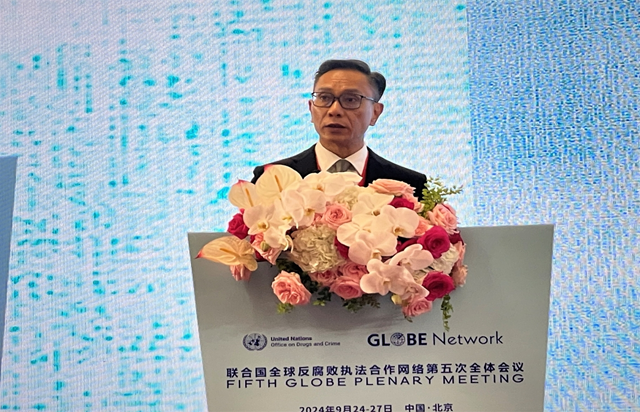
The Commissioner Against Corruption Chan Tsz King led a delegation of the CCAC to Beijing to attend the 5th Plenary meeting and the 8th Steering Committee meeting of the Global Operational Network of Anti-Corruption Law Enforcement Authorities (GlobE Network) of the United Nations late last month.
Nearly 400 representatives from 105 countries, regions and international organisations participated in the meetings. During the meetings, member of the Standing Committee of the Political Bureau of the Communist Party of China Central Committee cum Secretary of the Central Commission for Discipline Inspection, Li Xi, met with more than ten high-level representatives including those from Macao and Hong Kong. He stated that China was willing, together with other countries, to strengthen the consensus of combatting corruption with concerted efforts, realise the principles of equity and inclusion, jointly combat cross-border corruption and build a corruption-free world. During the meetings, participants adopted the “Beijing Consensus” and reiterated their position and determination of “zero tolerance” to corruption, joining hands together to combat transnational corruption crimes and denying safe haven for corruption. Speaking at the High-level Forum, the Commissioner Against Corruption of Macao, Chan Tsz King, pointed out that being anti-corruption agencies, in addition to performing their duties according to the legislation of their own jurisdictions, when it came to the global fight against corruption, they also needed to cooperate and interact with different jurisdictions. He specially mentioned that the Chinese mainland, the Macao SAR and the Hong Kong SAR were different jurisdictions which had different legal regimes, but from the regional point of view, they enjoyed geographical proximity, particularly for the Guangdong-Hong Kong-Macao Greater Bay Area and thus had adopted an open and active model to jointly prevent and investigate corruption crimes. He said that after years of adjustment and practices over the years, they had made an achievement which made them proud and believed that it could serve as experience to be drawn on with regard to international cooperation in graft-fighting.
During the meetings, the delegation of Macao also met with representatives from anti-corruption authorities of Brazil and United Arab Emirates. Both sides exchanged experience and explored the enhancement of cooperation of corruption fighting.
OMBUDSMAN ANNOUNCES INVESTIGATION RESULTS ON ENFORCEMENT AGAINST UNAUTHORISED LAND DEVELOPMENTS AND IMPLEMENTATION PROGRESS OF STRATEGIC FOCUS ON INTERDEPARTMENTAL COLLABORATION.
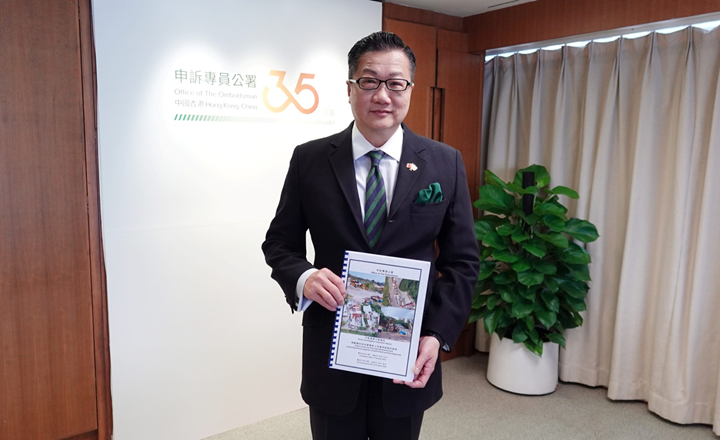
The Ombudsman, Mr. Jack Chan, announced the completion of a direct investigation operation regarding the enforcement by the Planning Department (“PlanD”) and the Lands Department (“LandsD”) against unauthorised land developments, and made 16 major recommendations for improvement to the two departments.
For the live broadcast of the press conference, please watch the replay on the Office’s YouTube channel
In the rural New Territories, common unauthorised developments under the Town Planning Ordinance (“TPO”) include filling of pond or land in “Agriculture”, “Green Belt” and conservation zones for storage, workshop and parking uses. For many years, PlanD had not been empowered to take enforcement action in rural areas not previously covered by development permission areas. The Office is pleased to note that with the amended TPO coming into effect in September 2023, the Secretary for Development may designate rural areas in the New Territories with ecological value, which are subject to development pressure and risks of environmental degradation, to be “regulated areas”, so as to plug the loophole by enabling the PlanD’s enforcement action against unauthorised developments in such areas.
From 2018 to 2023, PlanD received an annual average of 1 680 complaints about unauthorised developments. During the same period, combining complaints, proactive inspections and referrals from other departments, PlanD identified an annual average of 425 unauthorised development cases involving private land.
Regarding the unauthorised development cases identified, PlanD issued an annual average of more than 3,000 statutory notices demanding rectification. The compliance rate of such notices ranged from 69 per cent to 88 per cent between 2018 and 2023, reflecting the deterrent effect of PlanD’s existing enforcement measures against most offenders. During the same period, PlanD instigated prosecutions in a total of 475 cases of non-compliance with statutory notices, among which 65 involved repeated prosecutions.
The Office of The Ombudsman’s investigation found that for cases involving repeated breaches of the TPO, PlanD would, depending on whether the unauthorised development recurred within one year, shorten the timeframe for compliance with the Enforcement Notice from the normal three months to a minimum of one month. Given that cases of repeated breaches generally involve irregularities that are easy to rectify and prone to recur (such as storage and parking uses), the existing practice of PlanD might not have a sufficient deterrent effect on some repeated offenders. The Office recommends that, regarding cases of repeated breaches, PlanD should explore considering more factors in setting the timeframe for compliance with statutory notices and progressively shortening the timeframe upon subsequent breaches to raise offenders’ costs of non-compliance proportionately.
As for cases that breach the TPO while concurrently involving unlawful occupation of government land, it is often difficult to confirm the identity of the occupier or responsible person. Hence, such cases are currently handled by LandsD under the Land (Miscellaneous Provisions) Ordinance by demolishing and taking possession of the property and structures on the land. LandsD prioritises different types of cases under a risk-based approach. Nevertheless, the Office’s investigation revealed that for cases involving both priority and non-priority circumstances, LandsD’s existing guidelines for staff were unclear about how each case should be classified as a whole. There were also cases revealing LandsD’s failure to complete priority cases in a timely manner. The Office considers that LandsD should comprehensively review its existing guidelines, put in place a monitoring mechanism and step up training to ensure proper follow-up of cases by its staff.
Mr Chan said, “The Government is duty-bound to combat unauthorised land developments rigorously to safeguard the environment and optimise the use of valuable land resources. Overall, the Office considers that both PlanD and LandsD have handled unauthorised development cases according to their purview and statutory powers; however, there is still room for improvement regarding enforcement procedures and intensity. Moreover, the Office noticed that during the initial stage of this direct investigation operation, there was indeed room for enhancement in the efficiency of collaboration between PlanD and LandsD. The Office is pleased to note that both departments responded positively to its observations and opinions by proactively establishing a joint working group co-led by their deputy directors, and introducing a pilot scheme involving two large-scale unauthorised developments related to private agricultural land selected for joint enforcement operations. In addition to reviewing the above new initiatives in a timely manner, to further deepen collaboration, the Office recommends that PlanD and LandsD establish a database for unauthorised development cases to facilitate interdepartmental intelligence sharing and enforcement, as well as formulate targeted measures for high-risk sites to nip problems in the bud.
“Looking ahead, as the current-term Government actively implements various land development projects, land use in the rural New Territories will undergo vast changes. Unauthorised developments may differ in mode, scale, etc. PlanD and LandsD, as enforcement authorities, should conduct a systemic review after the implementation of the various improvement measures. The two departments should also adapt to the circumstances, continuously deepen reform and innovate, and improve the operational mechanisms and collaboration to strengthen their ability to prevent and handle unauthorised developments.”
The Office has made the following major improvement recommendations to PlanD and LandsD:
- regarding cases involving repeated breaches of the TPO, PlanD to explore considering more factors (including the total number of breaches committed by the offender, the gross area of the site, the nature of irregularities and the impact on environmental hygiene) in setting the timeframe for compliance with statutory notices and progressively shortening such timeframe upon subsequent breaches to raise offenders’ costs of non-compliance proportionately;
- PlanD to draw up guidelines on the procedures and target timeframe for handling unauthorised development cases involving a change in ownership for periodic circulation to staff to avoid omission of necessary action;
- PlanD to step up efforts to explain the basics of the Reinstatement Notice through such publicity channels as its official website to promote public awareness of its enforcement measures and avoid misunderstanding;
- PlanD to step up education and publicity to enhance private land owners’ understanding of their obligations, the damage caused by unauthorised developments to the environment, the enforcement role of the department, the price to be paid by offenders and the essential features of the TPO to raise law-bidding awareness;
- LandsD to comprehensively review its existing guidelines and specify clearly the various factors for determining whether a case falls within the priority category, supplemented with real cases to illustrate how to assess cases involving both priority and non-priority circumstances, for compliance by staff;
- LandsD to put in place a monitoring mechanism to ensure proper prioritisation of different cases by staff;
- LandsD to step up training to ensure that staff clearly understand the enforcement role of the department and take timely action against non-compliance with the law and lease conditions according to its performance indicators;
- PlanD and LandsD to consider drawing up a mechanism and timetable for timely review of the joint working group’s guiding direction, thereby ensuring that the new measures can serve the purpose of enhancing interdepartmental collaboration;
- PlanD and LandsD to conduct timely review of the effectiveness of the pilot scheme on joint enforcement operations;
- PlanD and LandsD to respectively review the data they maintained on interdepartmental unauthorised development cases and enforcement action, and discuss any need to incorporate more data items, thereby providing a more precise and comprehensive basis for monitoring and analysing enforcement work;
- PlanD and LandsD to consider establishing a database on unauthorised development cases with such information as the identity of offenders, subject locations, irregularities and results of follow-up action, thereby facilitating interdepartmental intelligence sharing and enforcement;
- PlanD and LandsD, making use of the above newly established database, to formulate targeted measures for high-risk sites having regard to such factors as the severity of breaches and whether repeated breaches are involved to nip problems in the bud;
- in light of the amended TPO, PlanD and LandsD to review the enforcement and case referral procedures in a timely manner and explore room for further streamlining and consolidation to optimise the use of resources for coping with an anticipated increase in enforcement work; and
- PlanD and LandsD to conduct a systemic review after the implementation of the various improvement measures. The two departments should also adapt to the circumstances, continuously deepen reform and innovate, and improve operational mechanisms and collaboration to strengthen their ability to prevent and handle unauthorised developments.
Upon Mr Chan’s assumption of office, one of the strategic focuses of the Office is to make every effort to promote interdepartmental collaboration. Effective interdepartmental collaboration is indispensable to efficient and people-oriented public administration as well as good governance. A lack of co-ordination among different departments or organisations is prone to shirking responsibilities, thereby directly affecting the well-being of the public. When handling relevant cases, the Office will request all departments and organisations concerned to take follow-up action and fully collaborate with other agencies, with a view to effectively resolving the difficulties facing the public. Where unclear divisions of responsibilities involve systemic issues, the Office will firmly point out the crux of the matter and urge the departments and organisations to seriously rationalise responsibilities or, if necessary, establish high-level platforms for resolving disputes, in order to address the problem at its root.
Furthermore, as different departments and organisations have their respective professional knowledge, expertise and experience, fostering their collaboration can create a synergy effect, thereby enhancing the quality and standard of public administration. Therefore, through handling cases and organising seminars and experience-sharing sessions from time to time, the Office tirelessly encourages various departments and organisations to deepen collaboration in their daily work on all fronts, including setting up communication and collaboration platforms, optimising case referral procedures, formulating information exchange mechanisms, sharing professional skills and technology, and launching joint operations.
The above direct investigation operation is a successful example of the Office’s efforts to promote interdepartmental collaboration. In addition, in the first half of this reporting year (i.e. from April to September 2024), the Office has handled 94 cases involving interdepartmental collaboration. The Office has also progressively launched on its website and social media platforms real cases of interdepartmental collaboration to enhance public understanding of how the Office addresses their needs through promoting interdepartmental collaboration.
“In the coming years, the overriding objective of the Office is to help resolve the difficulties facing the public in order to improve people’s livelihood and foster social harmony. I encourage all government departments and public organisations to work together on the premise of ‘Improving people’s livelihood’, and jointly enhance administrative arrangements for better public services and a stronger sense of gain and happiness among members of our community.”
FEDERAL OMBUDSMAN ADDRESSES AOA WEBINAR TITLED, “ADDRESSING MALADMINISTRATION IN THE INSURANCE INDUSTRY – AN OMBUDSMAN’S PERSPECTIVE”.
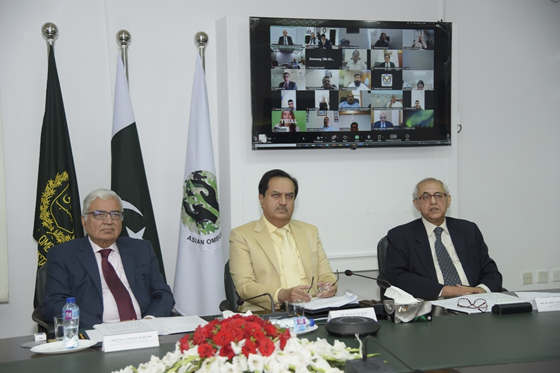
- Federal Ombudsman addresses Asian Ombudsman Association Webinar titled, “Addressing Maladministration in the Insurance Industry – An Ombudsman’s Perspective”.
- Calls for adherence to fair practices and promotion of best standards.
Islamabad, 29 October, 2024: Federal Ombudsman Mr. Ejaz Ahmad Qureshi said that Pakistan was among the few countries in the world which has a unique distinction of establishing a dedicated insurance ombudsman institution which offers a sound oversight mechanism for judicious protection of the interests of various stakeholders. He was addressing an international webinar organized by the Asian Ombudsman Association (AOA) in cooperation with the Wafaqi Mohtasib Secretariat at Islamabad today. Mr. Ejaz Ahmad Qureshi is the current President of the Asian Ombudsman Association (AOA), which is a 47-member strong non-political, professional body of ombudsman institutions in the Asian region.
Addressing the participants Mr. Ejaz Ahmad Qureshi said that the commitment to the protection and promotion of human rights is a corner stone of the country’s Constitution. Pakistan has ratified several human rights instruments on the subject and is committed to achieving the collective aspirations of the internationally recognized human rights regime. He referred to the Guiding Principles on Business and Human Rights as endorsed by the UN Human Rights Council and underlined the need to address the adverse human rights impact resulting from the business activities. The institution of the Federal Insurance Ombudsman (FIO), therefore, has a significant role in promoting and protecting the best standards of business practices in the insurance industry, he added.
Later, Mr. Mumtaz Ali Shah, Federal Insurance Ombudsman (FIO) made a presentation on the mandate and the scope of work of the institution which was established under the Insurance Ordinance 2000. He said that the FIO offers a sound oversight mechanism based on contemporary and equitable principles and takes cognizance of maladministration in the insurance industry of Pakistan. He added that the institution since its inception is providing free and expeditious relief to the aggrieved citizens at their doorsteps.
The Webinar is intended to share Pakistan’s experiences, best practices and the exchange of knowledge on the framework of Insurance Ombudsman’s institution with the ombudsman fraternity in the Asian region and beyond. The Webinar was attended by over one hundred participants representing Asian Ombudsman Association (AOA), OIC Ombudsman Association (OICOA), various insurance regulatory bodies and commissions working in different countries. It was also attended by a large number of insurance companies in the country and representatives of the specialized ombudsman institutions in the field of Banking, Taxation as well as other stakeholders.
PUBLIC DEFENDER MEETS WITH REPRESENTATIVES OF CIVIL SOCIETY AND WOMEN’S RIGHTS DEFENDERS WORKING IN IMERETI.
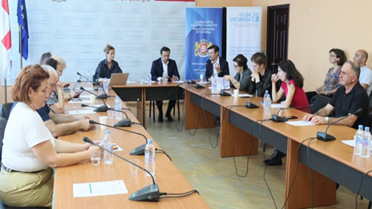
On September 27, 2024, Public Defender Levan Ioseliani met with representatives of Imereti civil society and women’s rights defenders at the Public Defender’s Kutaisi office.
The current situation of gender equality, protection of civil sector rights, awareness-raising and other needs and challenges were discussed at the meeting.
The Public Defender introduced the mandate of the Office, current activities and priorities in the direction of women’s empowerment to the participants in the meeting. Issues of future cooperation were also discussed at the meeting.
The event was jointly organized by the Public Defender of Georgia and the UN Women Georgia Office with the financial support of the Norwegian Government.
PDHJ ADDRESSES GENDER EQUALITY AT 29TH ANNUAL GENERAL MEETING OF THE ASIA PACIFIC FORUM.
The Ombudsman for Human Rights and Justice (PDHJ), represented by Deputy Ombudsman Rigoberto Monteiro, recently highlighted crucial gender equality issues at the 29th Annual General Meeting of the Asia Pacific Forum (APF) of National Human Rights Institutions in Bangkok, Thailand, emphasizing their significance within the broader context of human rights in Timor-Leste.
The meeting focused on three critical issues: Gender Equality, Environment and Climate Change, and mechanisms to defend human rights defenders in civic spaces.
During the first session, active members elected the leadership of the APF committee, which includes representatives from Jordan, South Korea, Pakistan, the Philippines, and Indonesia. The Jordanian Human Rights Commissioner, Zeid Ra’ad Al Hussein was elected as President, while Atnike Nova Sigiro from Indonesia’s KOMNASHAM was elected as Vice President.
In the second session, APF members presented their countries’ progress, challenges, and obstacles related to gender equality, climate change, and the protection of human rights defenders.
In his presentation, Deputy Ombudsman Monteiro focused on gender equality, discussing the progress and challenges faced by Timor-Leste in promoting this crucial issue. He also highlighted PDHJ’s initiatives aimed at enhancing gender equality within the country. PDHJ expressed its full support for KOMNASHAM Indonesia’s candidacy for the leadership committee of the APF.
Deputy Ombudsman Monteiro extended gratitude to the APF secretariat and congratulated the newly elected leadership for the upcoming two-year term.
The meeting provided an opportunity for the Forum Council and APF members to review the organization’s performance over the past year, addressing issues such as the accreditation status of members, membership applications, official elections, and the approval of annual audit accounts.
The Annual General Meeting of the APF is a legal requirement for the organization and serves as a platform for discussing essential governance issues.
Before the Annual General Meeting on September 24, 2024, Deputy Ombudsman Monteiro participated in a coordination meeting with Southeast Asian region members of SENAF, affirming positions particularly concerning the candidacies of the Philippines, Indonesia, and Malaysia for APF leadership.
The 29th Annual General Meeting saw participation from 26 member institutions, including PDHJ Timor-Leste, the Afghanistan Independent Human Rights Commission, the Australian Human Rights Commission, and many others from across the Asia Pacific region.
COMBATING DRUG ABUSE IN SECURING HUMAN RIGHTS: INTERNATIONAL CO-OPERATION AND A HOLISTIC APPROACH.
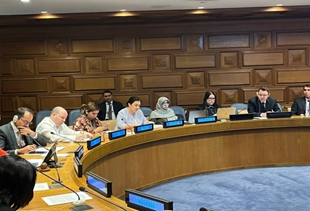
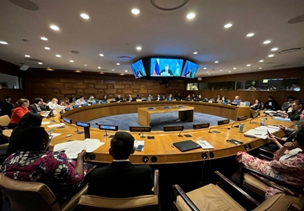
On 4 September this year, a special event was organised at the UN headquarters together with the Permanent Missions of Russia, China, Uzbekistan, Egypt, Pakistan, Singapore and the UN Office on Drugs and Crime on a unified and holistic approach to combating drug addiction, addressing drug trafficking and combating it in ensuring human rights.
The Oliy Majlis Commissioner for Human Rights (Ombudsman) F. Eshmatova also took part in the event, which was attended by delegations from more than 60 member countries.
The event noted that addressing and combating addiction is essential to ensuring human rights. This fight contributes to the creation of a healthy, safe and sustainable environment in society. Addiction can exacerbate crime and social problems, as well as cause serious damage to people’s physical and mental health. Especially its outbreak among young people hinders their right to education and personal development.
This event therefore provided a dialogue among UN Member States on effective strategies to address and combat the global drug problem.
Speaking at the special event, Ombudsman F. Eshmatova drew attention to the importance for all member states of the resolution adopted on 4 June 2024 by the UN General Assembly on ‘Readiness of Central Asian States to cooperate with a united front in effectively addressing and overcoming drug-related problems’, which is an initiative of Uzbekistan. It was also noted that this document is fully consistent with the National Strategy to Combat Drug Addiction and Drug Crime in the Republic of Uzbekistan for 2024-2028. Uzbekistan, based on the priority idea of ‘all efforts for human dignity’, is making every effort to eliminate negative factors affecting our population by creating ‘immunity’ to their consumption, ensuring the right of citizens to receive quality medical care, organising medical and sanitary treatment for patients with drug addiction on the basis of world standards, the Ombudsman said.
For information: The Ombudsman has been co-operating with the representative of the UN Office on Drugs and Crime in the Central Asian region throughout her work.
Representatives from Cuba, the United States, Switzerland, Kazakhstan, China, Egypt, Nigeria, Iran and Tajikistan also spoke at the event.
THE OMBUDSMAN RECEIVED THE UNICEF REPRESENTATIVE IN AZERBAIJAN.
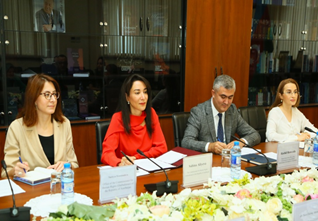
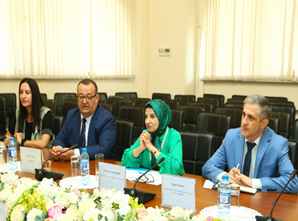
The Ombudsman of Azerbaijan, Sabina Aliyeva, received Saja Farooq Abdullah, the newly appointed UNICEF Representative in Azerbaijan.
During the meeting, the Ombudsman provided detailed information to the guest about the activities carried out in the field of the protection of child rights.
Speaking about international cooperation, the Ombudsman noted the existence of close collaborations with international organizations, including the UN and its specialized agencies, highlighting the several important joint projects. The Ombudsman emphasized the significance of the initiatives carried out in collaboration with UNICEF and discussed the work accomplished in this field.
- Aliyeva provided information about the recent amendments to the Constitutional Law “On the Commissioner for Human Rights (Ombudsman) of the Republic of Azerbaijan,” stating that her mandate has been expanded in the areas of child rights protection and several other fields.
The Ombudsman also talked about extensive information about the work carried out within the NPM, as well as independent monitoring mechanisms in the field of children’s rights. She discussed the efforts related to juvenile justice, addressing the appeals of prisoners and their family members, and submitting pardon proposals to the country’s President, among other areas of activity.
The Ombudsman stated that the landmines planted by Armenia during the occupation in our liberated territories pose a threat to the life and health of civilians, noting that children are also among those affected by landmines. She emphasized the importance of raising awareness among children about mine safety.
In turn, UNICEF’s representative in our country, Saja Farooq Abdullah, expressed gratitude to the Ombudsman for the warm reception.
During the meeting, an exchange of views was also held on the prospects for future cooperation between the institutions and a number of other issues of mutual interest.
IT’S TIME TO SUMMARISE THE RESULTS OF THE TELEPHONE HOTLINE.

During the day (from 07.00 to 20.00) the telephone “hot line” of the Office of the Ombudsman for Human Rights worked. In total, about 60 calls were received. No violations of citizens’ electoral rights were detected. The questions of residents concerned the location of the polling station commission, the possibility of voting for those who do not have registration in the territory of the republic, as well as voting at the place of residence, not at the place of registration, voting at home. All questions were resolved online, and no appeal was left without attention.