
Category Archives: AOA News Letter
“IMPROVEMENT NEEDED IN DISABILITY EMPLOYMENT LEVY TO ENSURE STRESS-FREE PARENTAL LEAVE.”

- ACRC calls for adjustments to employer obligations regarding levy payments during disabled workers’ parental leave
To ensure disabled workers can take parental leave without undue stress, the Anti-Corruption and Civil Rights Commission (ACRC, Chairperson Ryu Chul Whan) has recommended that the employer’s obligation to pay employment levies during such leave be relaxed.
* The disability employment levy is imposed on companies with over 100 employees if they fail to meet the requirement of employing at least 3.1% of their workforce as disabled individuals.
ACRC has pointed out that the current system imposes a uniform burden on employers, even when a disabled worker takes parental leave. This practice, in effect, restricts disabled employees from freely taking such leave. As such, the ACRC has recommended that the Ministry of Employment and Labor improve this system.
For instance, a hospital in Jeonbuk Special Self-Governing Province with approximately 190 employees met its obligation by employing six disabled workers (3.1% of the workforce). However, when one of its disabled nurses went on parental leave, the hospital failed to meet the mandatory ratio and had to pay a fine of approximately 5 million KRW.
The hospital filed a complaint with the ACRC, arguing that it was unfair to require a uniform levy payment without accounting for the time needed to recruit a substitute disabled worker during the parental leave period.
ACRC’s investigation revealed that the current system obliges employers to pay the employment levy without considering the necessary time for hiring replacement workers. This has made it difficult for disabled workers to take parental leave and has discouraged employers from hiring disabled workers who may require parental leave, creating unintended consequences.
In response, ACRC has recommended that the Ministry of Employment and Labor adjust the system to give employers a grace period for hiring replacement workers during the parental leave of disabled employees, thereby reducing the employment levy burden during this period.
Yang Jong-Sam, Director General for Ombudsman of ACRC, stated, “This decision highlights the need to improve the current employment levy system to prevent it from restricting disabled workers’ rights to parental leave. We hope this improvement will foster a more supportive environment for disabled employees seeking parental leave.”
OMBUDSMAN FETES STUDENT LEADERS AS INTEGRITY CHAMPIONS..
The Office of the Ombudsman recognized integrity champions of the youth during its Campus Integrity Crusaders (CIC) Awards Ceremony on 30 August 2024. Spearheaded by Deputy Ombudsman Jose Balmeo, Jr., Assistant Ombudsman Janina Hidalgo and Director Rhodora Fenix-Galicia, the Office awarded seven outstanding school organizations for the successful implementation of its enrolled activities promoting integrity, social responsibility and gender and development.
For school year 2023-2024, the following schools were feted as outstanding CICs:
- Campus Integrity Vanguard, Pinagbuhatan High School (Deped-Pasig)
- Caybiga Sulong Integridad, Caybiga High School (Deped-Caloocan)
- Coalesce Movement For Righteousness, Las Piñas National High School (Deped-Las Piñas)
- Juan Sumulong High School Guardians of Virtue, Juan Sumulong High School (Deped-Quezon City)
- Kasilag Integrity Crusaders, Lucrecia R. Kasilag Senior High School (Deped- Quezon City)
- New Villager Integrity Crusaders, Bagong Barrio National High School (Deped-Caloocan)
- Tondonian’s Campus Integrity Crusaders, Tondo High School (Deped-Manila)
The student leaders were accompanied by their respective advisers, principals and other school officials, with Deped Regional Director Jocelyn DR Andaya delivering the inspirational message during the awards ceremony.
Campus Integrity Crusaders are non-partisan school-based youth organizations recognized by a secondary or tertiary educational institution and duly accredited by the Office of the Ombudsman. The strategy of accrediting Campus Integrity Crusaders aims to empower the youth in their involvement in corruption prevention initiatives by developing their leadership skills and instilling values of integrity and social responsibility.
WAFAQI MOHTASIB (OMBUDSMAN) PAKISTAN INAUGURATES ANNUAL CONFERENCE OF BANKING MOHTASIB.
The Wafaqi Mohtasib (Ombudsman) Pakistan, Mr. Ejaz Ahmed Qureshi, has said that all the Ombudsmen are working in their respective jurisdictions with a commitment to resolve the grievances of the general public speedily. On 31 August 2024, these remarks were made by Mr. Qureshi while inaugurating the Annual Conference of Banking Mohtasib Pakistan with the “Focus on Values in Public Sector Services” at a local hotel in Karachi. All the institutions of Ombudsmen are doing public service by resolving the complainants’ grievances.
He lauded the role of Banking Mohtasib Pakistan, Mr. Sirajuddin Aziz for taking the initiative of holding this Conference to share the collective experience of good governance and rule of law, adding that such initiatives are essential for improving the efficiency of an organization.
Speaking about the development and progress of Federal Ombudsman’s Office, Mr. Qureshi said that there were only four offices a few years back which have now gone up to 24 Offices across the country.
Speaking on the occasion, the former Federal Minister, Mr. Javed Jabbar lauded the Banking Mohtasib Pakistan, Mr. Sirajuddin Aziz for the remarkable initiative taken by him to hold the First ever conference in which all the officers and staff across Pakistan (BMP Secretariat and Regional Offices) are participating. “This reflects his vision and empathy for the people that the Conference has been held after 19 years of the establishment of the Banking Mohtasib Pakistan Secretariat“, he added.
He also emphasized to the audience to inculcate in their lives the values of respect, integrity, etc. to ameliorate the lot of the people. Mr. Javed Jabbar stressed upon the need for providing financial assistance to women engaged in small and medium enterprises (SMEs). In this regard he asked the Banking Mohtasib to use his good offices to persuade the State Bank of Pakistan officials as well as high-ups of commercial banks to provide finances to SMEs, particularly to women.
SEOUL METROPOLITAN GOVERNMENT CITIZENS’ OMBUDSMAN COMMISSION LEGAL ADVISORY GROUP APPOINTMENT CEREMONY AND ADVISORY MEETING HELD… DISCUSSING MEASURES TO ENSURE AUDIT EFFECTIVENESS.
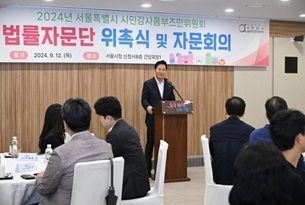
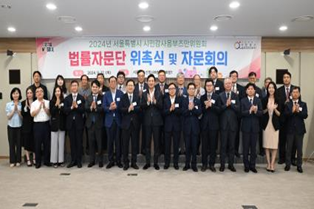
⦁ Mayor Oh Se-hoon reappoints 25 legal advisory members on Thursday, the 12th, and presents awards to outstanding members
⦁ Advisory meeting held on the topics of securing enforceability of audit results and introducing a period for citizens to request audits
⦁ Results of the discussion will be reflected in legislative and institutional reforms, aimed at providing substantial citizen rights protection and enhancing the public nature of the city’s administration.
The Seoul Metropolitan Government Citizens’ Ombudsman Commission (hereinafter referred to as the “Commission,” chaired by Joo Yong-hak), the nation’s first collegiate administrative agencies and a dedicated organization for handling citizen grievances, held the 2024 Second Half Legal Advisory Group Appointment Ceremony and Advisory Meeting on Thursday, September 12, at
4 p.m. in the conference room on the 8th floor of Seoul City Hall.
“Legal Advisory Group” was established in 2022 to enhance legal expertise through in-depth legal reviews of citizen-initiated audits, self-initiated audits, grievance investigations, and public project oversight”.
Currently, the Commission operates with a “Legal Advisory Group” consisting of approximately
40 members, including lawyers, legal scholars, and professors, and holds advisory meetings twice a year (first and second half).
The legal advisory members reappointed at this event total 25 (16 lawyers, 8 law professors, and
1 legal scholar), following the expiration of their terms in July and September this year. A recognition ceremony was also held, presenting certificates of appreciation to five outstanding members who have actively participated in legal consultations and advisory meetings for over a year.
According to Article 26 of the Commission’s operational regulations, the term of advisory group members is two years, and they may be reappointed up to three times.
Mayor Oh Se-hoon attended the ceremony, personally awarding the appointment and appreciation certificates to the legal advisory members, expressing gratitude for their contribution in enhancing citizen trust in city governance.
Since its launch in July 2022, the Legal Advisory Group has provided legal advice on 244 cases
(36 audits, 204 grievance investigations, and 4 public project oversight cases) by the end of August this year. This has enabled the Commission to review key legal issues in audit and investigation practices swiftly and efficiently, with expert opinions from legal professionals.
Mayor Oh remarked, “As the Citizens’ Ombudsman system helps citizens better understand Seoul’s projects and policies, it is an important yet often unsung task,” adding, “I ask for your continued support in strengthening the foundation of Seoul through the work of the Citizens’ Ombudsman Commission.”
Following the appointment ceremony, an advisory meeting was held, chaired by Legal Advisory Group Head Seo Young-deuk, to discuss two audit-related topics: (1) Measures to secure the enforceability of audit result demands and (2) The introduction of a period for requesting citizen audits.
The first topic, “Measures to secure the enforceability of audit result demands,” was presented by lawyer Jeong Ho-jeong. During the meeting, discussions focused on the lack of enforcement mechanisms in relevant laws, such as the “Administrative Audit Regulations for Local Governments” and the “Seoul Metropolitan Government Administrative Audit Rules.” The participants shared both direct and indirect measures that could be implemented to increase the enforcement of audit result demands.
The second topic, “The introduction of a period for requesting citizen audits,” was presented by lawyer Oh Hye-won. Unlike the resident audit system under the Local Autonomy Act, the citizen audit system under the “Seoul Metropolitan Government Citizens’ Audit Ombudsman Committee Operation and Resident Audit Request Ordinance” does not specify a time limit for requesting audits of specific matters. The meeting discussed the legal feasibility, as well as the positive and negative effects, of introducing a time limit for citizen audit requests to improve the efficiency and timeliness of audits.
The Citizens’ Audit Ombudsman Committee plans to use the discussions from this legal advisory meeting to promote legal and institutional reforms aimed at establishing an efficient, performance-based audit and investigation system. The committee also emphasized its commitment to continuously enhancing fairness and transparency in municipal governance from the citizens’ perspective.
Chairman Joo Yong-hak of the Citizens’ Audit Ombudsman Committee stated, “With the continued active cooperation of the legal advisory group members, we will strive to conduct our audit and investigation duties swiftly and fairly, focusing on protecting citizens’ rights and human rights. We aim to be a proactive committee that enhances citizens’ trust and satisfaction in municipal governance.”
<Reference> Overview of the “Citizens’ Audit Ombudsman Committee Legal Advisory Group”
⦁ (Basis) Article 26 (Formation and Operation of the Legal Advisory Group) of the Seoul Metropolitan Government Citizens’ Audit Ombudsman Committee Regulations
⦁ (Role) Provide legal advice in areas related to the audits, grievance investigations, and public project monitoring conducted by the Citizens’ Audit Ombudsman Committee
⦁ (Qualifications) Lawyers registered with the Korean Bar Association, law professors currently employed at universities, and other professionals with knowledge and experience in legal fields, holding at least a Ph.D. in law
⦁ (Current Status) 42 members (as of September 2024) – 32 lawyers, 8 law professors, and 2 Ph.D. holders in law
⦁ (Performance Record) A total of 244 legal consultations related to citizen, resident, and ex officio audits and grievance investigations (as of August 31, 2024) (36 audits, 204 grievance investigations, 4 public project monitoring)
DR. MUHAMMAD SOHAIL RAJPUT, PROVINCIAL OMBUDSMAN SINDH ATTENDED INTERNATIONAL CONFERENCE OF OMBUDSMAN, CASSINO, ITALY.
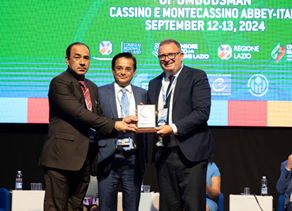
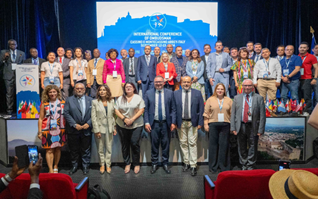
Provincial Ombudsman Sindh, Dr. Muhammad Sohail Rajput, participated in the International Conference of Ombudsman held on 12-13, September, 2024 in Monte Cassino, Italy. The event was hosted by the Ombudsman of the Lazio Region, Dott. Marino Fardeli.
On the occasion Ombudsman Sindh delivered a presentation on ‘The Impact of Climate Change’ and highlighted the challenges faced by the Pakistan especially with regard to Sindh Province during the 2022 floods.
The Conference emphasized the critical role played by Ombudsman in protecting public rights and promoting accountability within government institutions. The Conference also provided a platform for international delegates to exchange experiences and insights on the challenges faced in their respective regions.
The Conference underscored the importance of global collaboration among Ombudsmen to strengthen systems that safeguard citizen’s rights.
OMBUDSMAN PROBES ARRANGEMENTS FOR RECOVERING PUBLIC RENTAL HOUSING FLATS BY AUTHORITIES.

The Ombudsman, Mr. Jack Chan, (19 September) announced the launch of a direct investigation operation to examine in detail the workflow of and arrangements for recovering public rental housing (“PRH”) flats for reallocation by the authorities.
Every year, the Hong Kong Housing Authority (“HKHA”) and the Hong Kong Housing Society (“HKHS”) recover PRH flats due to various reasons for reallocation, such as tenants passing away, moving into residential care homes, purchasing subsidised sale flats, or breaching the terms of tenancy agreement. Last year (i.e. 2023/24), the HKHA allocated about 23,600 PRH flats, of which around 19,700 were recovered flats. The number of recovered PRH flats is expected to increase as the authorities have recently stepped up their efforts to combat the abuse of PRH.
At present, the HKHA’s key performance indicator (“KPI”) for refurbishing a vacant PRH flat is 44 days. The Ombudsman’s Office has noticed that, over the past three years, the average time taken to refurbish a vacant PRH flat has been close to this KPI. Nevertheless, refurbishment works have occasionally taken more than 100 days to complete, with one instance lasting as long as 197 days. Whether the process of recovering and refurbishing PRH flats by the HKHA and the HKHS is proper and efficient will directly affect whether families on the waiting list for PRH can be offered flats as soon as possible.
Furthermore, as the authorities have enhanced the efforts in combating tenancy abuse, the number of appeal cases is on the rise. Under the current procedures, the recovery of a PRH flat is suspended during an appeal. The Office is, therefore, concerned about whether there is room to expedite and improve the workflow of and procedures for appeals.
On the other hand, the Office receives complaints from time to time alleging the authorities for failure to properly dispose of items left in PRH flats by outgoing tenants, particularly singleton tenants and casually discarding items without contacting the tenants concerned or their next of kin, and without obtaining the tenants’ prior consent.
Mr. Chan said, “The current-term Government has been making every effort to increase PRH supply to satisfy people’s housing needs, and its efforts are delivering tangible results. If PRH flats are recovered and refurbished in a timely manner for reallocation to the families on the PRH waiting list as soon as possible, it would not only shorten their waiting time but also enhance their sense of happiness and contentment. In this connection, I have decided to launch this direct investigation operation to carefully examine the workflow of and arrangements for the Housing Department (as the HKHA’s executive arm) and the HKHS to recover PRH flats, including the specific procedures for refurbishing flats for reallocation and for tenants to appeal against the Notice-to-quit, as well as the various ways to dispose of items left in PRH flats by outgoing tenants. Pertinent improvement recommendations will be made where necessary.”

A training seminar for public assistants of the Ombudsman for Human Rights in the Republic of Tatarstan was held today at the Regional Management Centre of the Republic of Tatarstan. The main topics of our seminar were the development of youth policy in Tatarstan, the upcoming elections to the State Council of the Republic of Tatarstan, as well as the analysis of the work of the Public Assistants of the Commissioner for the past six months. In the context of new challenges associated with changes in the global world, modernisation of the goals of socio-economic development of the country, the protection of the rights and legitimate interests of young people acquires special significance. One of the most important upcoming political events of our republic, which will take place on 8 September 2024, is the election of deputies to the State Council of the Republic of Tatarstan.
At the end of the seminar, the Ombudsman’s public assistants visited the Doverie Centre for Psychological and Pedagogical Assistance to Children and Youth. The centre left extremely positive impressions, as here everyone can get psychological help, and people from 14 to 35 years old – absolutely free of charge! There are also various family-building activities here, and anyone can just come and play board games and just relax! The seminar was rich and interesting, and everyone who attended really learnt something new!
“PROHIBITION OF SPECIAL EMPLOYMENT AND ADDITIONAL SCORES FOR VETERANS SHOULD BE CAREFULLY EXAMINED”.

“Prohibition of Special Employment and Additional Scores for Veterans should be carefully examined” … Public Institutions ‘Employment Regulations to be ‘Modified’
– ACRC conducts ‘employment regulation consulting’ for local public institutions… preventing unfair employment caused by flaws in employment regulations or omission of a system
– In the first half of this year, ACRC completed issuing recommendations for improvement for a total of 5,163 items to 220 public institutions
(29, August 2024, ACRC)
From now on, public institutions employment regulations stipulating procedures and ways of hiring employees are projected to be modified to be fairer and more transparent.
The Anti-Corruption and Civil Rights Commission (ACRC, Chairperson Ryu Chul Whan) provides ‘consulting on internal employment regulations of public institutions for fair employment’ (the “consulting”) to improve or supplement public institutions’ hiring regulations if inadequate.
The consulting aims to prevent unfair hiring that can be caused by inadequate employment bylaws of public institutions and is provided in a way of issuing a recommendation for improvement to a public institution if its bylaws are found to be in violation of provisions of upper laws related to employment, such as the Fair Hiring Procedure Act, or if omission of critical items is found.
< Examples of Faulty Hiring Regulations of Public Institutions >
■ Despite laws prohibiting special hiring, ○○public corporation stipulated special hiring procedures in its bylaw.
■ Despite laws stipulating that those subject to the employment assistance under law should be hired with priority if there are ties, △△Committee stated different hiring process in its bylaw.
■ Despite laws obligating additional scores for veterans, □□Institute specified it as a voluntary matter.
There are 44 main areas to be scrutinized for fair hiring of each public institution, including: prior consultation with a supervisory agency for hiring plan; establishment of examining board and participation of external members; standard for handling ties; and provision of statutory additional scores, and this year, the ACRC is providing consulting to improve bylaws of local public institutions closely linked to the public livelihood.
The Commission has issued 5,163 recommendations for improvements in total to 220 local public institutions through the consulting on bylaws for the first half of the year.
Areas for improvements have been found in all of the bylaws scrutinized through the consulting by the Commission up to now, and in particular, 23.6% (52 institutions) of the total public institutions scrutinized have been found that they need to improve more than 30 items in their bylaws.
< The Status of Public Institutions in Need of By-law Improvement >
| No. of recommendations | Total | Local public corporation | Gov’t-funded institution |
| Not more than 10 | 7 | 3 | 4 |
| More than 10 ~ not more than 20 | 84 | 21 | 63 |
| More than 20 ~ not more than 30 | 77 | 6 | 71 |
| More than 30 ~ not more than 40 | 46 | 0 | 46 |
| More than 40 | 6 | 0 | 6 |
| Total | 220 | 30 | 190 |
Major vulnerable areas included: additional scores under the Act on the Honorable Treatment of and Support for Persons of Distinguished Service to the State (216 institutions); verification of ary evidence (209 institutions); taking minutes of a personnel committee (203 institutions); designation of employment examination board members and participation of external members (182 institutions); and establishment of a standard regarding how to deal with ties (169 institutions).
< Areas where Major Recommendations were Issued for Bylaw Improvements >
| Rank | Areas where improvements are needed | No. of Institutions | Rank | Areas where improvements are needed | No. of Institutions |
| 1 | Adding scores to the scores earned by persons eligible for employment assistance | 216 | 6 | Prohibition of requiring submission of unnecessary personal information | 153 |
| 2 | Duty to verify and review ary evidence | 209 | 7 | Prohibition of unreasonable restrictions and discrimination | 150 |
| 3 | Taking minutes of a personnel committee | 203 | 8 | Specifying a clear standard for relief of victims of hiring irregularities | 146 |
| 4 | Designating examiners and having outside members participate | 182 | 9 | Making it mandatory for institutions to conduct review process upon changing the contents of hiring announcement | 141 |
| 5 | Establishing the standard for handling ties in employment examination | 169 | 10 | Specifying major matters in the employment notice | 141 |
In particular, if scores are not properly added to the scores earned by persons eligible for employment assistance under the law, or ary evidences are insufficiently reviewed and verified, it can change who passes the employment examination, etc. Therefore, more active interest and participation of public institutions are necessary for improving and overhauling their
employment-related bylaws.
The Vice Chairperson of the ACRC Chung Seung Yun said, “More sound and firm foundations for fair hiring can be established in public institutions through reforming the front-line public institutions’ employment bylaws. The ACRC will spare no efforts to provide multifaceted support and assistance including consulting for the improvement of bylaws of public institutions for fair hiring until the day when a culture of fair employment is established comes in the country.”
OFFICE OF THE OMBUDSMAN ANNOUNCES RESULTS OF DIRECT INVESTIGATION OPERATION INTO TRANSPORT DEPARTMENT’S ARRANGEMENTS FOR DRIVING TESTS AND THE OMBUDSMAN’S STRATEGIC FOCUSES.
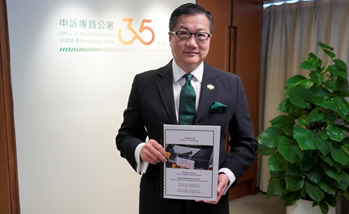
The Ombudsman, Mr. Jack Chan, announced the completion of a direct investigation operation into the arrangements for driving tests by the Transport Department (TD), and made 12 major recommendations to the Department.
For the live broadcast of the press conference, please watch the replay on the Office’s YouTube channel.
In recent years, there has been an increasing public demand for driving tests and the average waiting time of driving tests is very long. During the COVID-19 pandemic, the TD suspended the written tests and road tests on six occasions, resulting in a backlog of driving test applications. In November 2022, the waiting time for road tests for private cars and light goods vehicles had once been more than 340 days.
On the other hand, the Office of The Ombudsman’s investigation found a rising number of appeals against road test results in recent years. The number of appeals had doubled from 192 cases in 2017 to 380 cases in 2023, reflecting an increase in the public’s discontent with the TD’s road test arrangements.
The Office also noticed that since the pandemic ended, the TD had recruited more Driving Examiners (DEs) and made use of technology to increase road test output. The waiting time for road tests for private cars and light goods vehicles has now shrunk to around 200 days.
While recognising the efforts made by the Department, the Office considers that there is still room for improvement in the arrangements for driving tests.
Mr Chan said, “In addition to proactively exploring how to increase road test output by redeploying manpower resources and designating new test venues, the TD should also review the Duty Reporting Arrangement. Before our investigation, DEs are required to arrive at the TD Headquarters in Ho Man Tin, Kowloon, every day for ballot-drawing to determine the test centres they are responsible for, and then proceed to the various driving test centres to discharge their duties. We are pleased to learn that in response to our investigation, the TD has since mid-June this year implemented the Direct Reporting Arrangement on a trial basis at four driving test centres. We recommend that the TD review the Arrangement. If the trial is positively received, the Department should proactively study the feasibility of extending the Arrangement to other driving test centres. It is estimated that if the Direct Reporting Arrangement is implemented, about 5,500 additional road tests for non-commercial vehicles can be conducted each year, meaning that an additional 5,500 candidates can be benefited. We consider that this recommendation, which does not require additional manpower, man hour or test venues but only a change of the reporting arrangement for the DEs, is worth pursuing.
“With the growing popularity of dashboard cameras and the rapid technological development, installing video recording equipment in test vehicles is the prevailing trend, and it actually has certain practical benefits. The Office opines that the TD should seriously review its current practice of prohibiting video recording of road tests. We agree that protecting personal privacy is of paramount importance. If it is concluded that video recording is feasible, the TD should examine measures to protect personal privacy and continuously communicate with the stakeholders in the course of introducing video-recording equipment specifically for road tests. I understand that the TD is conducting a relevant feasibility study, which covers technical requirements, privacy issues and legal liabilities. We consider it the right direction to take.”
The Ombudsman has made the following improvement recommendations to the TD:
- to proactively explore ways to further increase road test output through flexible manpower deployment. For instance, it can consider arranging for the DEs to work extra hours on weekends;
- to study proactively the feasibility of increasing road test output by designating more driving test centres at locations farther away from the city centre or residential areas in various parts of Hong Kong;
- to conscientiously review the trial run of the Direct Reporting Arrangement at the four driving test centres;
- if the above trial arrangement is positively received, the TD should proactively examine the possibility of extending the Arrangement to other driving test centres;
- to review and consider resuming the practice of setting service standards and achievement targets in terms of waiting time for road tests for non-commercial vehicles;
- to promulgate guidelines to DEs as soon as possible on the making of instant remarks during road tests;
- to review its current practice of prohibiting video recording of road tests;
- if video recording is feasible upon review, the TD should examine measures to protect personal privacy and communicate with the stakeholders continuously in the course of introducing video-recording equipment specifically for road tests;
- in the long run, to consider whether advanced technology (such as electronic assessment systems) should be employed to help DEs evaluate candidates’ performance in driving tests;
- to seriously review the validity periods of the learner’s driving licence and the driving test form;
- to implement suitable measures as soon as possible to prevent the situation where more than one candidate registers the same test vehicle for their road tests during the same time slot because the private driving instructor has to provide his/her vehicle for use by several candidates under a tight road test schedule; and
- to step up management at driving test centres and keep in constant communication with the driving instructor sector with respect to the monitoring of the operations of their staff so as to ensure that road tests are conducted in a fair and orderly manner.
Regarding the way forward, Mr. Chan indicated that the overriding objective of the Office is to help resolve the difficulties faced by members of the public so as to improve people’s livelihood and foster social harmony.
Mr Chan stated that the Office has three strategic focuses. First of all, in the coming years, the Office will go full steam ahead with the use of mediation to resolve complaints from the public, respond to public demands promptly, and reduce conflicts in society to bring about social cohesion, with a view to revitalising the economy and improving people’s livelihood.
Mr Chan said, “In fact, the Office’s investigation and mediation work are complementary. The Office will continue to carry out comprehensive and proactive investigations into cases of maladministration, especially those contain systemic issues. In such instances, the Office will firmly point out the problems to the relevant departments or agencies, provide practical improvement suggestions and monitor the implementation of these recommendations. Furthermore, the Office will inform the public and the media about the investigation results in a timely manner. Where the Office determines that a case does not involve maladministration, it may choose to handle the case through mediation so as to clear the doubts and discontent of those seeking our help. I believe the collaboration of investigation and mediation is the best way to address the everyday issues faced by the public. Mediation would not weaken the investigative functions of the Office; on the contrary, it enhances its role in promoting social harmony.”
To foster the strategic goals on mediation and interdepartmental collaboration, the Office will use mediation as the default handling mode in complaint cases involving minor or no maladministration. Moreover, the Office has recently recommended other departments and agencies consider promoting mediation within their offices to resolve complaints efficiently. The Office has also invited other departments and agencies to appoint a Mediation Coordinator in their offices for handling minor complaints lodged with the Office that can be handled through mediation.
Another strategic focus of the Office is to promote interdepartmental collaboration. By handling cases involving interdepartmental collaboration and through organising seminars and exchange forums from time to time, the Office encourages various government departments and public organisations to work together to enhance administrative arrangements for better public services and a stronger sense of gain and happiness among members of the public.
The third strategic focus is to continue instilling a “positive complaint culture” in society and encouraging members of the public (especially the younger generation) to express views in a positive and constructive manner with the aim of improving public administration.
NEW REGIONAL OFFICE AT MUZAFFARABAD (AZAD JAMMU & KASHMIR) STARTS FUNCTIONING.
- New Regional Office at Muzaffarabad (Azad Jammu & Kashmir) starts functioning.
- The people of Azad Jammu & Kashmir can lodge complaints against mal-administration of Federal Government agencies.
On the directions of the Wafaqi Mohtasib (Ombudsman), Mr. Ejaz Ahmad Qureshi, the Regional Office Muzaffarabad, Azad Jammu and Kashmir has started functioning. Now the people of AJ&K can lodge complaints against mal-administration of about 180 Federal Government agencies including WAPDA, NADRA, BISP, Pakistan Baitul Mall, Pakistan Post Office, FIA, Passport Office, EOBI etc. Previously, the people of AJ&K had to travel all the way to Islamabad Head Office to lodge their complaints against mal-administration of these agencies.
The Wafaqi Mohtasib (Ombudsman) has appointed Mr. Mansoor Qadir Dar, former Secretary, Azad Jammu and Kashmir as Incharge/Commissioner IRD of the Regional Office, Muzaffarabad to provide services to the people of AJ&K.
The Regional Office, Muzaffarabad is located at Room No. 205/206 Block No. 05, New Secretariat, Chattar Domail and the contact number of the RO is 05822-940241. Complainants can also consult Wafaqi Mohtasib’s Website www.mohtasib.gov.pk or can send their complaints through mobile app or e-mail wmsromzd@gmail.com.