Category Archives: AOA News Letter
OMBUDSMAN PROBES HIGHWAYS DEPARTMENT’S WORK ON REPAIR AND MAINTENANCE OF PUBLIC ROADS.

The Ombudsman, Mr. Jack Chan, today (11 April) announced the launch of a direct investigation operation to examine the work of the Highways Department (“HyD”) on the repair and maintenance of public roads, in particular the prevention of serious road subsidence incidents.
As the authority responsible for the repair and maintenance of public roads, HyD engages contractors to carry out regular inspections and maintenance works to keep roads in safe and serviceable condition to ensure the safety of road users. However, the Office of The Ombudsman (“the Office”) has noted from media reports about incidents of public roads falling into disrepair from time to time, including uneven surfaces of carriageways, potholes and other damage, as well as serious road subsidence due to special incidents or extremely adverse weather conditions. The Office has also received from time to time public complaints against HyD for failing to properly follow up on road maintenance, such as ineffective monitoring of contractors and delays in road repair works.
Furthermore, as extreme weather conditions have become more frequent in recent years, HyD’s contingency measures and emergency repair works in relation to extreme weather conditions are crucial to ensuring the safety of road users and minimising inconvenience to the public.
Mr. Chan said, “Proper repair and maintenance of public roads are essential for ensuring safe and serviceable conditions of roads as well as safety and convenience for the public. Moreover, as sudden and exceptionally severe rainstorms brought about by extreme weather have happened from time to time in recent years, road closures due to subsidence and serious flooding also take place now and then. In this light, I have decided to launch a direct investigation operation to examine HyD’s work on the repair and maintenance of public roads, including HyD’s follow-up actions on complaints about road damages, monitoring of the road repair and maintenance works carried out by contractors, collaboration with the relevant departments in respect of large-scale road reinstatement works, as well as its contingency measures to handle road incidents in relation to extreme weather conditions, in particular serious road subsidence, and its emergency repairs. Where necessary, pertinent recommendations will be made for improvement.”
FEDERAL OMBUDSMAN ADDRESSES SENIOR JOURNALISTS.
- Federal Ombudsman’s Office Receives, Redresses Record Number of Complaints
- Impressive Implementation Rate Achieved
- Resolves to Further Enhance Outreach to Remote Areas
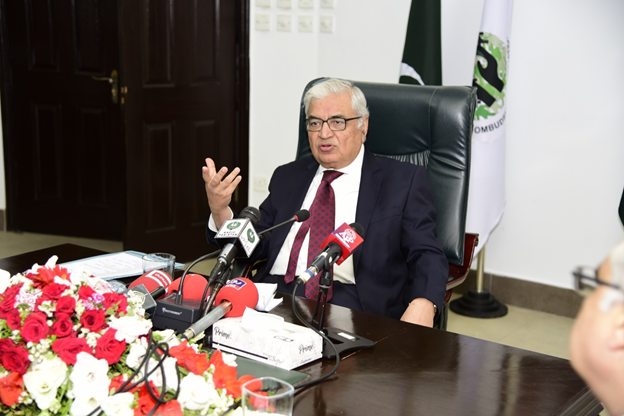
Islamabad: 8 April, 2025 – The outgoing year 2024 has been very eventful and productive for the Institution of Federal Ombudsman as it witnessed resolution of the record number of 223,198 complaints, out of the total 226, 372 it received. It showed an increase of 17% and 16% in receipt and disposal of complaints respectively over the figures of 2023.
This was stated by the Wafaqi Mohtasib (Federal Ombudsman), Mr. Ejaz Ahmad Qureshi, while informally talking to a group of senior journalists at the Wafaqi Mohtasib Secretariat here this afternoon.
The Federal Ombudsman said that during 2024, this office has been able to achieve an impressive implementation rate of 93.21% of its decisions/findings as against 85.70% in 2023.
During 2024,he said, 126 Khuli Katcheries (Public Courts) have been held across Pakistan with a view to providing administrative justice at the door steps of the people. In addition, 171 Outreach Complaint Resolution (OCR) visits have been carried out, which were instrumental in resolving as many as 4840 cases. Similarly, 79 Inspection Visits to different Federal Government agencies and departments have been held to improve their service delivery, informed the Ombudsman.
“With the opening of new Regional Offices and Complaint Collection Centres, the outreach and accessibility has been increased remarkably as now it has presence in 25 cities of the country including Muzaffarabad (AJ&K), Gilgit Baltistan and Sahiwal. We shall soon be opening another regional office at DG Khan”, he observed. Yet another important milestone has been the availability of IT and digital platforms for lodging the complaints and attending the hearing through zoom link and WhatsApp.
The Federal Ombudsman further added that the office has emerged as a truly poor man’s court, providing free and expeditious administrative relief to a large number of complainants at their door steps. Referring to the steps undertaken for facilitating the overseas Pakistanis, he said that a total number of 151,897 complaints were received during 2024. The One Window Facilitation Desks (OWFDs) set up at the international airports of the country facilitated 111,184 complainants, whereas 38,592 complaints were received by the Pakistan Missions abroad and 2,121 complaints by the office of Grievance Commissioner for Overseas Pakistanis established at Wafaqi Mohtasib Secretariat.
The Federal Ombudsman also informed that a number of steps have been taken for ameliorating the lot of children in the country including appointment of a full-fledged Grievance Commissioner for Children, whose office is located in the Wafaqi Mohtasib Secretariat. Underscoring the need for raising the general awareness about the existence of this forum, the Wafaqi Mohtasib stated that a well-planned public awareness campaign is producing the desired results and the general public is fast becoming aware of its existence. This office has so far carried out 80 studies/reports to fix the systemic issues and problems being faced by the various Federal Government agencies.
Touching on the international profile of the institution, the Federal Ombudsman stated that as President of the Asian Ombudsman Association (AOA), Pakistan was making efforts for upholding the cause of Ombudsmanship in the Asian Region and beyond.
PUBLIC DEFENDER OF GEORGIA PARTICIPATES IN GANHRI ANNUAL MEETING AND CONFERENCE.
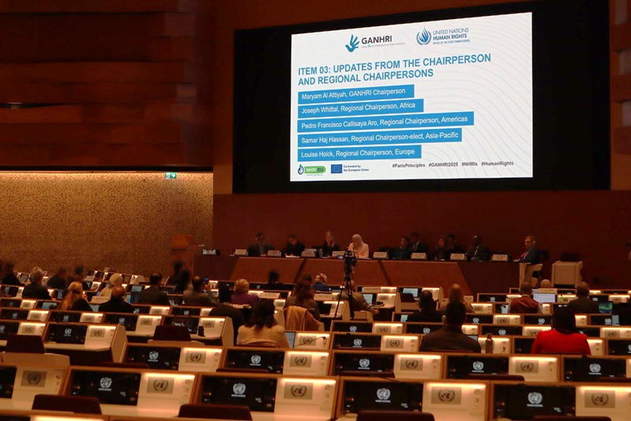
On March 10-12, 2025, Levan Ioseliani, Public Defender of Georgia, as well as Tamar Gvaramadze and Elene Ghudushauri, Deputies of the Public Defender, participated in the Annual Meeting and Conference of the Global Alliance of National Human Rights Institutions (GANHRI) held in Geneva.
The main directions of the strategy, activities, financial and audit reports of the GANHRI regional network and the European Network of National Human Rights Institutions (ENNHRI) were discussed at the events held within the framework of the meeting. Elections were also held, as a result of which, for the next 3 years, GANHRI will be led by Amina Bouayach, Chairperson of Morocco’s National Human Rights Council; Alyson Kilpatrick, Chief Commissioner of the Northern Ireland Human Rights Commission, took the position of the Secretary of the Alliance, and Tamar Gvaramadze, First Deputy Public Defender of Georgia, officially assumed her duties as a member of the ENNHRI (Europe) Governing Board and GANHRI (world) Bureau. The Public Defender and his deputies also participated in special sessions of GANHRI, which were dedicated to the protection of the rights of persons with disabilities, the accreditation of NHRIs and its importance. The results of the Public Defender’s accreditation passed in October 2024 were also approved at the GANHRI annual meeting.
Several parallel events were also held within the framework of the conference. Among other things, Tamar Gvaramadze chaired an open meeting organized by the GANHRI Working Group on Ageing for missions and national human rights institutions from various countries, which focused on the process of developing an international convention, its advocacy and protection of the rights of older persons. She also presented a report at the meeting held relating to the cooperation with the UN special procedures for the protection of human rights. In addition, Tamar Gvaramadze participated in the Working Group on Ageing and moderated one of the panels.
During her visit to Geneva, on March 10, Deputy Public Defender of Georgia Elene Ghudushauri met with Nicole Hogg, Secretary General of the Association for the Prevention of Torture (APT). At the meeting, along with introduction of additional monitoring methods within the framework of the National Preventive Mechanism, the situation of human rights protection in prisons and other places of deprivation of liberty was discussed. Particular attention was paid to the use of disproportionate force, violence and ill-treatment by law enforcement officers during the dispersal of protests and the oversight of the ongoing investigations by the Public Defender.
At the annual conference held on March 12, Tamar Gvaramadze presented a report on the importance of raising awareness and involving women in decision-making processes to protect the rights of women and girls.
SPECIAL REPORT ON THE REALIZATION OF THE RIGHT TO WATER IN GEORGIA.
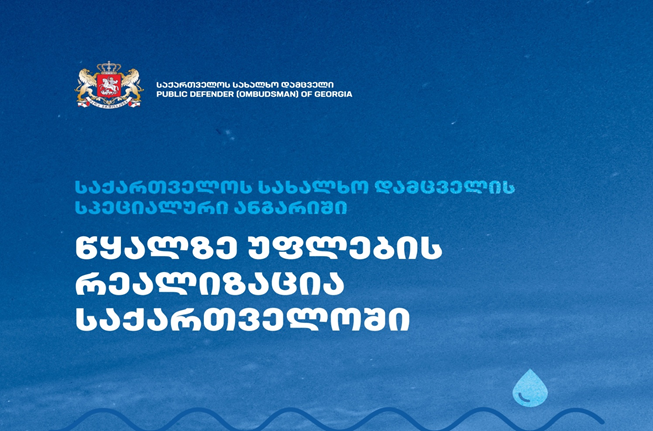
See the Special Report of the Public Defender of Georgia on the Realization of the Right to Water in Georgia.
Water is a limited natural resource and a public good that forms the foundation of life. We find references to the right to water in a number of international resolutions and reports. In 2010, for the first time, the UN General Assembly recognized the human right to safe water and sanitation as an essential right for the full enjoyment of life and realization of human rights.
The human right to water entitles everyone to sufficient, safe, acceptable, physically accessible and affordable water for personal and domestic (household) use.
Given the relevance and urgency of the issue at the global and national levels, the Public Defender’s Office of Georgia prioritized work on the right to water in 2024, with the support of the UN, the Global Alliance of National Human Rights Institutions (GANHRI) and Norway.
The Office, based on human rights-based approaches and international standards, developed a special methodology, based on which representatives of the Office visited 35 villages in 5 regions and 15 municipalities of Georgia.
The special report analyzes international standards of the right to water, state obligations, substantive aspects and principles of the right, national regulations, as well as challenges in various municipalities of Georgia. The special report offers proposals and recommendations to the relevant agencies, the implementation of which will contribute to the implementation of this right.
PDHJ REINFORCES HUMAN RIGHTS AND GOOD GOVERNANCE IN F-FDTL NAVAL TRAINING.
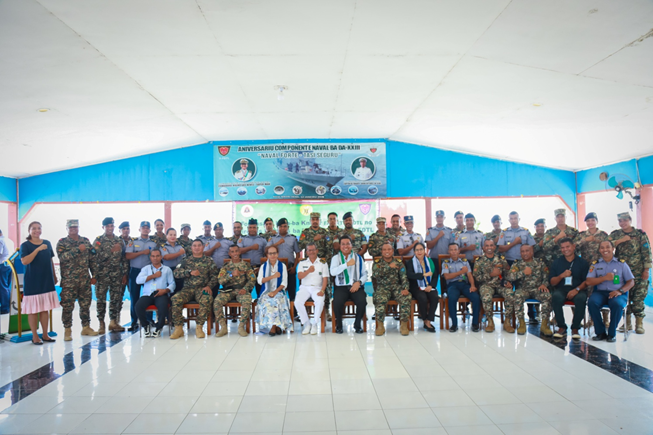
Dili, March 24, 2025 – The Ombudsman for Human Rights and Justice (PDHJ), in accordance with Article 27 of the Constitution of Timor-Leste, is mandated to oversee public entities, including the Government, F-FDTL, and PNTL, ensuring adherence to human rights and good governance principles.
This message was emphasized by Ombudsman Virgílio da Silva Guterres during the opening of a human rights training session for 25 members of the F-FDTL Naval Component in Hera. Virgílio underscored that public entities must ensure their practices and decisions respect human dignity, as enshrined in Article 1 of the Constitution, which defines Timor-Leste as a democratic state governed by the rule of law. He further pointed out that Article 27 recognizes the role of the Ombudsman for Human Rights and Justice, reinforcing the state’s commitment to human rights protection.
“We uphold fundamental human rights principles, especially within the security forces, ensuring that the spirit of love for the people is passed down to new generations entering the force. As Xanana Gusmão said during the struggle, Falintil did not need the United Nations to teach us about human rights, because we carried weapons and sacrificed our lives in the forests, knowing that our people had the right to self-rule. This is what we fought for,” said Virgílio, addressing the F-FDTL trainees.
In line with this commitment, Timor-Leste has enshrined these principles in its Constitution. Following the United Nations’ recommendations, the country has ratified numerous international conventions, including those on civil and political rights, children’s rights, migrant workers’ rights, and the elimination of discrimination against women and persons with disabilities. However, ratification alone is not enough—Timor-Leste must not only be a signatory but also demonstrate a genuine commitment to implementation and enforcement.
Beyond human rights, PDHJ also monitors public policies and political decisions to ensure they align with good governance principles. Virgílio emphasized that recruitment processes must be fair and transparent, based on merit rather than personal or political bias. Similarly, disciplinary actions within public institutions must follow due process, ensuring fair and proportional penalties. He explained that dismissals or disciplinary measures should be based on clear violations, and consequences must be appropriate—whether a suspension, fine, or community service to address the failure.
Virgílio also highlighted cases of human rights violations, stressing that law enforcement agencies must uphold human dignity. He cited a recent incident in Liquiça, where a PNTL officer physically assaulted a street vendor, allegedly as a form of discipline. PDHJ condemns such actions, reinforcing that violence in public spaces constitutes a human rights violation. According to Articles 146 and 147 of the Constitution, F-FDTL is responsible for guaranteeing national independence, security, and the well-being of the people, while PNTL must prevent crime while respecting human rights. Virgílio reminded participants that Timor-Leste’s security forces must carry forward the spirit of protecting the people, not harming them.
The five-day training (March 24–28, 2025) is jointly facilitated by PDHJ trainers, F-FDTL, and the UN Human Rights Advisory Unit (UADU). It aims to enhance the professionalism of the F-FDTL Naval Component, ensuring they operate with a deep understanding of human rights and good governance principles.
MEETING WITH STUDENTS: THE EXPERIENCE OF OMBUDSMAN OF UZBEKISTAN AND FINLAND.
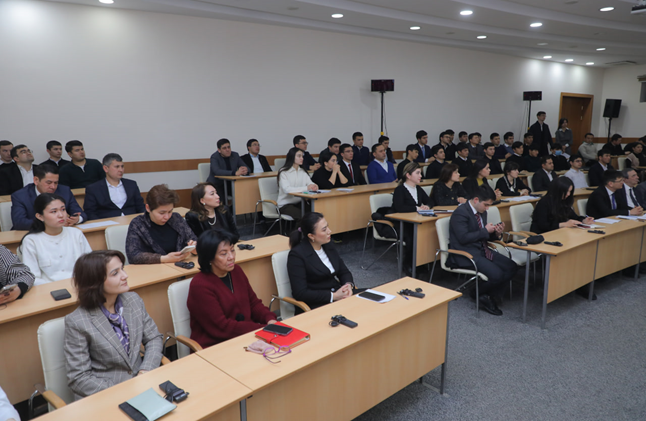
On March 4, 2025, as part of the memorandum of cooperation signed between the Authorized Person of the Oliy Majlis of the Republic of Uzbekistan for Human Rights (Ombudsman) and Tashkent State University of Law, a meeting with students was organized.
At the international roundtable discussion on the topic “The Role of the Ombudsman Institution in Ensuring Human Rights: The Experience of Uzbekistan and Finland,” the speakers included foreign experts—Deputy Chancellor of Justice of Finland Mikko Pumalaine and Director of the Rule of Law Center at the University of Helsinki Tuija Brax. They shared their experiences with students in the field of human rights protection, international cooperation, and modern approaches to human rights issues.
Members of the “Ombudsman Club” also took part in the event. After the lecture, they had the opportunity to gain practical experience under the guidance of Ombudsman Institute specialists, participate in the review of citizens’ appeals, attend public receptions, and observe monitoring visits to correctional institutions.
This international roundtable served as an important platform for students, allowing them to study international experiences in the protection and enforcement of human rights and to gain deeper insights into the activities of the Ombudsmаn of Uzbekistan and Finland.
The meeting was held in a format of active discussions and Q&A sessions. Students asked the speakers questions about pressing human rights protection issues, international standards, and national legislation. In turn, foreign experts answered the participants’ questions, sharing their experiences and practical recommendations.
SIGNS COOPERATION AGREEMENT WITH THE NIYAT CHARITABLE FOUNDATION AND SOCIAL REHABILITATION CENTER.
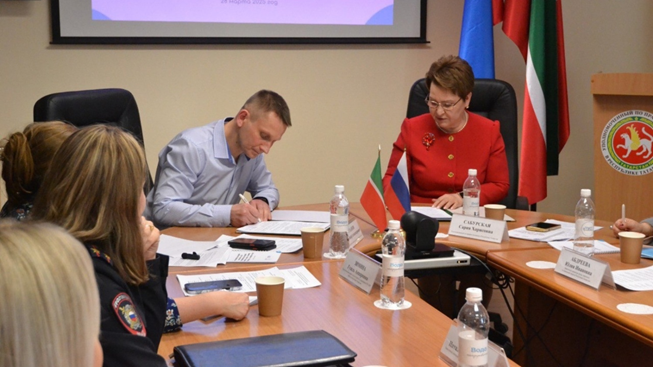
We signed a cooperation agreement with the Niyat Charitable Foundation and the autonomous non-profit organization, the Social Rehabilitation Center “Human Shelter”. Now our interaction will become even more systematic – this is important because homelessness and social isolation require a comprehensive approach.
I am sure that by joint efforts we will be able to help more people who find themselves in a difficult life situation!
We also presented letters of gratitude to distinguished employees of the “Human Shelter”!
CONFERENCE ON HUMAN RIGHTS AND THE RULE OF LAW.
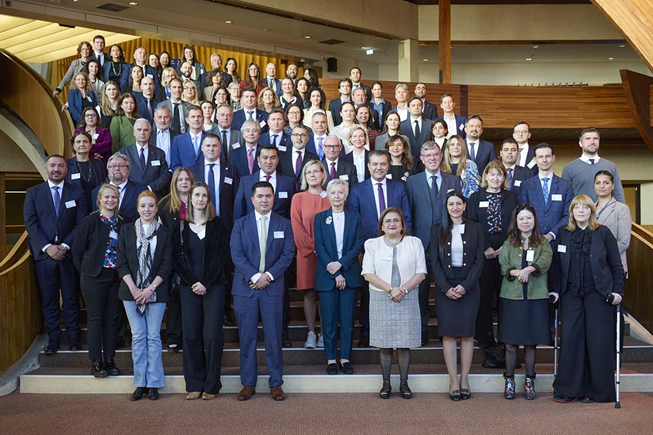
On March 27-28, 2025, Public Defender Levan Ioseliani and First Deputy Public Defender Tamar Gvaramadze participated in the High-Level Conference with Ombudsperson Institutions and National Human Rights Institutions organized by the Council of Europe.
The conference discussed challenges in terms of the protection of human rights and the rule of law, and the role and capabilities of ombudsmen institutions and NHRIs to overcome these challenges.
Participants in the meeting were introduced to the examples of best practices in the protection of human rights during times of crisis; discussed the role of ombudsmen and NHRIs in the implementation of the Venice Principles, the European Convention on Human Rights and the judgements of the Strasbourg Court of Human Rights; as well as opportunities for cooperation with the Council of Europe.
The conference also addressed the role of national human rights institutions in the implementation of the Council of Europe Framework Convention on Artificial Intelligence.
PDHJ SUPPORTS GLOBAL EFFORTS TO STRENGTHEN OLDER PERSONS’ RIGHTS.
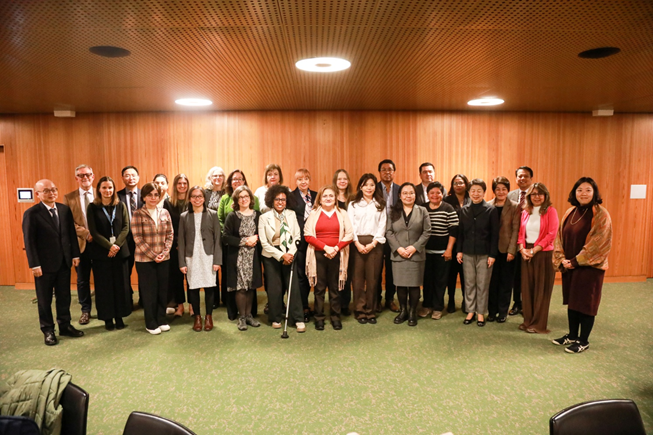
Geneva, March 13, 2025 – The Provedor for Human Rights and Justice of Timor-Leste, Virgílio da Silva Guterres ‘Lamukan’, and Deputy Ombudsman for Human Rights, Maria Marília da Costa, participated in the first Biannual Meeting of the Global Alliance of National Human Rights Institutions (GANHRI) Working Group on Ageing and the Human Rights of Older Persons (WG-HROP). The meeting focused on strategies for engaging the UN Human Rights Council (HRC) in advancing the rights of older persons, particularly in developing a legally binding international convention to strengthen global protections.
During the meeting, Provedor Virgílio Guterres expressed his full support for the initiative, committing to advocate for the recognition and prioritization of older persons’ rights.
As part of this global effort, the Provedoria for Human Rights and Justice (PDHJ) of Timor-Leste previously joined 15 other NHRIs in signing a joint written statement submitted to the 58th Session of the UN Human Rights Council (February 24 – April 4, 2025). Led by the National Human Rights Commission of Korea, the statement calls for the drafting of a new legally binding international instrument to protect the human rights of older persons. This follows key UN developments, including Decision 14/1 by the Open-Ended Working Group on Ageing and Resolution 78/324 by the UN General Assembly, both of which highlight critical gaps in the global protection framework.
Through this engagement, PDHJ continues to uphold Timor-Leste’s national commitment to advancing international human rights standards and advocating for stronger legal protections for older persons, ensuring their dignity and well-being are safeguarded within national and global frameworks.
SEMINAR-TRAINING FOR THE STAFF OF THE OMBUDSMAN’S OFFICE.
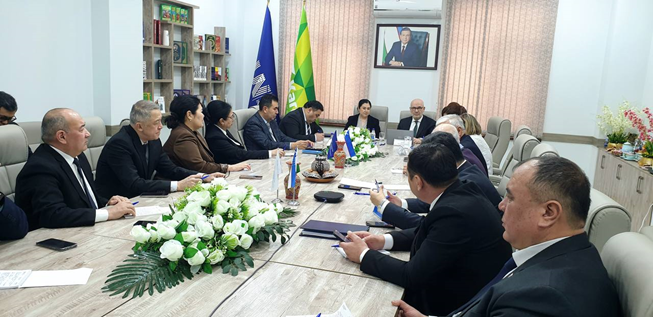
On March 3, 2025, the Commissioner of the Oliy Majlis of the Republic of Uzbekistan for Human Rights (Ombudsman), in cooperation with the Ministry of Foreign Affairs of Finland, the Rule of Law Center at the University of Helsinki, and the International Nordic University, organized a seminar-training for the staff of the Ombudsman’s Office.
The seminar featured Mikko Pumalainen, Deputy Chancellor of Justice of Finland, and Tuija Brax, Director of the Rule of Law Center at the University of Helsinki, as speakers. They shared their extensive experience in the field of human rights and provided practical information on mechanisms for receiving and reviewing citizen appeals, the rights and powers of the Finnish Chancellor of Justice and the Parliamentary Ombudsman, and procedures for engaging with the public.
During the seminar, the new mechanisms introduced in Uzbekistan for public engagement and handling appeals were highly recognized. In addition, discussions were held on the mechanisms outlined in the Law “On the Commissioner of the Oliy Majlis of the Republic of Uzbekistan for Human Rights (Ombudsman),” adopted last year, and their counterparts in Finnish legislation.
This seminar contributed to enhancing the activities of the Ombudsman institution, strengthening human rights protection, and facilitating international knowledge exchange.