Category Archives: AOA News Letter
ACRC ANNOUNCES “2025 BASIC PLAN FOR COMPREHENSIVE INTEGRITY ASSESSMENT OF PUBLIC INSTITUTIONS”.

– Public universities and research institutes evaluated biennially to be included in evaluation targets
– A comprehensive integrity evaluation to also be conducted for all local councils this year to focus efforts on improving entrenched corruption-prone areas in local settings
– Final plan for the comprehensive integrity assessment to be confirmed after gathering opinions from various institutions… Results to be announced in December
(Feb. 26, 2025, ACRC)
The Anti-Corruption and Civil Rights Commission (ACRC, Chairperson Ryu Chul Whan) finalized the 2025 Basic Plan for the Comprehensive Integrity Assessment of Public Institutions on the 24th.
This year’s comprehensive integrity assessment targets 721 institutions, including public universities and research institutes which were excluded from last year’s assessment as they are assessed biennially. The assessment framework will remain the same as the previous year, incorporating three areas: Perceived Integrity; Integrity Effort; and Corruption Status (deductions), to compute and announce the comprehensive integrity grade.
In the case of local councils, which were fully evaluated last year for the first time across 243 councils, their integrity scores for 2024 were found lacking compared to administrative agencies and public service-related organizations. As such, all local councils will once again be included in this year’s evaluation to improve entrenched corruption-vulnerable areas in local governance.
The assessment measures the public’s perceived integrity regarding local councils through surveys on ▴perceptions of corruption in unfair job performance and ▴experiences with corruption involving demands, exchanges, or promises of money and goods. Meanwhile, eight indicators assess the efforts in integrity policies, such as ▴policy implementation systems, ▴performance outcomes, and ▴policy effectiveness.
Particularly, this year sees the introduction of bonus indicators for establishing anti-corruption and integrity education programs and the number of education completions at public universities to enhance the integrity awareness of future generations. Furthermore, ongoing support for government tasks are to be ensured through continuous operation related to the establishment of fair recruitment standards and the enhancement of the public financial recovery system.
Additionally, the plan includes maintaining indicators that facilitate the improvement of integrity levels in the public sector through the sharing and dissemination of exemplary anti-corruption policies from various institutions.
Building on the basic plan announced today, ACRC will broadly collect opinions from different institutions, finalize the implementation plan in April, and introduce it into the evaluation procedure. From August, surveys on perceived integrity will be conducted, from October, evaluations of integrity efforts and corruption status will be carried out, and the final evaluation results will be announced in December.
Chairperson Ryu Chul Whan of the ACRC stated, “Through the comprehensive integrity assessment, we have prepared a basic plan to enable institutions at all levels to focus their efforts on improving corruption-vulnerable areas.” He further noted, “As the overarching anti-corruption agency, the ACRC will continue to support the promotion of anti-corruption integrity policies by institutions at all levels to enhance national integrity.”
HOLDS ROUND TABLE ON “STATE, BUSINESS, SCIENCE AND SOCIETY IN RESOLVING THE PROBLEMS OF VULNERABLE GROUPS OF THE POPULATION”.
Today(28 March 2025, Friday), the Office of the Commissioner for Human Rights in the Republic of Tatarstan held a round table on the topic “The State, Business, Science and Society in Resolving the Problems of Vulnerable Groups of the Population”, dedicated to the 25th anniversary of the Institute of the Commissioner for Human Rights in the Republic of Tatarstan and the Day of the Homeless.
The focus is on people who find themselves in a difficult life situation, without documents, housing and access to medical care. The issues of helping the homeless were discussed: their social adaptation, access to medicine, finding opportunities to restore documents and employment. Particular attention was paid to the situation with begging, especially with the participation of children. As a rule, such cases require not only explanatory work, but also comprehensive support measures.
LAUNCHES OFFICIAL WHATSAPP CHANNEL FOR RAISING PUBLIC AWARENESS.
- Wafaqi Mohtasib committed to speedy and free of cost redressal of complaints.
- Launches official WhatsApp Channel for raising public awareness.
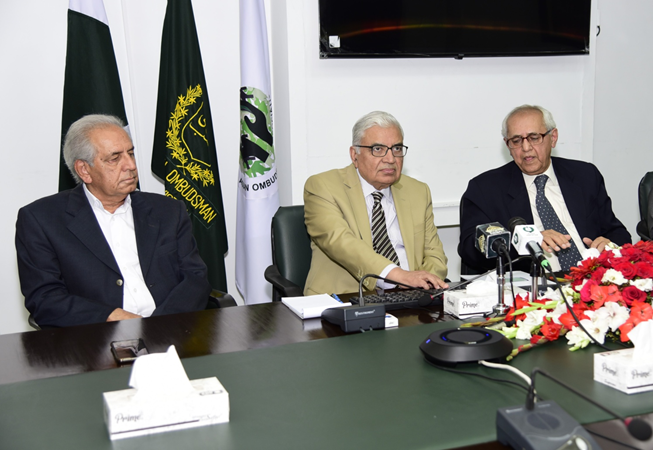
Islamabad: 11 March, 2025 – Wafaqi Mohtasib’s Office is committed to redressing public complaints relating to maladministration in the federal government agencies and it will continue to make efforts to build greater awareness about the role and scope of work of the institution. This was stated by the Wafaqi Mohtasib (Ombudsman), Mr. Ejaz Ahmad Qureshi while inaugurating the official WhatsApp Channel at the Wafaqi Mohtasib Secretariat here today.
The Wafaqi Mohtasib said that any person aggrieved by the administrative excesses of the government agencies can approach this Office for speedy and free of cost redressal of his complaint. He added that during the year 2024, it received 226,372 complaints out of which as many as 223,198 complaints were redressed within the statutory time limit of 60 days. The institution has also achieved an impressive implementation rate of 93.21% of his decisions in 2024 as against 85.7% in 2023, said the Mohtasib.
Mr. Qureshi, further stated that expanding outreach and accessibility has always been a high priority for this Office. He observed that the institution has witnessed significant expansion since1983 when it started operation with only four regional offices at provincial capitals which now has presence in 24 major cities including Azad Jammu and Kashmir and Gilgit Baltistan.
He said that opening of new regional offices and the greater use of IT tools has introduced further efficiency in the handling of complaints. “Now, multiple means are available for the general public to lodge their complaints including website, mobile phones, email, hearing via zoom link etc. which provide easy accessibility to the complainants for availing services being offered by this Office”, he maintained.
Wafaqi Mohtasib, Mr. Ejaz Ahmad Qureshi invited the members of civil society and media fraternity to follow the official WhatsApp Channel to remain updated about the activities of the institution. He expressed confidence that the active presence on various social media platforms will greatly contribute towards raising awareness about the institution and enhance its outreach and connectivity with the general public.
(WhatsApp Channel link https://whatsapp.com/channel/0029Vb0hwBxJf05kVaB6sN32)
THE OMBUDSMAN’S NATIONAL PREVENTIVE GROUP HELD VISITS TO SPECIAL BOARDING SCHOOLS.
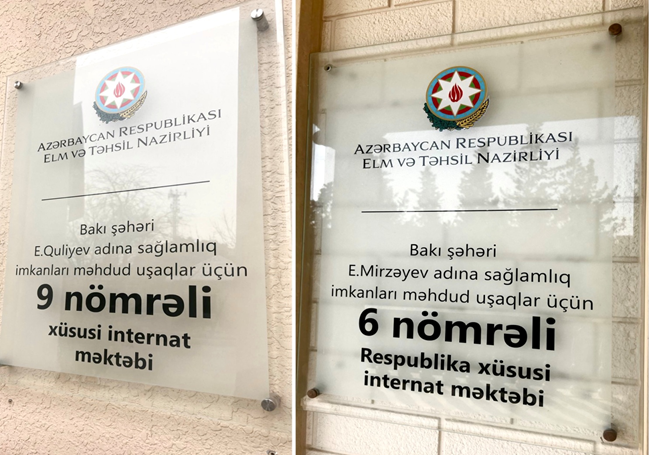
Within the framework of the National Preventive Mechanism (NPM) activities of Sabina Aliyeva, the Commissioner for Human Rights (Ombudsman) of the Republic of Azerbaijan, Ombudsman’s National Preventive Group (NPG) carried out scheduled monitoring visits to the Special Boarding School No.9 for children with limited health problems named after E. Guliyev and Republic Special Boarding School 6 for children with limited health problems named after E. Mirzayev under the Ministry of Science and Education.
The purpose of the visits was to monitor the living conditions, treatment standards, and status of ensuring the children’s rights, as well as to follow up on the elimination of any shortcomings found during previous visits.
During the visits, dormitories, canteens, medical centers, classrooms, and other administrative rooms of the facilities were inspected, as well as the process of organization of children’s leisure time, nutrition, supply with drinking water, and the documentation were examined. The documents used in carrying out psychological work with children in both institutions were found not to contain the full information; some medicines expired at the Republic Special Boarding School No. 6, lighting did not meet the norms, and some foodstuffs expired at the Special Boarding School No. 9.
With regard to the identified problems, the management of both facilities has been made recommendations on how to improve living conditions and the documentation in compliance with the requirements stipulated in the relevant legislative and international documents.
The Ministry of Science and Education will be appealed to address any shortcomings identified during the moitoring visits.
ACRC PRESENTS “KOREA’S ANTI-CORRUPTION POLICIES” TO APEC MEMBERS.
– 21 member economies and international organizations participate to discuss cooperative measures to tackle corruption
Korea will introduce its anti-corruption policies to APEC member economies and discuss on international anti-corruption prior to the APEC summit, which returns to the Republic of Korea after 20 years.
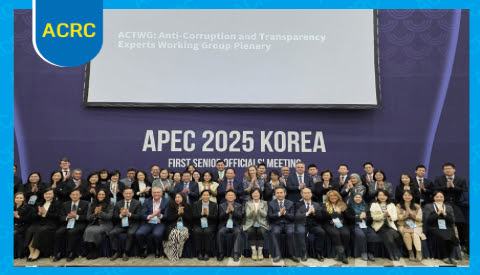
The Anti-Corruption and Civil Rights Commission (ACRC, Chairperson Ryu Chul Whan) hosts the 40th APEC Anti-Corruption and Transparency Experts’ Working Group (ACTWG) Plenary with approximately 80 guests, including 21 APEC member economies and international organizations from Feb. 27-28 at Hwabaek International Convention Center in Gyeongju.
APEC (Asia-Pacific Economic Cooperation) is an international organization established in 1989 for the promotion of economic growth and prosperity in the Asia-Pacific region. It organized ACTWG in 2005, acknowledging the necessity of anti-corruption and transparency for economic development.
ACRC represents Korea in ACTWG annual meeting, discusses leading agenda and promotes exemplary policies on anti-corruption.
As the Republic of Korea hosts APEC this year, ACRC also chairs this year’s APEC ACTWG.
The theme of the Meeting is “Multi-stakeholder Cooperation for a Corruption-Free Asia-Pacific Region.”
There will be various discussion items under this theme such as updates on anti-corruption activities of respective member economies to implement UN Convention against Corruption and APEC commitment, and introduction on ongoing trainings to tackle corruption and secure transparency, capacity development as well as technical assistance projects.
International organizations including UNODC and IAACA will also join to present major activities of the organizations to promote transparency of public and private sectors, further acknowledging the importance of activity and cooperation regardless of border and region to achieve APEC commitment on anti-corruption.
※ United Nations Office on Drugs and Crime (UNODC): Instrument of the United Nations that was established in 1997 for research and strategy establishment on drugs and crime as well as supervision of implementing relevant international convention.
※ International Association of Anti-Corruption Authorities (IAACA): Independent, non-political international organization with 180 anti-corruption institutions as its member. Established in 2006 for promoting implementation of the UN Convention Against Corruption.
During the session, participants will also discuss on measures to promote cooperation among APEC members for denial of safe haven, recovery of proceeds of corruption and legal assistance, and ways to develop anti-corruption policy to enhance transparency of the private sector by promoting participation of relevant stakeholder from the private sector.
ACRC will present various anti-corruption policies of Korea, including cooperation between the public institutions of the Republic of Korea and other economies as well as operational support on Ethics Management Compliance Guideline for both public and private sectors.
ACRC Vice Chairperson for Anti-Corruption Lee Myung Sun said, “Upcoming APEC can elevate dignity of the Republic of Korea as a leader of anti-corruption. ACRC will duly prepare the APEC High Level Dialogue of Anti-Corruption Cooperation planned this July to further enhance the credibility of the Republic of Korea among APEC members.”
OMBUDSMAN ANNOUNCES RESULTS OF DIRECT INVESTIGATION OPERATION INTO HOUSING DEPARTMENT’S HANDLING OF ILLEGAL PARKING IN PUBLIC HOUSING ESTATES.
The Ombudsman, Mr. Jack Chan, announced the completion of a direct investigation operation into the Housing Department (“HD”)’s handling of illegal parking in public housing estates, and made 12 recommendations for improvement to the HD.
Currently, there are 195 public housing estates in Hong Kong, with more than 780,000 households and about 2 million residents (not including residents of Tenants Purchase Scheme and Buy-or-Rent Option). The HD is responsible for the day-to-day management of estates and handling a wide range of issues. As proper management of public housing is a vital livelihood issue, this Office has decided to conduct detailed studies on it. Given the broad scope, the Office will initiate direct investigation operations into various aspects of public housing management in phases. This direct investigation operation focuses on illegal parking.
From time to time, the Office takes note of public complaints and media reports about illegal parking in public housing estates. Particularly, the Office is concerned about the obstruction of emergency vehicular access by illegally parked vehicles, which may hinder the rescue operations of emergency vehicles in the event of contingencies and lead to serious consequences. In this connection, the Office probed the HD’s enforcement mechanism against illegal parking in public housing estates, with site inspections conducted in four selected estates, namely Yau Oi Estate, Cheung Hong Estate, Lai Yiu Estate and Queens Hill Estate, where the installation of vehicle barrier gates in all vehicular access is infeasible due to geographical constraints.
To tackle illegal parking in Yau Oi Estate, the Office learned that the HD has specifically strengthened road controls outside office hours. Apart from enforcement in collaboration with the HD’s Mobile Operations Unit, the Estate Office has also enlisted the support of the Hong Kong Police Force (“HKPF”) on a case-by-case basis. The Estate Office has acquired more immobilisation devices and instructed the security service contractor to deploy more staff dedicated to patrolling. An additional closed-circuit television (CCTV) system has been installed in the estate, and the Internet of Things (IoT) sensors are piloted on specific road sections to facilitate the staff’s remote real-time surveillance of traffic. As a result of the HD’s commitment to improvement, the situation of illegal parking has been alleviated.
As regards the other three public housing estates, the Office’s investigators found illegal parking during site inspections. In Lai Yiu Estate, illegal parking was even found along the emergency vehicular access.
Mr. Chan said, “In certain public housing estates, the installation of vehicle barrier gates is infeasible due to geographical and environmental constraints, resulting in practical enforcement challenges against illegal parking, particularly outside office hours. Our site inspections revealed prolonged illegal parking of many vehicles in public housing estates at night; some of these vehicles may even obstruct emergency vehicles. The situation is unsatisfactory. Nevertheless, as the case of Yau Oi Estate has shown, strengthening enforcement is indeed conducive to alleviating illegal parking. Overall, we urge the HD to improve its handling of parking violations, especially to step up combating illegal parking along emergency vehicular access to minimise potential safety hazards.”
The Ombudsman’s recommendations for improvement to the HD are:
- continue to closely monitor the situation of illegal parking in public housing estates, especially on roads where the installation of vehicle barrier gates is infeasible, and formulate enforcement strategies;
- step up enforcement against black spots of illegal parking;
- take enforcement action against illegal parking along emergency vehicular access immediately without warning, including impounding or towing away the vehicles;
- strengthen collaboration with the HKPF to arrange joint operations for greater deterrence and increasing the non-compliance costs of offenders if necessary;
- step up monitoring the follow-up actions taken by security service contractors, consider stipulating key performance indicators for contractors under their service contracts and requiring them to report enforcement results regularly;
- consider compiling statistics and analysing the records of written warnings against illegal parking issued by the Estate Offices to facilitate their monitoring of illegal parking by frontline staff, with a view to supervising staff and reallocating resources where necessary;
- conduct timely review on the effectiveness and results of the pilot use of CCTV surveillance and IoT sensors;
- if the results of pilot arrangement are positive, proactively explore expanding the pilot arrangement to more public housing estates to facilitate effective detection by frontline staff of illegal parking;
- organise sharing sessions and training for the Estate Offices and security service contractors regarding enforcement against illegal parking from time to time;
- review existing manpower and, according to actual circumstances, explore any need to internally redeploy or obtain additional resources for enforcement;
- step up publicity and education for motorists, stressing the importance of refraining from illegal parking on emergency vehicular access; and
- draw up an implementation timetable for the above recommendations and conduct regular reviews.
The Office is pleased to note that the HD has accepted all of its improvement recommendations.
The full investigation report has been uploaded to the website of the Office of The Ombudsman for public information.
WAFAQI MOHTASIB PRESENTS ANNUAL REPORT – 2024 TO THE PRESIDENT.
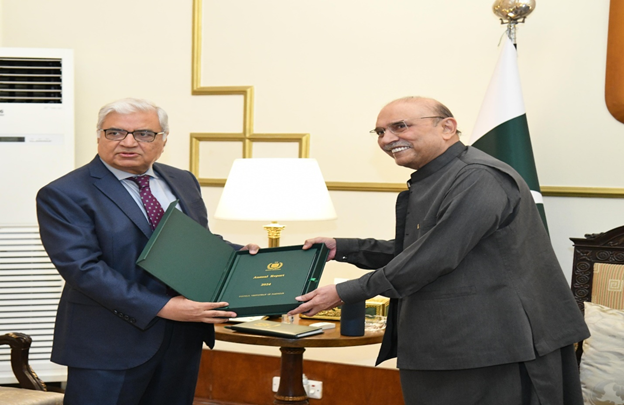
- Wafaqi Mohtasib presents Annual Report – 2024 to the President.
- Redresses a Record Number of 223,198 Public Complaints in a Year.
Islamabad: 26 March, 2025 –The Wafaqi Mohtasib, Mr. Ejaz Ahmad Qureshi called on the President Mr. Asif Ali Zardari at the Aiwan-e-Sadr last evening and presented him the institution’s Annual Report for the year 2024.
According to the Report, the Office of the Wafaqi Mohtasib has processed a record number of 226,372 complaints in 2024, reflecting an increase of 17% from the previous year. Moreover, the number of complaints disposed of during 2024, stood at 223,198 which showed an increase of 16% over the figures of 2023, it added. The Report attributed this spectacular performance to various initiatives like holding of Khuli Katcheries at remote places, Informal Resolution of Disputes (IRD) mechanism along with the Inspection Visits to service delivery organizations generating large number of complaints. Likewise, 93.21% of its decisions/Findings were implemented during the year, which reflected the institution’s effectiveness, meticulous approach and sound procedures, the Report concluded.
The Report went on to add that the office has presence in 24 cities of the country, which included Muzaffarabad (AJ&K) and Gilgit Baltistan. It has emerged as a truly poor man’s court providing free and expeditious administrative relief at the doorsteps of the complainants. Describing the achievements, the Report further stated that the institution continues to take proactive steps for the welfare of Overseas Pakistanis, particularly with regard to providing better facilities at the airports, resolving as many as 149,060 of their complaints in addition to ameliorating the lot of children in the country.
Touching upon Pakistan’s role in the international Ombuds fraternity, the Report elaborated that the country continues to undertake activities from the platform of Asian Ombudsman Association (AOA) of which Pakistan currently holds the Presidentship and making efforts for upholding the cause of Ombudsmanship in the Asian region and beyond.
The Report has been uploaded on the official website of the institution at https://mohtasib.gov.pk/ and the AOA website https://asianombudsman.com.
SPECIAL REPORT ON CHALLENGES RELATED TO THE PROPER REALIZATION OF THE RIGHT TO ACCESS TO PUBLIC INFORMATION.
See the Special Report of the Public Defender of Georgia on Challenges Related to the Proper Realization of the Right to Access to Public Information.
The document discusses the problematic issues identified as a result of the consideration of complaints submitted by citizens, organizations and journalists to the Public Defender’s Office of Georgia in 2021-2024, which were related to the proper realization of the right to access to public information. The document also includes the recommendations of the Public Defender of Georgia regarding legislative amendments to be implemented in order to properly realize the constitutional right.
The Public Defender of Georgia has been indicating in its parliamentary reports the challenges related to access to public information and the need to reform existing legislation for years.
WAGES OF OVER 100 MILLION SUMS HAVE BEEN RECOVERED.
Authorized Person of the OliyMajlis for Human Rights (Ombudsman) has received a collective appeal from citizens in Syrdarya province. In the appeal, citizens complained that the production enterprise located in the city of Gulistan did not pay wages for a 15-day working period in October and November 2023.
This appeal was taken under control and studied by the regional representative of the Ombudsman in Syrdarya region, and documents relevant to the case were collected.
The Ombudsman then filed a claim on behalf of the citizens with the inter-district court of Guliston district for the restoration of labor rights.
As a result, more than 100 million sums of wages were fully recovered from the citizens.
THE INSTITUTIONAL CULTURE IS BASIS OF REFORM PROCESS.
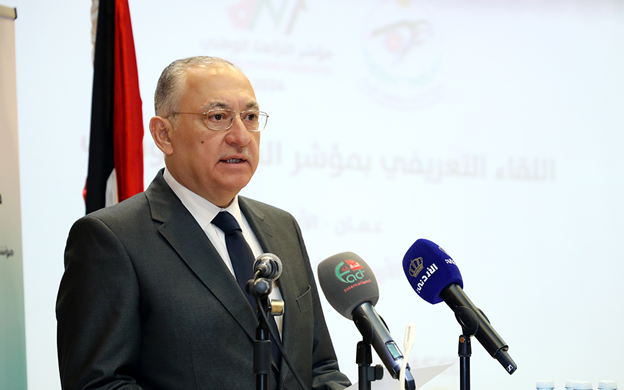
Chairman of the Integrity and Anti-Corruption Commission, Dr. MuhannadHijazi, stressed that the reform process requires changing the institutional culture, via the presence of a real will among senior management, sound decisions, and a competent & effective public employee, an ideal and honest work environment based on the rule of law, justice, equality, transparency and accountability.
During the dialogue meeting organized by JIACC today, Wednesday, with the secretaries and general managers of public administration institutions about the latest edition version of the National Integrity indicator , in cooperation with (ِAl-Hayat Center) raised, that the Commission was established with aim of preserving public money & the nation’s resources, Which will lead to improved performance and management of public facilities.
He stressed that enhancing integrity and rejecting corruption requires intensifying cooperation efforts to combat corruption, and working to establish integrity standards in all sectors to establish ethics and principles of integrity, in line with responsibilities of the public sector and commitment to the provisions of the International Convention against Corruption.
He pointed out that real measures must be taken; both employees and citizens feel, in order to reach an ideal and fair work environment. If this culture was achieved, it will be directly reflected in the quality of institutional work and increase citizen satisfaction.
Hijazi noted that the latest edition version of the National Integrity indicator is due to the intensive efforts made to develop the standards structure and evaluation and measurement tools.
The advancement of the public sector is a national demand, and will only be achieved via serious and integrated work between all public sector institutions. We have adopted our value system as a basis for enhancing credibility and transparency in work.
The second edition of the indicator adopted more accurate and comprehensive indicators, to become more capable of monitoring achievements and challenges related to building a culture of integrity.
He pointed out that the Jordanian experience in measuring the level of integrity is a model to be emulated, noting that the indicator is the first at the national and regional levels, as it is our administrative system and our national priorities, and derives its strength from the political will to combat corruption and dry out its sources.
He pointed out that it is the responsibility of public administrations to benefit from the indicator to improve their performance and the performance of their employees, and to create an attractive work environment characterized by an honest, effective, efficient and positive institutional culture.
He stressed the importance of the involvement of all public administration institutions in adopting and applying the culture and demands of these standards, which contributes to institutionalization and continuity of work, with the aim of modeling and improving the work of public administrations to combat corruption, preserve public money & stop wasted effort in public administrations.
Rasheed’s Executive Director Abeer Madanat, added that the updated version of the indicator is one of the most important tools for establishing aspects of good governance in the public sector.
She emphasized that the public sector has an important role in building a partnership , respect & trust between society and the state, as it is the main interface in providing the most important services to citizens and achieving justice.
The Director General of Al-Hayat Center (RASED), Dr. Amer Bani Amer, praised Commission’s effective partnership with official institutions and civil society organizations, pointing out this partnership is a positive cooperation based on an integrative relationship in implementing national aims & priorities.
He pointed out that the values of the integrity indicator are not a form of administrative luxury, but rather a national need and necessity that contributed to development government services in line with requirements of comprehensive modernization of the state, and called on all public administration institutions to make the indicator a success in cooperation.
He thanked the Commission for its belief in the sustainability of the integrity indicator, which represents a national compass for all workers and decision-makers in the country.
A discussion session was also held, chaired by Secretary-General of JIACC Amjad Narmouk, in which the Commission’s Advisor for Strategic Planning and Risk Management, Dr. Muwaffaq Ziadat, Director of Integrity and Prevention Directorate, Dr. Khaled Al-Qudah, and Director of Digital Support Directorate, Yanal Al-Majali, participated.
They showed details of the latest version of the national Integrity Indicator, stages of its implementation, how to fill out the “Compliance with National Integrity Standards” matrix by institutions, and the mechanisms for implementing the three Indicator questionnaires: the Individual Integrity Questionnaire, Institutional Integrity Questionnaire, as well as Service Recipient Questionnaire.
The Commission launched an awareness media campaign aimed all state institutions, their employees and various segments of society to introduce the new version of the Integrity Indicator and raise awareness of National Integrity Standards, which will lead to providing services to citizens with quality & transparency.
The Commission urged for supporting campaign via cooperation in publishing its messages, highlights and introductory videos through official websites, channels and digital platforms of ministries, official institutions, civil society organizations & all media.
It is worth noting that the JIACC unveiled the latest version edition National Integrity Indicator during a ceremony commemorating International Anti-Corruption Day, which was held at end of 2024 , consider an executive arm for consolidating National Integrity Standards in public sector.