
Category Archives: AOA News Letter
COOPERATION BETWEEN THE OMBUDSPERSONS OF UZBEKISTAN AND RUSSIA IS STRENGTHENING.

On April 17, 2025, the Commissioner of the Oliy Majlis of the Republic of Uzbekistan for Human Rights (Ombudsman), Feruza Eshmatova, met with the Commissioner for Human Rights in the Russian Federation, Tatyana Moskalkova.
During the meeting, the parties discussed the practice of joint review of citizens’ appeals, the outcomes achieved through such cooperation, and opportunities to further develop collaboration in this area.
It is noteworthy that in the first quarter of 2025, the Ombudsman of Uzbekistan received 36 appeals from foreign ombudspersons and citizens residing abroad, of which 11 related to the territory of the Russian Federation. The Russian Ombudsman, in turn, received 6 appeals from Uzbekistan regarding the rights and interests of Uzbek citizens residing in Russia. Most of these appeals were resolved positively. Such cooperation among ombudspersons plays an important role in addressing the challenges faced by citizens living abroad.
The meeting also addressed the protection of the rights of Uzbek citizens who are temporarily residing, working, or studying in the Russian Federation, as well as those held in temporary detention centers for foreign nationals. Feruza Eshmatova emphasized the importance of strengthening information exchange and monitoring activities to prevent such situations.
Following the meeting, the parties agreed to adopt a plan of additional joint actions on the issues discussed, within the framework of the Memorandum of Cooperation signed between the Ombudspersons of Uzbekistan and Russia.
For reference: The institution of the Commissioner for Human Rights in the Russian Federation has been functioning for over 25 years as an independent constitutional body. Regional ombudspersons operate in all subjects of the Russian Federation, and the central office comprises over 250 specialists.
THE OMBUDSMAN ADDRESSES PUBLIC GRIEVANCE REGARDING PATIENT REFERRALS FOR MEDICAL TREATMENT IN MAIN HOSPITALS UNDER THE UNIVERSAL COVERAGE SCHEME (UCS).

The “Gold Card” scheme, also known as “30-baht healthcare” scheme, is a healthcare policy that allows the public to access medical services free of charge by registering at their designated healthcare service unit under their entitlement. If the required treatment exceeds the potentiality of the primary the medical unit, doctors will refer the patient to a more advanced medical center. However, in some areas, certain limitations pose challenges to accessing these healthcare services.
In the case of Mr. Banchob (บรรจบ), a representative of the senior citizen group in a community in Bangkok, he reflected that each time he has a medical appointment at the designated healthcare service unit, he is required to obtain a referral document from the public health center nearby his residence. This process results in wasted time and travel expenses, highlighting the system’s limitation in accommodating the specific needs of the vulnerable patients.
The Ombudsman, in collaboration with relevant agencies, has conducted a fact-finding investigation and found that the Universal Coverage Scheme (UCS) prescribes that initial treatment should first be conducted at a nearby primary care unit where doctors assess and screen basic symptoms before referring patients to hospitals. This approach is designed to reduce overcrowding in hospitals and distribute workloads. However, in some cases, it poses difficulties for patients, as the approach lacks clarity in distinguishing between continuous treatment and the initiation of new treatment. Moreover, limitations of the e-Referral system, or the electronic patient data referral system result in many healthcare service unit still using paper referral forms. This causes delay and errors in the referral process.
To ensure effective and comprehensive healthcare services for the public, the Ombudsman has recommended developing the e-Referral system to cover all healthcare service units in Bangkok. This would facilitate faster patient referrals and reduce redundant steps. Additionally, a focal point should be assigned to manage the system for continuity and increased efficiency. Furthermore, the Ombudsman encourages the appointment of family medicine doctors in primary units for initial screenings. As well, public awareness campaigns should also be carried out to educate citizens about their rights under the “Gold Card” scheme, and to promote acceptance of the Health Link system in order to improve the efficiency of health data integration.
The Ombudsman’s recommendations collaboration with relevant agencies not only facilitate access to healthcare services, but also enhance standard and lay a crucial foundation. This aims to develop the citizens’ rights under the “Gold Card” scheme beyond mere health welfare, serving as a beacon of hope and the guarantee of fair, comprehensive, and sustainable care in every dimension for the public.
MEETING HELD TO DISCUSS PROBLEMS FACED BY PEOPLE WITH MENTAL DISABILITIES SINCE CHILDHOOD.
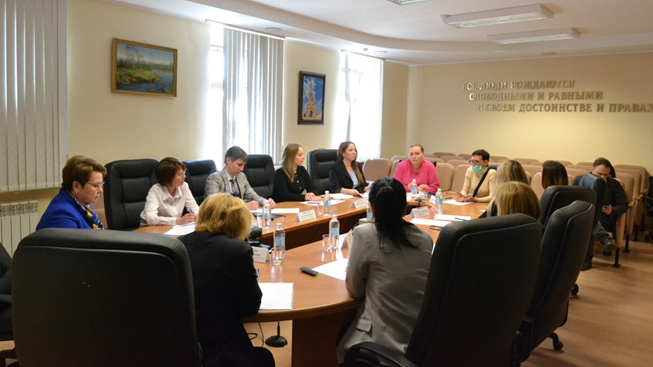
Our Office held a meeting dedicated to the problems faced by people with mental disabilities since childhood. The applicants expressed serious concerns about the availability and quality of medical services provided to their wards. Important issues were discussed regarding the procedure for making an appointment with a doctor, organizing consultations with specialists, as well as the difficulties encountered when needing to receive medical care.
In addition, the meeting touched on the topic of organizing leisure activities for people with disabilities, including the possibility of summer shifts in camps, as well as holding training seminars for doctors and social workers.
All of the applicants’ questions have been taken under control. We will work to improve the situation and will continue to monitor the development of these issues so that medical care becomes more accessible to people with mental disabilities.
OMBUDSMAN OPENS ASSISTANCE CENTER IN CALBAYOG CITY.

In its bid to bring frontline services closer to the Eastern Visayas region, the Office of the Ombudsman inaugurated its sixth Ombudsman Assistance Center (OAC) at the Calbayog City Police Station, Terminal Site, Barangay Bagacay, Calbayog City, Samar. The OAC is a frontline service point established to facilitate the filing of complaints, Statement of Assets, Liabilities and Net Worth (SALN), and application for Ombudsman clearance, aiming to bring services closer to the public.
The ribbon-cutting ceremony was led by Acting Directors Janice Gabrito, Philip Camiguing together with Police Lieutenant Colonel Dinvir Revita, Chief of Police, and Fr. Roger Oñate.
Other OAC sites are located in Pasay City, Roxas City, Zamboanga City, Tuguegarao City and in Patikul, Sulu. The Office of the Ombudsman also has offices in the cities of Davao, Cebu, Iloilo, Cagayan De Oro and Tacloban.
THE OMBUDSMAN PRESENTED THE 2024 REPORT TO THE PARLIAMENT.

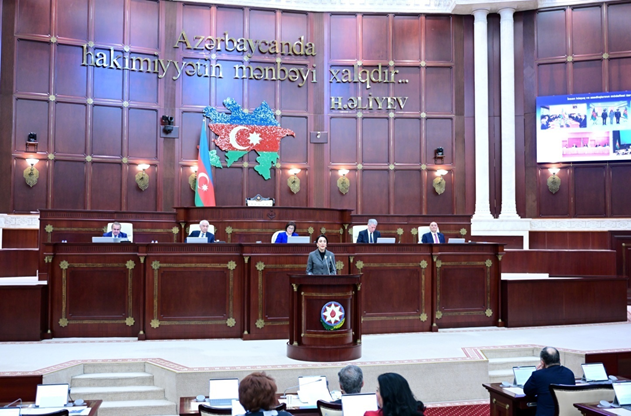
The Commissioner for Human Rights (Ombudsman) of the Republic of Azerbaijan, Sabina Aliyeva, presented the 2024 Report on the Protection of Human Rights in Azerbaijan to the Parliament on March 7, 2025.
Prior to the presentation, the Ombudsman and staff members visited the grave of the National Leader Heydar Aliyev, paying deep respects to his dearest memory. At the Alley of Honor, the memory of the distinguished ophthalmologist and academician Zarifa Aliyeva was also honored.
Afterwards, the Alley of Martyrs, where tribute was paid to the memory of those who had fallen their lives for the sovereignty and territorial integrity of the country.
Later, in an interview with media representatives, Sabina Aliyeva briefed about the key issues underlined in the annual report presented to the Parliament. According to her, the rec
ommendations and suggestions outlined in the report aim to ensure the effective protection of the rights of various population groups.
During the speech at the Parliament, the Ombudsman provided a comprehensive overview of the situation regarding human rights and freedoms in Azerbaijan over the past year, the actions taken, existing challenges, and future tasks. The report also offers several recommendations and proposals for enhancing the protection and promotion of human rights and freedoms in the country.
It should be noted that the 2024 Ombudsman Report has been published on the institution’s official website and has been shared with relevant media outlets for wider public dissemination.
THE OMBUDSMAN CONDUCTED FACT-FINDING INVESTIGATION REGARDING THE REQUEST FOR THE PEDESTRIAN CROSSING, THE SLOWDOWN SIGN, AND THE FIRE HYDRANT IN A VILLAGE IN THE AREA OF NONGKHAEM DISTRICT OFFICE, BANGKOK.

The Office of the Ombudsman received the complaint from residents of a village in Nongkhaem District, Bangkok, alleged that the Nongkhaem District Office has failed to provide essential safety measures, including the pedestrian crossing, the slowdown signs, and the fire hydrant in front of their village. This omission had caused inconvenience and posed risks to the lives and property of local residents in the area.
Upon receiving the complaint during an on-site proactive public relations campaign of the Office of the Ombudsman conducted in collaboration with Bangkok Metropolitan Administration (BMA) at Nongkhaem District, the Office of the Ombudsman requested clarification of facts and relevant documents and evidences for consideration from the Nongkhaem District Office
The investigation revealed that the area in front of the village is a main road with heavy traffic, regularly used by the residents for transportation. However, the absence of pedestrian crossing, slowdown signs, a fire hydrant, and a proper fire protection system posed a safety risk to the local residents and communities.
In response, the Office of the Ombudsman coordinated with the relevant agencies to address these issues. The Nongkhaem District Office acknowledged the concerns and agreed to take the following actions:
- Installation of the pedestrian crossings and slowdown signs: The BMA’s Traffic and Transportation Department would carry out the inspection to consider the suitability and design the installation.
- Placement of a fire hydrant: The relevant agencies approved the fire hydrant installation of the fire hydrant (red hydrant) at a suitable location.
Currently, the BMA’s Traffic and Transportation Department has installed the pedestrian crossing and slowdown signs in front of the mentioned village in Nongkhaem District, Bangkok. The Traffic and Transportation Department has also inspected the streetlight poles in the area. The installation of the fire hydrant is under consideration by the relevant agencies, with proceedings aligned with their duties and powers. The Office of the Ombudsman will continue to monitor the process to ensure the effective solutions in the best interest of the public. Any progress will be communicated to the complainant and the public accordingly.
Influenced by this case, the Office of the Ombudsman has recommended that the relevant agencies consider and take further actions as follows:
- Expedite inspections and installations of security facilities in a timely manner.
- Carry out investigation and assessments of the safety needs in other communities to develop comprehensive development plan.
- Encourage public participation in providing suggestions and monitoring the actions of the government agencies.
ACRC OPERATES EMERGENCY GRIEVANCE COUNSELING SERVICE FOR VICTIMS OF GYEONGSANGBUK-DO WILDFIRES.

– Grievance counseling for residents from Mar 27 (Thu.) to 29 (Sat.) at Uiseong Sports Complex
A grievance counseling service will be available at the shelter to resolve the difficulties of residents who are suffering from the wildfire-related damages in Gyeongsangbuk-do province.
The Anti-Corruption and Civil Rights Commission (ACRC, Chairperson Ryu Chul Whan) visits Uiseong Sports Complex evacuation shelter from the 27th to 29th to listen to the grievance of people suffering from damages of wildfire and to quickly support recovery.
Residents can consult with ACRC investigators at the grievance counseling platform in the Sports Complex or on-site outreach bus for various inconveniences or difficulties regarding the supporting process of wildfire-related damages.
During the consultation, ACRC will file complaints for matters that need to be investigated separately. The commission will continue to provide on-site grievance consultation channels for the residents, focusing on regions where wildfires have been extinguished.
“We express our deepest condolences to the people damaged by the fire and hope the grievances of people can be relieved through the on-site consultation,” said Ryu Chul Whan, chairperson of ACRC.
OMBUDSMAN ANNOUNCES RESULTS OF DIRECT INVESTIGATION OPERATION INTO GOVERNMENT’S REGULATION OF OCCUPATIONAL SAFETY AND HEALTH IN CONSTRUCTION INDUSTRY.
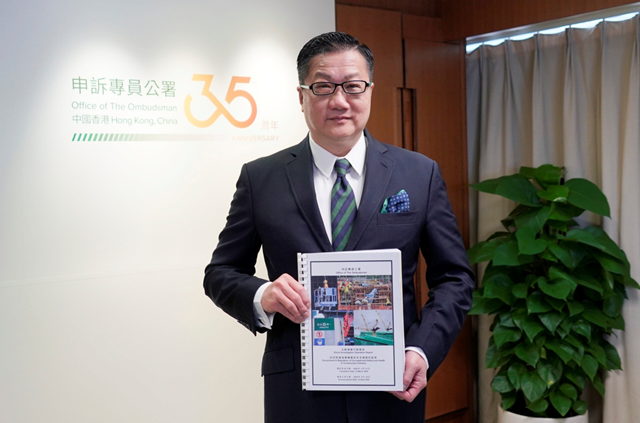
The Ombudsman, Mr. Jack Chan, today (16 April) announced the completion of a direct investigation operation into the Government’s regulation of occupational safety and health (“OSH”) in the construction industry, with 40 major recommendations for improvement made to the Labour Department (“LD”), the Buildings Department (“BD”) and the Development Bureau (“DEVB”).
Please click here to watch the live replay of our press conference.
In recent years, from large-scale public works, housing development and building repairs to small-scale flat renovation works, fatal industrial accidents in the construction industry have occurred frequently. The situation has attracted widespread public concern. During the six-year period from 2018 to 2023, the construction industry recorded a total of 108 fatal industrial accidents, accounting for more than 80 per cent of fatal industrial accidents in all industries.
Mr. Chan said, “This direct investigation operation is by far our largest and most comprehensive direct investigation operation in many years. During the investigation, investigation staff of the Office has scrutinised over 90,000 pages of documents, including about 70 individual cases in 40 boxes, and conducted multiple in-depth site visits of different types to examine the issue thoroughly and from different perspectives.
“The construction industry undoubtedly makes significant contributions to the economic development of society and people’s living environment. All lives are priceless. Indeed, one life lost to an industrial accident is one too many. The problem must be dealt with seriously and vigorously. During our direct investigation operation, the current-term Government has proactively introduced an array of targeted improvement measures to enhance OSH in the construction industry, which include amending the relevant OSH legislation to significantly increase the level of penalties to provide greater deterrent; revising various codes of practice to enhance technical requirements; conducting a number of special enforcement operations to curb unsafe operations; updating the content of mandatory safety training courses to raise workers’ safety awareness; improving the mechanism for processing renewal of contractors’ registration; formulating proposed amendments to the Buildings Ordinance to tighten the regulation of contractors; strengthening the regulation of contractors on the approved lists with unsatisfactory safety performance; and making great efforts to promote the application of the Smart Site Safety System. While the current-term Government’s endeavours are highly commendable, heart-wrenching fatal industrial accidents still happen from time to time. The Government must continue to step up its efforts to safeguard the safety of workers at every step of work. Based on our findings, the Office considers that there is still room for improvement in different areas on the part of the three relevant departments.”
From the analysis of previous fatal accidents, complaints handled by LD and site visits conducted by the Office, the Office found that in a number of cases concerning high-risk operations such as bamboo scaffolds, lifting appliances and lifting operations, the “competent persons” and “competent examiners” (collectively referred to as “competent persons”) had failed to properly inspect the plant or machinery before signing a prescribed form to certify its safety, or even signed multiple forms in advance. For example, a “competent person” has to sign a “Form 5” to certify that a bamboo scaffold is safe before it can be used by workers. In a site inspection, we found that a “competent person” had signed a “Form 5” certifying that a scaffold had been inspected and was in safe working order, but the inspection date mentioned in the form was two days after the date of the Office’s inspection. The Office even found a case where a “competent person” had already signed a form to certify the safety of a scaffold before the scaffold was actually completed.
Moreover, in its investigation into a fatal industrial accident concerning a lifting appliance, LD found that two registered professional engineers acting in the capacity of “competent examiners” signed a few prescribed forms on different dates, one of which was after a storm, certifying that the lifting appliance was in safe working condition, but they actually had not carried out the required tests and examination.
Mr. Chan said, “These ‘competent persons’ failed to carry out inspections properly or even did not carry out any inspections at all, yet irresponsibly signed forms to certify the safety of equipment. Such reckless acts pose a serious risk to the safety of workers and the public. These persons failed to uphold their obligations and meet public expectations, and they must face legal consequences and criticisms from all.” The Office considers that LD must step up monitoring under a multipronged approach, including exploring the formulation of inspection checklist templates for different types of high-risk operations, requiring “competent persons” to maintain inspection records, and implementing a system of random checks. In the long run, LD should explore the development of an electronic platform for contractors and “competent persons” to upload inspection records and forms to facilitate monitoring and surprise checking to curb unprofessional or even fraudulent criminal conduct, such as predating inspection forms.
The average amounts of penalty imposed on offenders of OSH legislation in the construction industry between 2018 and 2023 ranged from merely some $8,000 to some $10,500 per year. Comparing to the enormous fees and profits of construction projects, such penalty levels are obviously inadequate to have a deterrent effect. Among those offenders, the two contractors with the highest and the second-highest numbers of convictions during the six years had been convicted 77 and 56 times respectively. This shows that some disobedient contractors in the construction industry are repeat offenders, and their blatant defiance of the law and disregard for OSH are indeed staggering. The Office is pleased to learn that the current-term Government has completed amendments to the relevant OSH legislation, and the Occupational Safety and Occupational Health Legislation (Miscellaneous Amendments) Ordinance 2023, which took effect on 28 April 2023, has significantly increased the penalties for contravention of OSH legislation and extended the time limit for prosecution. Since the new penalties have been in effect for only a short time, LD should, after the new penalties have been in force for a period, conduct a systemic analysis to review the effectiveness of its prosecution work and the penalties imposed by the Court in convicted cases.
The Office’s investigation also revealed that BD had long failed to handle cases referred by LD for determining whether disciplinary action should be taken against contractors convicted of OSH offences. During the decade from 2011 to 2021, BD has taken disciplinary action against only one contractor on one occasion. The Office has thoroughly examined the reason for the BD’s omission throughout the years. Under the disciplinary system, BD may take disciplinary action against a contractor when either one of the following two criteria is met: the contractor has been convicted of five or more site safety offences relating to building works in the same construction site in six consecutive months (“Criterion 1”); or the contractor has been convicted of site safety offences relating to building works which involved fatal accidents (“Criterion 2”). The Office found that, in the past decade or so, BD, upon receiving the monthly summary list of conviction records from LD, only focused on handling contractors meeting Criterion 1 for consideration of disciplinary action. As regards contractors meeting Criterion 2, BD admitted omission of follow-up action due to a mistaken belief that, in addition to a monthly summary list of conviction records, LD would proactively provide details of individual cases for its consideration of disciplinary action.
Furthermore, in the only disciplinary case mentioned above, it took more than six years from the occurrence of the fatal accident in 2009 to the BD’s completion of disciplinary action against the contractor in 2015. The Office has examined the sequence of events of this case and found delays in different time points. For example, it took the BD a year after receiving the LD’s referral to complete analysis and seek detailed case information from LD. And, after receiving information from LD, BD sought legal advice only a year later. This reflects the cumbersome and inefficient procedures for disciplinary action. The Office is glad to see that in response to its observations, BD has implemented time indicators for handling cases of disciplinary action before the Office’s completion of this report and is striving to process previously omitted cases.
Meanwhile, relevant data shows that site safety has obviously been better maintained in public works than in the construction industry as a whole. While this is not due to luck but to effective regulation by relevant government departments, the Office considers that there is still room for improvement. The Office has selected 12 public works projects involving fatal industrial accidents between 2020 and 2023 and examined the scores that the contractors concerned (i.e. the successful tenderers) received regarding their site safety performance in the tender evaluation. The Office found in many contracts that the successful tenderer was given a rather low score regarding site safety performance, and some were even given the lowest score among all the tenderers. Yet, these successful tenderers still managed to win the bid because of their higher scores in tender price or other technical parts. Although the Office found no systemic occurrence of “the lowest bid wins” situation in the tender evaluation of public works, the case studies showed that adequate consideration had not been given to tenderers’ previous performance of site safety. This is because items relating to site safety did not weigh much, and the score gaps between tenderers were narrow, resulting in only an insignificant impact on the overall outcome.
Mr. Chan said, “The Office is glad to learn that, during this direct investigation operation, DEVB introduced in November 2023 a new tender evaluation system whereby a merit or demerit point would be applied having regard to the tenderer’s previous performance of site safety. DEVB should continue to review the tender evaluation system for public works in a timely manner to ensure that only contractors whose performance meets the safety standards are awarded contracts.”
Another noteworthy point is that, during the six-year period from 2018 to2023, there were 45 fatal accidents relating to renovation and repair works in total, accounting for a significant 42 per cent of all fatal accidents in the construction industry. Based on case studies and site inspections, the Office found serious inadequacies in safety measures for renovation and repair works and a lack of basic safety awareness among workers and even property management companies, property owners and residents. The Office recognises the sheer volume of renovation and repair works under way throughout the territory. LD alone can hardly ensure the safety of this kind of small-scale works, and property management companies, owner’ corporations, property owners and residents should also take part in monitoring. In fact, property management companies, owners’ corporations, property owners and residents have clear legal responsibilities under OSH legislation and may face civil claims or even criminal liability in the event of accidents. The Office considers that LD should step up publicity and education among these stakeholders, stressing in particular their legal liability in relation to renovation and repair works and the legal consequence (whether criminal or civil) and loss in case of accidents. This is to ensure that these stakeholders understand it is in their own interest to protect the safety of workers, and at the same time incentivise them to engage contractors and workers with a good safety record.
On the whole, the Office has made 40 recommendations for improvement in nine major areas, including the LD’s regulation of high-risk operations; the LD’s inspections; the LD’s enforcement and prosecution; the LD’s monitoring of registered safety auditors and registered safety officers; the BD’s regulation of registered contractors; the DEVB’s monitoring of public works and contractors; the use of innovation and technology; safety education and training; as well as publicity and promotion. The Office is pleased to learn that LD, BD and DEVB have accepted all of its recommendations.
Mr. Chan said, “To enhance OSH in the construction industry, the Government is duty bound to carry out effective regulation. However, stakeholders within or outside the industry, including contractors, workers, trade unions, various types of safety personnel, as well as owners’ corporations, property owners, residents and property management companies who are involved in renovation and repair works, all have a role to play. I hope all stakeholders will work together to safeguard site and worker safety, eradicate undesirable habits, and prevent accidents from happening for the benefit of society as a whole.”
The Office’s major recommendations for improvement to LD are:
- explore formulating templates of inspection checklist for different types of high-risk operations and attach them to the relevant codes of practice for use by “competent persons” during inspections or examinations to tighten control;
- conduct a comprehensive review of the existing requirements for maintenance of inspection records by “competent persons” regarding different types of high-risk operations, specifying the inspection records to be maintained and the need to produce such records upon the instruction of the LD officers;
- in the long run, explore the development of an electronic platform for contractors and “competent persons” to upload inspection records and forms to facilitate monitoring and random checking to curb unprofessional or even fraudulent conduct, such as predating inspection forms;
- review the operational guidelines on the conduct of in-depth surprise inspections for more precise selection of high-risk construction sites and proper follow-up on sites inspected to ensure systemic improvement of site safety;
- continue to pursue legislative amendment work to enhance the statutory notification mechanism for construction works;
- after the new penalties for OSH offences have been in force for a period of time, conduct a systemic analysis to review its prosecution work and the penalties imposed by the Court in convicted cases;
- take more proactive steps to follow up on the performance of registered safety auditors and registered safety officers on the monitoring list by, for example, making close observations of their actual performance on the site and careful examination of the reports they submit to enhance the quality of their work;
- drawing on the painful lessons from previous fatal accidents, remind site personnel including registered safety officers and registered safety auditors of the issues to which they should pay attention during their routine inspections or safety audit to strengthen their ability to detect irregularities in site operations and enhance the quality of their work;
- step up the monitoring of course providers and trainers engaging in mandatory safety training courses and carry out surprise checks in a timely manner to ensure their quality. In case of irregularities, the Department should be decisive in taking regulatory action;
- consider coordinating efforts of relevant departments and organisations to set up a thematic website on OSH in the construction industry to provide a convenient platform for various stakeholders and the public to look for information they need;
- step up publicity and education among property owners, owners’ corporations, property management companies and residents through mass media and the platform of property management companies, stressing in particular their legal liability in relation to renovation and repair works and the legal consequence and loss in case of accidents; and
- enrich the content of the publications and information on analysis of accidents, adding the roles and responsibilities of various stakeholders and how they can avoid accidents.
The Office’s major recommendations for improvement to the BD are:
- speed up processing of previously omitted cases and promptly refer those warranting disciplinary action to the Registered Contractors’ Disciplinary Board to bring non-compliant contractors to account; and
- set up a mechanism for internal monitoring to ensure timely follow-up on all referrals from LD for consideration of disciplinary action against convicted contractors.
The Office’s major recommendations for improvement to DEVB are:
- continue to review the tender evaluation system for public works in a timely manner to ensure that only contractors whose performance meets the safety standards are awarded contracts;
- continue to review the regulating requirement regarding contravention of legislation related to site safety for more effective prevention of accidents;
- after various promotional measures have been implemented for a period of time, review the adoption of the Smart Site Safety System and, with reference to the feedback from the industry, step up efforts to encourage and support wider use of the system in private development sites to enhance site safety by means of technology; and
- share with the Construction Industry Council the experience of safety training in public works for its consideration of offering subsidies as incentive, with a view to extending such safety training to private works projects to enhance site safety.
The full investigation report has been uploaded to the website of the Office of The Ombudsman for public information.
FEDERAL OMBUDSMAN INAUGURATES REGIONAL OFFICE AT SAHIWAL.
- Asks Heads of Federal Agencies to Ensure Speedy Redressal of Public Complaints.
- More than 223,000 Complaints Redressed during 2024
- Renews Commitment to Expand Outreach and Accessibility of the Institution.
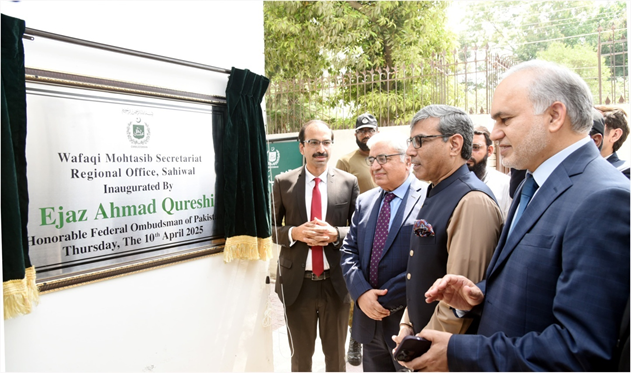
Sahiwal: 10 April, 2025 – The Wafaqi Mohtasib (Federal Ombudsman), Mr. Ejaz Ahmad Qureshi has asked the heads of the Federal Agencies to ensure speedy resolution of public complaints and provide prompt relief to the people. He was inaugurating the institution’s Regional Office at Sahiwal here today.
The Federal Ombudsman said that there is a continuous increase in the receipt of complaints every year, which reached a peak during the outgoing year 2024.Mr. Qureshi reiterated commitment to enhancing the outreach and accessibility of the institution and stated that new offices have been established at Muzaffarabad (AJ&K), Gilgit Baltistan and Mirpur Khas (Sindh). “Now with the opening of a Regional Office at Sahiwal, it has presence in 25 cities of the country”, adding that more regional offices are expected to be opened later this year.
The Federal Ombudsman further observed that the fundamental purpose of opening the new offices is to dispense administrative justice closer to the doorsteps of the people. “Our focus remains on facilitating the provision of free and expeditious redressal of grievances to the people specially those belonging to the remote areas to access our services”, said the Ombudsman. The inaugural ceremony of the Regional Office Sahiwal was attended by a large number of senior officials belonging to the Federal Agencies besides members of the civil society and the media. Speaking on the occasion, he said that during the outgoing year 2024, as many as 226,372 complaints were received, out of which 223,171 have been disposed of, indicating an increase of 17% and 16% in the receipt and disposal of complaints respectively.
He further added that while an impressive 93.21% implementation rate was achieved during the last year, 126 Khuli Katcheries in addition to 171 Outreach Complaint Resolution (OCR) visits were undertaken across the country. Additionally, 79 Inspection Visits were also carried out to the Federal Government agencies and departments generating large number of complaints in order to improve their service delivery, stated the Mohtasib.
“The Wafaqi Mohtasib Office is in essence a poor man’s court, which is committed to speedy resolution of the complaints, particularly those belonging to the vulnerable segments of the society”, he observed. Later, he also held a meeting with the Heads of the Federal agencies and called upon them to spare no efforts for speedy redressal of public complaints. He also spoke informally with the Press and Media and highlight edvarious initiatives launched by his office to ensure prompt resolution of public complaints. These included, Informal Resolution of Disputes (IRD) initiative as well as the Khuli Katcheries, which were conducted mostly at remote areas of the country.
He said that two dedicated offices of Grievance Commissioner for the Overseas Pakistanis and for the Children are functioning in the Wafaqi Mohtasib Secretariat. The Grievance Commissioner for Overseas Pakistanis acted upon 151,897 complaints received in his office. The Wafaqi Mohtasib also lauded the role of press and media, which he termed as most instrumental in raising public awareness about the existence of this forum, urging the people to utilize its services for speedy resolution of their grievances.
“INCREASE IN CPI LEADS TO RISE IN GDP PER CAPITA” INTEGRITY EDUCATION FOR FUTURE GENERATIONS TO BE STRENGTHENED.
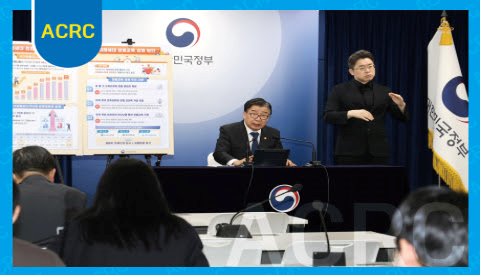
– Last year, Korea achieved its highest-ever ranking (30th) on the Corruption Perceptions Index (CPI)… The Anti-Corruption and Civil Rights Commission (ACRC) aims to maintain the upward trend through strengthened integrity education for future generations.
– ACRC to expand the inclusion of integrity content in elementary, middle, and high school textbooks, work with military academies, the Korea National Police University, and teacher’s colleges to make integrity lectures mandatory, and sign MOUs with major universities.
The Anti-Corruption and Civil Rights Commission (ACRC, Chairperson Ryu Chul Whan) announced plans to further strengthen integrity education for youths and university students in order to sustain the upward trend in Corruption Perceptions Index (CPI), which reached its highest level last year.
According to the 2024 CPI released by Transparency International (TI), Korea scored 64 out of 100, ranking 30th among 180 countries.
* (2020) 61 points, 33rd → (2021) 62 points, 32nd → (2022) 63 points, 31st → (2023) 63 points, 32nd → (2024) 64 points, 30th
In the 2024 CPI, Korea saw an increase of 1 point and an improvement of two places from a year earlier, marking the highest score and rank since the first release of the index in 1995.
ACRC analyzed this ranking could be attributed to the Korean government’s continuous anti-corruption efforts, such as strengthening the protection of whistleblowers and actively addressing corruption issues like hiring irregularities, which have been positively evaluated by the international community.
CPI is closely related to economic growth. According to the Korean Association for Public Administration, when a country’s CPI score and ranking rise, GDP per capita also increases. In fact, from 2016 to 2023, Korea’s CPI score increased by 10 points, while GDP per capita grew by 15.3%, indicating that for each 1-point increase in the index score, GDP per capita increased by an average of 1.53%.
This suggests that national efforts to enhance overall societal integrity can positively impact the economy by driving economic growth.
However, despite the upward trend, Korea ranks 21st among the 38 OECD member countries, indicating that further improvement is necessary relative to Korea’s international standing.
Particularly, from a long-term perspective, raising the integrity awareness of future generations and establishing a culture of integrity across various sectors of society are highlighted as important tasks.
For example, in Denmark, which has maintained the top position in CPI for seven consecutive years, education emphasizes “fair processes” rather than “results” and “cooperation” rather than “competition” from a young age. Similarly, in Singapore, which ranks first among Asian countries in the index, “Character and Citizenship Education (CCE)” is implemented from elementary school, highlighting the values of respect, honesty, and consideration to spread a culture of integrity throughout society through integrity education.
In line with this, the ACRC plans to further solidify the anti-corruption system for the continued development of a transparent Korea and will focus on strengthening integrity education at the frontline educational settings to foster a sense of integrity among students and young people who will lead the future of Korea.
Firstly, ACRC plans to expand the inclusion of integrity-related educational content in elementary, middle, and high school textbooks. Currently, some textbooks at these levels include content related to anti-corruption and integrity, but it is not offered as a separate subject, and its proportion is not significant.
ACRC plans to consult with relevant agencies to ensure that integrity-related educational content is expanded in future curriculum revisions. It also intends to develop and distribute new digital integrity education learning materials based on case studies.
Additionally, there are plans to encourage the establishment of integrity-related liberal arts courses in the formal education programs of universities. Collaboration will be sought with not only public servant training institutions such as military academies and the Police University, but also teacher training universities like education colleges, to ensure that prospective public officials and teachers complete integrity education as a mandatory requirement. Furthermore, general universities will be supported to activate integrity education through the establishment of regular liberal arts courses.
In particular, to ensure that integrity education becomes a regular liberal arts course in universities, specific curriculum development is necessary, and the Commission plans to conduct relevant research and produce various educational content to support this effort.
At the same time, the Commission is actively supporting integrity education in frontline educational settings by signing MOUs with major universities across the country.
Last month, the Commission signed an MOU with Cheongju National University of Education to jointly develop an integrity education program that will be provided not only to prospective teachers studying at education and teacher training colleges but also to students at general universities. Additionally, MOUs will be signed with institutions such as Korea National University of Education and Hoseo University to promote the establishment of courses focused on integrity.
In particular, Ulsan Institute of Science and Technology has already started offering a credit-bearing liberal arts course related to integrity this semester. MOUs with major universities and local education offices will continue in the future.
Chairperson Ryu Chul Whan of the ACRC stated, “As the integrity awareness of students and the younger generation increases, we expect it will enhance transparency throughout our society and ultimately create a virtuous cycle that drives improvements in national integrity and economic growth,” adding that, “Since the survey results targeting foreign businesspersons have a significant impact on national integrity assessments, we plan to continuously strengthen our promotion of the Korean government’s anti-corruption commitment and efforts, including holding meetings with executives of foreign chambers of commerce in Korea.”