Category Archives: AOA News Letter
THE OMBUDSMAN IN COOPERATION WITH MINISTRY OF PRESCHOOL AND SCHOOL EDUCATION IMPLEMENTS “OMBUDSMAN HOUR” PROJECT.
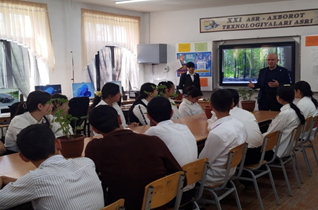
Since 2023, the Commissioner of Oliy Majlis for Human Rights (Ombudsman), in cooperation with the Ministry of Preschool and School Education of the Republic of Uzbekistan, has been implementing the “Ombudsman Hour” project across the country with the goal of increasing students’ legal awareness. To make the lessons non-traditional, creative, and engaging, the Ombudsman has prepared a series of video lessons.
The next series of “Ombudsman Hour” lessons were organized for students of the following public schools:
- No. 14 in Balikchi district of Andijan region;
- No. 28, 39, and 40 in Uchqo‘rg‘on district and No. 2, 4, and 12 in To‘raqo‘rg‘on district of Namangan region;
- No. 4, 18, 19, and 24 in Nurota district and No. 2, 18, 22, and 78 in Xatirchi district of Navoi region;
- No. 5 in Jondor district of Bukhara region;
- No. 285 and 331 in Yangihayot district of Tashkent city;
as well as for students of the University of Economics and Pedagogy in Qarshi city.
The lessons, rich in interactive Q&A sessions, provided upper-grade students with a clear understanding of the essence of human rights and freedoms, as well as their personal, political, social, economic, and environmental rights, explained through real-life examples. Additionally, detailed information was provided about the activities of national institutions operating in the field of human rights.
THE OMBUDSMAN MONITORES, CONDITIONS AT SEVERAL CLOSED INSTITUTIONS IN NAVOI REGION.
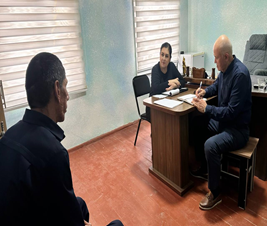
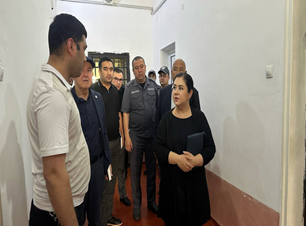
On April 24, 2025, under the leadership of the Commissioner of Oliy Majlis for Human Rights (Ombudsman), members of the Public Groups operating within the framework of the National Preventive Mechanism (NPM) conducted monitoring visits to several penitentiary institutions in Navoi region. Representatives of the media also participated in the visits.
The first destination was the Temporary Detention Center in Navoi city. During the monitoring, the team assessed the living conditions, food supply, access to medical services, and the facilities for investigation and meetings with lawyers for detainees.
Next, the team visited Correctional Colony No. 11 in Navoi city. Here, 14 vocational training circles have been established to teach inmates skills such as sewing, electrical work, beekeeping, livestock and poultry farming, agriculture, carpentry, soft furniture production, and English language. Inmates who receive vocational training certificates are employed in 18 production workshops, helping them develop a sense of responsibility and facilitating their social reintegration after release. Special attention was paid to working conditions and food provision for inmates.
During the monitoring, both group and individual interviews were conducted with inmates, and their appeals were accepted.
In cooperation with the regional Department of Health, a team of specialized doctors also carried out in-depth medical examinations of inmates at the colony. Similar activities were organized at Correctional Colonies No. 4, No. 5, and No. 12 in the region.
The next destination was the Navoi Regional Narcology Dispensary, where conditions for patients were examined. The monitoring team assessed living quarters, the canteen, sports rooms, medical units, storage conditions for medicines, and compliance with sanitary and hygiene standards.
The monitoring visits will continue on April 25.
TRAINING FOR PUBLIC DEFENDER’S STAFF ON SEXUAL VIOLENCE.
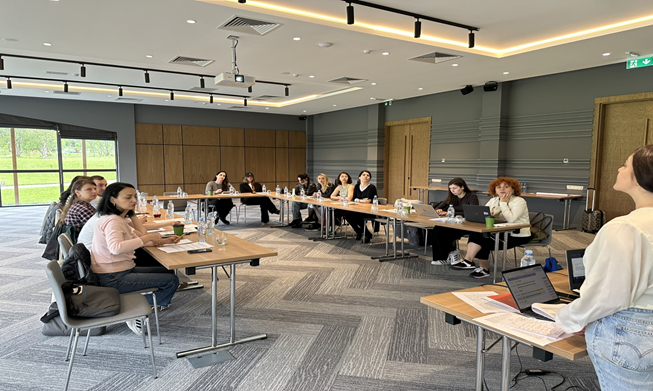
On April 24-25, 2025, training was held for the staff of the Public Defender’s Office of Georgia on the topic of sexual crimes, which covered issues of effective investigation of cases of sexual violence, criminal prosecution, trial and access to justice, including:
- Understanding sexual violence crimes from a gender perspective in accordance with the Istanbul Convention, international human rights law and criminal justice standards;
- Evidentiary standards and the importance of context-based investigation;
- Studying victim-centered strategies, including during interviews;
- Identifying myths and stereotypes about sexual violence;
- Analyzing specific circumstances for persons with disabilities and other particularly vulnerable persons, introducing victim-centered and context-based approaches.
The knowledge gained during the training will assist the Public Defender’s Office of Georgia in monitoring cases of sexual violence, examining individual cases and exploring the above-mentioned issue.
The meeting was held with the support of the Council of Europe project “Reinforcing gender equality and implementing GREVIO recommendations to combat violence against women and domestic violence in Georgia”.
PDHJ AND KOMNAS HAM ADVANCE CROSS-BORDER HUMAN RIGHTS COOPERATION.
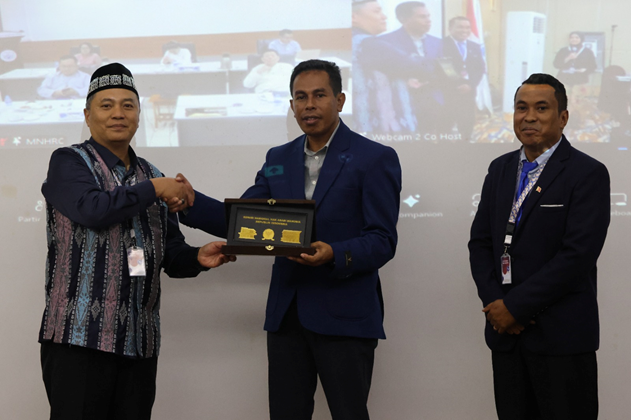
Jakarta, 24 April 2025 – The Provedoria dos Direitos Humanos e Justiça (PDHJ) of Timor-Leste and the National Human Rights Commission of Indonesia (Komnas HAM) are taking concrete steps toward formalizing a bilateral cooperation agreement focused on enhancing human rights protections in the border areas between the two countries.
The cooperation initiative began with a high-level meeting in Dili on 17 October 2024, where Provedor Virgílio da Silva Guterres ‘Lamukan’ and Komnas HAM Chairperson Atnike Nova Sigiro agreed on the importance of addressing key cross-border issues—such as statelessness, labour rights, and access to basic services—through structured collaboration.
The proposed cooperation includes joint studies, human rights seminars, capacity-building for border officials, and the development of policy responses to better protect vulnerable communities along the border. To formalize this partnership, both institutions committed to preparing a Memorandum of Understanding (MoU), with the aim of launching collaborative activities in 2025.
As a follow-up, during the First SEANF Technical Working Group Meeting held in Jakarta from 23 to 24 April 2025, PDHJ’s Head of Cabinet, Áureo José António Savio, met with Komnas HAM Secretary General Henry Silka Innah to discuss the progress of the MoU and outline the next steps.
Both sides reaffirmed their commitment to finalizing the technical and procedural elements of the agreement. The MoU is expected to be signed on the sidelines of the Second SEANF Technical Working Group Meeting, which is scheduled to take place in July 2025 in Indonesia.
This evolving partnership represents a significant step toward establishing a sustainable, cross-border human rights cooperation model that addresses the specific needs of communities in the Timor-Leste–Indonesia border region. It also demonstrates a shared commitment to regional solidarity, mutual learning, and the promotion of good governance and human dignity.
OMBUDSMAN PARTICIPATED IN THE FOURTH MEETING OF THE CIS HUMAN RIGHTS COMMISSION.
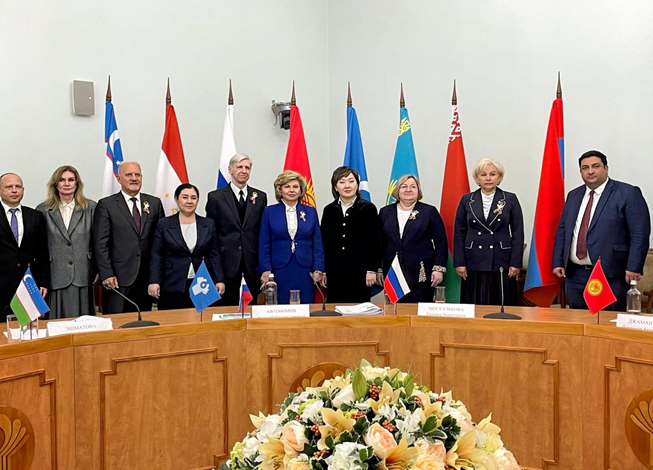
On April 16 of this year, the next (fourth) meeting of the Human Rights Commission of the Commonwealth of Independent States (CIS) was held in Moscow.
The Commissioner of the Oliy Majlis of the Republic of Uzbekistan for Human Rights (Ombudsman), Feruza Eshmatova, took part in the event.
During the meeting, special declarations were adopted to mark the 30th anniversary of the adoption of the Convention on Human Rights and Fundamental Freedoms within the CIS, and the 80th anniversary of the Victory over fascism.
The agenda of the meeting included 17 items, including:
- Issues of implementation of international standards in the penitentiary system in the national legislation of States;
- On the results of monitoring the observance of the rights of veterans of the Great Patriotic War in the States.
- Strengthening co-operation in ensuring the rights and freedoms of persons held in places of detention.
The speech by Uzbekistan’s Parliamentary Ombudsman, Feruza Eshmatova, focused on the protection of youth rights. She emphasized that safeguarding youth rights is one of the priority areas in the human rights sphere in Uzbekistan, and drew attention to the ongoing reforms, legislative changes, and the growing role of public oversight in this field.
The meeting also featured an exchange of experiences on best practices in human rights protection among the Ombudspersons of Kazakhstan, Belarus, Tajikistan, Kyrgyzstan, Turkmenistan, and Russia.
APPEAL RESOLVED FOR DELAY IN ISSUING A REFFERAL FOR MEDICAL AND SOCIAL EXAMINATION.
The Office of the Commissioner for Human Rights in the Republic of Tatarstan received an appeal from citizen T., a resident of the village of Blagovatnoye, Nizhnekamsk District. She contacted us in the interests of her mother, citizen R., born in 1957.
According to the applicant, despite persistent visual impairment confirmed by an examination at the Prozrenie clinic in Nizhnekamsk, her mother had been unable to obtain a referral for a medical and social examination for a long time. All the necessary documents were provided to the local therapist, tests were taken, but the issue remained unresolved.
We contacted the Ministry of Health of the Republic of Tatarstan with a request to look into the situation. During the investigation, the information contained in the appeal was confirmed. The delay in issuing a referral for a medical and social examination was due to the lack of a full package of documents and a consultation with a neurologist, as well as the temporary absence of the attending physician.
After the intervention, the situation was resolved. Citizen R. underwent the necessary examination, and from March 12, 2025, she was assigned Group I disability for a general disease indefinitely. An individual rehabilitation and habilitation program was also developed for her.
The chief physician of the Kamsko-Polyanskaya District Hospital was instructed to strengthen control over compliance with the deadlines for referral to the Medical and Social Expertise, as well as to conduct explanatory work with medical personnel.
Timely and qualified access to medical and expert assistance is an inalienable right of every citizen!
PUBLIC DEFENDER’S STATEMENT ON WORLD AUTISM AWARENESS DAY.

In accordance with the resolution of the UN General Assembly, Autism Awareness Day is celebrated worldwide on April 2. 17 years after the establishment of this day, its significance has expanded further and, along with raising awareness, includes the inclusion of people with autism in public life, their respect, and recognition of the contribution they made to the development of the community and the world.
The main theme of 2025 is “Advancing Neurodiversity and the UN Sustainable Development Goals (SDGs),” which draws attention to the importance of aligning efforts for neurodiversity and global sustainability.
People with autism continue to face obstacles in the process of exercising their rights and freedoms in Georgia. The issue of introducing services that promote and support independent living, tailored to the individual needs of these individuals, is acute. Rehabilitation programmes in several municipalities operate only for minors and are still inaccessible to adults with autism. Access to health care services for individuals with autism is also problematic. Ignoring the principle of reasonable accommodation and difficulties in communicating with medical personnel create additional barriers in the process of realizing the right to health care. No services providing psycho-social support to individuals with autism and their families have been developed to date. Other challenges are the provision of quality inclusive education, meaningful participation in the decision-making process, and stigmatizing attitudes in society, including statements made by politicians, which incite discrimination.
The Public Defender of Georgia once again calls on the central and local governments to make appropriate efforts, with the involvement of interested parties, to raise awareness of persons with autism, form an inclusive society, promote the realization of the rights of these persons and their independent living, and ensure their access to healthcare and continuous rehabilitation programmes.
PDHJ PARTICIPATES IN SEANF TECHNICAL WORKING GROUP MEETING IN JAKARTA.
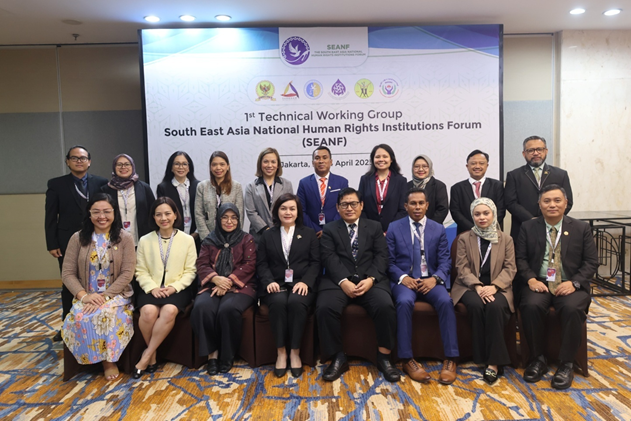
Jakarta, Indonesia, 23–24 April 2025 – The Provedoria dos Direitos Humanos e Justiça (PDHJ) of Timor-Leste joined representatives from across Southeast Asia for the First Technical Working Group Meeting of the South East Asia National Human Rights Institutions Forum (SEANF), held in Jakarta under the Chairmanship of Komnas HAM Indonesia.
The meeting brought together all six SEANF member institutions: Komnas HAM (Indonesia), SUHAKAM (Malaysia), MNHRC (Myanmar), CHRP (Philippines), NHRCT (Thailand), and PDHJ (Timor-Leste). PDHJ was represented by Aureo José António Savio, Head of Cabinet, and Antoninho Bernardino, Media and Public Relations Specialist.
The meeting began with opening remarks from the SEANF Chairperson, followed by the formal adoption of the agenda and institutional updates. Over the two days, SEANF members reviewed progress since the 21st SEANF Annual Conference, discussed internal governance matters such as the rotational secretariat, chairpersonship terms, and reactivated the SEANF Communication Working Group to finalize the forum’s media communication guidelines.
A key focus of Day 2 was the implementation of the SEANF Strategic Plan (2022–2026), particularly its four thematic priorities:
- Human rights in a post-COVID-19 environment
- Business and human rights
- Prevention of torture
- Institutional strengthening
During the institutional sharing session, PDHJ presented its key developments and activities since the last annual conference, structured around five strategic pillars: protection, policy, promotion, prevention, and institutional strengthening.
Among its highlights, PDHJ shared its constitutional review of several key legal instruments, including the Health Professionals Career Law, and its pro bono legal support initiative for victims of forced evictions. It also emphasized its participation in major regional and international forums, such as the GANHRI Annual Meeting, the CPLP Human Rights Network Event in Geneva, and the AICHR Meetings in Malaysia.
Importantly, PDHJ announced its recent reaccreditation with “A” status by GANHRI, reaffirming its independence and compliance with the Paris Principles—a key marker of credibility and commitment for national human rights institutions.
The meeting concluded with updates from the 2025 GANHRI Annual Meeting, a briefing on the UN Human Rights Council’s resolution on the rights of older persons, and planning discussions for the upcoming 22nd SEANF Annual Conference later this year.
PDHJ’s participation reaffirmed its commitment to strengthening collaboration with SEANF partners and contributing actively to regional efforts to promote and protect human rights and good governance across Southeast Asia.
OMBUDSMAN OPENS ASSISTANCE CENTER IN ZAMBOANGA CITY.

The Office of the Ombudsman inaugurated its fifth Ombudsman Assistance Center (OAC) today at the City Mall in Tetuan, Zamboanga City. The center is designed to provide responsive and streamlined frontline services, including assisting walk-in clients with the filing of complaints, submitting Statements of Assets, Liabilities, and Net Worth, and processing of Ombudsman clearances.
The ribbon-cutting ceremony was led by Deputy Ombudsman Jose Balmeo, Jr. together with Assistant Ombudsman Rex Sandoval, Director Gay Maggie Violan, consultant Atty. Carlo Bala, Fr. Oscarlito Bisnar, Jr., City Mall representatives Edzel Ned Nohay, Dayanara Gonzales, Engr. Ritzel Angelo Flores and Engr. Alvin John Araneta. They were joined by OMB OAC support personnel: Rajeevah Fathma Saripada and Mike Richelieu Buzmion.
In partnership with DoubleDragon Corporation, this initiative marks a significant step towards improving access to Ombudsman services in the region. Other Ombudsman OAC offices are located at the City Malls in Pasay City, Roxas City, Tuguegarao City and in Patikul, Sulu.
HUMAN RIGHTS COMMISSIONER CONDUCTS MOINTORING OF THE FORENSIC PSYCHIATRIC CENTER.
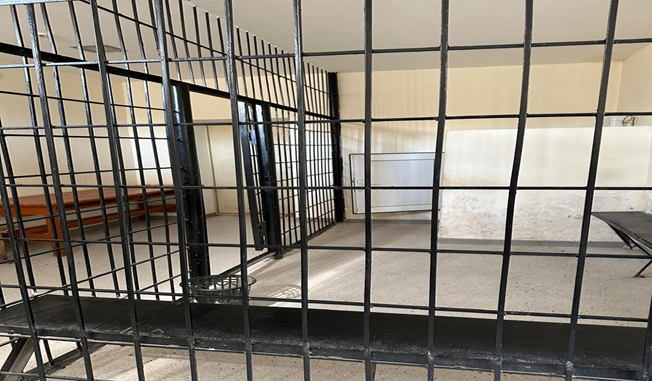
By the instruction of Sabina Aliyeva, the Human Rights Commissioner, within the framework of activities of the Working Group on Mental Health and Human Rights, a monitoring was conducted in the Forensic Psychiatric Center of the Ministry of Health.
The purpose of the monitoring organized in compliance with the requirement of the Constitutional Law on the Ombudsman, the Law on Psychiatric Assistance of the Republic of Azerbaijan, and the Law on Forensic Activities of the Republic of Azerbaijan was to investigate conditions of detention and treatment standards, as well as become familiar with the activities of the institution.
The issues of ensuring rights established by the requirements of law for those found not guilty of criminal penalties, those who are in police custody, those detained in temporary detention centers, and persons accused of criminal offenses held in pre-trial detention centers in the Center have been studied in the course of engaging in psychiatric examination.
During the monitoring, which was attended by a physician member of the Working Group, the outpatient and inpatient departments, administrative building, commission, convoy, and on-duty police rooms of the Center were inspected.
In the course of the monitoring, confidential conversations were held with detainees in cell-type wards, and the status of relevant rights regarding nutrition, walking, and receiving parcels was investigated.
At the end, legal educational publications produced by the Ombudsman Office were presented to the Head of the
Center, the relevant requirements specified in the national legislation and international documents were highlighted, and recommendations were made on improving the conditions of detention and documentation.
The relevant entity has been addressed in connection with the elimination of any defects detected during monitoring.