
Category Archives: AOA News Letter
LEGAL AWARENESS OF THE POPULATION DISCUSSED AT A NATIONAL ROUNDTABLE.
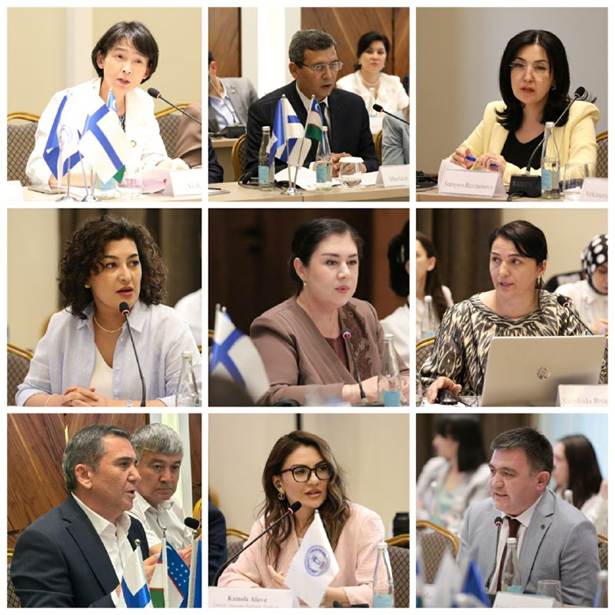
On 13 May 2025, a roundtable discussion titled “Improving Approaches to Raising Legal Awareness among the Population” was held in cooperation with the Commissioner of the Oliy Majlis for Human Rights (Ombudsman), the Ministry of Justice of the Republic of Uzbekistan, the United Nations Development Programme (UNDP) in Uzbekistan, and the Ministry for Foreign Affairs of Finland.
The event brought together members of parliament, representatives of government agencies and institutions, non-governmental non-profit organizations, human rights advocates, experts from the project “Strengthening Rule of Law and Human Rights Protection in Uzbekistan,” and staff of the Ombudsman’s Secretariat in both offline and online formats.
The main objective of the roundtable was to comprehensively examine the legal needs of the population, identify problematic areas, and develop practical recommendations for government bodies, non-governmental organizations, and other stakeholders operating in the field of legal aid provision.
It is worth noting that in recent years the Ombudsman has launched a number of practical initiatives aimed at raising public legal awareness. These include the “Ombudsman School” project in remote communities and the “Ombudsman Hour” lessons in schools across the country.
A distinctive feature of these initiatives is that they are not based on generic topics alone but are informed by the analysis of citizen appeals, enabling targeted legal education. Legal consultations are provided through face-to-face communication with the population involving relevant specialists and officials. Results show that the number of appeals has significantly decreased in regions where these initiatives were implemented, indicating that citizens are increasingly able to resolve their issues without formal complaints, due to greater legal understanding.
The event also highlighted the role of the Ombudsman’s regional representatives in increasing legal awareness, shared findings from studies on citizens’ legal needs, and presented work carried out to provide free legal assistance to victims of violence and human trafficking.
According to national survey results, over the past two years, the most common issues faced by citizens have been related to social protection, housing, financial stability, and employment. These challenges are directly linked to several constitutional rights — such as the right to social security, the right to own housing, the right to work under fair conditions, and guarantees of financial security.
Analyses show that low levels of legal literacy remain a key barrier to solving these issues legally, especially in remote and rural areas. There, limited awareness of legal rights significantly restricts individuals’ ability to access justice.
Raising legal consciousness among the population is not solely the responsibility of state institutions; it is a shared task that must involve civil society institutions, NGOs, and legal advocates. Empowering people to understand and exercise their rights through legal channels is a cornerstone of upholding human dignity.
Based on the discussions, priority directions were defined to improve legal literacy and strengthen public trust in legal institutions.
THE OMBUDSMAN PARTICIPATED IN THE CONFERENCE “IMPACT OF DIGITALIZATION AND ARTIFICIAL İNTELLIGENCE TO THE WORKPLACES” .
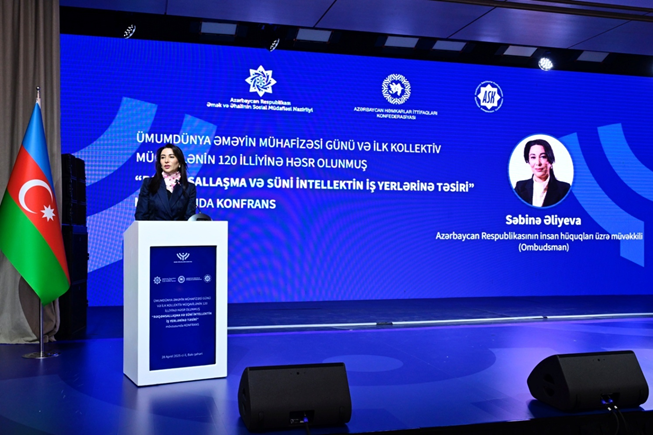
The Human Rights Commissioner, Sabina Aliyeva, participated in the conference “Impact of Digitalization and Artificial İntelligence to the Workplaces.”
While speaking at the conference, the Commissioner highlighted that notable steps have been taken in the country to advance digital governance and implement artificial intelligence. She emphasized the particular significance of the “AI Strategy of the Republic of Azerbaijan for 2025–2028,” which was approved by a Presidential Decree.
The Ombudsman noted that the given the increased AI usage, it is necessary to approach labor law and employment from new perspectives, the transition of the concept of AI is conditioned by ensuring human rights and freedoms and minimizing the negative impacts of technologies progress on human rights.
The Ombudsman noted the necessity of conducting trainings on new technologies for target groups and expand re-education opportunities, in collaboration with state bodies, civil society organizations, and the private sector.
The Ombudsman also noted that, within the scope of her powers, she will continue her activities in cooperation with relevant institutions on monitoring the impact of AI on human rights, investigating complaints, organizing awareness-raising activities, improving legislation, and analyzing the implementation process of state programs in this area.
“CRONYISM AND NEPOTISM IN HIRING TO BE PREEMPTIVELY PREVENTED!” ACRC CONDUCTED PROFESSIONAL EDUCATION ON FAIR RECRUITMENT.
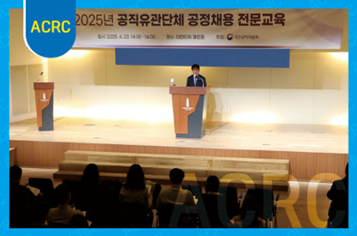
– The ACRC conducted professional education on fair recruitment for those in charge of recruitment and auditing at public service-related organizations in the metropolitan area… Providing guidance on the latest systems and considerations related to fair recruitment, etc.
The Anti-Corruption and Civil Rights Commission (ACRC, Chairperson Ryu Chul Whan) conducted professional education on fair recruitment (hereinafter referred to as professional education) in Ferrum Tower in Jung-gu, Seoul, today (April 23) for those in charge of recruitment and auditing at 150 public service-related organizations located in the metropolitan area to prevent corruption in the public sector.
This professional education consists of introduction of the latest laws and guidelines related to fair recruitment, such as the “Act on Fair Hiring Procedures”; considerations for each stage of recruitment, including recruitment planning, announcements, composition of review committees, and selection of successful candidates; measures for punishing related parties and redressing victims in the event of violations of fair recruitment; and case studies of major detected instances of recruitment fraud, etc.
Since 2023, the ACRC has been conducting professional education to prevent recruitment fraud in the public sector, and the number of participating organizations and graduates has been increasing every year.
※ (2023) 907 organizations, 5,066 people → (2024) 1,076 organizations, 7,772 people
In addition, 91.8% of education recipients who completed the education last year responded that the professional education was “helpful in performing duties,” indicating that this education is contributing in a practical way to on-site work performance.
The ACRC plans to gradually conduct education in the Gyeongsang, Jeolla, and Chungcheong regions, starting with this education, and complete professional education for a total of 1,490 public service-related organizations by the end of this year.
Lee Myung-soon, Vice Chairperson of the ACRC, emphasized, “In order for public institutions to conduct their hiring fairly, practical efforts made by those in charge at the front line as well as the improvement of the system are more important than anything else.“
He further stated, “The ACRC will continue to actively support frontline personnel in enhancing their professional recruitment work capacity in order to eradicate recruitment fraud in the future.”
MALAYSIAN DELEGATION VISITS PDHJ AS PART OF PREPARATIONS TO ESTABLISH OMBUDSMAN INSTITUTION.
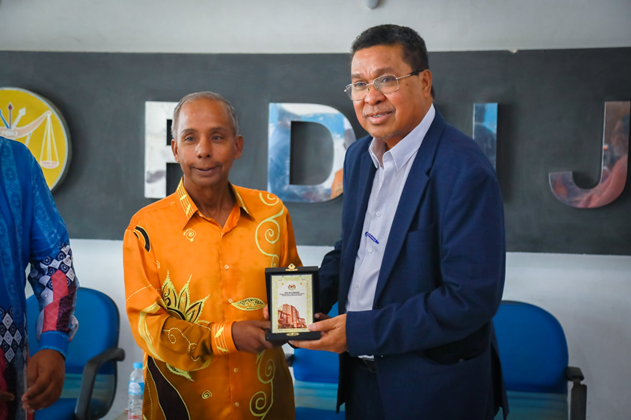
Dili, 28 May 2025 — The Provedoria dos Direitos Humanos e Justiça (PDHJ) hosted a high-level courtesy visit from a Malaysian government delegation, led by M. Kula Segaran, Deputy Minister in the Prime Minister’s Department (Law and Institutional Reform), as part of Malaysia’s initiative to learn from international models in preparation for the establishment of its own Ombudsman institution.
The delegation was accompanied by Dato’ Amarjit Sarjit Singh, Ambassador of Malaysia to Timor-Leste, who also participated in the meeting.
Representing PDHJ were Virgílio da Silva Guterres Lamukan, Ombudsman for Human Rights and Justice; Rigoberto Monteiro, Deputy Ombudsman for Good Governance; Maria Marília da Costa, Deputy Ombudsman for Human Rights; and other senior officials.
The visit provided an opportunity for the Malaysian delegation to learn about PDHJ’s institutional structure, mandate, and experiences over its 21-year journey. As a hybrid institution combining human rights protection with the promotion of good governance, PDHJ shared insights into its complaint handling mechanisms, oversight processes, and legal framework.
The Ombudsman, Virgílio Guterres, expressed his sincere appreciation to the delegation for including PDHJ in their official program and for their interest in learning from Timor-Leste’s experience. He noted that such exchanges strengthen regional cooperation and reinforce shared commitments to transparency and justice.
Discussions also explored areas of mutual interest, including whistleblower protection, maladministration prevention, and complaint management systems. The Malaysian delegation extended an invitation for PDHJ to participate in the upcoming Ombudsman Conference in Malaysia, which was positively received by the institution.
The meeting reflects growing regional collaboration and underscores PDHJ’s role as a reference point for institutions working to uphold integrity, accountability, and human rights.
TRAINING “FUNDAMENTAL GUARANTEES OF THOSE IN POLICE CUSTODY – INTERNATIONAL STANDARDS” WAS HELD.
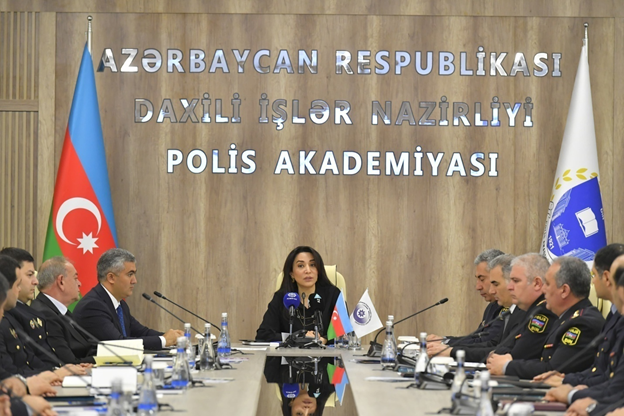
Within the framework of the “Year of the Constitution and Sovereignty,” the training “Fundamental guarantees of those in police custody- international standards,” organized by the Ombudsman of Azerbaijan, was held at the Police Academy of the Ministry of Internal Affairs.
The Ombudsman, Sabina Aliyeva, opened the ceremony and wished the training success.
In her speech, the Ombudsman noted the Ombudsman Institution has very effective co-operation with the Ministry of Interior Affairs and that both institutions work in the protection of human rights on the basis of principles of mutual co-operation and satisfaction of citizens.
The Ombudsman stated that, within the framework of the National Preventive Mechanism, monitoring visits have been carried out in institutions where detained persons cannot leave at their own free will, including police custodial settings.
The Commissioner stressed the importance of increasing professional knowledge about international standards, including continuing to raise awareness among employees of the Ministry.
Noting also the significance of the protection detainees’s rights, awareness-raising activities encouraging the legislative improvements, the Ombudsman said that this training significantly facilitates increasing legal culture in this regard.
Later, the Ombudsman’s representatives shared insights on monitoring visits under NPM mandate, relevant international standarts and mechanisms, legal assistance, fundamental rights of individuals in police custody, etc.
In conclusion, broad discussions were held and questions raised were answered.
“A FUTURE OF INTEGRITY IN BUSAN” STARTS IN THE CLASSROOM: ACRC PARTNERS WITH BUSAN’S EDUCATION SECTOR.
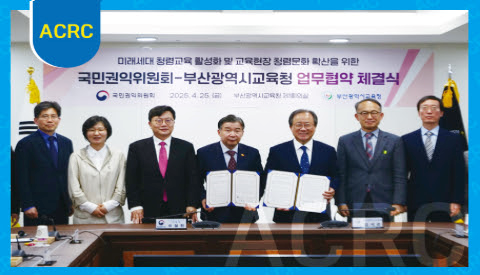
– The Anti-Corruption and Civil Rights Commission (ACRC) signed Memoranda of Understanding (MOUs) with Pusan National University (PNU) and the Busan Metropolitan City Office of Education to promote integrity education.
– The parties agreed to collaborate to ensure the consistent and effective implementation of integrity education at all levels of schooling, from elementary to university.
The Anti-Corruption and Civil Rights Commission (ACRC, Chairperson Ryu Chul Whan) signed separate Memoranda of Understanding (MOUs) on April 25 with Pusan National University (PNU, President Choi Jae-Weon) and the Busan Metropolitan City Office of Education (Superintendent Kim Seokjoon) to foster mutual cooperation in promoting integrity education for future generations.
These MOUs aim to lay the foundation for future generations—including elementary, middle, and high school students, as well as university students to internalize the values of integrity in their daily lives and become integrity-driven individuals who will lead various sectors of society.
Through this MOU with Pusan National University and the Busan Metropolitan City Office of Education, the ACRC plans to actively support the development of integrity-minded individuals in the Busan region by providing integrity education to university students and faculty members; offering and operating regular academic courses on integrity; jointly utilizing participatory integrity education content for elementary, middle, and high school students; and identifying key initiatives and strengthening collaboration to enhance integrity at educational settings.
In addition, the ACRC plans to host an integrity lecture for public officials at Busan City Hall, to be delivered by Chairperson Ryu Chul Whan to help foster a culture of integrity in the city’s public service.
Chairperson Ryu Chul Whan of the ACRC said, “Instilling a strong sense of integrity in future generations is crucial not only for strengthening national competitiveness but also for serving as a cornerstone of sustainable growth.” He added, “I look forward to strengthening the effectiveness of integrity education at all levels and nurturing future leaders with integrity in various fields through close cooperation with educational institutions in Busan.”
WAFAQI MOHTASIB (OMBUDSMAN) INAUGURATES REGIONAL OFFICE AT DERA GHAZI KHAN.
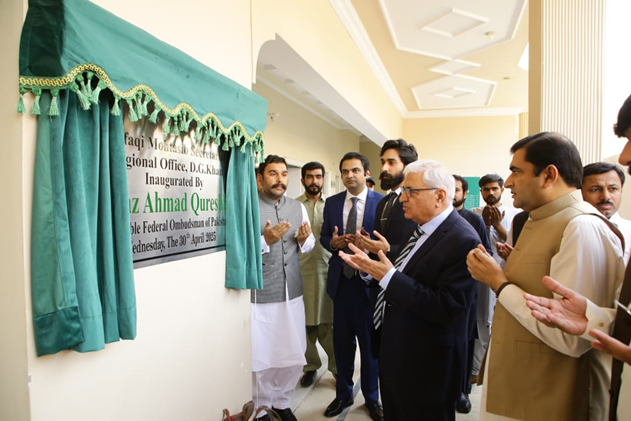
- Wafaqi Mohtasib (Ombudsman) Inaugurates Regional Office at D.G. Khan
- All out Efforts to Dispense Administrative Justice to the People of Far Flung Areas – Ejaz Ahmad Qureshi
The Wafaqi Mohtasib (Ombudsman), Mr. Ejaz Ahmad Qureshi has formally inaugurated the Regional Office at Dera Ghazi Khan here today, which brings the number of Wafaqi Mohtasib’s Regional Offices to 26 in the country.
Speaking on the occasion, the Wafaqi Mohtasib expressed the resolve that the efforts would continue for prompt disposal of public complaints and dispensing administrative justice to the people of far flung and backward areas. He urged the government officials to ensure speedy resolution of public complaints closer to the doorsteps of the people. He said that there was a continuous increase in the redressal of public complaints since 2024, which reflects the trust and the confidence the general public has in the viability of this institution.
The Wafaqi Mohtasib further added that efforts have been made to expand outreach and accessibility of the institution during the last couple of months as new regional offices have been established at Muzaffarabad (AJ&K), Gilgat Baltistan, Mirpur Khas (Sindh) and Sahiwal (Punjab) to facilitate the public.
The inaugural ceremony was attended by a large number of the local heads of the Federal Government agencies apart from civil society members and the media. Later, talking to the media representatives, the Wafaqi Mohtasib informed that more than 226,372 complaints have been received last year, out of which 223,198 have been resolved satisfactorily. The implementation rate also stood at an impressive 92.31%.
The Wafaqi Mohtasib further informed that 126 Khuli Katcheries have been held during the outgoing year and 171 visits were undertaken to the remote and far-flung areas for dispensing quick administrative justice in addition to the 79 Inspection Visits under the OCR programme intended for improving the service delivery operations of the various federal government agencies.
He said that our Investigating Officers held Khuli Katcheries at the remote and far off places with a view to dispensing administrative justice on the spot.“Due to the untiring efforts of the officers and our staff members and owing to the initiatives like the Informal Resolution of Disputes (IRD), the general public have been benefitted and their complaints being addressed in large numbers. Similarly, the complaints relating to the Children and Overseas Pakistanis have also been taken care of since there are separate Grievance Commissioners for Children and Overseas Pakistanis, working in the Wafaqi Mohtasib’s Office.
RESPONSE TO PUBLIC DEMAND SHOULD BE BASED ON THE PRINCIPLES OF GOOD FAITH AND RATIONALITY.
In 2024, a complainant reflected to the CCAC that he had booked the facility of Outdoor Football Field of the Olympic Sports Centre at the Sports Bureau (ID) for use at 20:00 one day, but in the afternoon of that day, the Meteorological and Geophysical Bureau (SMG) announced that it would issue typhoon signal no. 8 at 22:00 that day. Considering the potential safety hazards on the way back home from the facility, the complainant cancelled the booking and requested the ID for refund. However, he was rejected by the ID.
Upon investigation, typhoon signal no. 3 was issued at 05:00 on the day when the relevant case occurred. The SMG announced at 17:00 that day that it would issue typhoon signal no. 8 at 22:00. Afterwards, the relevant signal was officially issued on time.
However, the ID explained to the CCAC that according to the rules of purchasing tickets of the relevant sports facilities, when the grounds of outdoor facilities are slippery due to the weather when typhoon signal no. 3 is issued, the users who have not yet used the facilities may apply to the ID for refund within a designated time limit. Nevertheless, the grounds of the outdoor facilities of the same type were not slippery at the same time slot on the same day as they were made of special materials and the facilities remained open as usual at that time. For this reason, the ID rejected the relevant application as it did not meet the aforesaid requirement.
The CCAC considered that since the SMG had clearly announced the issuance of typhoon signal no. 8 at a particular time in advance and there were safety risks on the way to and from the facility, the ID should more properly respond to residents’ reasonable demands in accordance with the principles of good faith, debureaucratisation and efficiency after ascertaining the relevant facts in order to ensure the quality and effectiveness of public administration work.
The ID agreed with the suggestions of the CCAC. It reviewed afresh the case and refund applications of the same type for that day and made a refund. Moreover, it reviewed and optimized the rules of purchasing tickets of relevant sports facilities.
OMBUDSMAN PROBES ENHANCED MANAGEMENT OF COUNTRYSIDE ANCILLARY TOURIST FACILITIES TO PURSUE “TOURISM IS EVERYWHERE”.

The Ombudsman, Mr. Jack Chan, today (29 May) announced the launch of a direct investigation operation to examine the Hong Kong Special Administrative Region Government’s management of countryside ancillary tourist facilities to align with its efforts to develop green tourism and the pursuit of the ideas of “tourism is everywhere” and “sightseeing all over Hong Kong”.
In recent years, the Government has actively promoted green tourism to attract visitors from around the world to explore Hong Kong’s natural landscapes. Some hiking routes, such as Dragon’s Back, have been hailed by international media as the best in the city. Country parks and ancillary facilities, including hiking trails, toilets, rubbish bins, emergency distress facilities, drinking water stations, and signage, are primarily managed and maintained by the Agriculture, Fisheries and Conservation Department (“AFCD”), while the Civil Engineering and Development Department and the Home Affairs Department are also engaged in related work. In addition, AFCD, in collaboration with the Tourism Commission, has implemented the Enhancement of Hiking Trails programme since 2018 to improve the ancillary facilities of hiking trails in country parks, which are popular with and appealing to tourists.
However, the Office has noted from media reports the relevant departments’ failure to properly manage and maintain ancillary tourist facilities in countryside areas. Issues include inadequate toilets and poor hygiene conditions, and scattered and rarely updated information on transportation and location of toilets and water filling stations in country parks. Moreover, there have been incidents where damaged hiking trails remained unrepaired and neglected, and fallen trees were unremoved for months after typhoons, extremely heavy rain or landslides, posing potential risks to hikers and visitors. Furthermore, the Office has from time to time received complaints about the slow progress of countryside facility maintenance and insufficient supporting resources, such as delays in rain shelter repairs and insufficient publicity for visitor centres.
Mr. Chan said, “Proper management of countryside ancillary tourist facilities not only helps protect the safety of hikers and visitors but also enhances the outdoor experience for members of the public and tourists, thereby strengthening Hong Kong’s appeal as a green tourism hotspot. I have noticed that, for example, during the recent Labour Day Golden Week with many people and tourists travelling to the countryside to enjoy the beautiful mountains and coastal scenery of country parks, problems such as garbage accumulation and traffic congestion emerged. I consider it essential to examine how to improve the ancillary facilities in the countryside, so as to ensure that all these facilities function effectively and are maintained in safe and good condition, and information for visitors is accurate and clear. In this light, I have decided to launch a direct investigation operation to examine the work of AFCD and other relevant departments on the management and maintenance of countryside ancillary tourist facilities, the dissemination of information on hiking activities and countryside facilities, particularly safety-related information for hikers, as well as the division of responsibilities and co-ordination among different departments regarding the management and maintenance of relevant facilities. Where necessary, pertinent recommendations will be made for improvement.”
WAFAQI MOHTASIB OPENS WEBINAR ON “OMBUDSMANSHIP: COMPLYING WITH THE INTERNATIONAL STANDARDS”.
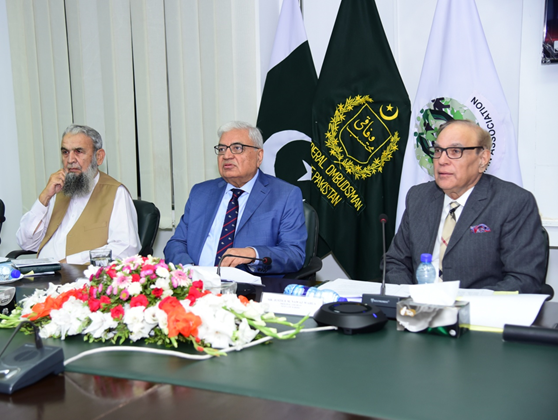
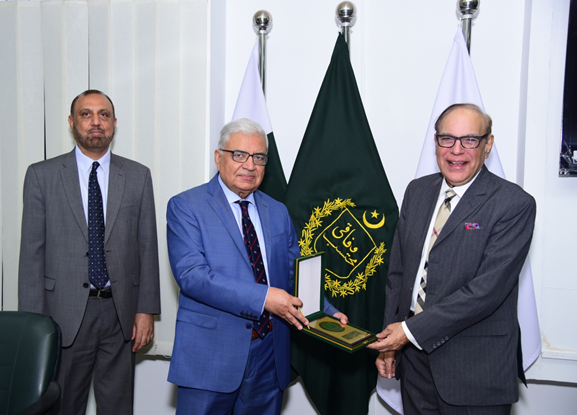
- Wafaqi Mohtasib Opens Webinar on “Ombudsmanship: Complying with the International Standards”.
- Highlights the Role of Ombudsmanship in Pakistan and Promoting Good Governance through redressal of grievances.
Islamabad: Ombudsman and Ombudsman-like institutions are playing a critical role in upholding the rule of law, redressing grievances, thus fostering good governance. This was stated by the Wafaqi Mohtasib (Federal Ombudsman), Mr. Ejaz Ahmad Qureshi, while addressing a webinar on “Ombudsmanship: Complying with the International Standards”, at the Wafaqi Mohtasib Secretariat.
Mr. Ejaz Ahmad Qureshi, who is also the current President of the 47-member strong Asian Ombudsman Association, said that it is a matter of great satisfaction that the institution of Wafaqi Mohtasib (Federal Ombudsman) has emerged as a reliable forum to address public grievances expeditiously and without any financial costs. He informed that the Wafaqi Mohtasib aligns its operations with the universally acclaimed benchmarks which are commonly known as the Paris Principles, the Venice Principles and the latest UN General Assembly Resolution 79/177. The provisions of these international instruments provide comprehensive guidelines for efficient discharge of the mandate of ombudsman institutions, he maintained. Mr. Qureshi, further added that compliance with international standards lends greater credibility and legitimacy to the functioning of the ombudsman institutions all over the world.
The Principal and Dean of NUST Law School, Mr. Justice (Retd.) M. Nawaz Wahla in his keynote address, highlighted the significance of the international standards which characterized the functioning of the ombudsman and mediator institutions. He said that the UN General Assembly, through multiple resolutions has recognized the importance of ombudsman and mediator institutions in promoting and protecting human rights and fundamental freedoms in addition to good governance and respect for the rule of law.
The Webinar was attended by a large number of member institutions of the Asian Ombudsman Association (AOA), the OIC Ombudsman Association (OICOA), the Forum of Pakistan Ombudsman (FPO), members of academia and civil society.