Category Archives: AOA News Letter
OMBUDSMAN SINDH LAUNCHES COLLABORATIVE OUTREACH INITIATIVE WITH UN AGENCIES AND CIVIL SOCIETY.
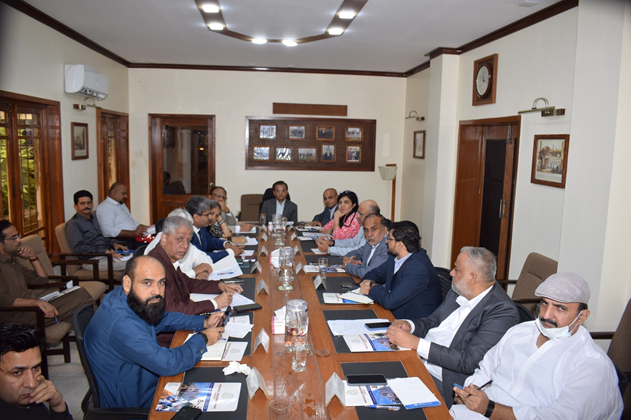
Mr. Muhammad Sohail Rajput, Provincial Ombudsman Sindh, chaired a high-level meeting attended by representatives of prominent UN agencies, foreign and local NGOs, community based organizations, local support organizations, and civil society organizations to formally launch the “Awareness and Outreach Program – A Collaborative Initiative.” This initiative is aimed at strengthening public awareness of citizens’ rights, promoting transparency and accountability, and enhancing the visibility and accessibility of grievance redress mechanisms across Sindh.
The meeting brought together a wide array of humanitarian & development partners, including UNRC, UNOCHA, United Nations Provincial Program Team-Sindh, Pakistan Red Crescent Society-Sindh, Legal Aid Society, Legal Rights Forum, HANDS Foundation, Sindh Rural Support Organization, Thardeep Rural Development Programme, Fast Rural Development Program, Muslim Hands, Helping Hand for Relief and Development, and the Pakistan Humanitarian Forum.
Addressing the participants, the Ombudsman emphasized the critical role of sustained and inclusive partnerships in extending the reach of his office to underserved and vulnerable communities. He particularly noted the significance of coordinated outreach in fostering public trust and ensuring timely redress of complaints. During the meeting, the Pakistan Red Crescent Society offered institutional support, including access to its Training Institute for the organization of awareness and capacity-building workshops targeting both the public and development sector actors. An orientation session under this initiative is planned for July 2025.
All participating organizations assured their full support for the awareness and outreach efforts of the Ombudsman Office and reaffirmed their commitment to collaborate in the development and dissemination of informational material, organizing community-level activities, and promoting the Ombudsman’s role through their respective platforms.
In his concluding remarks, the Ombudsman underscored the shared responsibility of all stakeholders in ensuring access to justice and good governance for every citizen. He expressed confidence that with collective efforts, public service delivery and grievance redress mechanisms can be significantly improved, particularly in reaching the most marginalized populations across Sindh.
“CONFLICT-OF-INTEREST STATUS CAN BE CHECKED IMMEDIATELY BY SCANNING QR CODE!”… SELF-DIAGNOSIS SERVICE BEGINS TODAY.

– ACRC launched a self-diagnosis service available on a dedicated website via QR code scan, etc. which allows for checking conflict-of-interest situations in commemoration of the 3rd anniversary of the enforcement of the Conflict of Interest Prevention Act
– From today until May 23, a voting and survey will be conducted via People’s Idea Box to pick the best word selected in “the Contest for a Word on Conflict of Interest”… participants will have a chance to be awarded a mobile gift certificate through a draw
The Anti-Corruption and Civil Rights Commission (ACRC, Chairperson Ryu Chul Whan) announced today that on the third anniversary of the enactment of the “Conflict of Interest Prevention Act for Public Officials,” a ‘Conflicts of Interest Self-Diagnosis Service’ that anyone can understand and utilize will be provided and a voting and survey related to the contest on the Conflict of Interest Prevention Act will be conducted.
The Conflicts of Interest Self-Diagnosis Service is a service that allows public officials to check for themselves whether their duties are in violation of the Conflict of Interest Prevention Act through a checklist.
When a user connects to the dedicated website by scanning a QR code, etc., and answers questions in the order of the checklist, he/she can easily confirm whether the ten categories of standards under the Conflict of Interest Prevention Act apply.
* The Conflict of Interest Prevention Act stipulates five types of reporting and submission obligations and five types of restricted and prohibited conducts that public officials must comply with to ensure the fair performance of public duties.
| Disclosure and submission of information | Restricted and prohibited conducts |
| Disclosure of privately interested persons & application for challenge | Restriction on duty-related outside activities |
| Disclosure of ownership/purchase of public duty-related real estate | Restriction on employment of family members |
| Disclosure of records of high-ranking officials’ business activities in the private sector | Restriction on private contracts |
| Disclosure of transactions with duty-related persons |
Prohibition of private use of or profiting from public institutions’ goods |
| Disclosure of personal contact with retirees | Prohibition of use of job secrets, etc. |
For example, a public official responsible for contract work can self-diagnose whether a contract he/she intend to enter into is restricted under the Conflict of Interest Prevention Act by scanning a QR code.
In addition, various participatory promotional activities are being conducted to help the public easily understand the purpose of the Conflict of Interest Prevention Act and feel the need for it.
From May 19 to 23, on the digital platform ‘People’s Idea Box’ (www.epeople.go.kr/idea), an online public vote was held to select outstanding works from the Contest aimed at encouraging awareness and adherence to the Conflict of Interest Prevention Act with phrases of around 20 characters, and mobile gift certificates were given to 100 randomly selected participants in the survey.
During the same period, a survey was also conducted to assess public awareness and the effectiveness of the Conflict of Interest Prevention Act. Mobile gift certificates were given to 100 randomly selected participants in the survey.
* Announcement of the contest’s outstanding works and the draw results for vote and prizes was made on May 30 (Friday).
Lee Myung Soon, the Vice Chairperson for Anti-Corruption at the ACRC, said, “For the Conflict of Interest Prevention Act to be more effective, the understanding and participation of both the public and public officials are crucial,” adding that “I expect that the conflict-of-interest self-diagnosis checklists are widely used so that public officials can check conflict-of-interest situations themselves as they perform their duties.”
RELEASE OF THE 2024 ANNUAL REPORT OF THE COMMISSION AGAINST CORRUPTION OF MACAO.
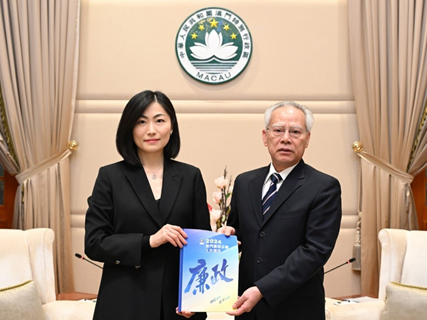
On 11th June, the 2024 Annual Report of the Commission Against Corruption of Macao was published in the Official Gazette of the Macao Special Administrative Region.
Regarding ombudsman actions, the report identifies key concerns in public service management, municipal affairs, and land and public works. Areas of focus include disciplinary matters, environmental hygiene, noise problems, administrative licensing, illegal construction, and oversight in public works.
The report also marks 2024 as a pivotal year for the CCAC, with revised laws enhancing its mission, investigative procedures, and organizational structure. These developments aim to strengthen the CCAC’s ability to safeguard public interest and promote transparency and integrity in governance.
The Annual Report has been submitted to the Chief Executive, Sam Hou Fai, in accordance with the Law of the Commission Against Corruption of the Macao Special Administrative Region. Summaries of some of the cases handled by the Anti-Corruption Bureau and the Ombudsman Bureau were included in the report.
(https://www.ccac.org.mo/pt/annual_report_details/article/mbpzu17h.html)
OMBUDSMAN PROBES HOSPITAL AUTHORITY’S ASSISTIVE DEVICE LOAN SERVICE.

The Ombudsman, Mr. Jack Chan, today (10 June) announced the launch of a full investigation into the procedures and mechanisms currently employed by the Hospital Authority (“HA”) in providing an assistive device loan service to the public.
Hospitals under HA have long provided patients and their families or carers with a loan service of assistive devices, such as wheelchairs, canes and walking frames to support patients in their daily routine and rehabilitation during recovery. While this service is undoubtedly beneficial to the public and worthy of support, available information indicates that the borrowing and returning procedures are rather cumber some and overly stringent. For example, when a device is returned, the deposit payer must present the deposit receipt to collect the refund in person at the hospital; authorising a representative is not acceptable. Moreover, without the receipt, a refund will be denied even if the deposit payer visits the hospital in person and provides proof of the device’s proper return.
Mr. Chan said, “Assistive devices are essential to facilitating the early recovery and daily lives of patients with needs, and alleviating the burden on families and carers. The Office has noted that the HA’s current loan arrangements may cause varying degrees of inconvenience to patients and their families and carers. Given the significant number of borrowers and a deposit as high as $3,500 for each assistive device, denying refunds due to missing receipts would not only lead to conflicts, but also imposes a financial burden on patients and their families. In this light, I have decided to launch a full investigation into the HA’s current procedures and mechanisms for assistive device loan services to identify any areas for improvement. Pertinent recommendations will be made for the benefit and convenience of the public.”
WAFAQI MOHTASIB (FEDERAL OMBUDSMAN) INAUGURATES NEW OFFICE BUILDING IN MULTAN.
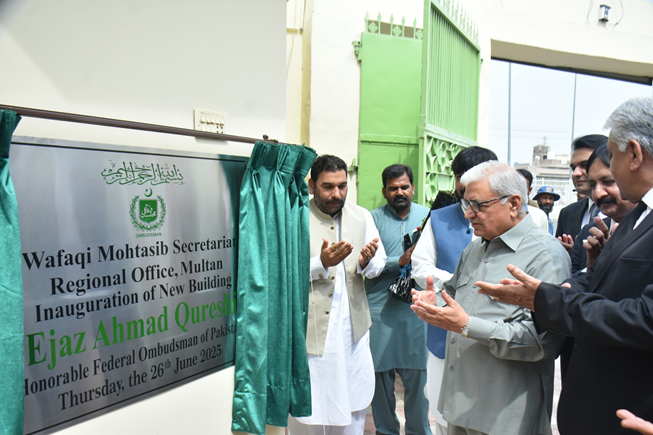
- WAFAQI MOHTASIB (FEDERAL OMBUDSMAN)INAUGURATES NEW OFFICE BUILDING IN MULTAN
- RESOLVES TO DELIVER ADMINISTRATIVE JUSTICE AT THE DOORSTEPS OF THE PEOPLE
- OFFICIALS AVOIDING IMPLEMENTATION OF DECISIONS WILL BE PROCEEDED AGAINST
Multan: 26 June, 2025 – The Wafaqi Mohtasib (Federal Ombudsman), Mr. Ejaz Ahmad Qureshi has called upon the government officials to ensure implementation of the Wafaqi Mohtasib’s decisions with a view to providing prompt relief to the people.
He was addressing government officials and officers of the Wafaqi Mohtasib Regional Offices following inauguration of the new building of Regional Office at Multan today.
He said that the Wafaqi Mohtasib’s office is fundamentally a poor man’s court committed to providing administrative relief to the poor and moralized segments of the society. “We hear complaints against more than 200 Federal Government entities and redress the public complaints against maladministration as expeditiously as possible”, he observed.
Later, he held a meeting with the senior officials of the Regional Offices at Multan, Bahawalpur and DG Khan alongwith the representatives of the Federal Agencies there. He urged them to redouble their efforts for serving the people and ensure implementation of his decisions in letter and spirit. He also made it clear that his decisions have to be implemented otherwise he would be invoking provisions in the law prescribed for non-implementation as punishment. “The Wafaqi Mohtasib possesses powers equivalent to those provided to the judges of the Supreme Court”, he added.
Addressing the meeting, he said that the outgoing year 2024, witnessed a record surge in the receipt and disposal of complaints as a result of expanding outreach and accessibility. We have established new offices at Muzaffarabad (AJ&K), GB, Mirpur Khas, Sahiwal and DG Khan during the last couple of months and now this intuition has presence in 26 cities of the country.
The Wafaqi Mohtasib further added that the outgoing year 2024 was very eventful in the sense that it witnessed resolution of 223,198 complaints, out of the 226,372 it received, which brings about the implementation rate to a record 93.21%. Furthermore, 126 Khuli Katcheries were held across the country to deliver justice at the doorsteps of the people, in addition to 171 visits undertaken in pursuance of the OCR Programme. Additionally, 79 Inspection Visits were undertaken to those government offices and agencies generating large number of complaints to fix their systemic issues. “The increasing number of public complaints is a testament to the viability and efficacy of this institution in resolving public complaints. It also initiated significant measures ameliorating the lot of Overseas Pakistanis and Children, he maintained.
The inaugural ceremony was attended by a large number of people belonging to the civil society and media besides the government officials and the general public.
QUADRILATERAL INSTITUTIONS LAUNCH LEADERSHIP TRAINING IN MANUFAHI TO PROMOTE GOOD GOVERNANCE AND PREVENT CORRUPTION.
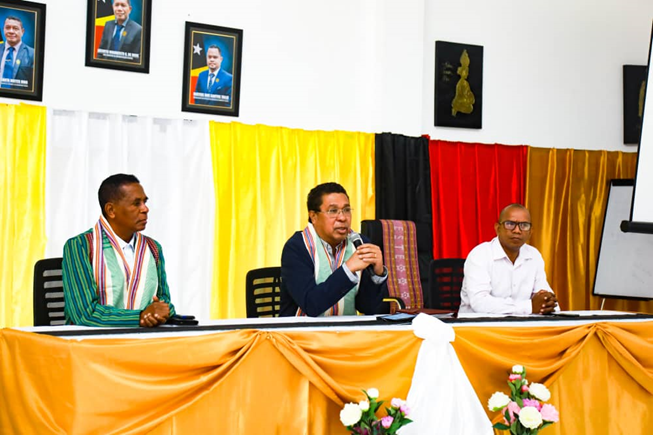
Manufahi, 06 May 2025 – The Office of the Ombudsman for Human Rights and Justice (PDHJ), in partnership with the Anti-Corruption Commission (CAC), the Public Service Commission (CFP), and the Inspector General of the State (IGE), officially launched a leadership training program for public officials in Manufahi Municipality. The training is part of the Quadrilateral Initiative — a joint effort to prevent and combat corruption, promote good governance, and protect human rights in public administration.
In his opening remarks, the Ombudsman for Human Rights and Justice reminded participants of the vital role of public service. Quoting Samora Machel, he said, “Public servants are servants of the people,” emphasizing that serving the public requires prioritizing duty over personal benefit. “To be a good servant, one must sacrifice first and seek benefit later perform your duty before claiming your rights,” he added.
He also drew inspiration from Pope Francis, stating, “Those who do not live to serve, do not serve to live.” He encouraged all civil servants to see their roles not merely as jobs, but as part of a larger social mission to serve the people and the nation.
The training is designed to build leadership capacity among public officials and remind them of their ethical responsibilities. “Sometimes we get caught up in routines, working Monday to Friday, and forget the values that should guide us. This training is a space to reflect on our mission, we are not here just to earn a salary, but to uphold the public interest and promote justice,” the Ombudsman said.
He stressed that good governance and transparency are essential to public service and that leaders must communicate effectively with their teams. He encouraged directors to apply rules fairly and consider the circumstances of employees such as when they are late due to family emergencies or illness before applying sanctions. “Rules are important, but so is fairness. Communication is key in leadership,” he said.
The Ombudsman highlighted that PDHJ is a constitutional body that exists to safeguard citizens’ rights by receiving and investigating complaints against public authorities and institutions. “Our Constitution, in Article 6, outlines the objectives of the State — to protect national sovereignty, guarantee the rights of all citizens, promote democratic values, and ensure popular participation in addressing national challenges like poverty.”
He expressed appreciation for the creation of institutions like PDHJ, CAC, CFP, and IGE, which play a critical role in upholding integrity in public administration. “Our politicians made the right decision to establish these bodies. Together, we ensure that government decisions and public policies truly serve the people.”
He closed his remarks by reminding officials that success in public administration depends on teamwork and communication. “We do not succeed alone. Even those who clean our offices contribute to the mission. When communication flows well, we can uphold good governance. If officials act unfairly, citizens have the right to report them. Complaints can be submitted through our territorial offices, email, or directly to PDHJ’s Investigation Directorate — the law guarantees this.”
The training in Manufahi marks a continued effort under the Quadrilateral Initiative to strengthen ethical leadership, transparency, and accountability across Timor-Leste’s public service.
PUBLIC DEFENDER’S MEETING WITH STUDENTS.
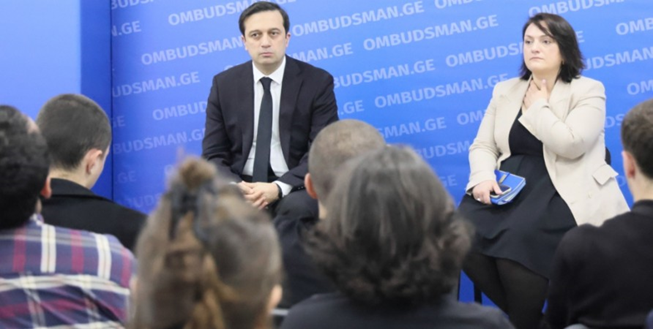
On 13 May 2025, the Public Defender of Georgia, Levan Ioseliani, spoke about the importance of human rights protection and the mandate of the Public Defender’s Office at the meeting with students of Gogita Kiknadze Tbilisi Public School No. 182.
At the interactive meeting, the students showed interest in the state of human rights protection in the country. Among other things, they discussed the current situation in penitentiary institutions, issues of gender equality, the rights of ethnic minorities, and the rights of citizens living in the occupied territories. They also showed interest in the challenges that the Public Defender’s Office faces in the process of carrying out its activities.
The meeting was organized by the Human Rights Education Department of the Public Defender’s Office.
MEMBERS OF THE OMBUDSMAN CLUB AT THE UNIVERSITY OF WORLD ECONOMY AND DIPLOMACY FAMILIARIZED THEMSELVES WITH THE INSTITUTION’S ACTIVITIES.
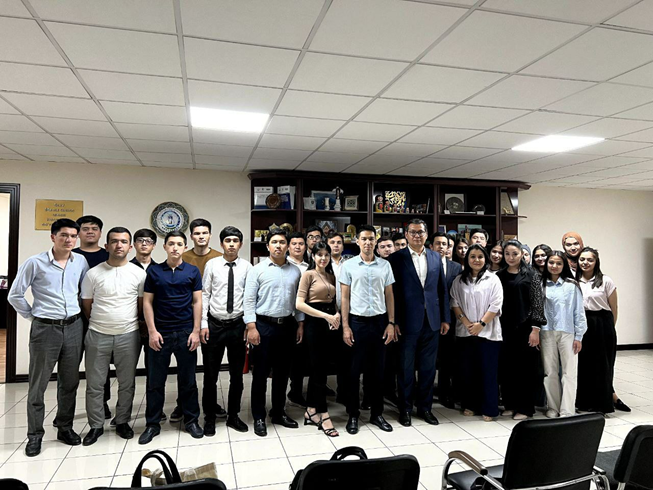
On 7 May 2025, members of the Ombudsman Club — students specializing in International Law at the University of World Economy and Diplomacy (UWED) — visited the Secretariat of the Commissioner of Oliy Majlis for Human Rights (ombudsman).
During the visit, the students received detailed information on the role of the Ombudsman institution in the protection of human rights, the procedure for reviewing citizens’ appeals, as well as mechanisms for public and international cooperation.
They also learned about the Ombudsman’s legislative initiative powers, particularly the ability to propose legal solutions to issues raised in appeals. The discussion further covered the Ombudsman’s participation in parliamentary debates and the authority to provide legal opinions on draft laws.
As part of the Club’s activities, students are offered the opportunity to apply their theoretical knowledge in practice. They may be assigned to relevant departments and sectors of the Secretariat to assist directly in legal analysis, complaint handling, and monitoring activities as apprentices.
At the end of the meeting, the students had the chance to ask questions of interest and gain firsthand insight into the practical aspects of human rights protection.
PDHJ’S 21ST ANNIVERSARY SPOTLIGHTS SYSTEMIC CHALLENGES AND INSTITUTIONAL RECOMMENDATIONS.
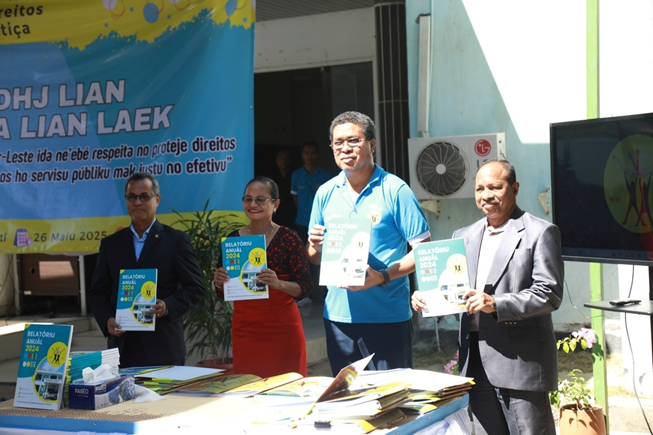
Dili, 26 May 2025 – The Provedoria dos Direitos Humanos e Justiça (PDHJ) celebrated its 21st anniversary with a ceremony held at its national office in Caicoli, where Ombudsman for Human Rights and Justice, Virgílio da Silva Guterres Lamukan, delivered a strong message on the state of human rights and governance in Timor-Leste.
Joined by senior leadership and staff from both national and municipal offices, the Ombudsman used the occasion to present key institutional outputs, including the 2024 Activity Report and several thematic monitoring reports. These included findings on health system performance, particularly shortages of essential medicines, inadequate maternity facilities, and limited human resources in referral hospitals, health centres, and health posts across all 12 municipalities, Ataúro, and RAEOA.
PDHJ also released a report on detention cell monitoring, highlighting continued concerns over poor infrastructure and conditions in municipal police stations and detention posts. Another monitoring report covered the situation in Uma Mahon and social protection centres, revealing gaps in basic services. In addition, the institution submitted 32 final investigation reports, many of which involved serious violations by public officials.
In his address, the Ombudsman stressed that the most frequent and severe violations in 2024 were committed by members of the National Police (PNTL) and teachers. He cited examples of police brutality, including a disturbing case in Manufahi where a young man was injured after a traffic officer forced his ear against a motorcycle exhaust pipe. “This kind of punishment is not lawful. It is degrading and a clear violation of human rights,” said Guterres.
The Ombudsman also expressed alarm over the Ministry of Health’s decision not to renew contracts for nearly 2,000 health workers, which has had a direct impact on service delivery, especially in remote areas. PDHJ monitoring found that some health posts were unable to operate properly due to the lack of staff, medicines, and essential equipment.
In the prison system, the institution observed that some detainees still lacked access to legal assistance and proper healthcare. At Suai Prison, inmates went without hygiene supplies, including soap and toothpaste, for nearly two months, while food deliveries were delayed due to logistical constraints. Although PDHJ found no evidence of torture inside detention cells, it reported that abuse often occurs during arrest and transport, particularly during the use of handcuffs or excessive force.
Guterres acknowledged that some of the shortcomings are linked to limited resources and procurement challenges faced by PNTL. However, he urged the Ministry of Interior and the PNTL General Command to take concrete steps to improve conditions in detention facilities and ensure compliance with human rights standards.
All findings and recommendations will be formally submitted to the National Parliament, the Prime Minister, and key institutions, including the Office of the Attorney General, the Ministries of Justice, Health, Education, and State Administration, as well as MCAE, CAC, the PNTL General Command, and the RAEOA Authority.
“Marking this anniversary is more than a celebration,” said Guterres. “It is a reminder of our duty to protect dignity, demand accountability, and strengthen the foundations of justice in Timor-Leste.”
TRAINING FOR REPRESENTATIVES OF MEDICAL FIELD.
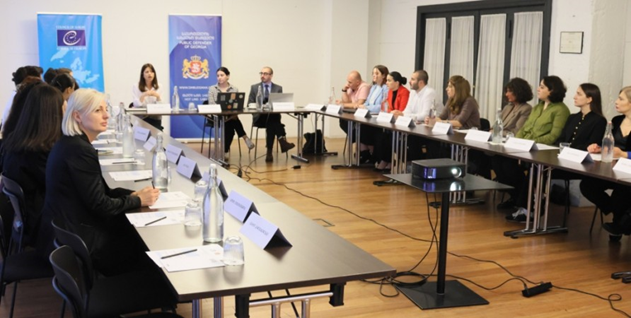
On 28 May 2025, the staff of the Equality Department of the Public Defender’s Office, with the support of the Council of Europe Office in Georgia, conducted training for representatives of several medical institutions, including lawyers and persons responsible for human resources management.
The training aimed to provide information on equality issues to medical institutions in order to further align their activities with the principles of equality and non-discrimination.
The participants were given the opportunity to gain an in-depth understanding of the essence of the right to equality, the scope of anti-discrimination legislation and, in this regard, the mandate of the Public Defender as a national anti-discrimination mechanism. In addition to the theoretical overview, the training focused on covering practical issues tailored to the participants. For this purpose, they received information on discriminatory cases identified directly in the medical field. In addition, since the participants are persons responsible for maintaining legal relations with employees and, at the same time, are employed themselves, attention was also focused on issues of discrimination and sexual harassment in the workplace.
Similar activities aimed at raising awareness are particularly important for improving the situation of equality in the country. The Public Defender hopes that even more representatives of various fields will be willing to deepen their knowledge on equality issues and contribute to the prevention of discrimination.