Category Archives: AOA News Letter
OMBUDSMAN CALLS FOR INDEPENDENT AND RIGHTS-BASED JUSTICE REFORM AT PALOP-TL-EU MINISTERIAL MEETING.
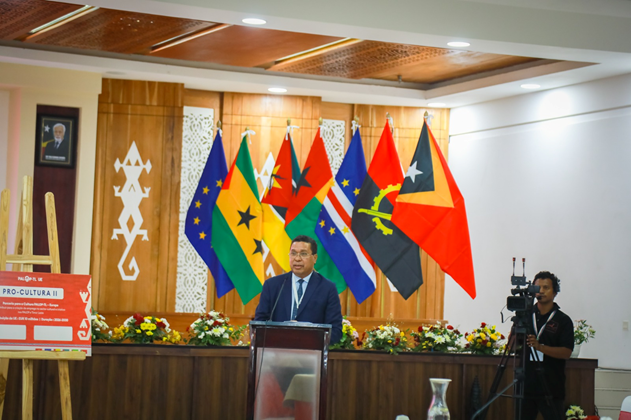
Dili, 6 June 2025 – The Ombudsman for Human Rights and Justice of Timor-Leste, Virgílio da Silva Guterres “Lamukan”, participated as a speaker in the political dialogue session of the 15th Ministerial Meeting between Portuguese-Speaking African Countries and Timor-Leste (PALOP-TL) and the European Union, held in Dili under the central theme “Justice and the Rule of Law.” The session was officially opened by Prime Minister Kay Rala Xanana Gusmão and was attended by delegations from the PALOP-TL countries, representatives of the European Union, members of parliament, government officials, and other relevant entities.
In his remarks, the Ombudsman began with a quote from Samora Machel, reflecting the essence of public service and the spirit of sacrifice: “Our duty is to give everything to the people, to be the last when it comes to benefits, and the first when it comes to sacrifice. That is what it means to serve the people.” For the Ombudsman, this quote is directly linked to the spirit of responsibility and dedication that should guide discussions on justice and the rule of law. Virgílio Guterres emphasized that speaking of a democratic rule of law is to speak of the guarantee of citizens’ freedoms, the promotion of equality, and the realization of justice. Referring to the role of the Ombudsman institution, he noted that its mission is to ensure respect for fundamental rights and promote good governance, serving as an important mechanism for strengthening the rule of law in Timor-Leste.
During his presentation, the Ombudsman reflected on the need for judicial reform and its impact on political stability and investment attraction. In this context, he posed a critical question: if we are to reflect on or discuss a potential reform of the justice system, we must ask whether the current justice system is effectively meeting the needs of political stability and providing a favorable environment for investment. If not, then perhaps it is time to seriously consider reform.
Quoting Article 1 of the Constitution of the Democratic Republic of Timor-Leste, which defines the country as a democratic rule of law based on the popular will and respect for human dignity, the Ombudsman argued that all public policies, including justice sector reform, must be guided by the public good. He emphasized that courts must be independent and free from external interference or political pressure, and that reform should not compromise that independence, but rather reinforce it as a foundation for delivering justice to the people.
Guterres also praised the IX Constitutional Government for putting forward proposals for judicial reform, noting that many recommendations have already been made and that it is essential to ensure the reform process strengthens legal certainty and public trust. He further underscored the importance of regional cooperation in the justice sector, highlighting the role of the PALOP-TL platform as a space for mutual support among Portuguese-speaking countries in their shared effort to ensure justice for their populations.
The Ombudsman stressed that judicial reform must not be merely technical but rooted in democratic and constitutional values. It should contribute to reducing social conflicts, promoting a culture of voluntary compliance with the law, and ensuring an environment conducive to foreign investment.
In closing, Guterres addressed the link between justice, human rights, and business activity, referring to the United Nations Guiding Principles on Business and Human Rights. These principles assign states the duty to protect human rights through effective grievance and remedy mechanisms, while companies have the responsibility to respect fundamental rights, ensuring that business activities incorporate social responsibility and avoid negative impacts. He concluded by affirming that the promotion of human rights must always be at the heart of any institutional reform process, especially in the justice sector.
THE INTERNATIONAL SYMPOSIUM OF OMBUDSMEN WAS WAS HOSTED IN BAKU.
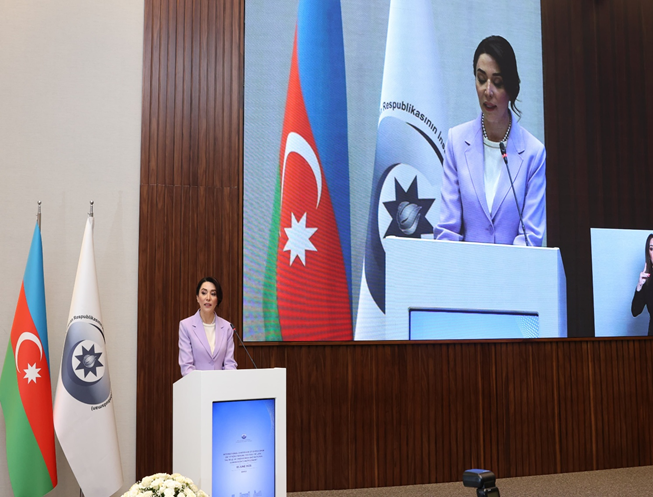
The Ombudsman of Azerbaijan hosted the International Symposium of Ombudsmen on “Strengthening the Rule of Law: The Role of Ombudsmen and National Human Rights Institutions,” in Baku. The event was dedicated to the “Year of the Constitution and Sovereignty” and the Human Rights Day in Azerbaijan, which is marked on June 18.
The event had brought together heads and representatives of ombuds institutions and NHRIs from around 15 countries, high-level state officials, parliamentarians, representatives of international organizations and CSOs, as well as experienced human rights experts. During this event, Farid Ahmadov, Minister of Justice, delivered a greeting message from His Excellency, Mr. Ilham Aliyev, President of Azerbaijan, to the symposium’ participants.
In her opening speech, the Ombudsman, Sabina Aliyeva, conveyed her deep gratitude to the country’s President, for his greeting message.
The Ombudsman expressed optimism that this meeting, dedicated to such an important issue, would foster fruitful discussions on human rights protection and evaluation of potential future developments.
- Aliyeva highlighted the need for enhanced cooperation in human rights due to globalization, armed conflicts, and the crucial role of ombudsmen and NHRIs in ensuring rule of law.
The Ombudsman reported that Azerbaijan, under the leadership of Commander-in-Chief Ilham Aliyev, has successfully liberated its occupied territories and restored its internationally recognized sovereignty. The humanitarian consequences of Armenia’s occupation and ethnic cleansing continue to impact Azerbaijan, with landmine issues posing threats to safety, preventing former IDPs’ return, hindering reconstruction, and contributing to environmental imbalance.
- Aliyeva also emphasized that the improvement of legislation in line with modern challenges, the effective organization of supervision over the implementation of normative legal acts, and the cooperation between ombudsmen and NHRIs with judicial bodies make a significant contribution to ensuring the rule of law. She spoke about the good practices in this area.
Farhad Abdullayev, Chairman of the Constitutional Court of Azerbaijan, stressed that safeguarding fundamental rights and the rule of law is key to the stable development of state and society. He also underscored the need for strong inter-institutional cooperation.
He highlighted the cooperation between the Court and the Ombudsman Institution, noting that mutual relations and experience-sharing play a vital role in protecting human rights.
In his speech, Ali Ahmadov, First Deputy Speaker of the Parliament, stated that Azerbaijan considers human rights protection a top priority, which has enabled ombuds and human rights institutions to operate on these core values.
Ali Ahmadov noted that organizing this significant event within the framework of the “Year of the Constitution and Sovereignty” is both well-founded and closely aligned with its purpose.
The conference participants received video messages from Ms. Amina Bouayach, Chair of GANHRI, and Ms. Luise Holck, Chair of ENNHRI.
The Symposium featured panel sessions on the role of ombudsmen and NHRIs in ensuring constitutional rights, promoting equal rights for all—best practices and challenges—and enhancing international cooperation in protecting refugees’ rights. The sessions included presentations and in-depth discussions, along with extensive dialogue on current challenges and future cooperation prospects.
At the conclusion of the event, the Declaration of the International Symposium of Ombudsmen was officially presented and adopted.
THE INTERNATIONAL SYMPOSIUM OF OMBUDSMEN WAS COMPLETED.
The Ombudsman of Azerbaijan hosted the International Symposium of Ombudsmen on “Strengthening the Rule of Law: The Role of Ombudsmen and National Human Rights Institutions,” in Baku. The event was dedicated to the “Year of the Constitution and Sovereignty” and the Human Rights Day in Azerbaijan, which is marked on June 18.
The event had brought together heads and representatives of ombuds institutions and NHRIs from around 15 countries, high-level state officials, parliamentarians, representatives of international organizations and CSOs, as well as experienced human rights experts. During this event, Farid Ahmadov, Minister of Justice, delivered a greeting message from His Excellency, Mr. Ilham Aliyev, President of Azerbaijan, to the symposium’ participants.
In her opening speech, the Ombudsman, Sabina Aliyeva, conveyed her deep gratitude to the country’s President, for his greeting message.
The Ombudsman expressed optimism that this meeting, dedicated to such an important issue, would foster fruitful discussions on human rights protection and evaluation of potential future developments.
- Aliyeva highlighted the need for enhanced cooperation in human rights due to globalization, armed conflicts, and the crucial role of ombudsmen and NHRIs in ensuring rule of law.
The Ombudsman reported that Azerbaijan, under the leadership of Commander-in-Chief Ilham Aliyev, has successfully liberated its occupied territories and restored its internationally recognized sovereignty. The humanitarian consequences of Armenia’s occupation and ethnic cleansing continue to impact Azerbaijan, with landmine issues posing threats to safety, preventing former IDPs’ return, hindering reconstruction, and contributing to environmental imbalance.
- Aliyeva also emphasized that the improvement of legislation in line with modern challenges, the effective organization of supervision over the implementation of normative legal acts, and the cooperation between ombudsmen and NHRIs with judicial bodies make a significant contribution to ensuring the rule of law. She spoke about the good practices in this area.
Farhad Abdullayev, Chairman of the Constitutional Court of Azerbaijan, stressed that safeguarding fundamental rights and the rule of law is key to the stable development of state and society. He also underscored the need for strong inter-institutional cooperation.
He highlighted the cooperation between the Court and the Ombudsman Institution, noting that mutual relations and experience-sharing play a vital role in protecting human rights.
In his speech, Ali Ahmadov, First Deputy Speaker of the Parliament, stated that Azerbaijan considers human rights protection a top priority, which has enabled ombuds and human rights institutions to operate on these core values.
Ali Ahmadov noted that organizing this significant event within the framework of the “Year of the Constitution and Sovereignty” is both well-founded and closely aligned with its purpose.
The conference participants received video messages from Ms. Amina Bouayach, Chair of GANHRI, and Ms. Luise Holck, Chair of ENNHRI.
The Symposium featured panel sessions on the role of ombudsmen and NHRIs in ensuring constitutional rights, promoting equal rights for all—best practices and challenges—and enhancing international cooperation in protecting refugees’ rights. The sessions included presentations and in-depth discussions, along with extensive dialogue on current challenges and future cooperation prospects.
At the conclusion of the event, the Declaration of the International Symposium of Ombudsmen was officially presented and adopted.
CHIEF OMBUDSMAN OF TÜRKIYE AND PRESIDENT OF OICOA MR. MEHMET AKARCA TOGETHER WITH OMBUDSMAN MR. ERTUNÇ ERKAN BALTA ATTENDED THE 4TH GENERAL ASSEMBLY AND 12TH BOARD OF DIRECTORS MEETING OF THE OIC OMBUDSMAN ASSOCIATION IN TEHRAN.
On 13-14 May 2025, Chief Ombudsman and President of OICOA, Mr. Mehmet Akarca, paid a visit to Tehran to attend 4th General Assembly and 12th Board of Directors Meeting of the OICOA which were hosted by the General Inspection Organization of the Islamic Republic of Iran.
In the opening ceremony of the program, Mr. Akarca emphasized that OICOA strives to strengthen cooperation among Islamic countries and contribute to the protection and promotion of human rights. He also highlighted the organization’s efforts to raise global awareness about human rights violations against Muslims, particularly in the context of combating Islamophobia, and its aim to help prevent such violations. Mr. Akarca also drew attention to the humanitarian crisis in Gaza, stating that the Palestinian people must be able to live in peace and prosperity, in a manner that upholds human dignity, on their own land.
During the meetings, an exchange of views was held, and decisions were made on topics such as strengthening the OICOA, contributing to the protection of human rights in Islamic countries, and enhancing the capacities of the member institutions of the Association.
As part of his working visit to Tehran, Chief Ombudsman Mr. Mehmet Akarca, along with the Board Members of the OICOA, visited the General Inspection Organization of Iran to learn about the institution’s activities and how they utilize technology and AI in their work.
“EXCESSIVE PAPERWORK REQUIRED BY PUBLIC INSTITUTIONS IS A BURDEN…”ACRC STARTS SOLVING THE RECRUITMENT PROBLEM OF INTERNATIONAL GRADUATES.
– ACRC recommends public institutions to make institutional improvement to ease the job applicant burden on international graduates

In the future, it is expected that job seekers who have graduated from overseas educational institutions will ease the burden of submitting s when applying to public institutions.
The Anti-Corruption and Civil Rights Commission (ACRC, Chairperson Ryu Chul Whan) recommended 331 public institutions to ease the job applicant burden of international graduates.
In the meantime, job seekers who have graduated from overseas educational institutions such as universities have been requested to deliver Apostille* or proof of academic background that are translated into Korean and notarized by consular to apply to public institutions or work as instructors of for-profit educational institutions.
* Apostille: A legalization procedure that authenticates the origin of a country for use in another country. Requires the verification by a public institutions regarding, for instance, certificate of registration or academic tran which is issued by schools or universities.
Therefore job seekers who want to get a job in Korea after graduating educational institutions based in other countries have no choice but to use private agencies and foreign language translation administrators, which requires a high cost and time burden.
Some public institutions have requested the original submission of academic s that received Apostille during the recruitment process (e.g. review, interview) that are blind process and thus not related to academic background, causing a burden on job seekers.
ACRC hence relived the requirements for the recruitment process so that for the screening process where academic background is not a recruitment requirement, copies of s with Apostille can be also accepted.
In addition, many public institutions required recently issued s*, so job seekers had to ask for academic background s several times during the job search period and even go through confirmation of Apostille.
* Example of recent: s issued within 3 months from the date of job opening
Therefore, ACRC recommended to set the recognition period for s with low possibility of update, such as graduation certificates, for a long period of more than a year to lower the burden on job seekers with international education background.
At the same time, it was challenging for an international graduates if they have worked as an academy instructor and move to an academy in another region, as they have to receive the original academic from their workplace or reissue it and resubmit it to the education office which has jurisdiction over the academy.
ACRC thus proposed the Ministry of Education and 17 metropolitan and provincial offices of education to set a function to link relevant information between education (support) offices in the educational administration information system, for the instructors who agrees to provide personal information.
THE CCAC COLLABORATES WITH UNIVERSITIES IN MACAU TO PROVIDE INTERNSHIP PROGRAMMES FOR TERTIARY STUDENTS.
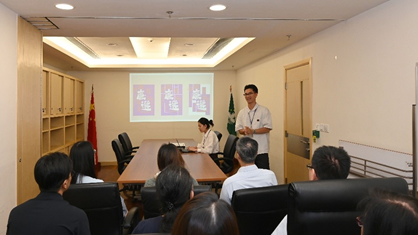
Since 2021, Commission Against Corruption of Macau (CCAC) has been offering internship opportunities for tertiary students to participate in integrity promotion efforts.
From June to July 2025, several undergraduate students from the Department of Communication at the Faculty of Social Sciences of the University of Macau, and the Department of Journalism and Communication at the School of Humanities and Arts of Macau University of Science and Technology, participated in an internship at the CCAC.
Coinciding with the clean election promotion period, the interns assisted in planning youth initiatives to promote clean elections, drafting promotional content, and supporting campus advocacy activities. These duties allowed the interns to actively engage in the Commission’s work and gain hands-on experience.
THE OMBUDSMAN OF UZBEKISTAN PARTICIPATED IN AN INTERNATIONAL SYMPOSIUM HELD IN BAKU.
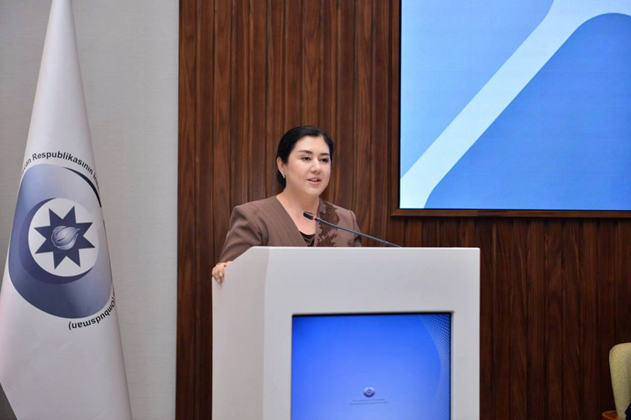
On June 18, 2025, an international symposium on the theme “Strengthening the Rule of Law: The Role of Ombudspersons and National Human Rights Institutions” was held in Baku, Azerbaijan. The event was organized by the Commissioner for Human Rights (Ombudsman) of the Republic of Azerbaijan in cooperation with a number of organizations.
This prestigious forum brought together heads of ombudsperson institutions and national human rights institutions from more than 20 countries, including Kazakhstan, the Kyrgyz Republic, Mongolia, Egypt, Azerbaijan, Uzbekistan, the Slovak Republic, Turkey, Serbia, Oman, and Montenegro.
Representatives of international organizations also took part, including the Global Alliance of National Human Rights Institutions (GANHRI), the European Network of National Human Rights Institutions (ENNHRI), the Organization of Islamic Cooperation Ombudsman Association (OIC Ombudsman Association), among others.
During the first session, the Ombudsman of the Oliy Majlis of the Republic of Uzbekistan, Feruza Eshmatova, delivered a speech outlining the ongoing reforms in Uzbekistan aimed at ensuring the protection of human rights. She emphasized that the new version of the Constitution has significantly strengthened the legal foundations for guaranteeing human dignity, honor, freedoms, and rights.
She also noted that the Law “On the Commissioner of the Oliy Majlis of the Republic of Uzbekistan for Human Rights (Ombudsman),” adopted in 2024, had been aligned with the updated constitutional norms. The law enhances the significance of the Ombudsman institution as a national human rights body by expanding its powers.
Initiatives such as the “Ombudsman School” and “Ombudsman Hours,” which aim to provide legal assistance and engage with the public in various regions, as well as the “Huquq Bilimdoni” (Legal Knowledge) quiz conducted among children with disabilities and those living in orphanages, sparked particular interest among the participants.
The symposium also focused on sharing national experiences among ombudsmans and discussing modern mechanisms for ensuring human rights protection, particularly in the digitalization and artificial intelligence era. Special attention was given to the provision of legal assistance to populations affected by conflict.
For reference, the institution of the Commissioner for Human Rights (Ombudsman) of the Republic of Azerbaijan was established as an independent state body based on the Constitutional Law adopted on December 28, 2001. The Ombudsman is authorized to protect the rights and freedoms of individuals and citizens, oversee the activities of state authorities, review individual complaints, and make recommendations to relevant bodies in response to identified human rights violations.
Additionally, the Ombudsman conducts regular monitoring of the human rights situation in institutions where persons with restricted liberty are held, working to prevent torture and cruel or inhuman treatment.
Within the framework of the symposium, Feruza Eshmatova held a series of bilateral meetings with ombudsmans from various countries to discuss issues of mutual cooperation and the further development of partnerships in the field of human rights.
WAFAQI MOHTASIB (OMBUDSMAN) TEAM HOLDS KHULI KATCHERY IN FATEH JANG.
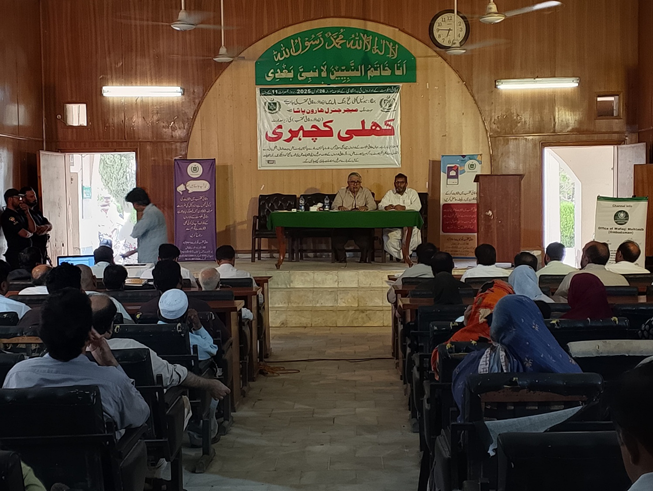
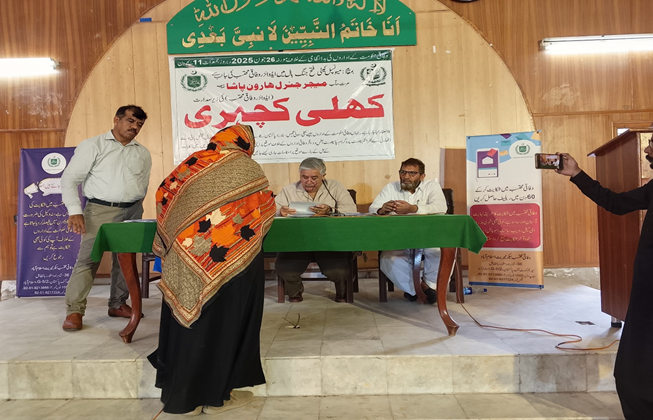
- WAFAQI MOHTASIB (OMBUDSMAN) TEAM HOLDS KHULI KATCHERY IN FATEH JANG
- COMPLAINANTS RECEIVE FINANCIAL RELIEF FROM BISP SOURCES
- NATIONAL BANK EMPLOYEES’ PAY ISSUE RESOLVED
Islamabad: 27 June, 2025 – A Wafaqi Mohtasib (Ombudsman) team comprising Advisor
Maj. Gen. (R) Haroon Sikandar Pasha and Consultant Khalid Sial held a Khuli Katchery in Fateh Jang (District Attock) the other day and heard complaints relating to the federal government entities including Sui Gas, Electricity, Benazir Income Support Programme (BISP), NADRA and others and resolved a number of complaints on the spot. A large number of complainants attended the Khuli Katchery, wherein they lodged complaints against federal and provincial departments. Most of the complaints pertained to suspension of financial relief from the BISP, non-installation of electricity transformers, delay in provision of electricity and gas connections, excessive billing and delay in issuance of the National Identity Cards.
The Wafaqi Mohtasib team issued on the spot instructions for speedy resolution of the complaints relating to the federal entities, whereas the complaints pertaining to the provincial departments were forwarded to the Provincial Mohtasib. Following the Khuli Katchery, the Wafaqi Mohtasib officials also visited the National Bank and the BISP office and instructed that the public complaints be resolved promptly. The team also directed the National Bank authorities to forthwith release the monthly pay to a contractual employee, who filed a complaint against delay in payment of pay in the Khuli Katchery. The Bank Administration assured timely payment to the employee concerned and pointed out that the team’s instructions would ultimately benefit more than 50 employees of the bank. Similarly, during the visit to BISP Office the team was informed that that the office has received the payment in respect of three beneficiaries and they might collect the same from the office. A citizen complained that a number of accidents have occurred due to absence of speed breakers near the educational institutions and public places. The Wafaqi Mohtasib team, in response directed the NHA authorities to submit a report in this regard.
The Khuli Katchery was attended by the officials belonging to the Federal Entities, district administration and representative of the media in addition to the general public. Earlier, the Wafaqi Mohtasib officials also delivered an awareness lecture highlighting the salient features of Wafaqi Mohtasib institution and how to get relief from this office in case of mal-administration. It also thanked the press and media for playing a useful role in promoting general awareness amongst the masses regarding availability of this forum.
AN EXTENDED MEETING OF THE COORDINATION COUNCIL OF HUMAN RIGHTS COMMISSIONERS IN THE CONSTITUENT ENTITIES OF THE RUSSIAN FEDERATION WAS HELD.
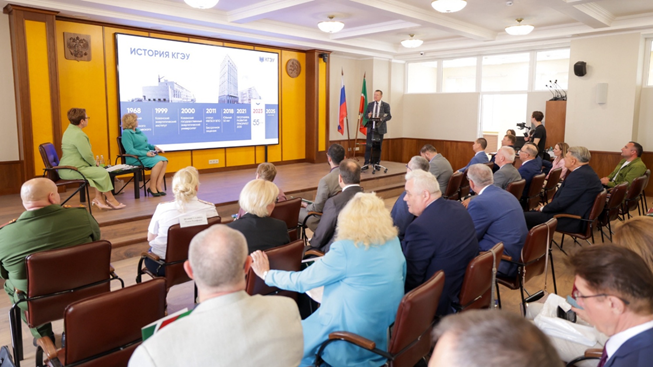
An extended meeting of the Coordination Council of Human Rights Commissioners in the constituent entities of the Russian Federation of the Volga Federal District was held on 25 June 2025. There were two topics on the agenda:
🔺 “Introduction of proposals and amendments to the Federal Law of March 18, 2020 No. 48 of Federal Law “On Human Rights Commissioners in the constituent entities of the Russian Federation”: summing up the results of 5 years of adoption of this law”
🔺 “Protection of citizens’ rights in places of forced detention”.
During the meeting, colleagues presented proposals for improving the current legislation, shared problems and observations that they encounter in their practice. They discussed the status of the offices of the commissioners, legal gaps, and opportunities to strengthen the role of ombudsmen in the regions.
Among the initiatives voiced by our side is the empowerment of regional commissioners to review criminal case materials for which court decisions have already entered into force when checking complaints. It was also proposed to amend the Code of Administrative Offenses of the Russian Federation, providing for administrative liability for obstructing the lawful activities of human rights commissioners in Russia.
As part of the discussion of the protection of citizens’ rights in places of forced detention, we raised the issues of observing the rights of foreign citizens in temporary detention centers for foreign citizens, receiving medical care in penal institutions, the need for further humanization of criminal legislation, the implementation of the rights of convicts involved in paid work, in terms of receiving sick leave and benefits under compulsory state insurance, the work of probation centers and specialized rehabilitation teams.
I thank all colleagues for their active participation and meaningful work. The protection of human rights is a daily work that requires attention, knowledge and constant participation. I am sure that today’s conversation will be another step towards improving our common work!
As part of the discussion of the protection of citizens’ rights in places of forced detention, we raised the issues of observing the rights of foreign citizens in temporary detention centers for foreign citizens, receiving medical care in penal institutions, the need for further humanization of criminal legislation, the implementation of the rights of convicts involved in paid work, in terms of receiving sick leave and benefits under compulsory state insurance, the work of probation centers and specialized rehabilitation teams.
I thank all colleagues for their active participation and meaningful work. The protection of human rights is a daily work that requires attention, knowledge and constant participation. I am sure that today’s conversation will be another step towards improving our common work!
THE OMBUDSMAN PARTICIPATED IN THE INTERNATIONAL CONFERENCE ON “ARTIFICIAL INTELLIGENCE AND HUMAN RIGHTS: OPPORTUNITIES, RISKS AND VISIONS FOR A BETTER FUTURE” IN QATAR.
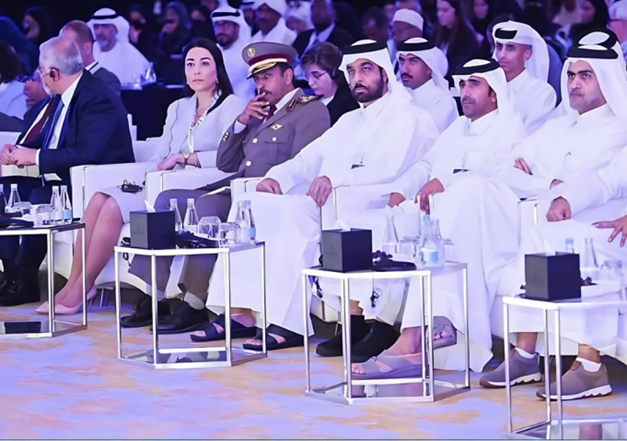
Sabina Aliyeva, the Ombudsperson of Azerbaijan, participated in the international conference on “Artificial Intelligence (AI) and Human Rights: Opportunities, Risks, and Visions for a Better Future” held in Qatar.
The event had brought together heads and representatives of various international organizations, ombudspersons and national human rights institutions, AI experts, and legal scholars from world-leading universities. The Azerbaijan Ombudsperson informed the participants of the measures taken in Azerbaijan in developing digital governance and AI applications, drawing attention to the fact that in 2025, the country’s President approved by his relevant Decree, a National AI Strategy for 2025-2028.
The Ombudsperson underlined that the possibilities of AI in its operations are being explored, pointing out that it could be very helpful in the initial handling of complaints, making basic decisions, analyzing and determining systematic problems in the process of investigation of complaints, and boosting call center productivity.
The Commissioner emphasized the significance of creating international regulatory frameworks, considering the effects of AI on human rights, and outlining the responsibilities of national human rights organizations in that document, particularly their roles in monitoring, education, and legislation improvement. She pointed out that protecting human rights and liberties and reducing the adverse effects of technological advancement on human rights should be prerequisites for the adoption of the AI concept. She also said that the legal framework and technological advancements in this field should be complementary.
In addition, Sabina Aliyeva met with Maryam bint Abdullah al-Attiyah, chairwoman of the State of Qatar’s National Human Rights Committee; Dragan Milkov, EOI President; Moshira Khattab, President of the National Council for Human Rights of the Arab Republic of Egypt; representatives of the NHRI of Bulgaria; and heads of some state institutions in Qatar. During these meetings, the parties discussed the issues on the agenda, existing challenges in defending freedoms and human rights generally, and the perspectives of collaboration.