Category Archives: AOA News Letter
THE 2023 AND 2024 ANNUAL REPORTS OF THE OMBUDSMAN INSTITUTION WERE PRESENTED TO THE JOINT COMMITTEE OF THE GRAND NATIONAL ASSEMBLY OF TÜRKIYE.
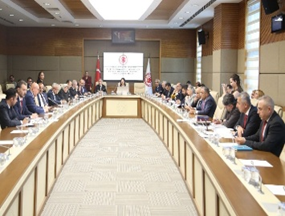
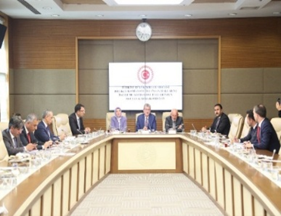
The 2023 and 2024 Annual Reports of the Ombudsman Institution were presented to the Joint Committee of the Grand National Assembly of Türkiye, composed of members of the Petition Committee and the Human Rights Inquiry Committee. The meeting was attended by Ombudspersons, Mr. Sadettin Kalkan, Mr. Ertunç Erkan Balta, Ms. Fatma Benli Yalçın, Mr. Özcan Yıldız, and Secretary General Mr. Mehmet Doğan.
In his speech, Ombudsman Mr. Sadettin Kalkan highlighted the Institution’s impartial and independent approach, its in-depth complaint review process, and its advisory role to public administrations. He reported that the Institution received 14,762 complaints in 2024.
Chair of the Joint Committee, Ms. Sunay Karamık, praised the Committee’s initiative to invite Deputy Ministers to the meeting, noting that it marked a first in parliamentary practice and helped raise awareness of the Ombudsman Institution among Ministries.
AN AWARD CEREMONY WAS HELD FOR A GROUP OF YOUNG PEOPLE WHO COMPLETED THEIR VOLUNTEER WORK AT THE OMBUDSMAN’S OFFICE.
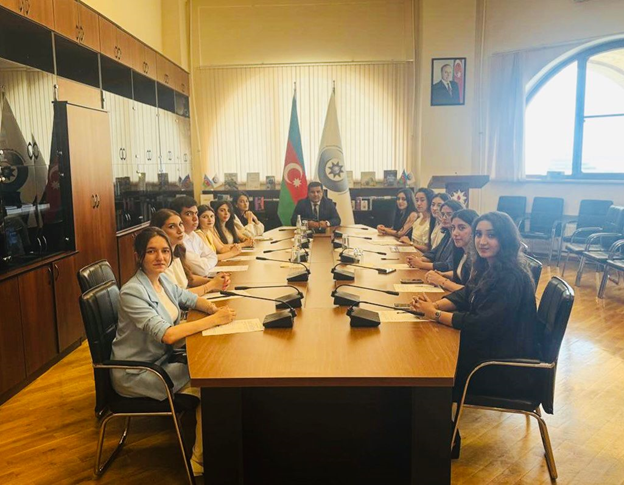
Mr. Aydin Safixanli, Head of the Office of the Human Rights Commissioner (Ombudsman) of the Republic of Azerbaijan, met with a group of young people who completed their volunteer work at the institution.
During the meeting, A. Safixanli provided extensive information about the volunteer program successfully organized at the Ombudsman’s Office at the initiative of the Commissioner for Human Rights (Ombudsman) of the Republic of Azerbaijan, Sabina Aliyeva, in which young people are actively involved.
He spoke about the opportunities created for young people in our country, state programs and strategies that contribute to the improvement of their knowledge and skills. He noted that it is commendable that graduates of the volunteer program organized at the institution have been admitted to master’s degrees at higher education institutions in local and foreign countries, and have successfully passed recruitment competitions in state and private organizations.
The head of the office was also interested in what the volunteers learned as a result of their experience at the institution, and also spoke about the international trainings they were sent to on the initiative of the Ombudsman. Then, the opinions of the young people were listened to and recommendations were given to them regarding their future activities.
Finally, in accordance with the Law of the Republic of Azerbaijan “On Volunteer Activities”, the Ombudsman presented certificates to young people who successfully completed their contractual obligations as volunteers for their active participation in the volunteer program for the protection of human rights and freedoms.
It should be noted that within the framework of the volunteer program, volunteers who studied at the Academy of Public Administration under the President of the Republic of Azerbaijan, Baku State University, ADA University, Azerbaijan University of Languages, Azerbaijan State Pedagogical University, Azerbaijan State University of Culture and Arts, and Western Caspian University underwent internships in various structural divisions of the institution and became closely acquainted with the activities of the Ombudsman in the field of protection and promotion of human rights.
“EXPORTING K-ANTI-CORRUPTION TO KAZAKHSTAN… ACRC SHARED KOREA’S INTEGRITY POLICIES WITH KAZAKHSTAN.
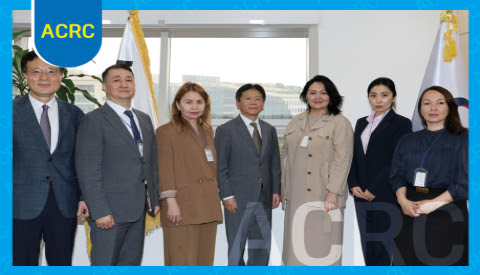
– From June 24, the ACRC conducted a four-day training program for Kazakh officials, sharing Korea’s leading anti-corruption initiatives such as the Integrity Assessment and whistleblower protection system
The Anti-Corruption and Civil Rights Commission (ACRC), chaired by Ryu Chul Whan, announced that it had transferred Korea’s exemplary anti-corruption systems including the Public Institution Integrity Assessment and the whistleblower protection system to the Republic of Kazakhstan.
The ACRC’s affiliated Anti-Corruption Training Institute launched a four-day training course on June 24 titled “Training Program on Anti-Corruption Institutional Reform,” specifically designed for officials from Kazakhstan’s Anti-Corruption Agency.
The program was organized in response to an official request from the Government of Kazakhstan and focused on Korea’s flagship anti-corruption policies particularly the Integrity Assessment for public institutions and the protection system for corruption and public interest whistleblowers.
A total of 18 participants, including Ms. Aigul Bazarbayeva, Director of Legal and International Cooperation at the Anti-Corruption Agency of Kazakhstan, participated in the program. Following the training, participants developed a detailed action plan for the introduction of these systems in Kazakhstan.
The ACRC’s Public Institution Integrity Assessment, which received the United Nations Public Service Award in the anti-corruption category in 2012, had already been shared with over ten countries—including Indonesia, Vietnam, Thailand, Uzbekistan, and Algeria with positive outcomes.
Moreover, Korea’s whistleblower protection system had been internationally recognized for its effectiveness, having been featured in the United Nations Compendium of Best Practices on Whistleblower Protection published in 2015.
Upon completion of the training, the ACRC announced plans to host a seminar in Kazakhstan around September. The event is expected to bring together officials from related institutions, public enterprise employees, and academic experts to support the practical implementation of Korea’s anti-corruption policies, including the Integrity Assessment, in Kazakhstan.
Kim Se-shin, President of the Anti-Corruption Training Institute, stated: “We hope Korea’s experiences served as a practical resource for enhancing Kazakhstan’s anti-corruption capacity.”
He added, “In particular, as Kazakhstan is Korea’s largest trading partner in Central Asia, enhanced integrity in Kazakhstan is expected to facilitate more stable and transparent business activities for Korean companies. The ACRC will continue to expand international training programs to share Korea’s integrity policies with the world.
NATIONAL ANTI-CORRUPTION WHISTLEBLOWER PROTECTION SYSTEM LAUNCHED IN IRAN.
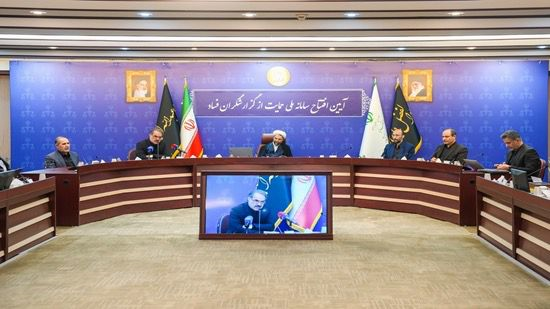
First Deputy of the Judiciary: We Rely on Public Participation to Achieve Justice President of the General Inspection Organization: Public Engagement is the Key to Preventing and Combating Corruption
The “National Whistleblower Protection System” was officially launched during a ceremony attended by Hojjatoleslam Wal-Muslimeen Khalili, First Deputy of the Judiciary; Dr. Khodaeiyan, President of the General Inspection Organization (GIO); Mr. Sahebkar Khorasani, Deputy for Strategic Affairs; and Mr. Kazemi-Fard, Deputy for Statistics and Information Technology of the Judiciary.
According to the GIO’s Public Relations Office, the launch emphasized the strategic role of public involvement in detecting and preventing corruption and the necessity of maximizing this capacity in the national oversight process.
In his speech, First Deputy of the Judiciary Hojjatoleslam Wal-Muslimeen Khalili stated:
“Oppression in today’s world spares neither children nor the elderly and utilizes every means to kill innocents. While international organizations remain silent in the face of widespread injustice, we are witnessing a devout society that believes in divine promises and holds that tyranny shall never prevail over it. Instead, the devout will always hold superiority.”
He added, “This religious society is bound by a profound unity, a manifestation of divine grace. This unity has repeatedly brought low its enemies, despite their material powers, and uplifted the dignity of Muslims worldwide. We must strive to preserve this cohesion, which has proven to be a formidable force.” Khalili emphasized that the Judiciary’s “Transformation and Excellence Document” specifically calls for leveraging public capacity in the fight against corruption.
“To attain justice,” he said, “we must act collectively. Public participation is essential to preventing corruption. The Iranian people reject corruption and yearn for justice; they are ready to cooperate, provided we engage them through rational and efficient methods.”
He continued, “According to this strategic document, the National Whistleblower Protection System was developed by the General Inspection Organization to institutionalize public cooperation. God commands that justice must lead a devout society. If we neglect the public, justice will remain individualistic. True justice is only realized when we mobilize society as a whole. This system now enables citizens to immediately report irregularities within the governance structure.”
Khalili stressed that “the people demand a clear path to justice and expect decisive action against corruption. Our nation deserves committed service. They have shown resilience, fostered unity, and humiliated the enemy. We must now fully harness this united front.”
He expressed satisfaction that the GIO launched this initiative, noting:
“Our people do not tolerate corruption and demand accountability. Every action against corruption brings us closer to justice. Indifference, however, allows corruption to grow and diverges us from the path of justice.”
He warned that ignoring the role of citizens in delivering justice is neither commendable nor legitimate. “It lacks moral, religious, and legal justification. Active public participation is a precondition for justice. This system harnesses that participation with a structured and reliable process. It is not built on vague or unverifiable reports.”
Khalili also praised Dr. Khodaeiyan, President of the GIO, for his constructive and impactful leadership, saying, “With this platform, we have taken a meaningful step toward justice.”
Dr. Khodaeiyan: Transparency and Public Engagement Are Essential for Combating Corruption
During the launch event, Dr. Khodaeiyan extended his condolences on the martyrdom anniversaries of Imam Hussain (A.S.) and Imam Sajjad (A.S.), as well as the recent assassinations of several Iranian commanders, scientists, judicial staff, and innocent civilians by the Zionist regime and the United States.
He noted that this year’s Tasua and Ashura ceremonies were held with unprecedented passion and spiritual depth due to the recent criminal attacks. “The people’s widespread and heartfelt participation in these mourning ceremonies reflected national unity and resilience.”
Khodaeiyan congratulated the Iranian nation on resisting global arrogance:
“In this asymmetric war, Iranians at home and abroad displayed remarkable national pride and solidarity.”
Welcoming the First Deputy of the Judiciary, he commended Khalili’s active role in accelerating judicial services during the recent 12-day war and in broader governance structures.
Referring to the Judiciary’s Transformation Document, Khodaeiyan said:
“This roadmap identifies major challenges and offers concrete solutions across short-, mid-, and long-term horizons. It assigns clear roles for implementation, collaboration, and oversight. If fully implemented, many obstacles will be overcome.”
One of the key pillars of this document, he emphasized, is the adoption and implementation of the Whistleblower Protection Law.
“The GIO has actively participated in drafting and promoting this law from the outset. It was approved on December 5, 2023, and its executive bylaw was later submitted to the government and approved. The related directive is currently under review by the Judiciary’s Legal Department.”
The newly launched platform, he said, is based on Article 3 of the Whistleblower Protection Law and enables public collaboration in anti-corruption efforts across all institutions.
“To succeed in prevention, detection, and prosecution of corruption, we must involve the public the most extensive and effective observers. Their active presence is a powerful asset for oversight bodies.” He noted that not only does public involvement increase oversight efficiency, but it reduces anti-corruption costs significantly.
Dr. Khodaeiyan added that since assuming office during the Judiciary’s transformation phase, the GIO has prioritized transitioning from traditional oversight to smart, electronic supervision by strengthening digital infrastructure and enhancing transparency.
“Thanks to divine support and our colleagues’ efforts, we have made considerable progress in this area.” He criticized certain agencies’ resistance to transparency and digital oversight, saying:
“To ensure access to essential electronic systems, we had to pursue legislation through the Islamic Consultative Assembly, obligating agencies to cooperate. These laws have enabled the GIO to access numerous data systems. Such access is utilized with full respect for privacy and security, allowing for more precise and intelligent monitoring.”
Public Engagement is the Key to Combating Corruption
In conclusion, Mehdi Hedayatfar, Director General of Technology and Data Analytics at the GIO, presented a technical overview of the platform’s functions.
The National Whistleblower Protection System is now accessible to all citizens via the website: www.SIHAF.ir
WAFAQI MOHTASIB STRIVING FOR GOOD GOVERNANCE IN THE COUNTRY .
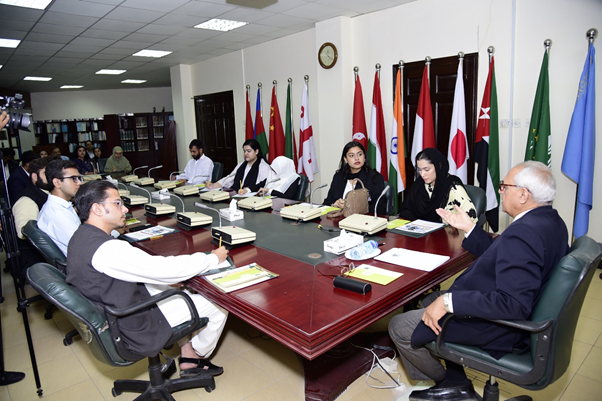
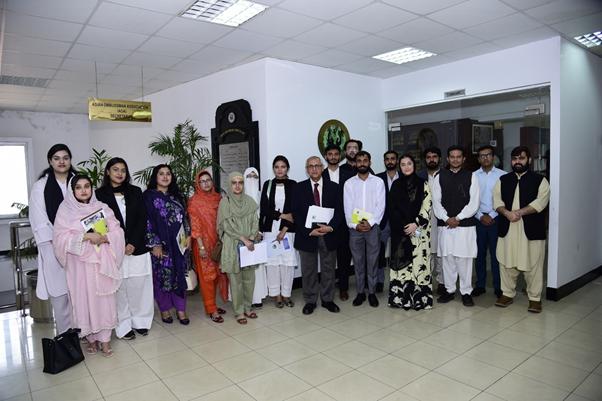
Islamabad: July 28, 2025 – A group of Interns, currently undergoing training at the office of Federal Tax Ombudsman (FTO), visited the Wafaqi Mohtasib Secretariat here today and attended a briefing on its role and functions. Briefing the group, the Advisor, Wafaqi Mohtasib Office,
Mr. Shahid Humayun and Director General (Admn), Mr. Muhammad Safdar stated that owing to its persistent efforts, the institution of Wafaqi Mohtasib has emerged as the premier agency of administrative accountability in the country.
They said that it is encouraging to note that Ombudsmanship has taken firm roots in the country. Following the success of the Wafaqi Mohtasib’s institution in providing free and expeditious administrative justice to the people, the concept has been replicated in other areas like Banking, Insurance, Taxation and Protection of Women against Harassment at the Workplace, they added. They further informed that during the year 2024, the office received and processed a record number of public complaints totaling 226,373 out of which 223,198 were disposed of, showing an increase of 17% and 16% in the receipt and disposal of complaints respectively over the figures of 2023.
Later, the internees also visited the Asian Ombudsman Association (AOA), Secretariat, located in the premises of Wafaqi Mohtasib’s Office, wherein it was apprised of Pakistan’s pioneering role in the Ombuds fraternity. Speaking on the occasion, Senior Advisor and AOA’s Executive Secretary, Amb. (R) Abdul Moiz Bokhari said that the country enjoys a position of pre-eminence in the international Ombudsman community. He also alluded to the steps taken for strengthening international linkages of the institution, saying that it is an active member of the International Ombudsman Institution (IOI) and a founding member and current President of the Asian Ombudsman Association (AOA).
The group commended the excellent work being done by the Wafaqi Mohtasib Office in addressing complaints relating to maladministration and initiating steps for good governance in the country.
CHIEF OMBUDSMAN MR. MEHMET AKARCA ADDRESSES THE INTERNATIONAL OMBUDSMAN SYMPOSIUM HELD IN AZERBAIJAN.
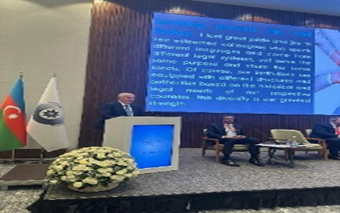
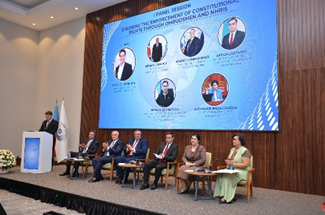
Chief Ombudsman Mr. Mehmet Akarca participated as a speaker in the session titled “Ensuring the Enforcement of Constitutional Rights through Ombudsmen and National Human Rights Institutions” at the International Ombudsman Symposium on “Strengthening the Rule of Law: The Role of Ombudsmen and National Human Rights Institutions” held in Baku, Azerbaijan on 18 June 2025.
In his speech, he emphasized the Ombudsman Institution’s dual role: promoting citizens’ rights and guiding public institutions in line with principles such as the rule of law, democracy, and good administration and recalled the clear mission of Ombudspersons: Never to allow the rights, freedoms promised by constitutions to remain mere words on paper, but to ensure they become a living reality for every individual and that this is only possible through the presence of strong, independent and effective institutions. He also brought up the suffering endured by people due to the years-long unlawful occupation and human rights violations in Karabakh, and emphasized that today civilians including women and children are losing their lives on account of the ongoing attacks against Iran and the genocide in Gaza, underscoring the urgent need for these atrocities to come to an end. Referring to grave human rights violations in Gaza, Chief Ombudsman stated that the Ombudsman Institution of Türkiye had embraced the mission of documenting this historical tragedy and bringing it to the international agenda, noting that, in this context, the Institution had published a special academic edition titled “Ombudsman Academic Gaza Special Issue” with contributions from over 130 respected scholars, and had also released a comprehensive report prepared by the experts of the Institution, which clearly exposes the serious human rights violations in Gaza.
Mr. Akarca stressed that internal conflicts, wars, forced migrations, issues arising from climate change and digitalization are matters that constantly remain on the agenda of the Ombudsman Institutions since they constantly threaten human rights and therefore keep increasing and complicating the duties and responsibilities of Ombudspersons every day.
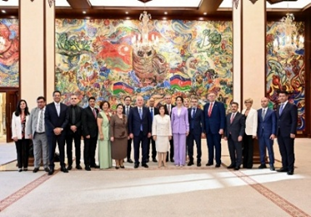
As part of the conference, Chief Ombudsman Mr. Mehmet Akarca and the ombudspersons from various countries present in Azerbaijan paid a visit to Ms. Sahiba Gafarova, the Speaker of the Milli Majlis of Azerbaijan.

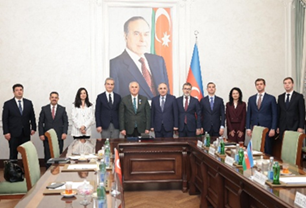
Also, as part of his official program in Azerbaijan, Chief Ombudsman paid a visit to the Prosecutor General Mr. Kamran Aliyev and the Chief Justice of the Supreme Court of the Republic of Azerbaijan, Mr. Inam Karimov and Ambassador of the Republic of Türkiye to Azerbaijan Prof. Dr. Birol Akgün.
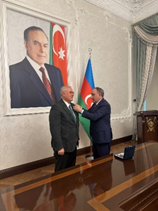
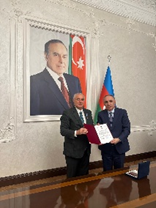
Mr. Akarca was presented with the special state award, the “100th Anniversary Jubilee Medal of the Azerbaijani Prosecution Service” by Mr. Kamran Aliyev for his contributions to strengthening legal cooperation between the two countries, fostering solidarity between institutions and advancing the field of human rights.
ACRC TRANSFORMS POTENTIALLY UNWANTED STORMWATER DETENTION FACILITY INTO A WATERFRONT PARK.
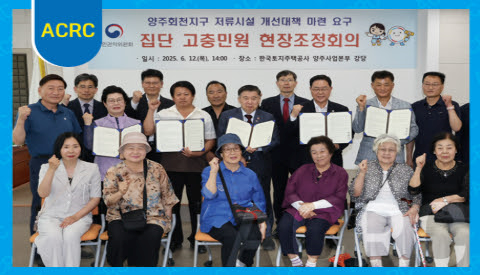
The ACRC provided a mediation plan to develop the stormwater detention facility under construction in the Yangju Hoecheon District Housing Site Development Project into a waterfront park featuring an ecological learning center, sports facilities, and walking trails.
The collective civil complaints filed by residents of the Yunjung Apartment Complex, who had expressed concerns about potential damage from the stormwater detention facility*being constructed in the Yangju Hoecheon District to prevent damage from torrential rains, are expected to be resolved through mediation by the ACRC (Chairperson Ryu Chul Whan).
* Storm water detention facility: A facility designed to temporarily store rainwater during torrential rains and discharge it once the water level of the adjacent river recedes.
The ACRC convened an on-site coordination meeting on the afternoon of June 12 at the Yangju Project Headquarters of LH Corporation, attended by representatives of LH Corporation, Yangju-si of Gyeonggi-do Province, the applicants, complainants, and residents, and reached a final agreement on resolving the collective civil complaints requesting improvement measures for the stormwater detention facility.
The Yunjung Apartment Complex, first occupied in October 2002, was excluded from the Yangju Hoecheon District Housing Site Development Project in December 2006. In early 2024, when LH Corporation planned to build a storm water detention facility adjacent to the Yunjung apartment complex, residents raised concerns about construction-related noise, structural cracks, and the potential for river water to infiltrate the underground parking lot. They requested relocating the facility further away from the apartment and covering it with a structural enclosure to conceal it from view. However, when no agreement was reached, they filed collective civil complaints with the ACRC in June 2024.
Despite prolonged discussions among the ACRC, LH Corporation, Yangju-si, and complainants, no consensus had been reached. Eventually, the ACRC proposed developing the storm water detention facility as a waterfront park. This alternative was accepted by the relevant agencies and the complainants, which ultimately enabled the development of the final mediation plan.
Under this plan, LH Corporation agreed to construct the storm water detention facility 23 meters away from the Yunjung Apartment Complex and establish an ecological learning center, sports facilities, and walking trails accessible to its residents.
Yangju-si agreed to regularly monitor the facility’s construction process and continuously manage and maintain the ecological learning center and sports facilities after completion.
The ACRC Chairperson Ryu Chul Whan stated, “This mediation holds great significance as it successfully resolved collective civil complaints by transforming residents’ negative perceptions of the storm water detention facility into positive ones through the alternative of developing it as a waterfront park.” He further urged the relevant agencies to do their utmost to swiftly implement the measures agreed upon during the June 12 mediation so that the residents’ grievances could be ly resolved.
OMBUDSMAN’S THREE STRATEGIC FOCUSES DELIVER RESULTS AND TANGIBLE BENEFITS TO COMMUNITY.
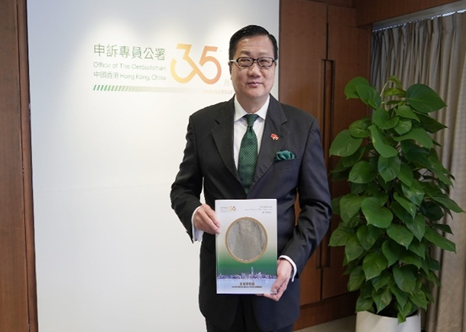
The Ombudsman, Mr. Jack Chan, presented the 2024-25 Annual Report of The Ombudsman to the public. The Office exceeded all its service targets in handling enquiries, complaints, reassessment and review of complaints in the reporting year.
Mr. Chan said, “Since assuming office on 1 April last year, I have championed three strategic focuses: (1) enhancing mediation to effectively and swiftly resolve public complaints; (2) fostering interdepartmental collaboration to provide highly efficient and quality public services; and (3) cultivating a positive and proactive complaint culture within the community. These three initiatives are designed to improve the quality of public administration, deliver tangible benefits to our citizens, and encourage the Government and citizens to foster a more stable, harmonious and progressive society for all.”
In the reporting year, the Office concluded an all-time high of 555 cases by mediation, nearly tripling the number of the previous year and accounting for 33.5 per cent of the cases pursued. Given that the average time taken to resolve a complaint by way of mediation was only 10.87 days, it significantly expedited the process of redressing grievances for the public.
On the front of fostering interdepartmental collaboration, the Office completed three direct investigation operations and processed 141 complaint cases during the year in this connection.
The Office has stepped up efforts to cultivate a positive complaint culture. In addition to the annual Ombudsman’s Awards Scheme, the Office issued 41 appreciation letters to 16 departments and organisations, and presented 19 appreciation certificates to complainants during the year, recognising their contribution to the enhancement of public administration. For the first time, the Office hosted seminars for universities and tertiary institutes, with a total of 13 seminars held at tertiary and secondary institutes throughout the year to promote a positive complaint culture. The Office is in active preparation for establishing the Hong Kong International Ombudsman Academy to provide appropriate training for government departments and public organisations, enhance the professional capabilities of staff of the Office, and promote exchanges and co-operation between the Office and overseas ombudsman institutions.
The Office completed eight direct investigation operations and 40 full investigations during the year, delivering a total of 254 recommendations, 37 per cent more compared to that of the previous year, for improvement of public administration. All the recommendations were accepted by the government departments or organisations concerned, including some having been pursued and implemented. From November 2024 onwards, the Office started making observations in cases concluded after inquiries to highlight the improvements that had been or could be put in place more speedily. As at 31 March 2025, 106 observations had been made and were well received by the government departments or public organisations concerned.
In the reporting year, the Office received 4,402 complaints on various topics and completed 4,664 cases (including some carried over from the preceding year), of which 3,009 were assessed and closed and 1,655 pursued and concluded.
WAFAQI MOHTASIB OPENS AOA WEBINAR ON THE SHARED PRINCIPLES OF OMBUDSMANSHIP AND THE UN SUSTAINABLE DEVELOPMENT GOALS.
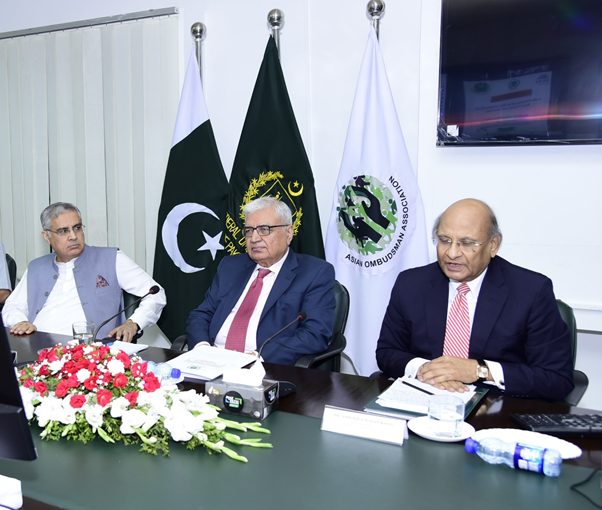
- Wafaqi Mohtasib opens AOA webinar on the shared principles of ombudsmanship and the UN Sustainable Development Goals.
- Ombudsman institutions play key role in achieving the international development goals and targets – Ejaz Ahmad Qureshi.
Islamabad: 14 July, 2025 – Wafaqi Mohtasib, Mr. Ejaz Ahmad Qureshi, has said that the ombudsmanship and the UN Sustainable Development Goals pursue shared principles and purposes which together constitute the agenda for global action. He was inaugurating a webinar organized by the Asian Ombudsman Association (AOA) in cooperation with the Wafaqi Mohtasib Secretariat at Islamabad today. Mr. Ejaz Ahmad Qureshi is the current President of the Asian Ombudsman Association which is a 47-member strong non-political, professional body of ombudsman institutions in the Asian region.
Addressing the participants, Mr. Ejaz Ahmad Qureshi said that the ombudsman institutions play a critical role in the implementation of Sustainable Development Goals (SDGs). He added that the efficient delivery of public services, respect for the rule of law, promotion and protection of human rights remain fundamental to the principles and purposes of ombudsmanship and the 2030 Agenda for Sustainable Development. Mr. Ejaz Ahmad Qureshi further added that the mandate of the Wafaqi Mohtasib’s institution is not limited to redressal of grievances alone, but also provides for ascertaining the root causes of maladministration, bad governance, arbitrary and discriminatory practices in public administration at all levels. He said that so far, 80 studies have been conducted which led to long term reforms and fixed the systemic issues faced by the general public. Inspection visits of public agencies against whom frequent complaints are received has greatly contributed towards identifying the shortcomings and developing a culture of fairness, equality and professional propriety, he added.
Dr. Ashfaque Hasan Khan, Director General, National Institute of Policy Studies at the National University of Science & Technology (NUST), Islamabad in his keynote address, stated that the people are the ultimate stakeholders in all development efforts including the 2030 Agenda for Sustainable Development. He emphasized the need for stepping up cooperation between the ombudsman institutions and the UN Agencies for realizing the core values of the two programmes.
The Webinar was attended by over one hundred participants representing Asian Ombudsman Association (AOA), OIC Ombudsman Association (OICOA), the Forum of Pakistan Ombudsman (FPO), academia and members of civil society at home and abroad.
MONITORING VISIT CONDUCTED TO SETTLEMENT COLONY NO. 46 FOLLOWING A PRISONER’S APPEAL.
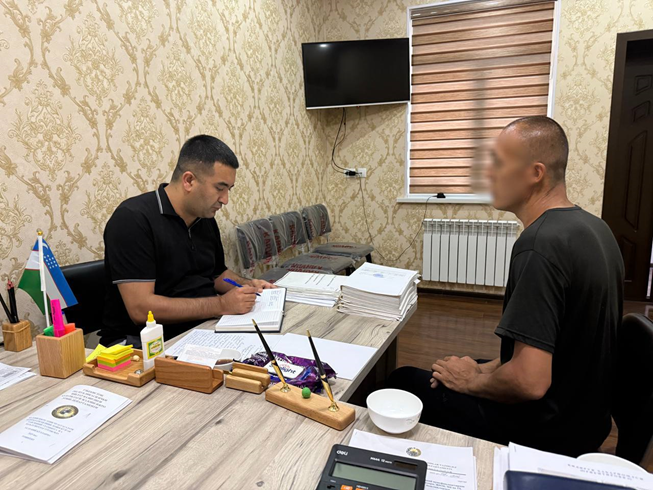
This appeal was immediately taken under control by the Commissioner of the Oliy Majlis of the Republic of Uzbekistan for Human Rights (Ombudsman).
On the same day, staff of the Ombudsman’s Secretariat, the Regional Representative in the Tashkent region, and members of the Public Group under the Ombudsman visited the facility to investigate the issues raised, and conducted private interviews with the inmates.
Additional information on the findings of the monitoring and actions taken by the Ombudsman will be provided in due course.