Category Archives: AOA News Letter
THE COMMISSIONER FOR HUMAN RIGHTS HOLDS JOINT BRIEFING WITH CHAIRMAN, CENTRAL ELECTION COMMISSION.
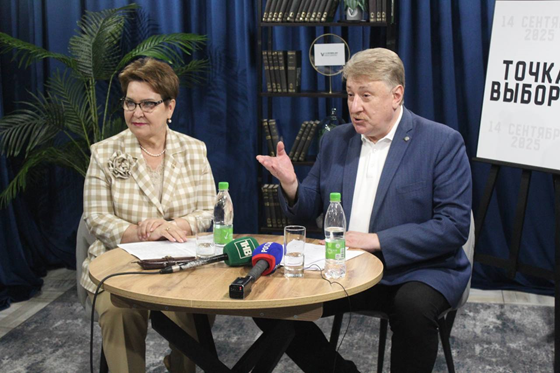
The Commissioner for Human Rights in the Republic of Tatarstan together with the Chairman of the Central Election Commission of the Republic of Tatarstan, Andrei Kondratyev, held a joint briefing at the information center «Point of Choice». Discussed the protection of voters’ rights, access to polling stations and preparations for elections at all levels.
The right to vote is one of the basic rights of citizens. And our task as institutions working for the benefit of society – to make sure that everyone, regardless of age, state of health, place of residence, can enjoy this right freely.
It is gratifying to see that the country has consistently eliminated barriers to the exercise of citizens’ voting rights. Thus, already 94% of polling stations are located on the first floors of buildings. In 2025, 1,240 polling stations will be equipped with special booths for voters using wheelchairs, Braille stencils, information materials in a larger font, and video communication with a sign interpreter.
Special attention is given to those who are in detention centres. In conjunction with the Federal Punishments Service, temporary polling stations will be re-organized so that the rights of voters are also ensured there.
“NO BORDERS IN PREVENTING CORRUPTION”… ACRC AND APEC SOUGHT ANTI-CORRUPTION COOPERATION.
– From July 30 to August 1, the ACRC hosted the 41st APEC Anti-Corruption and Transparency Experts’ Working Group (ACTWG) Meeting and the APEC High-Level Dialogue on Anti-Corruption Cooperation (AHDAC) over three days.
Ahead of the APEC Summit being held in Korea for the first time in 20 years, senior anti-corruption officials from APEC member economies gathered to discuss solutions to pressing global anti-corruption issues.
The Anti-Corruption and Civil Rights Commission (ACRC, Chairperson Ryu Chul Whan) held the 41st ACTWG Meeting and the APEC High-Level Dialogue on Anti-Corruption Cooperation (AHDAC) at Songdo Convensia in Incheon from July 30 to August 1.
*Anti-Corruption and Transparency Experts’ Working Group
**APEC High-Level Dialogue on Anti-Corruption Cooperation
APEC, founded in 1989 to promote sustainable economic growth and shared prosperity in the Asia-Pacific region, has recognized that fighting corruption and promoting transparency are essential to economic development. It operates the ACTWG as a standing working group to address these issues.
As the 2025 APEC host economy, Korea presented the overarching theme of “Creating a Sustainable Future” and prioritized “Connectivity, Innovation, and Prosperity”, leading the organization of this year’s events.
The meetings brought together over 100 participants, including delegations from 20 APEC member economies—such as Chile, Thailand, Indonesia, Japan, and Chinese Taipei—as well as representatives from major international organizations including the UN Office on Drugs and Crime (UNODC), the Organisation for Economic Cooperation and Development (OECD), the World Bank, and the International Anti-Corruption Academy (IACA). Civil society leaders, private sector representatives from companies like Oracle, and academic experts from institutions such as the Korea Development Institute (KDI) and the Korean Association for Corruption Studies also attended.
Notably, the High-Level Dialogue on Anti-Corruption Cooperation, held on July 31 and August 1, marked the first high-level meeting in APEC history dedicated to anti-corruption. Ministers and vice-ministers from member economies reaffirmed the international community’s commitment to fighting corruption and developed concrete avenues for cooperation.
Key agenda items included strengthening cooperation to combat transnational corruption crimes enhancing integrity in the private sector Expanding anti-corruption education for future generations
The ACRC shared Korea’s achievements in anti-corruption policy, including the operation of whistleblower protection and reward programs under the Act on the Protection of Public Interest Whistleblowers, integrity education initiatives for youth, and cases of international cooperation in anti-corruption training.
Chairperson Ryu stated, “This High-Level Dialogue will serve as a new milestone for anti-corruption cooperation within APEC. By sharing effective strategies and cooperation models among member economies, we aim to strengthen the region’s overall capacity to combat corruption.”
OMBUDSMAN ANNOUNCES RESULTS OF DIRECT INVESTIGATION OPERATION INTO HOUSING DEPARTMENT’S HANDLING OF AIR-CONDITIONER DRIPPING IN PUBLIC HOUSING ESTATES.
The Ombudsman, Mr. Jack Chan, today (7 August) announced the completion of a direct investigation operation into the Housing Department (“HD”)’s handling of air-conditioner dripping in public housing estates, with 15 major recommendations for improvement made to HD.
Over 780,000 households, comprising about 2 million residents, live in 195 public housing estates under the Hong Kong Housing Authority (“HKHA”). HD and its property services agents (“PSAs”) are responsible for the daily management of these estates, which encompasses a wide array of duties. Proper management of public housing is a crucial livelihood issue. Following the Office of The Ombudsman’s direct investigation operation into illegal parking in public housing estates completed in March this year, this direct investigation operation deals with air-conditioner dripping.
Mr. Chan said, “Over the years, HD has made extensive efforts to successfully alleviate the problem of air-conditioner dripping through the implementation of the air-conditioner drain-pipe installation programme, and inclusion of such misdeeds under the Marking Scheme for Estate Management Enforcement. The number of complaints received by HD dropped by 93 per cent from around 18,900 in 2005 to an average of around 1,300 from 2022 to 2024. This remarkable accomplishment merits recognition and appreciation.”
However, air-conditioner dripping remains a typical problem every summer. HD must step up its efforts to ensure a hygienic and quality living environment for residents. Among the public housing estates under HKHA, the property management of around two-thirds are outsourced to PSAs (known as outsourced estates), and the remaining one-third are directly managed by HD (known as directly managed estates).
Between 2022 and 2024, outsourced and directly managed estates received 2,826 and 1,049 complaints respectively about air-conditioner dripping. During those years, related complaints rose by 45.5 per cent in outsourced estates and 20.1 per cent in directly managed estates. In 2024, 10.6 per cent of the complaints in outsourced estates were repeated complaints, compared to 6.3 per cent in directly managed estates. These figures reflect that directly managed estates outperformed outsourced estates, where outsourced estates had a higher increase in the number of complaints and a higher percentage of repeated complaints. In terms of the proportion of complaints over the number of households, outsourced estates recorded percentages of 0.17 per cent, 0.20 per cent and 0.24 per cent in 2022, 2023 and 2024 respectively while directly managed estates recorded percentages of 0.12 per cent, 0.12 per cent and 0.14 per cent during the same period.
There are two categories of misdeeds under the Marking Scheme: those incurring a warning prior to the allotment of penalty points, and those resulting in an immediate point allotment. Air-conditioner dripping falls into the former category. The Office’s investigation revealed that in air-conditioner dripping cases, HD’s PSAs often issued reminder letters to non-compliant tenants before enforcing the Marketing Scheme. These letters were merely advisory in nature. During the Office’s inquiry and investigation, initially HD had not yet formulated guidelines on issuing reminder letters. Between 2022 and 2024, HD’s PSAs issued an average of two reminder letters per complaint, which was more than tenfold of those issued in directly managed estates. There were cases which revealed that despite the repeated issuance of reminder letters, the dripping problem still occurred. As HD’s PSAs might not be required to report the number of reminder letters issued to HD, HD can hardly verify whether its PSAs are issuing too many reminder letters or mishandling air-conditioner dripping complaints.
The Office’s investigation also found that HD’s operational guidelines for handling air-conditioner dripping cases are too brief, focusing only on the procedures for enforcing the Marking Scheme without clear instructions for frontline staff on such aspects as complaint investigations, source detections, air-conditioner testing and its duration, dealing with unco-operative tenants and arranging follow-up inspections. The Office considers the absence of proper guidelines might have resulted in inconsistent handling by frontline staff, as evidenced in some cases.
The Office is pleased to note that during its inquiry and investigation, HD has, since December 2024, implemented enhanced measures under the Marking Scheme, such as launching standardised “advisory letters”, granting a uniform grace period of five days and formulating guidelines for issuing advisory letters and follow-up actions etc.
Mr. Chan said, “Nothing about people’s livelihoods is trivial. Air-conditioner dripping probably causes not only hygiene-related nuisances but also noise disturbances. From an estate management perspective, it is incumbent on HD to thoroughly enforce the Marking Scheme in order to address the dripping problems and resolve such complaints promptly. The Office considers it undesirable for HD to be unable to ascertain in the past whether its PSAs were issuing too many reminder letters and handling cases inconsistently. The Office recommends that HD explore ways to formulate measures for monitoring the issuance of advisory letters and case reporting to strengthen its supervision of its PSAs, as well as to record the details and follow-up actions in relation to air-conditioner dripping complaints more systematically. HD should also beef up its operational guidelines and expedite the adoption of innovative technologies to improve its ability to trace the sources of dripping. Furthermore, the Office recommends that HD consider collaboration with other government departments (such as the Food and Environmental Hygiene Department (“FEHD”)) to foster exchanges of experiences across their respective areas of responsibility.”
Overall, the Office has made 15 major recommendations for improvements. It is pleased to note that all the recommendations have been agreed by HD.
The Office’s major recommendations for improvement to HD include:
- explore the formulation of measures for monitoring the issuance of advisory letters and case reporting to strengthen its supervision of its PSAs;
- explore how to record the details and follow-up of dripping complaints more systematically to facilitate monitoring;
- consider enhancing its operational guidelines for handling air-conditioner dripping cases, enabling estate management staff to work in clarity and effectively;
- beef up the operational guidelines with clear procedures for frontline staff to investigate the source of dripping, including making every effort to enter suspected flats for air-conditioner testing where there is no other way to verify the source of dripping, for example, when the source cannot be determined through external observation, standardising the durations for testing, and specifying follow-up actions when the source remains unidentified;
- draw up operational guidelines and notices in designated format for cases where the source of dripping has not been determined;
- consider requiring its PSAs to include in their monthly reports the number of advisory letters issued and any repeated cases to facilitate problem detection and follow-up;
- expedite and broaden the adoption of innovative technologies to strengthen its ability to detect dripping air-conditioners; and
- consider collaborating with other government departments (such as FEHD) to explore opportunities of conducting large-scale inspections as well as publicity and education campaigns, with a view to increasing public engagement and boosting awareness of proper air-conditioner maintenance.
WOMEN LAWYERS DELEGATION VISITS FEDRAL OMBUDSMAN SECRETARIAT.
- Women Lawyers delegation visited Federal Ombudsman Secretariat
- Briefed on the Working of the Institution and its Activities
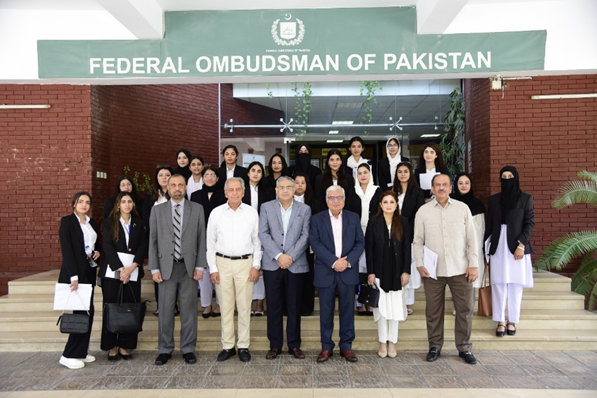
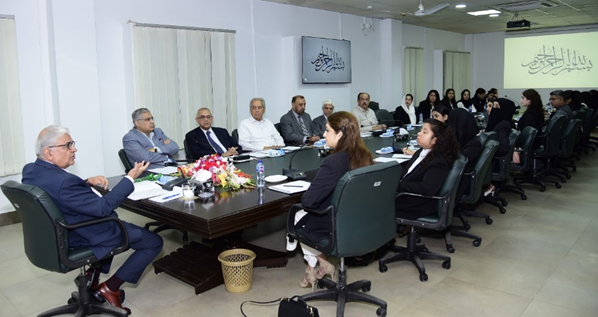
Islamabad: 21 August, 2025 – A representative delegation from S&S Law Associates – Pakistan’s first All Women Law Firm headed by Ms. Sibah Farooq, Advocate visited the Wafaqi Mohtasib Secretariat here today as part of the latter’s civil society initiative. It was briefed in detail on the working of the various sections and departments of the Secretariat by their respective heads and also paid a courtesy call on the Wafaqi Mohtasib (Ombudsman), Mr. Ejaz Ahmad Qureshi.
It was informed that the Wafaqi Mohtasib’s Office is the premier institution of administrative accountability in the country mandated to address and rectify maladministration of the federal government agencies. Following the success of the Wafaqi Mohtasib’s institution, being the first in the country of its kind, in providing free and expeditious administrative justice to the general public, the concept has been replicated in areas like Banking, Taxation, Insurance and Protection of Women against Harassment at the Work Place, it was told.
The delegation was further informed that during the outgoing year 2024, a record number of complaints amounting to 226,373 have been received, out of which as many as 223,198 have been redressed satisfactorily. As regards the current year, the delegation was informed that more than 150,000 have been received so far and if we go by the projections made for the current year, this figure may cross 250,000 mark.
Later, the delegation also visited the Asian Ombudsman Association (AOA) Secretariat located in the Wafaqi Mohtasib’s Building and attended a detailed briefing on the Association. It was told that the organization came into being in 1996 mainly due to the efforts of the Wafaqi Mohtasib who has also held its Presidentship most of the time. Presently, the Wafaqi Mohtasib (Federal Ombudsman), Mr. Ejaz Ahmad Qureshi, is the current President of the Association.
The delegation highly commended the efforts of Wafaqi Mohtasib’s institution in addressing maladministration and checking administrative inefficiencies of the public sector organizations as well as making efforts for good governance in the country, terming the office’s performance as being remarkable and worth emulating for all.
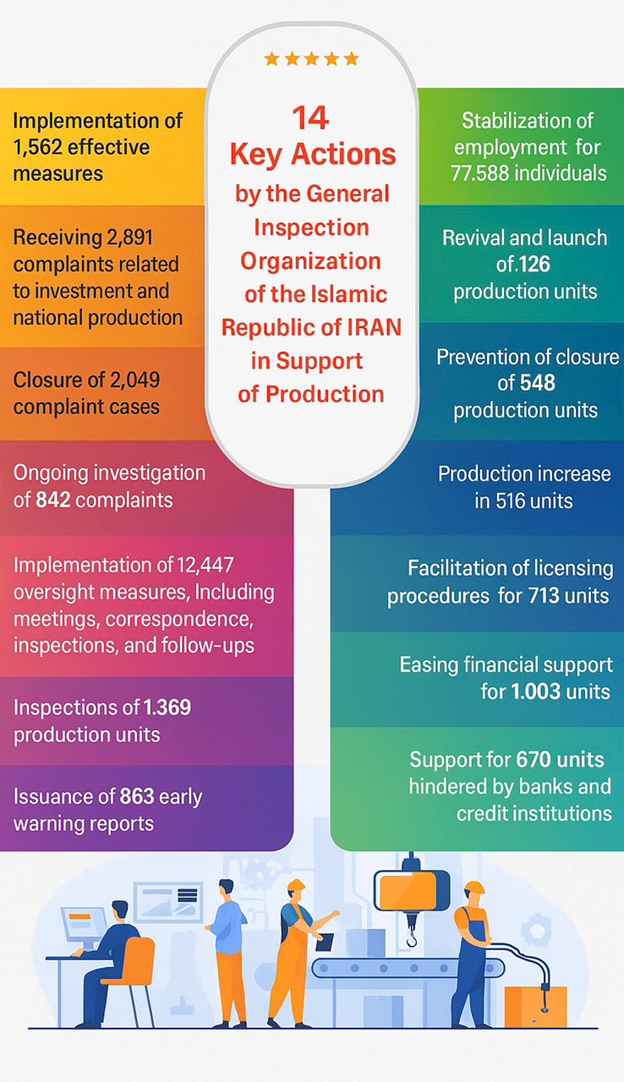
14 KEY ACTIONS BY THE GENERAL INSPECTION ORGANIZATION OF THE ISLAMIC REPUBLIC OF IRAN IN SUPPORT OF PRODUCTION IN 2024.
- Implementation of 1,562 effective measures aimed at supporting production
- Receiving 2,891 complaints related to investment and national production
- Closure of 2,049 complaint cases
- Investigation of 842 complaints
- Implementation of 12,447 oversight measures, including meetings, correspondence, inspections, and follow-ups
- Inspections of 1,369 production units
- Issuance of 863 early warning reports
- Stabilization of employment for 77,588 individuals
- Revival and launch of 126 production units
- Prevention of closure of 548 production units
- Production increase in 516 units
- Facilitation of licensing procedures for 713 units
- Easing financial support for 1,003 units
- Support for 670 units hindered by banks and credit institutions
PUBLIC DEFENDER MEETS WITH CHIEF OMBUDSMAN OF TURKEY.
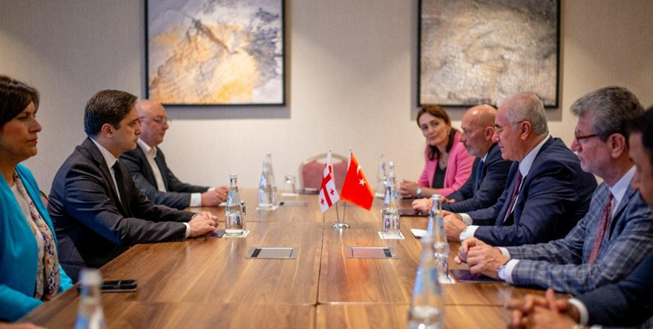
On July 25, 2025, in the city of Batumi, Levan Ioseliani, Public Defender of Georgia, met with Mehmet Akarca, Chief Ombudsman of the Republic of Turkey, and other representatives of the Turkish delegation.
Levan Ioseliani and Mehmet Akarca discussed the situation of human rights in the region, emphasized the long-standing cooperation between the human rights institutions of the two countries and expressed their readiness to continue this relationship.
The ombudsmen of Georgia and Turkey have been fruitfully cooperating for years in the areas of introducing modern technologies into the penitentiary system, improving the extradition process, protecting the rights of migrants, etc.
AN INTERNATIONAL SEMINAR ENTITLED “TOWARDS A MINE-FREE WORLD – THE EXAMPLE OF AZERBAIJAN” WAS HELD IN KUALA LUMPUR.
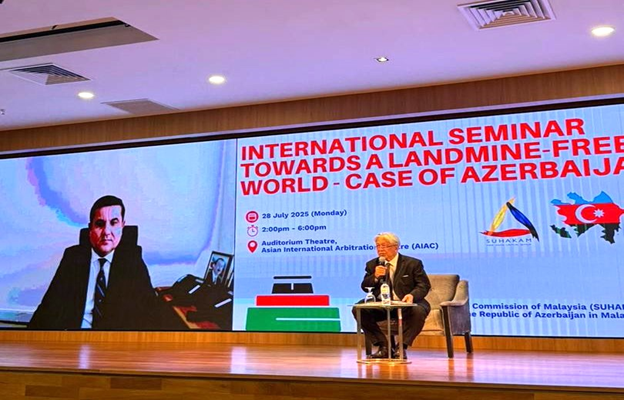
An international seminar on the topic “Towards a Mine-Free World – the Example of Azerbaijan” was held in the Malaysian capital, Kuala Lumpur, jointly organized by the Human Rights Commission of Malaysia (SUHAKAM) and the Embassy of the Republic of Azerbaijan in Malaysia.
At the international seminar, Aydin Safixanli, Head of the Office of the Commissioner for Human Rights (Ombudsman) of the Republic of Azerbaijan, spoke online on the topic “The Impact of Landmines on Human Rights.”
In his speech, the head of the staff analyzed the impact of mines on human rights from the perspective of international humanitarian law and international law norms, drawing attention to the requirements of existing norms in this area. He emphasized that mines remain one of the greatest threats to the civilian population not only during armed conflict, but also in post-war periods. This threat directly affects people’s right to life, physical and psychological health, the right to freedom of movement, the right to live in a healthy environment, education and labor rights. The mine terrorism carried out by Armenia, in addition to harming people’s lives and health, the environment, is accompanied by gross violations of international humanitarian law and international human rights law.
The seminar participants were informed that humanitarian demining is one of the main priorities of the Azerbaijani state, that the Azerbaijan Mine Action Agency (ANAMA) is carrying out important activities in this direction, and that the difficulties created by Armenia’s failure to provide accurate mine maps were brought to their attention.
It was noted that the Azerbaijani Ombudsman carries out consistent and systematic activities to protect the rights of mine victims, provide them with social reintegration and medical and psychological support, and draws attention to human rights violations resulting from Armenia’s mine terrorism through reports, statements and special reports addressed to international organizations.
It was noted that the process of carrying out rehabilitation and reconstruction works in mine-contaminated areas and the return of more than 800,000 former internally displaced persons (IDPs) whose rights have been violated for thirty years to their native lands is seriously delayed, resulting in violations of the fundamental human rights of these people.
At the end of his speech, the Chief of Staff called on international organizations not to remain indifferent to Armenia’s mine terrorism and violations of human rights and freedoms, to support Azerbaijan’s activities in the field of mine clearance, and to make serious efforts to provide our country with accurate mine maps.
PDHJ PARTICIPATES IN THE 2ND SEANF TECHNICAL WORKING GROUP MEETING IN YOGYAKARTA.
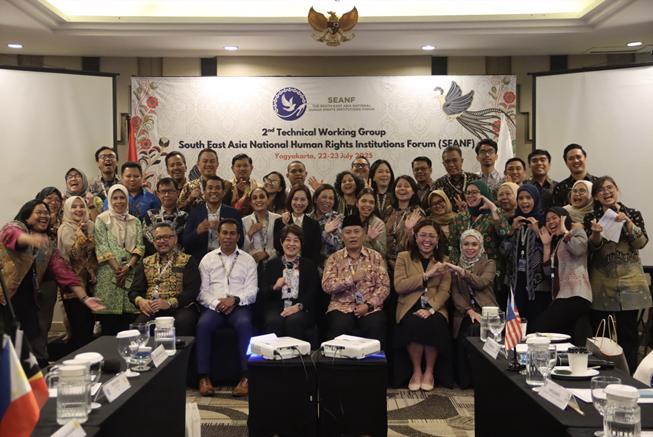
Yogyakarta, Indonézia, 22-24 July 2025 –The Ombudsman for Human Rights and Justice (PDHJ) of Timor-Leste participated in the 2nd Technical Working Group (TWG) Meeting of the Southeast Asian National Human Rights Institutions Forum (SEANF), hosted from 22 to 24 July 2025 in Yogyakarta, Indonesia. The PDHJ delegation was composed of Áureo José António Sávio, Margarida dos Santos, and Antoninho Bernardino.
The meeting officially opened with welcoming remarks from the Chairperson of Komnas HAM and current SEANF Chair, Anis Hidayah, who warmly greeted all SEANF member delegations and emphasized the importance of sustained collaboration in advancing human rights in the region.
On the first day, members provided comprehensive updates on their respective institutional developments and reviewed follow-up actions from the 1st TWG meeting. Central to the discussions was the progress in implementing the SEANF Strategic Plan’s four core priority areas. PDHJ highlighted its recent achievements across its five constitutional mandates: public policy monitoring, human rights promotion, prevention, protection, and institutional strengthening. The presentation emphasized key outputs including the submission of major public petitions, completion of human rights investigations, and public education campaigns aimed at promoting a culture of rights and accountability in Timor-Leste.
The second day featured institutional sharing among SEANF members and deeper engagement with the SEANF Secretariat and thematic working groups. Members explored strategies to enhance the implementation of the Strategic Plan and improve coordination mechanisms. During this session, PDHJ Timor-Leste presented a concrete proposal to reactivate the SEANF Strategic Communications Working Group (SCWG), which has been inactive in recent years. The proposal outlined steps for revitalizing SEANF’s online presence through regular content updates, institutional visibility, and shared editorial responsibility. The proposal was well received by the members, with PDHJ offering to lead the reactivation process and host the task force moving forward.
On the third and final day, participants took part in a thematic workshop co-organized by Komnas HAM and the Office of the High Commissioner for Human Rights (OHCHR), focusing on the role of National Human Rights Institutions (NHRIs) and Human Rights Defenders (HRDs), particularly Environmental HRDs. The workshop featured four in-depth sessions covering the UN Declaration on HRDs, human rights mechanisms, business and human rights, and the protection of HRDs in conflict situations. International experts Cecilia Jimenez-Damary, former UN Special Rapporteur on the Human Rights of Internally Displaced Persons, and Pichamon Yeophantong, Member of the UN Working Group on Business and Human Rights, facilitated key discussions. The OHCHR team was represented by Cynthia Veliko, Regional Representative of the High Commissioner for Human Rights in South-East Asia, alongside Human Rights Officers Romchat Wachirarattanakornkul and Arnaud Chaltin. Together, they shared insights on embedding rights-based approaches in environmental governance, development policy, and political participation. The sessions also highlighted the growing risks faced by Environmental HRDs and the proactive role NHRIs can play in their protection. Through expert presentations, interactive group reflections, and dialogue, the workshop provided a meaningful platform to exchange good practices and align regional human rights efforts with global sustainability commitments.
The 2nd TWG Meeting marked an important milestone in advancing SEANF’s collective strategic objectives and deepening cooperation among member institutions. PDHJ reaffirmed its commitment to regional collaboration and to strengthening the role of NHRIs in promoting and protecting human rights across Southeast Asia.
TRAINING FOR PRIVATE COMPANY EMPLOYEES.
On July 2 and July 17, 2025, the Equality Department of the Public Defender’s Office conducted training for managers, HR specialists and other employees of the central office of one of the large service sector companies (fast food restaurant) and its branches operating throughout Georgia.
The training aimed to encourage the company and its employees to more actively align their activities with the principles of equality and non-discrimination. In this regard, the participants were given the opportunity to learn about the essence of the right to equality and the scope of anti-discrimination legislation. Along with a review of general standards, the training focused, in particular, on the issues of sexual harassment and discrimination in labour relations. Among them, the relevant practice of the Public Defender’s Office was discussed, in particular, cases of discriminatory treatment of employees of companies operating in the service sector.
The Public Defender’s Office considers such activities aimed at raising awareness to be of the utmost importance for improving the situation of equality in the country and expresses the hope that more representatives of various fields will be willing to deepen their knowledge on equality issues and contribute to the prevention of discriminatory practices.
OMBUDSPERSONS OF UZBEKISTAN AND RUSSIA CONDUCT MONITORING VISIT TO PENAL INSTITUTION.
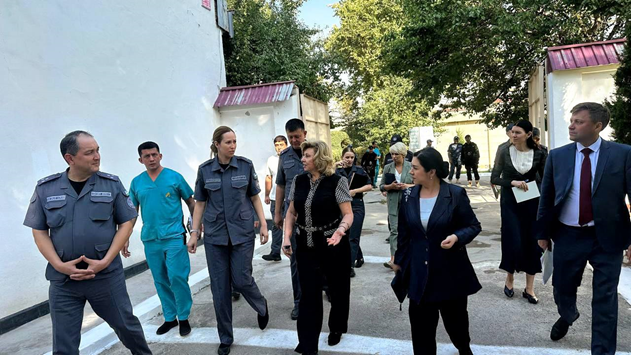
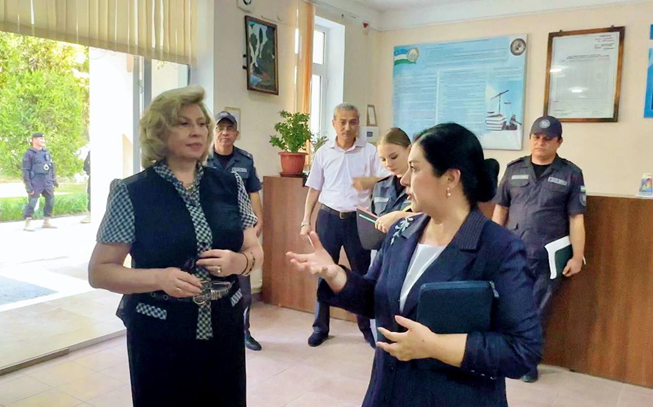
On July 29, 2025, the Commissioner of the Oliy Majlis of the Republic of Uzbekistan for Human Rights (Ombudsman) and the Commissioner for Human Rights in the Russian Federation, Tatyana Moskalkova, along with members of the accompanying delegation, conducted a monitoring visit to Penal Colony No. 13, located in the city of Chirchik, Tashkent region.
During the visit, the delegation inspected the inmates’ living quarters, hygiene and bathing facilities, dining hall, medical unit, storage areas for food and medicines, short- and long-term visitation rooms, as well as the working processes of inmates involved in labor activities.
Special attention was paid to the conditions created for inmates with disabilities. It should be noted that in 2022, at the initiative of the Ombudsman and in cooperation with relevant government agencies, a Roadmap was developed to prevent torture and ensure equal conditions for inmates with disabilities. As part of the implementation of this document, facilities are being improved in accordance with international standards. Moreover, a practice has been introduced whereby a physically healthy inmate is assigned to assist a person with limited mobility and receives monetary compensation.
The medical unit was reviewed and discussions were held with medical staff. It was particularly noted that under recent legislative amendments, the positive practice of mandatory medical examination directly within the pre-trial detention facility prior to placement has been introduced. Additionally, it was emphasized that every newly arrived person undergoes an initial medical check-up, and in cases where bodily injuries are detected, prompt measures are taken.
It was also reported that both inpatient and outpatient treatment are available in the colony. In the absence of health improvement, the inmate may be transferred to Specialized Hospital No. 23 for inmates. During the visit, the Commissioner for Human Rights in the Russian Federation highly appreciated Uzbekistan’s experience and noted that it should be studied as a model of good practice.
As part of the monitoring visit, group conversations were held with inmates to gather their opinions about the institution.
At the end of the visit, a joint reception was held by the Ombudspersons, during which the inmates’ appeals were heard.