Category Archives: AOA News Letter
THE OFFICE OF THE OMBUDSMAN PUNJAB, PAKISTAN ATTENDED THE TRAINING PROGRAMME OF THE OMBUDSMAN INSTITUTION OF TÜRKIYE.
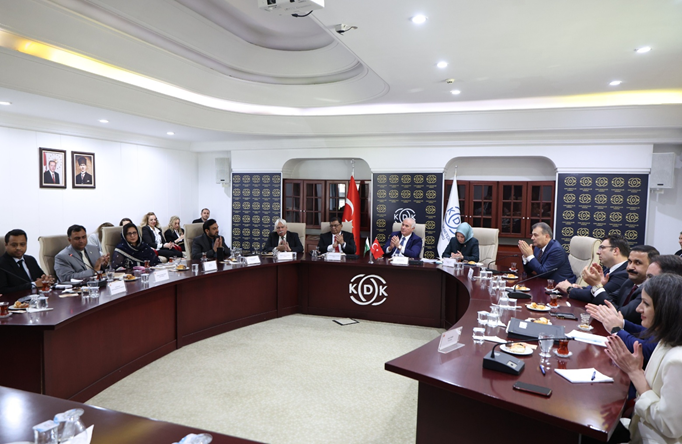
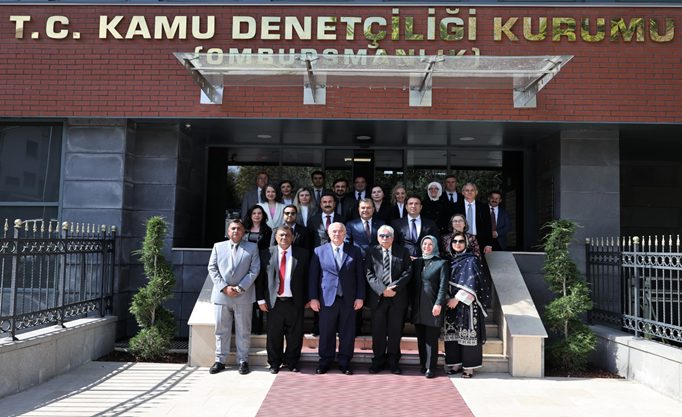
A delegation from the Office of the Provincial Ombudsman Punjab, Pakistan paid a training-oriented working visit to the Ombudsman Institution of Türkiye between 4-8 May, 2026.
On the first day of the training programme, the delegation was received by Chief Ombudsman of Türkiye, Mr. Mehmet Akarca, with the participation of the Secretary General of the Ombudsman Institution, Mr. Mehmet Doğan. During the meeting, emphasis was placed on the importance of strengthening cooperation and mutual exchange among Ombudsman Institutions, particularly in the fields of human rights protection, fairness, and good administration.
Throughout the program, the delegation held meetings with Ombudsmen Mr. Ertunç Erkan Balta, Mr. Şerif Yılmaz, Mr. Abdullah Cengiz Makas, and Mr. Özcan Yıldız. Experts from the relevant departments of the Institution delivered comprehensive presentations on the Ombudsman Institution’s mandate, functioning, working procedures, complaint-handling mechanisms, and landmark decisions.
During the training program, a broad range of topics was addressed, including children’s rights, women’s rights, justice, social security, education, public personnel, and labour-related complaints, among others. In addition, the entire complaint-handling process from the submission and examination of complaints to the finalization of decisions and recommendations was comprehensively reviewed. Informative presentations were also delivered on the Institution’s international relations, as well as its corporate communication and media strategies. The meetings and presentations provided a valuable opportunity for the exchange of knowledge, experience, and best practices.
Moreover, as part of the program, the delegation also paid a visit to the Human Rights and Equality Institution of Türkiye (HREIT), where they were received by the President of the Institution, Mr. Vasip Şahin. Deputy President of the HREIT Mr. Muhammet Ecevit Carti and Board Member Atty. Erol Gökdöl together with relevant experts, delivered a detailed presentation to the delegation about the Institution’s mandate, structure, and activities in the field of human rights and equality.
As part of the training programme, the delegation visited Anıtkabir (Mausoleum) and paid tribute to the founder of the Republic of Türkiye, Mustafa Kemal Atatürk. The delegation also visited the Grand National Assembly of Türkiye (GNAT), the Nation’s Library of the Presidency of Türkiye, as well as the Ankara Ethnography Museum and the Art and Sculpture Museum.
A closing session was held on the final day of the training program with the participation of Chief Ombudsman of Türkiye Mr. Mehmet Akarca, Ombudsman Ms. Fatma Benli Yalçın, Ombudsman Mr. Abdullah Cengiz Makas, Ombudsman Mr. Özcan Yıldız, and Secretary General Mr. Mehmet Doğan. The session included an overall evaluation of the training program, followed by a certificate presentation ceremony for the delegation of the Office of the Ombudsman Punjab.
The training provided an important opportunity to further strengthen institutional cooperation, the exchange of knowledge and experience, and deepen the longstanding ties of friendship and collaboration between the two Ombudsman institutions. The program also constituted a meaningful contribution to the spirit of solidarity and cooperation promoted under the umbrella of the OICOA.
The working visit concluded in an atmosphere of mutual goodwill and constructive dialogue, further reinforcing the close institutional ties, cooperation and friendship between the Ombudsman Institutions of Türkiye and Punjab.
TRAINING ON “PROTECTION OF CHILDREN’S RIGHTS, PROTECTION AGAINST DISCRIMINATION AND PROMOTION OF EQUALITY” HELD WITHIN THE FRAMEWORK OF “HUMAN RIGHTS MONTH”.
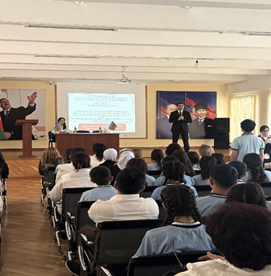
Within the framework of the “Human Rights Month” declared by the Commissioner for Human Rights (Ombudsman) of the Republic of Azerbaijan, Sabina Aliyeva, a training on the topic “Protection of Children’s Rights: Protection against Discrimination and Promotion of Equality” was held for students and teaching staff at Secondary School No. 282 named after Nadir Aliyev in Baku.
The senior advisor of the Child Rights Protection Sector of the Ombudsman’s Office, Azer Isali, participated as a trainer and provided extensive information on the importance of protecting children’s rights and freedoms, promoting the principles of equality and mutual respect among students, preventing discrimination cases, as well as the nature and consequences of rights violations.
In addition, discussions were held during the training based on examples of discrimination cases, the participants’ views on the topic were heard, and detailed information was provided on the protection of children’s rights, promotion of equality, as well as the Ombudsman’s activities in the field of child rights protection.
At the end of the training, the questions of the students were answered, and awareness-raising publications prepared by the Ombudsman’s Office in the field of protection of children’s rights were presented to the educational institution.
RESOLVING CONUNDRUMS THROUGH FIELD-CENTERED COMMUNICATION, COLLECTIVE CONFLICT MEDIATION BUREAU OFF TO A SMOOTH START IN ADDRESSING COLLECTIVE CIVIL COMPLAINTS.

– The ACRC releases major cases of collective civil complaint resolutions since the launch of the Collective Conflict Mediation Bureau last January
– The Bureau swiftly resolves collective civil complaints arising across diverse sectors including transportation, welfare, and the environment
Since the official launch of the Collective Conflict Mediation Bureau on Jan. 27 of this year, the Anti-Corruption and Civil Rights Commission (ACRC, Chairperson Jung Il Yeon) has been swiftly resolving collective civil complaints that had been left unaddressed for years going beyond simple legal review to “proactive mediation” that reflects the specific conditions of each case thereby alleviating the difficulties faced by citizens.
The resolved cases that were released this time involve collective civil complaints closely related to everyday life that were deemed problem-free based on paper reviews conducted by the relevant administrative agencies. They were resolved by drawing a consensus among the relevant agencies, focusing on the actual inconveniences and hardships experienced by citizens on the ground.
[Field-Oriented] Focus on Citizens’ Lives Rather Than the Regulations
Extension of the Senior Community Center in Okryong-dong, Gongju-si: the conflict over the extension of the senior community center in a permanent rental apartment estate which had been at a standstill for years—was dramatically resolved after the ACRC conducted three on-site visits to directly assess the poor welfare conditions of elderly residents and persuaded Korea Land & Housing Corporation (LH). LH had initially been reluctant to approve the extension, citing the area standards under the relevant regulations. It, however, ultimately agreed to permit the use of the site based on a shared understanding that “senior welfare is directly related to the survival of the elderly” and committed to actively supporting the creation of a resting space for the elderly residents.
[Creative Alternatives] Opening a Third Way of “Mutual Prosperity” Beyond a Simple Permit or Deny Decision
Conflict over the construction of a new cattle shed in Daepyung-ri, Goryeong-gun: residents had been opposed to the construction of a large-scale cattle shed on a site adjacent to a small stream at the entrance of the village, citing concerns over odor, overflow of the small river, and water pollution. Since there was no legal basis, however, to restrict the construction, the conflict between the local government and residents had persisted. In response, the ACRC stepped outside the administrative framework of merely determining whether to grant a permit, and proposed a third way centered on guaranteeing the right to a healthy living environment, paving the way for mutual prosperity. Considering residents’ concerns over odor, overflow, and water pollution, the Commission explicitly incorporated into its mediation proposal “priority consideration for inclusion of the small river improvement project” and “on-site inspection conducted in the presence of resident observers,” thereby securing both the legal right to construct the cattle shed and the trust of the residents at the same time.
[Tangible Outcomes] For Children Forced onto the Roadway, Finding the Answer to Safety in the Field
The safety of the school commute route at Jeonbuk Jeil High School and Iri Middle School in Iksan-si: although the commute route is used daily by approximately 1,000 students, a dangerous situation had persisted in which children were forced onto the roadway due to a one-meter height difference between the sidewalk and the crosswalk. Through an on-site investigation, the ACRC confirmed that children pushed onto the roadway faced a high risk of accidents as they mingled with vehicles entering the school’s main gate, and implemented a combination of measures including facility improvements to eliminate the height difference in the sidewalk and a redesign of the traffic signal system to create a school commute environment where children can feel genuinely safe.
[Reduction of Social Costs] The Miracle of Two Hours Where Data Met Sincerity
Transportation convenience improvements in the new town multi-family housing area of Icheon-si: ahead of large-scale move-ins to the new town, the inconvenience caused by insufficient public transportation and other factors had grown so severe that more than 1,800 civil complaints were filed over six months. The local government had been reluctant to devise alternatives due to the finalized project plan and the lack of budget, but the ACRC facilitated a session in which it persuaded the relevant agencies based on objective demographic data, leading to a dramatic agreement reached in just two hours. Throughout this process, the Commission went beyond simple arbitration and took the lead in fostering communication so that all parties could deeply understand each other’s positions, ultimately reaching swift decisions including the establishment of new bus routes and averting enormous social costs.
Since the launch of the Collective Conflict Mediation Bureau, the ACRC plans to continuously share and disseminate these collective civil complaint resolution cases achieved by listening to the voices of citizens—across the entire government. Chairperson Jung of the ACRC stated, “The Collective Conflict Mediation Bureau is an organization that finds answers not through paperwork-bound administration, but by sincerely listening on the ground where citizens’ lives breathe,” and added, “We will continue to actively identify and share best practices to heal social conflicts and provide stronger protection for citizens’ rights and interests.”
FEDERAL OMBUDSMAN INTERVENES TO GET ALLOTMENT/POSSESSION OF PLOT OF LAND .
– PETITIONER GETS RELIEF AFTER 29 LONG YEARS
Islamabad: 14 May, 2026 – The Federal Ombudsman, Mr. Naveed Kamran Baloch intervened to get allotment and possession of a plot of land to a petitioner, who has been running from pillar to post for the last 29 years to get his due. According to details, one Mirza Habibullah Khan belonging to district Rahim Yar Khan applied for allotment of a plot of land in the KRL Employees Housing Society operating near Rawat, Islamabad back in 1997 and cleared all his dues. However, the society concerned kept dilly dallying for a very long time. Meanwhile, he also suffered from a paralytic stroke, which restricted his movement. But he somehow managed to keep on visiting the office of the society concerned, only to receive vacant promises.
Finally, he approached the Office of the Federal Ombudsman, which took up the matter under the Informal Resolution of Disputes (IRD) programme, by invoking Article 33 of the President’s Order No.1 of 1983 and asked for detailed report from the society concerned. It also instructed Cooperative Housing Societies Department, Islamabad to submit a report in this regard.
A series of hearings were convened at the Federal Ombudsman Secretariat by the Registrar and Deputy Registrar of the office leading to the resolution of the matter. The housing society concerned later informed this office that original allotment letter No.30001214, dated 31-03-2026 and possession letter number 000280, dated 31-03-2026 have been issued to the petitioner whereby allotment and possession of plot No. DB-362 measuring 35 x 70 Sq.Ft was delivered to the complainant. Later, in a letter of thanks to the Federal Ombudsman, he expressed his profound gratitude to his office and eulogized its performance for resolving such a long standing issue amicably and expeditiously.
THE OMBUDSMAN’S 2025 ACTIVITY REPORT REVIEWED.
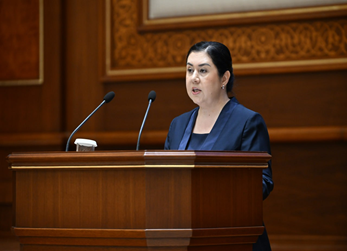
During the 14th plenary session of the Senate, the report of the Authorized Person of the Oliy Majlis for Human Rights (Ombudsman) on activities carried out in 2025 was reviewed.
It was noted that in 2025, the Ombudsman Institution implemented a number of measures aimed at ensuring effective parliamentary oversight over compliance with legislation on human rights, freedoms, and legitimate interests, based on new constitutional provisions. Efforts were also directed at improving national legislation in this sphere, strengthening the national preventive mechanism, developing international cooperation, and enhancing citizens’ legal awareness and culture.
In 2025, a total of 26,372 appeals were submitted to the Ombudsman, representing an increase of 12.6% compared to 2024. Regionally, the highest number of appeals was recorded in Kashkadarya region (4,159), Surkhandarya region (2,769), and the city of Tashkent (3,599). The lowest number of appeals came from the Republic of Karakalpakstan (681) and Syrdarya region (696).
Within the framework of the Senate Resolution dated March 18, 2025, visits were conducted to districts with the highest number of appeals—Kasansky district of Kashkadarya region and Denau district of Surkhandarya region. Open dialogues with citizens were organized in more than 20 mahallas, with the participation of representatives of relevant agencies and civil society institutions, during which issues raised in appeals were discussed. As a result, proposals to improve the system for handling appeals were developed and submitted to the Senate Committee on Judicial and Legal Issues and Anti-Corruption.
In response to the increase in appeals related to violence against women, the Ombudsman initiated the launch of the “Equality and Respect” platform in 2025 to assess the effectiveness of legislation on women’s rights and to strengthen parliamentary oversight. More than 150 group and individual consultations were conducted in rehabilitation centers with women who had experienced violence, and assistance was provided. Based on the findings, proposals were developed and submitted to the chambers of the Oliy Majlis.
As part of the implementation of the Senate Resolution of March 18, 2025, the Ombudsman paid particular attention to identifying legislative gaps and issues in law enforcement practice through systematic analysis of appeals. In particular, in 2025, three draft laws aimed at further strengthening guarantees of human rights and freedoms were developed. 1 legislative proposal submitted under the right of legislative initiative was reviewed and adopted by the Legislative Chamber. Additionally, 11 regulatory legal acts were developed by state bodies based on the Ombudsman’s recommendations.
As a result of the review of appeals and monitoring visits, 194 response measures were introduced to eliminate human rights violations, 82% of which were resolved positively.
In 2025, a total of 11 billion 82 million soums were recovered based on citizens’ appeals. This included: housing compensations amounting to 3 billion 936 million soums; wages and other labor-related payments totaling 2 billion 715 million soums (including 409.3 million soums in wages for convicted persons); debts and damages amounting to 3 billion 361 million soums; and alimony payments exceeding 604 million soums.
A total of 118 officials who violated human rights were held accountable, including disciplinary, administrative, and criminal liability.
A total of 954 monitoring visits were conducted to institutions where persons with restricted freedom of movement are held (902 in 2024). More than 11,000 collective and 5,487 individual interviews were conducted with convicted persons and detainees. Based on the submitted recommendations, detention conditions in several institutions were improved, over 8.5 billion soums were allocated, and temporary detention facilities in the Chinaz, Kibray, and Yukorichirchik districts of Tashkent region were closed.
In the international sphere, the Ombudsman joined the Asia-Pacific Forum of National Human Rights Institutions, signed a “Roadmap” for 2025–2026 with the Human Rights Commissioner of the Russian Federation, and concluded memorandums of cooperation with the Danish Ombudsman and the Friedrich Ebert Foundation of Germany.
However, during the plenary session, it was noted that certain shortcomings and issues requiring attention remain.
In particular, the number of appeals received in 2025 (26,372) increased by 2,950, or 12.6%, compared to 2024.
An analysis of the appeals shows that 32% concerned economic rights, representing a 26% increase compared to 2024. Most of these appeals related to disagreements with court decisions, guarantees of private property, labor rights, and related issues.
In 2025, 585 appeals were received regarding harassment and violence against women, including domestic abuse and unlawful interference in private life, which is an increase of 291 cases, or 99%, compared to 2024 (294). This indicates the continued relevance of these issues and the need to further strengthen preventive and protective mechanisms.
Additionally, regional representatives of the Ombudsman received 7,010 appeals (3,857 in 2024), both from the central office and directly from citizens.
During the discussions, specific tasks were identified, including the effective use of legal response measures, analysis of appeals with regard to regions with the highest number of submissions, and improvement of the activities of regional representatives in preventing torture and other forms of cruel, inhuman, or degrading treatment or punishment.
SEANF CONVENES FIRST TECHNICAL WORKING GROUP MEETING IN KUALA LUMPUR, FOCUSES ON HRDS, BUSINESS, AND CLIMATE JUSTICE.
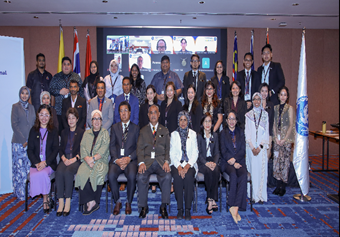
The South East Asia National Human Rights Institutions Forum (SEANF) opened its first Technical Working Group (TWG) Meeting of 2026 at The Grand Mercure Bukit Bintang, Kuala Lumpur, with delegates attending both in person and via the Zoom platform. The three-day gathering, which runs until 23 April, is being held under the Chairpersonship of the Human Rights Commission of Malaysia (SUHAKAM). The meeting includes two dedicated side events: Defending the Defenders on the afternoon of 22 April, and the Forum on Human Rights, Business and Climate Justice 2026 on 23 April.
Delivering the opening remarks, SUHAKAM Commissioner Abdul Kadir Jailani Ismail welcomed SEANF members, noting this as the first in-person meeting under Malaysia’s chairpersonship since the COVID-19 pandemic. He highlighted two central topics: “Defending the Defenders” and “Human Rights, Business, and Climate Justice,” drawing attention to the increasing use of Strategic Lawsuits Against Public Participation (SLAPPs) across Southeast Asia to silence human rights defenders. On climate justice, he commended the recent ASEAN Declaration on the Right to a Safe, Clean, Healthy, and Sustainable Environment. “Let’s be politically savvy enough to navigate the current tensions, but diplomatically brave enough to put human rights at the very centre of the table,” he concluded, formally declaring the meeting open.
Timor-Leste’s national human rights institution, the Provedor de Direitos Humanos e Justiça (PDHJ), is represented at the meeting by Chief of Staff Mr. Auréo José António Savio and Communication and Public Relations Specialist Mr. Antoninho Bernardino. Notably, the Ombudsman for Human Rights and Justice, Mr. Virgilio da Silva Guterres “Lamukan,” participated as a panelist in the Defending the Defenders side event. His invitation stemmed from both his current mandate as Ombudsman and his personal experience as a former political prisoner, offering a unique perspective on the protection of human rights defenders operating under repressive conditions.
During the session on major developments, PDHJ reported significant legal victories, including a court ruling in its favor on the PNTL recruitment case, which led the government to cancel and reopen the flawed admission process. PDHJ also submitted a shadow report on the UNCRPD, advanced OPCAT ratification advocacy, and finalized a concept note on enforced disappearances. In promotion and capacity building, PDHJ trained 24 PNTL members and 22 FALINTIL-FDTL defence force members, engaged 25 local authorities, and reached 124 students through dissemination sessions. On protection, PDHJ handled 62 complaints and conducted urgent monitoring of seven cases, alongside detention, social protection center, and health facility monitoring across multiple locations. To strengthen institutional presence, PDHJ swore in 13 new public administration agents as focal points deployed to nine municipalities.
The formal TWG proceedings, held on 21 April and the morning of 22 April, included the adoption of the agenda and introductory remarks by SEANF members; sharing of major developments and activities since the 22nd SEANF Annual Conference, with presentations from CHRP (Philippines), NHRCT (Thailand), PDHJ (Timor-Leste), MNHRC (Myanmar), Komnas HAM (Indonesia), and SUHAKAM (Malaysia); a dedicated session on the implementation of the 2022–2026 SEANF Strategic Plan, covering four priorities: human rights in a post-COVID environment (led by CHRP), business and human rights (MNHRC), torture prevention (NHRCT), and institutional strengthening of SEANF (SUHAKAM and Komnas HAM); and “Other Matters” including updates on older persons’ rights, the Inter-NHRI Mechanism, and the impact of armed conflict and energy crises on human rights. Additional sessions covered discussions on responses to external communications addressed to SEANF, an update from the SEANF Strategic Communications Working Group (SCWG) presented by PDHJ, and preparations for the 2nd SEANF TWG Meeting and 23rd Annual Conference. A welcoming dinner and cultural activities took place on the evening of 21 April.
The South East Asia National Human Rights Institutions Forum (SEANF) is a regional network comprising the National Human Rights Institutions (NHRIs) of Southeast Asian countries. Established to promote and protect human rights through cooperation, dialogue, and capacity-building, SEANF meets annually and through technical working groups to exchange good practices, address emerging human rights challenges, and strengthen the effectiveness of NHRIs across the region. Its Rules of Procedure mandate the Chairperson to organize two TWG meetings and one Annual Conference each year.
THE OMBUDSMAN PARTICIPATED IN THE FIRST ONLINE ASSEMBLY MEETING OF THE EUROPEAN NETWORK FOR TRANSPARENCY AND RIGHT TO INFORMATION.
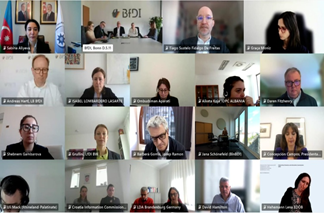
On 17 April, the First online Assembly Meeting of the European Network on Transparency and the Right to Information (ENTRI) was held within the framework of the International Conference of Information Commissioners (ICIC).
The purpose of the event was to discuss the establishment and activities of working groups on the use of artificial intelligence in handling access to information requests, proactive transparency, and privacy and personal data protection.
Speaking at the event, Sabina Aliyeva, the Ombudsman of Azerbaijan, noted that ENTRI plays a key role in strengthening regional cooperation and fostering a coordinated approach, and expressed confidence that it will become an effective platform for information exchange and the promotion of transparency, accountability, and good governance.
Sabina Aliyeva stated that the Ombudsman Institution of Azerbaijan stands ready to actively contribute to the work of all three working groups by sharing its positive practices and engaging in constructive dialogue.
The event also featured detailed discussions on the future directions of the working groups and included interventions by participants.
BRAND AMBASSADOR WORKSHOP HELD AT ZIAUDDIN UNIVERSITY.
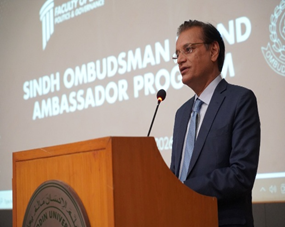
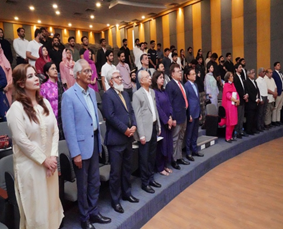
A workshop under the Ambassador Program of the Provincial Ombudsman Sindh was held at Ziauddin University on 22nd April 2026, highlighting the role of the Ombudsman Office in ensuring administrative justice for the public.
Dr. Professor Muhammad Ali Sheikh, Vice Chancellor of Ziauddin University, welcomed the Honorable Ombudsman Sindh and his team. Drawing on his earlier experience with the Ombudsman Office, he shared insights into the complaint redressal process and highlighted how timely, free-of-cost justice plays a vital role in strengthening accountability and public trust. He appreciated the Ombudsman office for indulging the youth in promoting civic responsibility.
Ms. Shaaista Sarki, Dean of the Faculty of Law, Politics and Governance, emphasized the vital role of academic engagement in promoting awareness of legal rights. She noted that the program effectively bridges the gap between theory and practice, enabling students to apply their knowledge in real-world contexts. She further highlighted that the initiative equips students with the skills to engage diverse audiences and communicate ideas with clarity and confidence. It also encourages Ambassadors to take an active role in their communities by raising awareness of mandate of Ombudsman Institute thereby serving as a meaningful link between the institution and the wider public.
Addressing the audience, the Honorable Provincial Ombudsman Sindh, Mr. Sohail Rajput stated that, The Ombudsman office was established in 1991 to provide free, fair, transparent, and speedy justice regarding complaints against government departments and agencies. Despite a large population, public awareness about the institution remains limited, which is why this outreach initiative is essential.
He emphasized the role of student ambassadors in strengthening outreach and bridging the gap between the institution and the public so far, we have selected 70 Ambassadors for seven universities and Ziauddin is eighth in row. He also noted a significant rise in complaints, from around 8,000 in previous years to nearly 25,000 in 2025, reflecting improved accessibility and public engagement through this program as well as Khuli khacharies (open house meetings), social media and public campaign.
He further highlighted the introduction of an automated Complaint Management System (CMS) to enhance the transparency and public trust in grievance redressal system by enabling complainants to track the progress of their cases. He also shared a 78% relief ratio, indicating that a majority of decisions have been made in favor of complainants.
Ms. Rehana G. Ali Memon, Advisor, and Masood Ishrat, Registrar, Secretariat Provincial Ombudsman Sindh, also briefed participants on the program’s objectives and operational framework. The event concluded with an interactive Q&A session led by the Honorable Ombudsman Sindh and vote of thanks by Registrar, Ziauddin University.
OMBUDSMAN PARTICIPATES IN REGIONAL EVENT ON ENVIRONMENTAL RIGHTS.
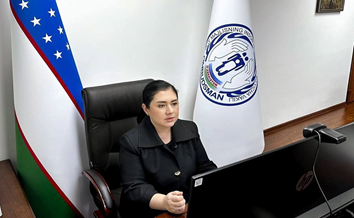
The Commissioner of the Oliy Majlis of the Republic of Uzbekistan for Human Rights (Ombudsman) participated on April 9, 2026, in an online regional event titled “The Role of North–South, South–South and Triangular Cooperation in the Realization of All Human Rights, Including the Right to Development”, organized by the Office of the United Nations High Commissioner for Human Rights (OHCHR).
During the event, discussions focused on ensuring environmental rights, protecting the right to a clean, healthy and sustainable environment, as well as strengthening international and regional cooperation mechanisms in this field. Particular attention was paid to enhancing cooperation among state bodies, national human rights institutions, international organizations and civil society institutions in ensuring rights related to environmental processes.
In her statement, the Ombudsman highlighted the significance of Uzbekistan’s participation in the Aarhus Convention and outlined the ongoing practical reforms in the field of human rights in the country. In particular, attention was drawn to approaches aimed at advancing environmental rights, ensuring a favorable environment, access to information, public participation, and improving mechanisms for handling appeals.
The importance of international and regional cooperation in ensuring human rights was also emphasized, particularly in promoting environmental rights and facilitating the exchange of best practices.
MEMBER OF THE CONSTITUTIONAL COURT OF HUNGARY AND FORMER COMMISSIONER FOR FUNDAMENTAL RIGHTS (OMBUDSMAN) OF HUNGARY, DR. ÁKOS KOZMA, PAID A VISIT TO THE OMBUDSMAN INSTITUTION OF TÜRKIYE.
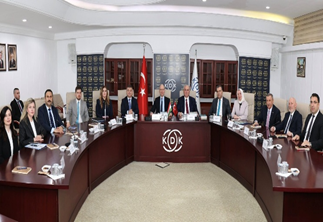
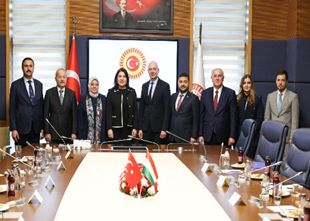
Member of the Constitutional Court of Hungary and Former Commissioner for Fundamental Rights (Ombudsman) of Hungary, Dr. Ákos Kozma, paid a working visit to Ankara on 1-3 April 2026. Chief Ombudsman of Türkiye, Mr. Mehmet Akarca first received Mr. Kozma and his accompanying delegation at the Ombudsman Institution. Dr. Kozma was accompanied by Counsellor and Deputy Head of Mission at the Embassy of Hungary in Türkiye, Mr. Gábor Baár. The meeting was attended by Ombudspersons Mr. Ertunç Erkan Balta, Ms. Fatma Benli Yalçın, Mr. Abdullah Cengiz Makas, Mr. Şerif Yılmaz, Mr. Özcan Yıldız, and the Secretary General of the Ombudsman Institution Mr. Mehmet Doğan.
As part of the visit, the Member of the Constitutional Court of Hungary Dr. Kozma together with Chief Ombudsman of Türkiye Mr. Akarca, held meetings at the Grand National Assembly of Türkiye (GNAT) with the Chair of the Petitions Committee of GNAT Ms. Sunay Karamık, and Chair of the Constitutional Committee of GNAT Prof. Dr. Serap Yazıcı Özbudun, and with members of both committees.
The delegation also paid a visit to the President of the Constitutional Court of Türkiye, Mr. Kadir Özkaya.
The working visit concluded with a visit to the President of the Justice Academy of Türkiye,
Mr. Metin Yıldırım, during which Dr. Ákos Kozma was accompanied by the Secretary General of the Ombudsman Institution, Mr. Mehmet Doğan.