Category Archives: AOA News Letter
AMBASSADOR PROGRAM CONCLUDES WITH INSIGHTFUL FEEDBACK AND CERTIFICATE DISTRIBUTION CEREMONY.
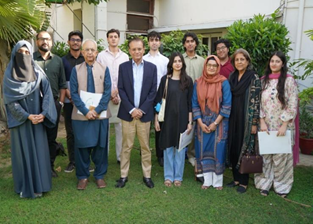
The second and concluding session of the Ambassador Program for students from IBA University Karachi was held on 13 April 2026 at the Provincial Ombudsman Secretariat, followed by a certificate distribution ceremony.
The session commenced with an overview of the Ombudsman’s role, after which the Honourable Ombudsman engaged with the ambassadors, acknowledging their selection as young individuals entrusted with the responsibility to advance public awareness and serve as an effective bridge between the institution and the community.
During the interactive discussion, ambassadors shared thoughtful suggestions, including the expansion of awareness initiatives and the incorporation of inclusive measures such as sign language in outreach content. The exchange highlighted the important role ambassadors’ play in enhancing public understanding and strengthening community engagement.
Through their participation, Ambassadors also gained valuable leadership, communication, and interpersonal skills, while strengthening their CVs and improving their prospects for higher education and employment.
In a notable initiative, one ambassador volunteered to organize an awareness session in her village, reflecting the program’s impact for meaningful outreach.
The Ambassador Program continues to empower students as informed representatives, contributing to greater awareness and stronger public engagement across diverse communities.
OMBUDSMAN PARTICIPATED IN THE GANHRI 2026 ANNUAL MEETING.
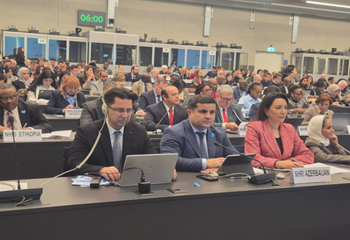
A delegation led by the Ombudsman of the Republic of Azerbaijan, Sabina Aliyeva, participated in the 2026 Annual Meeting of the Global Alliance of National Human Rights Institutions (GANHRI) held in Geneva.
The Ombudsman spoke at this event, which brought together heads and representatives of other countries, as well as representatives of international organizations and experts. The agenda topics were discussed.
Within the framework of the annual meeting, the Ombudsman also delivered a speech during a side event on “Protection of Human Rights in the Digital Space: Experiences and Best Practices of National Human Rights Institutions,” organized by the Ombudsman of Uzbekistan, providing detailed information on the activities carried out in this field in our country.
The Ombudsman noted that significant steps have been taken in Azerbaijan in the fields of digital governance and artificial intelligence and brought to attention that the “Artificial Intelligence Strategy of the Republic of Azerbaijan for 2025–2028” and the “Action Plan for Accelerating Digital Development in the Republic of Azerbaijan for 2026–2028” have been approved by the President of the country.
Sabina Aliyeva noted that the possibilities of applying AI in the activities of the Ombudsman of Azerbaijan are being explored, emphasizing that AI could be beneficial in increasing efficiency in the data analysis process.
The Ombudsman emphasized the significant importance of ensuring the right of access to information, taking into account the impact of AI on information accessibility. She noted that in Azerbaijan, the Ombudsman exercises oversight over information holders’ compliance with the requirements arising from the Law of the Republic of Azerbaijan “On Access to Information,” investigates complaints in this area, and has the authority to draw up protocols.
Ombudsman Sabina Aliyeva also addressed the event titled “Exchange of Good Practices: People on the Move,” held within the framework of the GANHRI Annual Meeting. She highlighted that Azerbaijan has suffered from conflict for many years. The Ombudsman also noted that large-scale restoration and reconstruction efforts are currently being carried out in the liberated territories and that consistent measures are being taken to ensure the safe, voluntary, and dignified return of formerly internally displaced persons to their homes.
The Ombudsman noted that the protection of the rights of refugees, migrants, asylum seekers, and stateless persons is one of the key areas of her activities. She stated that monitoring activities are carried out by the National Preventive Group, as well as within the framework of independent monitoring mechanisms, including visits to temporary accommodation centers and meetings with detained persons to assess the protection of their rights.
CHIEF OMBUDSMAN OF TÜRKIYE, MR. MEHMET AKARCA, ATTENDED THE ONLINE MEETING OF THE ASIAN OMBUDSMAN ASSOCIATION (AOA).
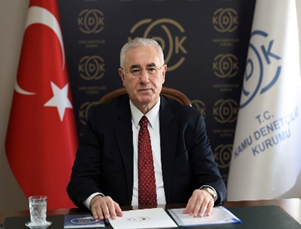
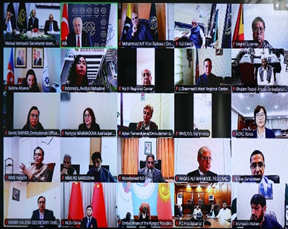
Chief Ombudsman of Türkiye, Mr. Mehmet Akarca, attended the online meeting organized on the occasion of the 30th anniversary of the Asian Ombudsman Association (AOA), of which the Ombudsman Institution of Türkiye is a member of the Board of Directors, on 16 April 2026.
The meeting was chaired by Federal Ombudsman of Pakistan and President of the AOA, Mr. Naveed Kamran Baloch, and was attended by AOA members.
In his speech, Mr. Akarca congratulated the Association on its 30th anniversary, noting that the AOA, which has made significant contributions to the development of the Ombudsman institution and the concept of Ombudsmanship at the regional and global levels over the course of 30 years since its establishment in 1996, has become a respected and effective network that strengthens mutual understanding, cooperation, and institutional capacity among Ombudsmen.
CELEBRATION OF THE 30TH ANNIVERSARY OF THE ASIAN OMBUDSMAN ASSOCIATION (AOA) BY THE CCAC.
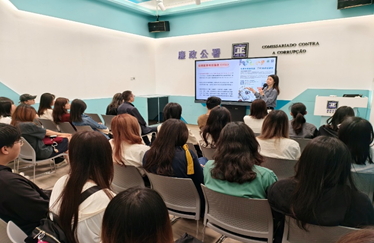
To mark the 30th anniversary of the Asian Ombudsman Association (AOA), the CCAC has carried out a series of initiatives to highlight its role and promote the ombudsman function.
The CCAC prepared a special anniversary message broadcast on local Chinese and Portuguese radio stations. The message emphasises the AOA’s mission of strengthening ombudsman systems, fostering cooperation and advancing professional development.
The CCAC also launched a dedicated trilingual webpage (Chinese, Portuguese, and English) on its official site (https://www.ccac.org.mo/en/aoaanniversary.html). The webpage features an introduction to the CCAC, a special message from the Commissioner Against Corruption, Ao Ieong Seong , mentioning of the quality of CCAC as a founding member of the AOA, general information about the AOA, archival photos and details of its participation in the Association, for example, the participation of the Commissioner Against Corruption, Ao Ieong Seong, and the Head of the Research Department of the Ombudsman Bureau, Ng Soi Hong, in the AOA meeting organised by the National Commission of Supervision of China in Nanjing in September 2025.
Furthermore, the theme of the 30th anniversary of the AOA will be incorporated into various promotional activities on ombudsman work throughout 2026.
Through these efforts, the CCAC reaffirms its commitment to the AOA’s principles of independence, impartiality and integrity while encouraging continued collaborate on among members to strength transparency and good governance across Asia.
OMBUDSMAN ANNOUNCES RESULTS OF DIRECT INVESTIGATION OPERATION INTO GOVERNMENT’S WORK IN COMBATING CRUELTY TO ANIMALS.
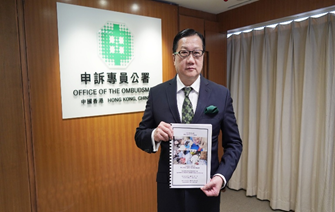
The Ombudsman, Mr Jack Chan, announced the completion of a direct investigation operation into the Government’s work in combating cruelty to animals by the Office of The Ombudsman (“the Office”), with 45 improvement recommendations made to the Government.
Please click here to watch the live replay of our press conference.
In recent years, animal cruelty cases have occurred from time to time in Hong Kong, shocking the community. Some cases are bloody and brutal, where helpless creatures endured extreme cruelty, with some found dead as a result of the abuse. As society advances, cruelty to animals is intolerable to our community.
Mr Chan said, “Many recent cases of animal cruelty are horrifying, leaving the public shocked and heartbroken. Atrocities of this kind amount to a deliberate trampling on the dignity of life and run wholly contrary to the very conscience of a civilised society. They must be condemned by our community. My colleagues and I firmly denounce acts of animal cruelty and urge the general public to work together and spare no effort in protecting animals. Any act or indication of suspected cruelty should be reported immediately and without hesitation, so that we may protect vulnerable lives together.”
Mr Chan noted, “Against this background, I decided to conduct this direct investigation regarding the combat of cruelty to animals. Our objective is to give a voice to the voiceless animals and seek justice for them, as they are among the most vulnerable, helpless and innocent members of our community.”
This direct investigation primarily focuses on examining the effectiveness of the Agriculture, Fisheries and Conservation Department (“AFCD”) in combating animal cruelty, including its protective measures and enforcement against suspected cruelty, publicity and promotional efforts, and in particular, regulation of animal traps. The Office thoroughly examined the AFCD’s procedures for following up on animal cruelty and abuse reports, covering relevant laws and policy documents, operational guidelines, specific cases and data. The Office also conducted site inspections at the AFCD’s animal management centres and at location where animal cruelty had occurred, and randomly selected 200 case files for studying.
The Prevention of Cruelty to Animals Ordinance (Cap. 169), the principal legislation that safeguards animal welfare, was enacted to prohibit and penalise acts of animal cruelty. Both AFCD and the Hong Kong Police Force (“HKPF”) are tasked with investigating and prosecuting suspected acts of animal cruelty in accordance with Cap. 169. Between 2020 and 2025, there was an overall upward trend in the number of reports received by AFCD, as well as in the number of cases registered by HKPF after preliminary investigations that uncovered evidence. In the first six months of 2025, AFCD received 251 reports, a figure close to the annual average of the past few years.
The Government launched earlier a public consultation on proposed amendments to Cap. 169, which included tougher penalties and enhanced enforcement powers. The Office understands that AFCD will continue the amendment process, and considers that phased amendments should be adopted, with priority given to imposing tougher penalties and enhancing enforcement, etc.
The Office’s investigation found that the AFCD’s investigation has been ineffective. Some cases have shown that when AFCD staff were unable to enter a flat for investigation, or failed to check on the abused animals, they based their actions solely on the information available at the time to assess whether there was animal cruelty. AFCD explained that under Cap. 169, its staff may only enter premises for investigation with the occupier’s consent, and the ordinance does not authorise the Department to seek court warrants for enforcement.
Mr Chan said, “We consider that where AFCD staff cease follow-up actions without ascertaining the actual condition of the animals, it calls into question whether the Department has handled reports seriously and properly. The investigative approach is ineffective against offenders intending to conceal evidence, and it directly undermines the effectiveness in pursuing prosecutions.”
In one case, AFCD staff negotiated multiple times with the owner of a dog suspected of being abused for a site inspection. Although the owner appeared to agree, he kept putting the inspection off. Eventually, the inspection was not carried out. The dog owner admitted that he had not applied for a dog licence, which already amounted to an offence, yet AFCD only reminded him to do so without taking enforcement action. Given the severity of rabies, the Office considers that AFCD should adopt a more serious and proactive approach in following up on the case.
The Office’s investigation also found that while there are guidelines for handling cases involving a large number of animals and requiring substantial manpower, AFCD has not established guidelines for following up on general cases. Without such guidelines, AFCD staff adopt different practices, which may result in inconsistent standards in investigations and enforcement, and may undermine effectiveness. It is unsatisfactory that AFCD only began formulating new guidelines covering all reports of suspected animal cruelty after this direct investigation was launched.
Concerning the monitoring of case follow-ups, AFCD must intensify its efforts. AFCD indicated that all suspected cases of animal cruelty must be reviewed and approved for closure by the case officer’s supervisor. The Department’s veterinary officers are also expected to periodically check the follow-up actions of frontline staff. However, the Office found in one case that AFCD staff refrained from attempting to enter the flat for inspection because of the occupier’s dissatisfaction and did not adopt other feasible means to complete the investigation. Without confirming whether animal cruelty had occurred, the staff recommended ceasing follow-up action based on the findings of an investigation conducted a year earlier that had found no evidence of animal cruelty, and a single inspection conducted outside the flat. Even so, the supervisor did not question this recommendation and approved the case closure. This casts doubt on whether it was prudent, or even reasonable, for AFCD to close the case under such circumstances.
Another focus of this direct investigation is the enforcement against the illegal use of animal traps. Such traps pose a serious threat to the safety of wild animals, stray animals and pets, inflicting horrendous pain, severe and permanent injury, or even death. They are equally dangerous to humans, posing a serious threat to hikers or members of the public who accidentally step on them, particularly children and the elderly, who may suffer injuries ranging from minor injuries to amputation, and in the worst cases, death. The maximum penalty in force for illegal possession or use of animal traps is only a fine at level 5 (i.e. $50,000), with no provision for imprisonment. By contrast, under the Wild Animals Protection Ordinance, the maximum penalty for illegal feeding of pigeons has been raised to a fine at level 6 (i.e. $100,000) and one year’s imprisonment.
Mr Chan said, “Illegal pigeon feeding and illegal possession and use of animal traps are certainly offences of a different nature. However, given the severe safety risks that animal traps pose to animals and the public, the current penalties completely fail to reflect the seriousness and danger of animal trap offences and provide no deterrent effect. Traps such as gin traps, metal snare traps, netting traps, sharpened bamboo traps, cage traps and deadfall traps, by their violent nature and danger level, are in fact no different from those of ordinary offensive weapons. These traps may lead to potential injuries, permanent disability or even death. We recommend that AFCD make reference to the current penalties for illegal possession and use of offensive weapons, and seriously consider raising the penalties for illegal possession and use of animal traps—for example, by introducing immediate imprisonment as a strong deterrent—and strengthening collaboration with relevant enforcement agencies to curb the import of animal traps.”
Overall, the Office has made 45 major recommendations for improvements to AFCD, covering handling of animal cruelty reports, case monitoring, records management, publicity and education, the tripartite collaboration mechanism with the HKPF and the Society for the Prevention of Cruelty to Animals (“SPCA”), as well as enforcement against the illegal use of animal traps.
The Office’s major recommendations for improvement include:
- consider amending Cap. 169 by adding provisions to strengthen the enforcement powers of staff of the Department, for example, by introducing procedures that allow them to enter private premises for investigation without the occupier’s consent;
- define in the New Guidelines the factors to be considered when initiating the relevant procedures for large-scale cases;
- continue to provide appropriate staff training on the New Guidelines regularly;
- continue to remind staff to remain vigilant at all times and to handle every report with a proactive, conscientious, and serious attitude;
- enhance staff training on investigation and communication skills to improve their ability and resolve when handling unco-operative residents, pet keepers or building attendants;
- review and strengthen the mechanisms currently in place for monitoring frontline staff;
- collate and analyse relevant information in detail to assess how relevant policies are being implemented and emerging trends, adjust enforcement strategies and develop appropriate work directions and specific measures to combat animal cruelty more effectively;
- further strengthen the tripartite collaboration with the HKPF and the SPCA against animal cruelty;
- make greater efforts to detect and remove illegally deployed animal traps at an early stage through regular patrols and targeted inspections of high-risk black spots of animal traps and cruelty; and
- with reference to the penalties for the illegal possession and use of offensive weapons, consider raising those for illegal possession and use of animal traps.
AFCD has accepted all 45 recommendations from the Office and has started to act on and implement some of them.
Furthermore, the Office is pleased to note that since 2011, HKPF has worked with AFCD, other government departments, the SPCA, other animal welfare organisations and veterinary bodies to launch the Animal Watch Scheme. Notably, since 2018, HKPF has established dedicated teams in 22 police districts where criminal investigation teams are already in place, to investigate animal cruelty cases, a move that deserves recognition, support and commendation by society.
Mr Chan said, “The Police’s Animal Watch Scheme has raised public awareness of animal protection through education and publicity, fostering greater respect for and protection of life across society. At the same time, it has reinforced efforts to combat animal cruelty through the establishment of dedicated criminal investigation teams. We highly commend HKPF for its work in this regard.”
FEDERAL OMBUDSMAN OPENS ONLINE MEETING TO MARK THE 30TH ANNIVERSARY OF THE ESTABLISHMENT OF AOA.
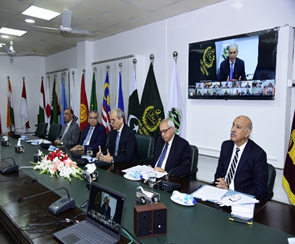
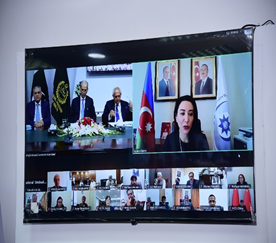
- FEDERAL OMBUDSMAN OPENS ONLINE MEETING TO MARK THE 30TH ANNIVERSARY OF THE ESTABLISHMENT OF AOA
- CALLS FOR GREATER SHARING OF EXPERIENCES AND BEST PRACTICES AMONGST OMBUDS INSTITUTIONS
Islamabad: 16 April 2026 – Wafaqi Mohtasib (Federal Ombudsman), Mr. Naveed Kamran Baloch has said that Ombudsman Institutions across the globe are playing a critical role in providing free and expeditious redressal of grievances to the people, besides promoting good governance, rule of law and efficient public administration.
He was inaugurating an online meeting organized to mark the 30th anniversary of the establishment of the Asian Ombudsman Association (AOA), at the Wafaqi Mohtasib Secretariat today in his capacity as the Association’s President. The other member countries, including Azerbaijan, Türkiye, China, Thailand, Uzbekistan etc. joined online and read out their special messages issued on the occasion.
Wafaqi Mohtasib noted that these bodies have the potential to transform the fate of the teeming millions particularly in the developing countries. Expressing his satisfaction over achieving this milestone, he observed that “the sapling which was planted three decades ago, stands today as a dynamic and robust 47-member organization, representing two-thirds of the world’s population”. “Its evolution is indeed most remarkable, inspiring confidence in the goals and objectives of Ombudsmanship and upholding commitment to working together in the best interest of the Asian regional fraternity”, he added.
The Wafaqi Mohtasib further maintained that it is about time to institutionalize sharing of knowledge, experiences and best practices to foster a culture of efficiency, inclusivity and transparency in public administration with a view to safeguarding the rights of citizens in our respective societies. On the occasion, he also reiterated Pakistan’s adherence to the goals and objectives of the Association.
While highlighting the Association’s international standing and stature, he stated that it can be gauged from the fact that the UNGA Resolution 79/177 recognizes the AOA among the active regional ombuds bodies, which is a matter of deep satisfaction. He also referred to the complementarity between the goals of ombudsmanship and the SDGs and observed that it is reflective of the Association’s abiding commitment to the principles of the UN Charter.
It may be recalled that Pakistan alongwith certain other likeminded countries played a pioneering role in the establishment of the Asian Ombudsman Association, following convening of the First Asian Ombudsman Conference in Islamabad on 15-16 April 1996, which led to the formation of AOA and Pakistan is also its current President. It may also be mentioned that the AOA’s Secretariat is located in the Wafaqi Mohtasib (Federal Ombudsman) Office premises in Islamabad.
PDHJ PARTICIPATES IN DISCUSSION ON THE E-GOVERNANCE PROGRAMME FOR THE JUDICIAL SYSTEM.
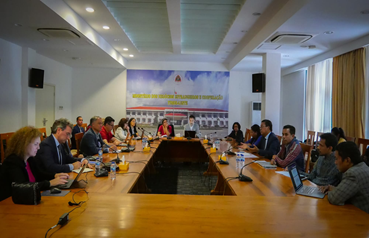
Díli, 12 March 2026 – The Ombudsman for Human Rights and Justice, Virgílio da Silva Guterres “Lamukan”, together with the Deputy Ombudsman for Human Rights, Maria Marília da Costa, participated in a meeting organized by the Ministry of Foreign Affairs and Cooperation of Timor-Leste to discuss the E-Governance for the Judicial System in Timor-Leste (e-JUSTI) programme, funded by the European Union. The meeting brought together representatives from several institutions, including the Camões – Institute for Cooperation and Language and the Italian Agency for Development Cooperation (AICS) and the Foreign Minister of the Republic of Lithuania, to exchange views on strengthening the modernization and digitalization of the judicial system in Timor-Leste.
During the discussion, the Ombudsman introduced the mandate and role of the Ombudsman for Human Rights and Justice of Timor-Leste in promoting good governance and protecting citizens’ rights. He welcomed the initiative, noting that the development of the e-Justice system could help improve the efficiency of the justice sector and facilitate better access to justice for the public. The Ombudsman also emphasized that the implementation of digital judicial systems should be supported by key legal frameworks, including a data protection law and legislation on cybercrime and cyber security, to ensure the protection of users and the integrity of online systems. In addition, he highlighted the importance of publishing court decisions online to enhance transparency and allow the public to scrutinize judicial decisions, thereby strengthening accountability within the justice system.
THE REPRESENTATIVE OF THE OMBUDSMAN PARTICIPATED IN THE SCIENTIFIC-PRACTICAL CONFERENCE “STRATEGICAL COOPERATION IN THE PREVENTING VIOLENCE AGAINST WOMEN: OPPORTUNITIES AND PERSPECTIVES”.
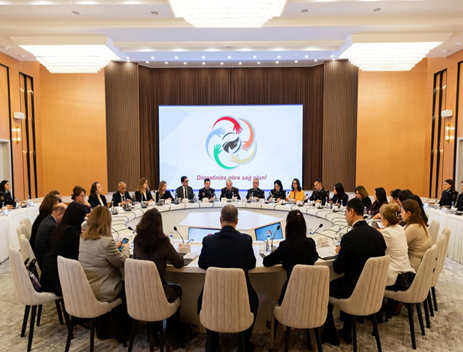
The Ministry of Internal Affairs of Azerbaijan organized a scientific-practical conference entitled “Strategic Cooperation in Preventing Violence against Women: Opportunities and Prospects.”
At the event, Lamiya Zeynalova, Head of the Department for the Protection of the Right to Information in the Ombudsman Office, delivered a speech and provided information on the Ombudsman’s activities for the protection of women’s rights, gender equality, preventing gender-based and domestic violence, non-discrimination, and so on.
She also spoke about the Ombudsman proposals reflected in the annual reports that were considered by the relevant state authorities and positively contributed to the improvement of the legislative framework. She emphasized the importance of regular awareness-raising activities on women’s rights, gender equality, and preventing violence against women (VAW), as well as on-site investigation within duties arising from monitoring groups.
During the event, a video clip entitled “Provision of Social and Legal Assistance to Women Subjected to Violence” was shown. As well, current prevention mechanisms against VAW were also discussed, and the importance of legal regulation and cooperation in this field was underlined.
PDHJ MEETS WITH PARLIAMENT PRESIDENT TO PUSH FOR OPCAT RATIFICATION.
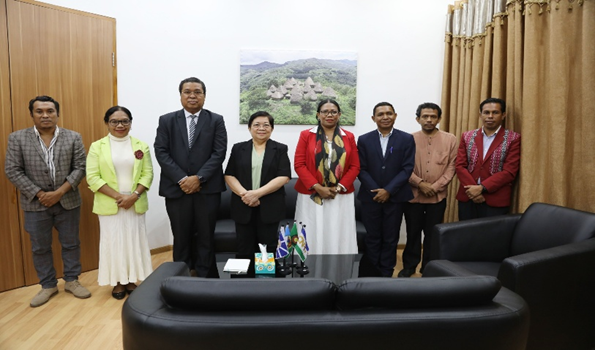
Díli, 24 March 2026 – The Ombudsman for Human Rights and Justice, Virgílio da Silva Guterres “Lamukan,” accompanied by Deputy Ombudsman for Good Governance, Rigoberto Monteiro, and Deputy Ombudsman for Human Rights, Maria Marília da Costa, met with the President of the National Parliament, Maria Fernanda Lay. The meeting aimed to follow up on a letter previously submitted by the Ombudsman requesting the ratification of the Optional Protocol to the Convention against Torture (OPCAT).
During the meeting, the Ombudsman emphasized that ratifying OPCAT would fulfil Timor-Leste’s commitment to its international obligations. He referred to the recommendations of the Commission for Reception, Truth and Reconciliation (CAVR), commonly known as CHEGA, which called for measures to prevent future torture and cruel, inhuman, or degrading treatment. The Ombudsman also highlighted that, under its statutory mandate, the Provedoria dos Direitos Humanos e Justiça (PDHJ) has the competence to propose to the government the ratification of international treaties and to advocate for their implementation following ratification.
The Ombudsman further noted that ratifying international human rights instruments aligns with Timor-Leste’s standing as a nation committed to human rights and democratic values. As a small country, Timor-Leste can take pride in championing these principles on the international stage. The Ombudsman also suggested to the President of Parliament that, following ratification, the National Preventive Mechanism (NPM) could be vested in PDHJ. Under its current statute, the Ombudsman already holds the mandate to conduct visits to prisons, police detention centres, and other places where people are deprived of liberty, making it more efficient than creating a new body.
President of Parliament welcomed the delegation and acknowledged the proposals submitted by PDHJ. She noted that her office has communicated with the Ministry of Foreign Affairs and expects the Ministry to submit a formal proposal for ratification to the National Parliament. Once received, Parliament will proceed with further action on the matter.
The meeting also addressed the urgent need for a Data Protection Law, a Cybersecurity Law, and a Cybercrime Law. Additionally, the discussion covered the importance of ratifying the International Convention for the Protection of All Persons from Enforced Disappearance. PDHJ has finalized a concept note on this Convention and will conduct further consultations with civil society organizations before submitting it to Parliament and the Ministry of Foreign Affairs.
Furthermore, the Ombudsman raised the initiative to amend the PDHJ Statute to accommodate recent institutional developments and emerging necessities. The proposed amendments aim to strengthen the institution’s mandate, enhance its effectiveness in protecting human rights and promoting good governance, and ensure alignment with international standards and the evolving needs of the Timorese people.
WOMEN’S DAY AT THE OFFICE OF THE OMBUDSMAN PUNJAB.
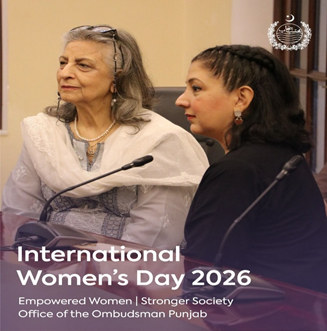
The Office of the Ombudsman Punjab commemorated International Women’s Day with a special event dedicated to celebrating the strength, leadership, and contributions of women across diverse fields. The event reflected the institution’s continued commitment to promoting gender equality and empowering women through accessible and effective grievance redressal mechanisms.
The occasion was graced by Ombudsman Punjab, Ms. Ayesha Hamid, whose leadership continues to strengthen institutional accountability and safeguard women’s rights. The event also featured distinguished speakers, including Ms. Mariya Suhail, Co-Founder and Creative Director at Orah Jewels, and Ms. Roohi Raees Khan, Former Chairperson of Sui Northern Gas Pipelines Ltd., who shared valuable insights on leadership, resilience, and the evolving role of women in professional and public spheres.
The programme concluded with remarks by Secretary to the Ombudsman Punjab, Mr. Kaiser Saleem, reinforcing the importance of collective efforts to advance women’s empowerment and ensure inclusive, equitable access to justice.