Category Archives: AOA News Letter
VEHICLES RENTED BY PEOPLE WITH DISABILITIES CAN NOW USE “EXPRESSWAYS” AT HALF PRICE!.
– Vehicles owned by people with disabilities or their families are eligible for a 50% discount on expressway tolls
– ACRC made “institutional improvement recommendations”: rented vehicles used by people with disabilities should also receive discounts on tolls
A decision has been made that not only vehicles owned by people with disabilities but vehicles rented and used by them should also be included in the scope of eligibility for a 50% discount on expressway tolls.
The Anti-Corruption and Civil Rights Commission (ACRC, Chairperson Ryu Chul Whan) recommended institutional improvements to the Ministry of Land, Infrastructure, and Transport (MOLIT) that vehicles rented by people with disabilities for one year or more through “lease” or “rent” should also be eligible for a 50% discount on expressway tolls currently offered to vehicles owned by them.
In February 2024, Person A who has disabilities filed a grievance complaint to ACRC, requesting that people with disabilities who use rented vehicles due to financial hardship be eligible for the same 50% discount on expressway that applies to those use their own vehicles.
The current laws and regulations concerning toll roads stipulate that vehicles owned by people with disabilities, lightweight cars (less than 1,000cc), and vehicles owned by persons of national merit should receive the 50% discount on expressway tolls.
According to an investigation conducted by ACRC, the scope of eligibility for the issuance of permits for designated parking for people with disabilities, designed to facilitate the mobility of people with disabilities, includes not only vehicles owned by persons with disabilities but also vehicles rented by them.
| Category | Scope of eligibility for the issuance of permits for parking for people with disabilities | Scope of eligibility for the 50% discount on tolls |
| Vehicles owned by people with disabilities | Included | Included |
| Vehicles owned by families who share the same address | Included | Included |
| Vehicles used and rented by people with disabilities for one year or more | Included | Not included |
Therefore, it was determined that there is no reason to treat vehicles rented by people with disabilities differently from vehicles owned by them regarding discounts on expressway tolls in order to facilitate their mobility as the issuance of permits for designated parking for people with disabilities.
Furthermore, ACRC estimated the additional amount of discount at approximately 370 million won even after including around 6,300 vehicles rented by people with disabilities in the toll discount as of 2023 and concluded that it is difficult to deem that the financial burden is relatively large compared to the annual toll revenue of over 4 trillion won.
In response, ACRC expressed its opinion that the MOLIT improve relevant institutions to include vehicles rented and used by people with disabilities for one year or more in the scope of eligibility for discounts on tolls.
ACRC Vice Chairperson Kim Tae Gyu said, “The recent decision aligns the scope of eligibility for receiving the issuance of permits for designated parking for people with disabilities under the jurisdiction of the Ministry of Health and Welfare with the scope of people with disabilities eligible for toll discounts under the jurisdiction of the MOLIT. ACRC will remain committed to formulating reasonable institutional improvement measures at the pan-governmental level.”
2023 ANNUAL REPORT OF THE CCAC OF MACAO PUBLISHED IN OFFICIAL GAZETTE .
According to the report, the CCAC proactively seized the opportunities in the wake of the revival after the epidemic and sought improvement in corruption fighting, ombudsman actions and promotion and education.
The 2023 Annual Report of the Commission Against Corruption of Macao was published in the Official Gazette of the Macao Special Administrative Region today on 12 June 2024. According to the report, the CCAC proactively seized the opportunities in the wake of the revival after the epidemic and sought improvement in corruption fighting, ombudsman actions and promotion and education. The CCAC placed a total of 249 cases on file in 2023, including 102 corruption cases, 123 ombudsman cases and 24 mutual assistance cases placed on file at the request of law-enforcement agencies outside the region. In addition, there were a total of 387 cases which were archived or were referred to competent departments for follow-up for the reason that they did not meet the conditions to be placed on file.
In the anti-corruption area, in addition to detecting a case where an assistant prosecutor general provided illicit assistance to persons subject to investigations in criminal cases, the CCAC also investigated and handled some cases involving different security service companies. These cases involved crimes such as making false attendance records to defraud public departments, document forgery to obtain quotas on non-resident workers and corruption in internal management in the private sector. The CCAC also looked into and handled some cases involving untruthful clocking in and out of work by public servants. The CCAC, however, points out that it recorded a significant year-on-year drop in reports of cases of defrauding government subsidies which frequently appeared in various forms in the past. It believed that the growth of such types of cases was temporarily suppressed due to the strategies of encompassing vigorous crackdowns, system building, promotion and education.
As regards ombudsman actions, the CCAC, due to the handling of some cases, explored with the Public Administration and Civil Service Bureau the proper interpretation of the legal regimes and regulations governing public services and continuously improved relevant systems through positive interaction with a view to seeking the best solutions together. In addition, the CCAC sustained its efforts in implementing the “retrospective review” mechanism and encouraged self-confidence of the administration by public departments. It added that a vast majority of the departments showed their attitudes of cooperation during the investigation processes concerning ombudsman actions, and were willing to carry out review and strive to optimise their work in order to complete the mission of accomplishing public interest with the CCAC.
WAFAQI MOHTASIB PRESIDES OVER THE ASIAN OMBUDSMAN ASSOCIATION’S ANNUAL MEETING AT ISTANBUL.
- Wafaqi Mohtasib Presides Over the Asian Ombudsman Association’s Annual Meeting at Istanbul
- Calls for Greater Sharing of Experiences to Promote Good Governance
The Wafaqi Mohtasib (Ombudsman), Mr. Ejaz Ahmad Qureshi has said that Ombudsman Institutions constitute a global fraternity which can play a very effective role in improving the quality of life for the common man through better governance.
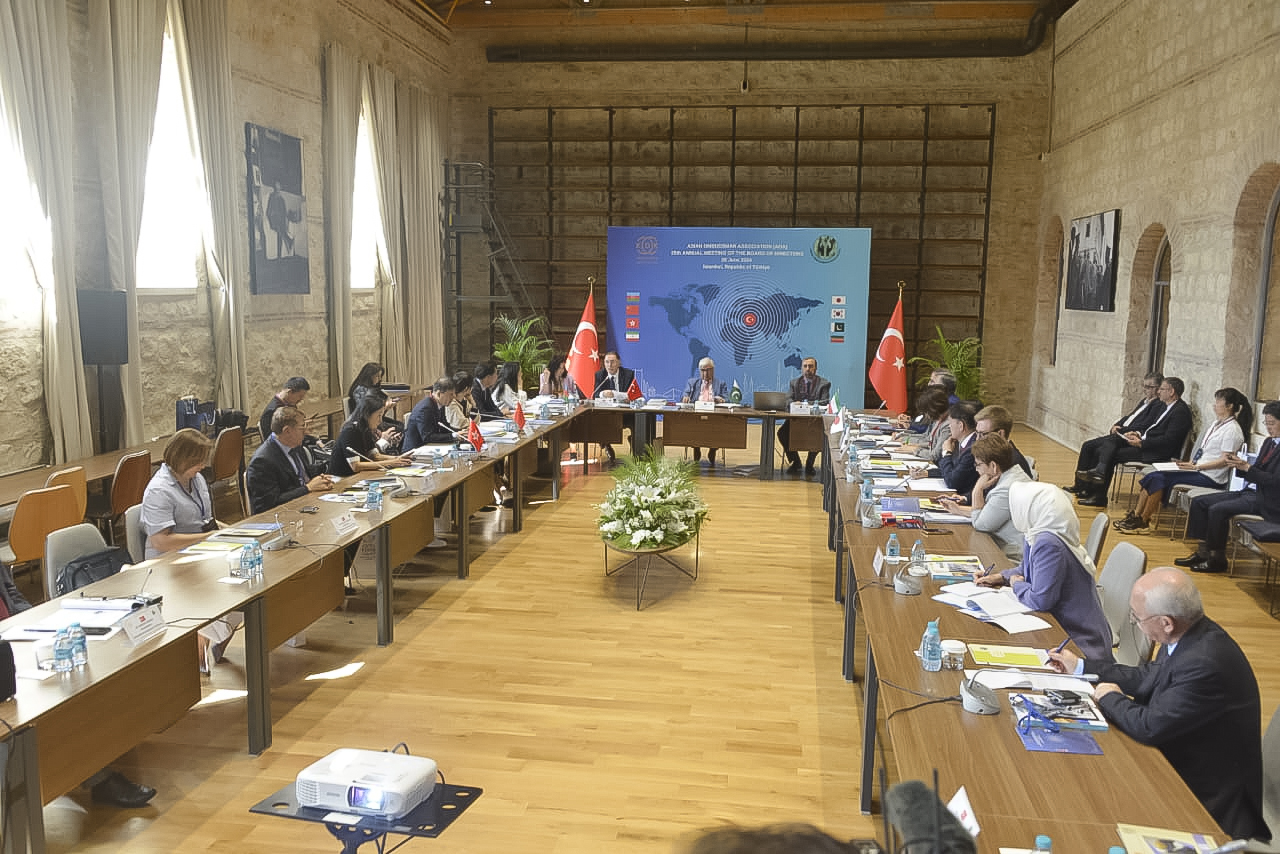
He was addressing the 25thAnnual meeting of the Board of Directors (BoD) of the Asian Ombudsman Association (AOA) as its current President at Istanbul (Republic of Turkiye).
He said that the objectives and purposes of the establishment of the Ombudsman Institution has a direct bearing on the realization of the overall goals, principally the protection and promotion of fundamental rights and good governance in all spheres of life.
Mr. Qureshi emphasized the need for greater sharing of experiences and best practices to the mutual advantage of all stakeholders. “The commonly shared objectives are worth striving for and we should make a conscious effort for their realization”, he observed. He expressed the confidence that such exchanges amongst the Ombuds Institutions would lead to further refining and streamlining the systems and procedures for addressing mal-administration, bureaucratic bottlenecks and systemic issues.
The Board, in its deliberations, took stock of the ongoing activities and decided to further step-up cooperation in core areas, expressing satisfaction over the mutuality of perception evolved in the meeting. It said that improvement in the quality of life of the common man would ultimately help realize the objectives for which the body was created. It also considered measures for instituting AOA Calendar of Activities and upgrading facilities at the AOA Resource Centre established in Islamabad.
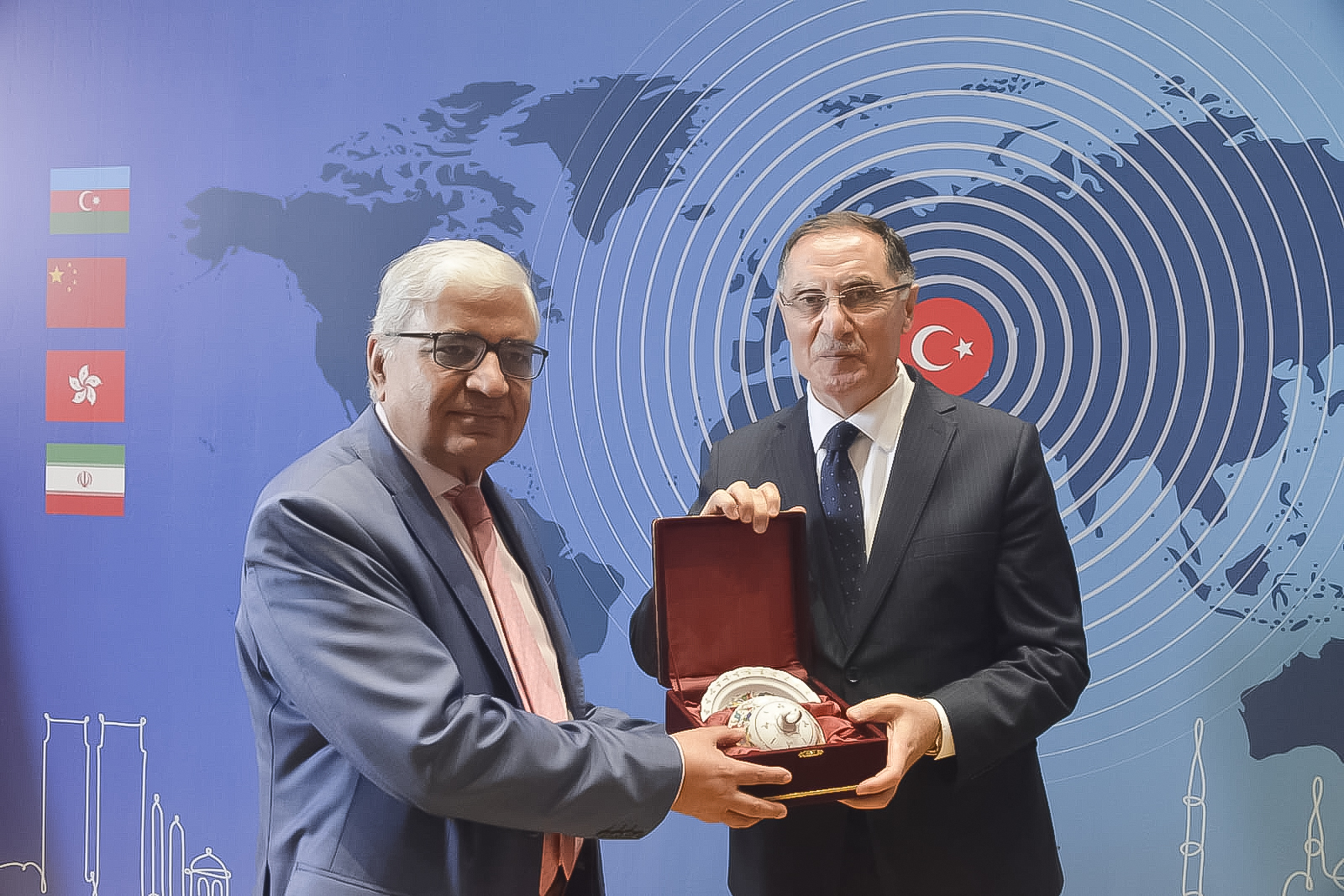
Asian Ombudsman Association (AOA) is a 47-Member strong professional body of the Ombudsmen in the Asian region representing more than two thirds of the world population. Its Board of Directors meets annually in one of the member states. The 25th meeting of the Board, held at Istanbul, on 28 June, 2024 was attended by heads of Ombudsman institution in Azerbaijan, China, Hong Kong, Iran, Japan, Korea, Pakistan, Tatarstan and Turkiye.
PUBLIC DEFENDER VISITS PENITENTIARY ESTABLISHMENT NO. 10 IN KSANI.
On May 29, 2024, Public Defender Levan Ioseliani visited Penitentiary Establishment No. 10 in Ksani.
The Public Defender checked the infrastructure of the penitentiary institution, the living conditions of prisoners; talked to the prisoners and the administration of the institution; visited walking spaces, medical section, de-escalation rooms and solitary confinement cells, library, kitchen and prison store.
The Public Defender also visited the snail and strawberry farms on the territory of the penitentiary institution, and talked to the prisoners employed there.
The Public Defender and his office will continue to supervise the state of protection of prisoners’ rights.
THE OMBUDSMAN DISCUSSES INTERNATIONAL COOPERATION IN SAFEGUARDING HUMAN RIGHTS.
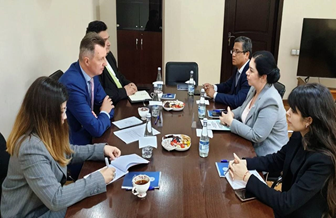
During the conversation Pavlo Byalyk expressed interest in establishing cooperation with the Oliy Majlis Commissioner for Human Rights (Ombudsman) on the protection of human rights and freedoms.
The meeting discussed promising plans of the Ombudsman to ensure human rights with the Office of the High Commissioner for Human Rights (OHCHR) Regional Office for Central Asia (ROCA).
In particular, views were exchanged on a number of proposals to support NGOs and civil society representatives, prevent cases of torture and domestic violence and take measures to prevent harassment and violence, including identifying and eliminating their causes.
The meeting was held in a constructive dialog and friendly spirit.
VIOLATIONS OF CODE OF CONDUCT BY LOCAL COUNCIL MEMBERS TO BE NO LONGER TOLERATED.

- ACRC to investigate the operational status of the Code of Conduct for Local Council Members until Sep. 2024
- Intensive inspection into areas vulnerable to corruption such as private contracts of family members of local council members and private use of business operating expenses, etc. to be conducted in parallel with inspection into the execution of local public finance, including rewards for collection of local taxes and clothing expenditure budget
Anti-Corruption and Civil Rights Commission (ACRC, Chairperson Ryu Chul Whan) conducts inspection into the operational status of the Code of Conduct for Public Officials targeting local councils and local authorities starting this month until Sep. 2024.
For the past years, the number of acts of corruption or violating the Code of Conduct for Public Officials by public institutions has decreased a lot, but some local council members or local authorities are still found to be involved in such irregularities as illicit signing of private contracts, private use of business operating expenses, fraudulent claims for business trip expenses, unlawful execution of rewards for collection of local taxes, and illegal use of clothing payments.
ACRC plans to conduct inspection into the implementational status of Code of Conduct by individual institutions from this month, targeting a total of 112 public institutions including 28 local councils (5 upper and 23 lower level councils), 17 municipal governments, and 67 basic local governments, in order to remove these deep-seated corrupt practices.
The inspection will be proceeded until Sep. this year through ary examination and field check-up for intensive investigation into private contracts of family members of local council members, private use of business promotion expenses, rewards for collection of local taxes, and unlawful execution of clothing expenditure.
In cases of public institutions found to have violated the Code of Conduct for Public Officials including personal use of public finance as a result of the inspection, ACRC plans to take necessary measures such as disciplinary measures, recovery of unlawfully executed public expenditure and institutional improvements, etc.
ACRC Vice Chairperson and Secretary General Chung Seung Yun said, “We will strive to fundamentally address the problem of waste of finances of local councils and governments through comprehensive fact-finding inspection.”
PUBLIC DEFENDER MEETS WITH UNICEF REPRESENTATIVE IN GEORGIA.
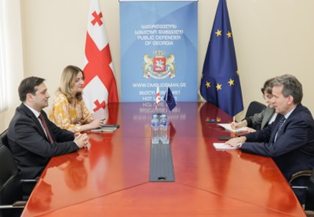
On May 24, 2024, Public Defender Levan Ioseliani and Deputy Public Defender Irine Chikhladze met with UNICEF Representative in Georgia Jesper Moller.
The general situation of children’s rights in the country, monitoring mechanisms and results were discussed at the meeting. The parties also talked about the session of the UN Committee on the Rights of the Child relating to the violations of children’s rights, where the Georgian delegation presented a report.
Levan Ioseliani and Jesper Moller agreed on further cooperation, both in terms of strengthening the protection of children’s rights in general, as well as regarding the involvement of the Public Defender in the consideration and implementation of the future recommendations of the UN Committee on the Rights of the Child.
PUBLIC DEFENDER MEETS WITH UNICEF REPRESENTATIVE IN GEORGIA.
On May 24, 2024, Public Defender Levan Ioseliani and Deputy Public Defender Irine Chikhladze met with UNICEF Representative in Georgia Jesper Moller.
The general situation of children’s rights in the country, monitoring mechanisms and results were discussed at the meeting. The parties also talked about the session of the UN Committee on the Rights of the Child relating to the violations of children’s rights, where the Georgian delegation presented a report.
Levan Ioseliani and Jesper Moller agreed on further cooperation, both in terms of strengthening the protection of children’s rights in general, as well as regarding the involvement of the Public Defender in the consideration and implementation of the future recommendations of the UN Committee on the Rights of the Child.
THE OMBUDSMAN OFFICE ORGANIZED TRAININGS ON THE PROTECTION OF CHILDREN FROM SEX-BASED DISCRIMINATION.
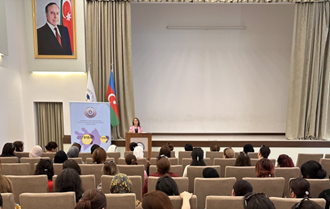
The Office of the Commissioner for Human Rights (Ombudsman) of the Republic of Azerbaijan organized trainings on the topic “Protection of children from sex-based discrimination:
medico-social and legal aspects” in general secondary schools No. 221 in Khatai and 216 in Khazar districts of Baku city.
At the trainings held during the Human Rights Month-long campaign and in joint collaboration with the Ministry of Science and Education and the Management Union of Medical Territorial Units (TABIB), Head of the Child Rights Protection Unit of the Ombudsman Office, Nigar Aghayeva, informed the participants about the activities of the Ombudsman in the field of protecting child rights, and combating sex-based discrimination against children.
The trainees were also informed on the existing legal framework about gender equality, forms of sex-based discrimination, early marriage, and child truancy.
In addition, during the trainings, comprehensive discussions were held on the rights and duties of parents and school staff, and the questions of the participants were answered.
It should be noted that the trainings are organized within the enforcement of the Action Plan for the implementation of the Children’s Strategy for 2020-2025, approved by the President’s Order dated 27 November 2020, and the “Action Plan for 2020-2025 on prevention of prenatal sex selection of children,” approved by the Cabinet of Minister’s Decree No. 71s dated 24 February 2020.
A REGIONAL APPROACH TO WOMEN’S ECONOMIC, SOCIAL AND POLITICAL EMPOWERMENT.
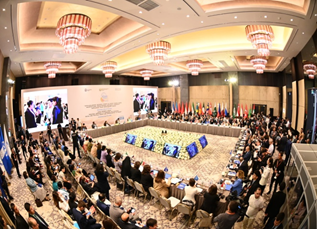
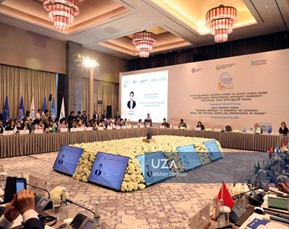
On May 13-14 this year, the Asian Women’s Forum was held in the city of Samarkand on the theme “A regional approach to the economic, social and political empowerment of women”.
The forum was attended by honored guests from more than 30 foreign countries and international organizations – Women Parliamentarians of the participating countries, heads of governments of East Asia, South-East Asia, South Asia and Central Asia, representative offices of foreign states in our country and more than 40 representatives of foreign organizations, as well as representatives of local government bodies, civil society institutions, women leaders, businessmen, political scientists, public figures, scientists, representatives of economic sectors, academics and economists.
Opening the forum, Senate Chairperson Tanzila Narbaeva presented an address from President Shavkat Mirziyoyev to the participants of the event.
As it was noted at the forum, thanks to the high political will of President of Uzbekistan Shavkat Mirziyoyev, the issues of ensuring the interests of women, gender equality and strengthening the family have become one of the priority areas of our policy. Women’s participation in the socio-political, economic and spiritual life of our country and in making important decisions is expanding considerably.
In a short period of time, a national legislative base that meets international standards of the industry has been formed, a striking example being the adoption of more than 80 normative legal acts in the last 5 years. Important laws “On guarantees of equal rights and opportunities for women and men” and “On protection of women from harassment and violence” were adopted and put into practice.
A gender strategy has been adopted for the period up to 2030 to adjust the gender equality policy and ensure its full implementation. Work on its implementation in all branches and sectors are well under way. Such concepts as gender expertise of normative legal acts, adoption of gender national budget, gender audit are being introduced and put into practice in the legislation.
At the same time, the UN Deputy Secretary General and Executive Director of UN Women Sima Bakhus, Director General of the UN Geneva Office Tatiana Valovaya, Secretary General of the Inter-Parliamentary Union Martin Chungong, as well as heads of parliaments of a number of states spoke at the forum, touching upon the goals and objectives of the forum, its significance and expected results.
After the opening ceremony, the participants were divided into parallel sessions with the aim of sharing experience, studying modern approaches of international organizations and financial institutions in this field. One of the sessions was moderated by the Authorized Person of the Oliy Majlis of the Republic of Uzbekistan for Human Rights (Ombudsman).
The forum discussed such issues as the economic empowerment of women, their broad involvement in entrepreneurship and innovation, women’s participation in scientific and innovative activities, education, as well as the use of digital technologies, poverty reduction by ensuring their leadership in the modern world economy.
The Samarkand Declaration was adopted as a result of the forum.