Category Archives: AOA News Letter
PUBLIC DEFENDER LEVAN IOSELIANI VISITED PRISONERS AT THE VIVA MEDI CLINIC.
On June 24, 2024, Public Defender Levan Ioseliani visited prisoners at the Viva Medi clinic, including the 3rd President of Georgia, Mikheil Saakashvili.
According to the Public Defender, based on his competence and taking into account the patient’s rights, he cannot talk about Saakashvili’s health condition, although it is obvious that the former President’s condition has improved much compared to the previous visit.
Mikheil Saakashvili thanked the Public Defender’s Office, which has been monitoring his health for several years. Levan Ioseliani confirmed that the Office would continue to monitor his health within the scope of its mandate.
According to Levan Ioseliani, at this stage, up to 10 prisoners are undergoing treatment at Viva Medi and none of them has expressed any dissatisfaction with the methods or quality of treatment.
The Public Defender emphasized the problem of delaying the process of determining the medical needs of prisoners in penitentiary institutions and transferring them to the medical institution on time.
A MONITORING VISIT TO A WOMEN’S COLONY WAS CONDUCTED UNDER THE LEADERSHIP OF THE OMBUDSMAN.
The Decision of the Head of State of 26 June 2021 on additional measures to improve the system of detection and prevention of cases of torture provides for the organization of a system of monitoring visits to places of detention of persons with restricted freedom of movement in order to prevent torture, in conjunction with public human rights groups under the Authorized person of the Oliy Majlis of the Republic of Uzbekistan for human rights (ombudsman).
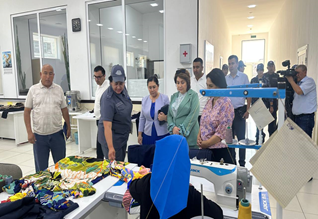
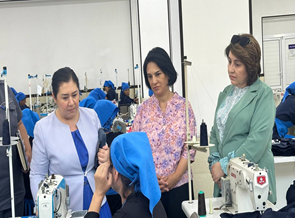
In this regard, on June 20, under the leadership of the Ombudsman and within the framework of the activities of the Public Groups for the Prevention of Torture, and with the participation of a deputy of the Legislative Chamber of the Oliy Majlis, a monitoring visit was made to the women’s correctional colony No. 21, located in the Zangiata district of Tashkent province. Media representatives participated in the monitoring process.
During the monitoring visit, the prisoners’ detention conditions, food, labor conditions, the level of medical care, the condition of rooms for long-term and short-term visits, and the library were studied.
The colony has five workshops for sewing, cutting and knitting socks. Prisoners are paid a piecework wage, which is transferred to their personal account. Money from prisoners’ relatives can also be transferred to this account. It was noted that women with children under 3 years of age, persons with disabilities and elderly prisoners were not employed. They can work only with written consent.
In addition, the colony has a women’s salon where an inmate working in the salon can teach her craft to others.
When talking to prisoners living with children, it was noted that the State allocates funds for all the children’s needs, and conditions have been created to provide medical care within 24 hours.
This year, the Authorized person of the Oliy Majlis of the Republic of Uzbekistan for human rights (ombudsman) received more than 110 communications from the women’s colony. As part of the monitoring, group and individual interviews were held with inmates. Individual interviews were also held with prisoners who had appealed to the Ombudsman.
Analytical information based on the results of monitoring visits on the prevention of torture, including the shortcomings identified during the monitoring, continues to be submitted to the chambers of the Oliy Majlis.
TELEPHONE “HOTLINE” FOR ADMISSION TO PRE-SCHOOL EDUCATIONAL ORGANIZATIONS, SCHOOLS, SPECIALIZED SECONDARY AND HIGHER EDUCATIONAL INSTITUTIONS.
Today in our Apparatus on the eve of the Day of Protection of Children received calls the telephone “hotline” for admission to pre-school educational organizations, schools, specialized secondary and higher educational institutions.
Hotlines on various topics are an ongoing practice organized by our Apparatus. For Tatarstan people, it is an easy way to address the representatives of ministries and departments, and for us – a convenient way to get information about the problems faced by our citizens. Most of the questions related to pre-school education, especially kindergarten, a number of questions related to summer holidays, and questions about changes in higher education programs.
For 4 hours of operation of the hotline counselors received more than 30 calls from different parts of the Republic of Tatarstan.
THE OMBUDSMAN ATTENDED THE SWEARING-IN CEREMONY OF NEW ATTORNEYS.
The Ombudsman of Azerbaijan, Sabina Aliyeva, attended the solemn swearing-in ceremony of the new attorneys.
Chairman of the Bar Association, Anar Bagirov, and the Ombudsman made opening speeches.
While speaking, the Ombudsman emphasized the ongoing measures to increase the institutional development and reputation of the lawyering institute in our country, saying that the strengthening and modernization of the institute are the priorities of state policy.
Speaking about the cooperation between the Ombudsman Institution and the Bar Association,
S. Aliyeva emphasized that the collaboration between these institutions continues to provide the population with professional legal assistance, thereby ensuring more reliable protection of rights and freedoms and organizing educational activities.
The Ombudsman stated that they are actively involved in the process of improving normative legal acts related to legal practice, adding that the reforms carried out in this field, as well as the strengthening and increased reputation of the lawyering institute, have also contributed to a growing interest in this area of work.
Subsequently, S. Aliyeva was awarded the Jubilee badge “100th anniversary of the Azerbaijani Bar Association for her special contributions to the joint cooperation between the Bar Association and the Ombudsman Institution.
In conclusion, a solemn swearing-in ceremony for new attorneys was held. The Ombudsman presented them with their certificates and wished them success in their future endeavors.
OMBUDSMAN CONCERNED ABOUT MEDICINE STOCK-OUT AT HNGV.
𝘿𝙞𝙡𝙞, 4 𝙅𝙪𝙣𝙚 2024 – In accordance with the Ombudsman for Human Rights and Justice’s mandate to oversee public institutions, the Chief Ombudsman Virgilio da Silva Guterres ‘Lamukan’ and his technical team conducted a monitoring visit to the Guido Valadares National Hospital (HNGV) on Tuesday, June 4th.
The purpose was to assess the situation and engage with the relevant authorities at HNGV regarding the ongoing issue of stock-out of medicines, which have been impeding the delivery of healthcare services to patients.
During the meeting with the Acting Executive Director, Sarah Maria Filomena Xavier, it was confirmed that there are stock-out of medicines at HNGV, with reagents at 13% and consumables at 11%. Additionally, concerns were raised regarding overcrowding in the inpatient wards, resulting in some patients having to sleep in corridors.
Consequently, the Ombudsman urged the government to take immediate action to address these issues.
“We cannot afford to have up to 11% of medicines stock-out in a national hospital. This is a matter of grave concern, and we will engage with the relevant stakeholders, particularly those in policy-making roles, to urgently rectify the situation,” stated the Ombudsman.
In response to the stock-out of medicines and broader healthcare delivery issues, last month, the Ombudsman established a joint team to conduct an assessment. The aim is to gather detailed information to provide necessary recommendations to relevant authorities.
As part of this process, the Ombudsman will soon visit the National Institute of Medicine and Medical Products (INFPM) to gather additional information on stock-out issues.
Lamukan emphasized that, if required, political figures such as the Minister of Health and Vice-Ministers will be summoned to provide clarifications at the policy level.
The Ombudsman’s intervention aims to ensure that the state upholds the people’s right to healthcare, sanitation, and medical services, as stipulated in Article 57 of the RDTL Constitution.
PUBLIC DEFENDER PRESENTS ANNUAL PARLIAMENTARY REPORT AT HUMAN RIGHTS AND CIVIL INTEGRATION COMMITTEE OF PARLIAMENT OF GEORGIA.
The Public Defender of Georgia presented a report on the situation of human rights and freedoms in Georgia in 2023 at the session of the Human Rights and Civil Integration Committee of the Parliament of Georgia.
The Public Defender briefly reviewed the main findings of the report, paying special attention to the trends in the direction of human rights protection, which require appropriate response from the authorities.
During the thematic review of the report, the Public Defender called the killing of Tamaz Ginturi by the occupation regime an echo of the impunity of the representatives of the occupation regime, who were directly involved in the murders of Davit Bashariuli, Giga Otkhozoria, Archil Tatunashvili and Irakli Kvaratskhelia, for which the Russian Federation is responsible. He also mentioned the alleged violation of Georgian citizen Temur Karbaia’s right to life by the occupying forces.
Along with the violation of the right to life, the practice of illegal detention and ill-treatment of citizens continues in the occupied territories; The ethnically Georgian population is not allowed to receive education in their native language; The illegal process of the so-called borderization, violation of property and other rights remain daily challenges for the population living near the occupation line.
The horrifying intentional murder of 14-year-old Aitaj Shakhmirova was the result of the gaps in the prevention of gender-based violence, and protection of and assistance to victims. In total, 24 killings and 27 attempted killings of women were reported in 2023.
In March 2024, the Ministry of Internal Affairs granted the request of the Public Defender’s Office relating to exceptional access to the materials of the investigation ongoing into the Shovi tragedy, although we are still waiting for actual access to the case materials.
One of the main problems in the country is child poverty. Compared to the previous year, the number of children registered in the Unified Data Base of Socially Vulnerable Families increased by 5.2%. Older people are also a particularly vulnerable group of the population.
The Public Defender spoke about the problems of homeless people, legislative gaps, absence of a unified policy and inappropriate environment in social housing.
To date, no national accessibility plan or standards for access to information and communication have been approved for persons with disabilities. The quality and continuity of inclusive education is problematic, as well as the essential participation of persons with disabilities and their organizations in the decision-making process at different levels. Detection of violence and effective response to it remain problematic.
Challenges related to freedom of peaceful assembly, legislative initiatives aimed at restricting the form and content of assembly, disproportionate and, in some cases, illegitimate measures implemented to disperse assemblies were relevant in 2023.
In 2024, the majority of persons detained administratively had physical injuries, which proves that this year law enforcement officers used physical force against detainees more intensively than last year.
Another challenge in the country is the lack of a safe environment for media freedom and journalistic activities, as well as outdated legislation regulating access to information.
The introduction of draft laws on transparency of foreign influence, which do not meet the standards of protection of freedom of association and expression, as well as the right to privacy, was worrying. Unfortunately, in 2024, the Parliament of Georgia adopted a law, some parts of which are problematic, which may become an insult to the dignity of the addressees of the law.
Overcrowding of penitentiary institutions and cases of informal governance, non-targeted and punitive placement of prisoners in the de-escalation rooms and solitary confinement cells for a long time; detection and documentation of cases of ill-treatment, provision adequate medical services to prisoners and physical environment of penitentiary institutions have been challenges for years.
It is necessary to improve the normative base related to the mechanism of early release of prisoners on parole or commutation of the unserved part of the sentence; as well as the effective functioning of the sentence review mechanism for convicts sentenced to life imprisonment.
Patients in psychiatric institutions are still victims of violence. The legal framework and existing policies fail to ensure that patients are treated in a dignified and coercion-free environment. The instructions and rules for the use of patient restraint methods have not been updated.
The State has not taken effective steps to improve the equality policy or the situation of vulnerable groups, and has not improved the policy documents or legal regulation.
Elimination of harmful practices of child marriage and engagement and proper protection of girls remain problematic. Effective implementation of reproductive health and rights and access to services are also among the challenges.
There has been no progress in terms of returning religious buildings confiscated during the Soviet period to their historical owners, as well as assessing the amount of damage and confiscated property.
The judicial system of Georgia still needs to eliminate legislative and institutional deficiencies, which is a prerequisite for integration of Georgia into the European Union.
Establishing a minimum hourly wage limit for those employed in the medical field is welcome. However, enjoyment of labour rights is still problematic for those employed on the digital platform. It is also an unresolved issue to oblige private employers to ensure a paid leave for pregnancy, childbirth and child care.
When reviewing the activities of the Public Defender’s Office, it should be noted that in 2023, the Office received and responded to 4,849 reports of human rights violations. 17567 calls were received via hotline. In order to eliminate the identified rights violations, the Office addressed state agencies with 79 recommendations/proposals. 10 special reports and 3 alternative reports were submitted to international bodies. 3 constitutional lawsuits and 23 opinions of the friend of the court were prepared and 3 communications were sent to the Committee of Ministers of the Council of Europe. In order to identify and monitor rights violations and challenges, dozens of visits were made to various institutions.
ACRC COMMITTED TO CONTINUED ANTI-CORRUPTION COOPERATION WITH VIETNAM.
– A meeting was held in Hanoi, Vietnam for the extension of the “Anti-corruption Cooperation MOU” and discussion on cooperation measures
The Anti-Corruption and Civil Rights Commission (ACRC, Chairperson Ryu Chul Whan) held a meeting to extend the “Memorandum of Understanding (MOU) on Anti-Corruption Cooperation” signed with the Central Committee for Internal Affairs of Vietnam (CCAC, Chairman Phan Dinh Trac) and discuss future cooperation measures.
ACRC shared achievements in anti-corruption policies of both parties, such as measures aimed at eradicating employment irregularities in the public sector, and discussed cooperation measures with the CCAC during the meeting held in Hanoi at 9:30 a.m. on May 23, local time.
|
The Central Committee for Internal Affairs (CCAC) of Vietnam, an agency overseeing anti-corruption practices in Vietnam, was established in 2013. CCAC serves its functions, such as establishing laws and regulations for the prevention of corruption, conducting investigation, supervision, and mediation of relevant institutions, advising on corruption allegations against the head of institutions under the Prime Minister, and supervising and supporting the activities conducted by the local committees for internal affairs. |
Vietnam, a long-standing partner of Korea and a member of the Indo-Pacific Economic Framework (IPEF), has been maintaining policy exchanges for anti-corruption cooperation since signing the first “MOU on Anti-Corruption Cooperation” with ACRC in 2010.
Participants of the recent cooperation meeting included Chung Seung Yun, Vice Chairperson and Secretary General of ACRC, and Vo Van Dung, Vice Chairman of CCAC.
ACRC introduced the Korean government’s efforts and achievements in combating corruption, including measures to eradicate employment irregularities in the public sector, designed to ensure fair opportunities for the young generation, along with major detected cases and the current operational status of the integrity education system.
CCAC introduced the Vietnamese government’s efforts in combating corruption and anti-corruption trends.
At the same time, the ACRC delegation visited other major anti-corruption agencies in Vietnam, such as the Government Inspectorate of Vietnam and local committees for internal affairs, alongside CCAC, to discuss measures to enhance the integrity level of both countries.
ACRC Vice Chairperson Chung Seung Yun said, “The recent cooperation meeting has been an opportunity to reaffirm a close cooperative relationship between Korea and Vietnam. We will remain committed to continuing our cooperation with Vietnam and strengthening global anti-corruption collaboration.”
COOPERATION BETWEEN THE OMBUDSMAN AND THE OFFICE OF THE UNITED NATIONS HIGH COMMISSIONER FOR HUMAN RIGHTS IS BEING STRENGTHENED.
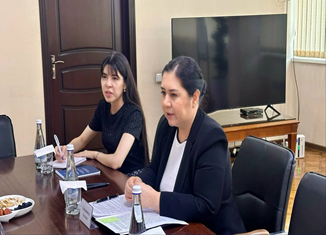
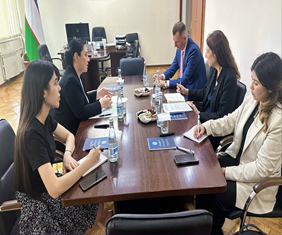
On June 12, 2024, Authorized Person of the Oliy Majlis for Human Rights (Ombudsman) F. Eshmatova met with Matilda Bogner, Head of the Regional Office for Central Asia of the Office of the United Nations High Commissioner for Human Rights (OHCHR), and Pavel Bialik, Human Rights Advisor of the Regional Office for Central Asia of the Office of the United Nations High Commissioner for Human Rights.
The meeting discussed prospective plans to ensure human rights. In particular, opinions were exchanged on a number of proposals to support NGOs and civil society, prevent cases of torture and domestic violence.
The meeting was held in a constructive and friendly spirit.
KAZAN FORUM: ISLAMIC WORLD – 2024.
Within the framework of KAZAN FORUM: Islamic World – 2024 the Republic of Tatarstan met a large number of distinguished guests from different parts of the world. Representatives from 79 countries came to Kazan to exchange experiences and open dialogue.
The Commissioner for Human Rights in the Republic of Azerbaijan Sabina Aliyeva was invited to these events. The program of our meeting was full. We met with representatives of the association of women deputies of the State Council of the Republic of Tatarstan «Marham-Mercy». The Parliament of the Republic discussed issues of human rights and freedoms, protection of the family, motherhood and childhood, and further joint cooperation.
After that, we went to a meeting with representatives of the Regional Public Organization «Azerbaijan National and Cultural Autonomy of the Republic of Tatarstan» in the House of Friendship of the Peoples of Tatarstan. The meeting proved to be easy, cordial and casual, as if talking to old friends.
And judging by the ease and familiarity of our meeting – to stick together both peoples only in joy!
Within the framework of the forum there was an amazing opportunity to learn about the trends in the development of various areas, including those aimed at the protection of human rights. The richness and innovativeness of the activities cannot be overestimated.
OMBUDSMAN SABINA ALIYEVA SPOKE AT THE 11TH MEETING OF THE BOARD OF DIRECTORS OF THE OICOA IN MOROCCO.
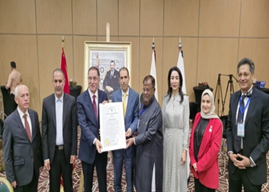
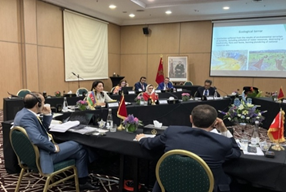
Sabina Aliyeva, the Human Rights Commissioner (Ombudsman) of Azerbaijan, participated in the 11th Meeting of the Board of Directors of the Organization of Islamic Cooperation (OIC) Ombudsmen Association (OICOA) held in Morocco.
During her speech at the event, attended by ombudspersons of other member states of the Association, the Ombudsman of Azerbaijan expressed her concerns about the impact of current global climate issues on the future of human rights. She emphasized the importance of expanding international cooperation in promoting environmental rights.
The Ombudsman highlighted the crucial role that national human rights institutions (NHRIs) play in bringing these issues into global attention and effectively addressing them.
Addressing the negative effects of armed conflicts on the environment, the Azerbaijani Ombudsman discussed the landmine problem that our country faces. She pointed out that mines buried during nearly thirty years of occupation pose threats to human life and health, create significant obstacles for the return of former IDPs to their native lands, which also require substantial financial resources for the restoration of destroyed infrastructure and ecosystems.
The Ombudsman noted that significant measures are being taken in Azerbaijan to address ecological problems. She spoke about the numerous state programs, strategies, national action plans, and other documents related to environmental protection that were approved and implemented.
S. Aliyeva said that 2024 has been declared the “Year of Solidarity for a Green World” in Azerbaijan and that the country will host the 29th session of the UN Climate Change Conference (COP29). She also added that within the framework of COP29, a “Baku Forum on Climate Change and Human Rights for Ombudspersons and NHRIs” will be held. Therefore, she invited members of the Association to participate in this event.