
OMBUDSMAN ANNOUNCES RESULTS OF DIRECT INVESTIGATION OPERATION INTO UNSUCCESSFUL DELIVERY OF ELECTRONIC TAX RETURNS.
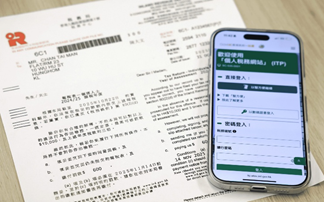
The Ombudsman, Mr Jack Chan, announced the completion of a direct investigation operation into the unsuccessful delivery of electronic tax returns submitted by members of the public to the Inland Revenue Department (“IRD”), with 18 improvement recommendations made to IRD. The IRD has accepted all the recommendations. Given the increasing prevalence of electronic tax returns, the service should be more efficient, convenient and reliable, said Mr. Chan.
The National 15th Five-Year Plan has dedicated a chapter to the advancement of digital China, proposing strategic planning to elevate the level of digital intelligence development and digital government infrastructure. The current-term Government of the Hong Kong Special Administrative Region is also committed to promoting digital government and smart city operations. IRD has actively promoted electronic filing of tax returns in recent years, encouraging the public to use its online platform, eTAX, for individual submission of tax returns. The prevalence of electronic filing is reflected by the continuous increase in the number of taxpayers opting for this service.
However, in 2025, after the deadline for filing individual tax returns for the 2024/25 year of assessment, there was an emerging number of taxpayers who had made submissions via eTAX reported to have been notified by IRD for non-receipt of their tax returns, and some taxpayers even received penalty notices for late filings.
Mr Chan said, “Given the increasing prevalence of electronic tax returns, the service should be more efficient, convenient and reliable. Yet, the cases of unsuccessful deliveries of electronic tax returns submitted by members of the public occurred time and again last year. As the electronic service is widely used, we are highly concerned that such a problem might cause an extensive impact on the public. Our investigation revealed that between May 2025 and January 2026, IRD did not receive the tax returns filed by over 33,000 taxpayers via eTAX using a digital signature completed with ‘iAM Smart’.”
IRD explained that the problem originated from an incomplete submission process. In short, after some users confirmed submitting their tax returns via eTAX, they were redirected to “iAM Smart” and digitally signed the document through the “iAM Smart” application, but they did not return to eTAX thereafter to complete the submission procedures. To this end, IRD pointed out that after completing the digital signature with “iAM Smart”, users must return to eTAX until a confirmation page showing a 16‑digit transaction reference number appears, indicating that the tax return submission process has been completed.
The investigation revealed that the wording on the submission and signature interface of eTAX was unclear, making it easy for users to mistakenly believe that successfully signing via “iAM Smart” within eTAX was equivalent to a successful submission of their tax returns. The large number of taxpayers affected clearly indicated that the problem was not merely due to operation errors of individuals. The incident caused a great deal of inconvenience to those affected. Apart from the need to resubmit their tax returns, several thousands of taxpayers were even subject to estimated assessments by IRD unilaterally, or penalties for late filing, and some were even prosecuted by IRD. However, IRD initially failed to take the initiative to contact the taxpayers affected to offer support. The incident not only caused distress to those taxpayers, but also resulted in extra workload for IRD staff, such as responding to enquiries and complaints, allaying the grievances of taxpayers, and processing applications for penalty waivers and objections to tax assessment. The significant amount of additional work had an adverse impact on the efficiency of public administration.
The Office also found that IRD had already received public reports on similar problems as early as 2022. IRD stated that it had explored with the Digital Policy Office (“DPO”) to identify areas of improvement in both parties’ systems, and that DPO revised the wording on the signature confirmation page of “iAM Smart” the following year. Unfortunately, the revised wording was still unclear and did not resolve the problem. When the problem emerged again in 2025, IRD was not initially alarmed and only suggested that taxpayers resubmit their tax returns upon receiving enquiries.
Following the Office’s intervention and urging for remedial and improvement measures, IRD was receptive to the recommendations and proactively liaised with the DPO to obtain records of digital signatures for analysis. Eventually, IRD identified all the taxpayers affected and implemented a series of measures before the bulk of individual tax returns for the 2025/26 year of assessment were issued, thereby preventing the problem from recurring. The Office urges IRD to learn from this incident, strengthen daily monitoring, and intervene early and decisively when noticing irregularities that may have extensive implications to ensure that the electronic filing service is convenient and at the same time more reliable and more trustworthy.