
Category Archives: Related Links
OMBUDSMAN PROBES REGULATION OF LICENSED SWIMMING POOLS BY FOOD AND ENVIRONMENTAL HYGIENE DEPARTMENT

The Ombudsman, Ms Winnie Chiu, announced the launch of a direct investigation to examine the regulation of licensed swimming pools by the Food and Environmental Hygiene Department (“FEHD”).
As at June 2022, there were 1,371 licensed swimming pools across the territory. The Swimming Pools Regulation under the Public Health and Municipal Services Ordinance stipulates that licensees shall comply with the Regulation and licensing conditions imposed by the Director of Food and Environmental Hygiene, which include ensuring that the equipment and water quality of the pool are maintained to the prescribed standards, and that a sufficient number of qualified life-saving attendants are on duty during the opening hours of the pool. The FEHD regulates licensed swimming pools by conducting routine inspections and handling relevant complaints so as to safeguard public health and safety.
There have been media reports from time to time on drowning accidents in licensed swimming pools. The Office’s preliminary inquiries found that the FEHD has not put in place a notification mechanism for accidents that occur in licensed swimming pools. Unless an accident has been reported by the media or made known through other means, the FEHD would not learn of a serious accident in a swimming pool under its regulation. Furthermore, between 2017 and June 2022, the FEHD received 470 complaints related to licensed swimming pools.
Ms Chiu said, “As the licensing authority, the FEHD has the responsibility to ensure that licensed swimming pools comply with the Regulation and licensing conditions, especially those pertaining to swimmers’ safety. If the FEHD has no idea about whether a serious accident has occurred in a licensed swimming pool, it can hardly conduct investigation or take follow-up actions to find out if the licensee has breached the Regulation and rectified the problem(s), and to review whether the licensing conditions are appropriate. Therefore, I have decided to launch a direct investigation to probe the FEHD’s regulation of licensed swimming pools, including the Department’s mechanism for approving applications for a new swimming pool licence and licence renewal, as well as its procedures for inspecting swimming pools and complaint handling. We would also examine the adequacy and effectiveness of the FEHD’s current measures for ensuring hygiene of swimming pools and protecting swimmers’ safety. Recommendations for improvement would be made where necessary.”
The Ombudsman is collecting information and views on the above topic. Members of the public can provide information and their views in writing to the Office of The Ombudsman by 28 March 2023.
LAUNCH OF TRAINING PLAN FOR UNIVERSITY STUDENTS “UNI PROJECT”
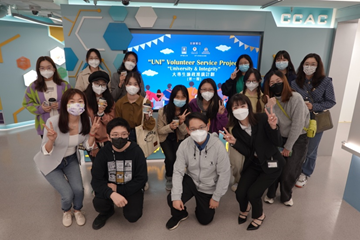
In order to enhance local tertiary students’ awareness of integrity, the CCAC, for the first time, launched the “UNI Volunteer Project” – Integrity Promotion Plan for Tertiary Students (“UNI” stands for “University and Integrity”) in collaboration with the Moon Chun Memorial College of the University of Macau. The CCAC provides the trainees with professional training and opportunities to participate in integrity promotion work in order to broaden their horizons and exert young people’s strength to promote integrity.
THE NEXT AWARENESS RAISING EVENTS DEDICATED TO THE RIGHT OF ACCESS TO INFORMATION WERE HELD IN MASALLI AND LANKARAN
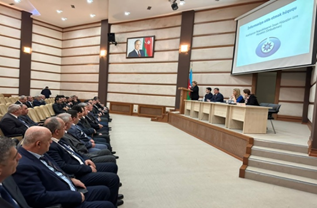
The Office of the Commissioner for Human Rights (Ombudsperson) of the Republic of Azerbaijan organized the next educational events related to the protection of the right of access to information in Masalli district and Lankaran city.
The events were attended by representatives of information holding local executive power, law enforcement agencies, education departments and other state institutions.
Lamiya Zeynalova, head of the Department of Protection of the Right to Access to Information of the Ombudsman’s Office, and other employees during their speeches gave information on execution of the function of supervision over the fulfillment of the duties of information holding state bodies, local self-government bodies and officials arising from the requirements of the Law of the Republic of Azerbaijan “On Access to Information”. The participants of the event were also informed about the history of the right of access to information and the international documents available in this field.
Later, a presentation was displayed on the topic, detailed information was given about the duties of information owners and the rights of requesters, as well as other articles of the Law. In addition, a video on the right to access information was displayed.
At the events, it was also emphasized that complaints related to cases of violation of the requirements of the Law “On Access to Information” are promptly investigated within the powers of the Commissioner, inquiries are sent to relevant competent institutions to eliminate violations and protocols are drawn up.
In the end the questions of the participants were responded to and booklets on ensuring the right of access to information were distributed.
INTERACTION AND COOPERATION IN THE FIELD OF RELIABLE PROTECTION OF HUMAN RIGHTS AND FREEDOM
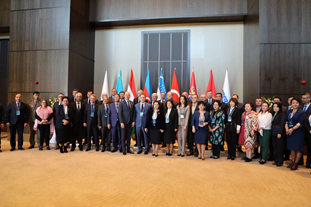
On February 23 this year, an international conference was held on the topic “Interaction and cooperation in the field of reliable protection of human rights and freedom” in connection with the 28th anniversary of the establishment of the institution of the Authorized Person of the Oliy Majlis for Human Rights (Ombudsman) at the Congress Center of the “Silk Road Samarkand” complex in the city of Samarkand.
The main purpose of the event dedicated to the 28th anniversary of the Ombudsman is to exchange experience with the Ombudsmen of foreign countries, national institutions, competent state bodies and international organizations in ensuring human rights and freedoms, strengthening cooperation in protecting the interests of our compatriots working in foreign countries.
The conference was organized by the Authorized Person for Human Rights of the Oliy Majlis (Ombudsman) in collaboration with OSCE Project Coordinator in Uzbekistan, USAID Legal Reform Program. The conference was attended by representatives of national human rights institutions, international associations and the diplomatic corps of about 20 foreign countries, including the ombudsmen of Portugal, Serbia, Hungary, Turkey, Azerbaijan, Russia, Thailand, the Kingdom of Morocco, Kazakhstan, Tajikistan, Kyrgyzstan. The event was also attended by members of the Senate of the Oliy Majlis and deputies of the Legislative Chamber, representatives of the Constitutional Court, the Supreme Court, the Prosecutor General’s Office, the Ministry of Foreign Affairs, the Ministry of Internal Affairs, the Ministry of Justice, the National Center of the Republic of Uzbekistan for Human Rights and a number of state organizations, members of the commission under the Authorized Person of the Oliy Majlis for Human Rights (ombudsman), representatives of civil society institutions, as well as the media.
The word ombudsman is understood all over the world as a “defender of human rights”. The main task of the ombudsmen is to inform the government about the problems that exist in society in the field of human rights, based on the analysis of citizens’ appeals. The relevant organizations, following the recommendations of the Ombudsman, increase the efficiency of their activities by eliminating shortcomings in the system. At present, ombudsman institutions have been introduced in almost 180 countries of the world.
On February 23, 1995, the Ombudsman institution was introduced in Uzbekistan as one of the first among the CIS countries. Over the past period, the Authorized Person of the Oliy Majlis for Human Rights (ombudsman) has taken a worthy place in protecting the rights and freedoms of citizens, including those held in closed institutions with limited freedom of movement. More than 20 memorandums of cooperation have been signed with national human rights institutions in a number of foreign countries. The Ombudsman has become amember of such international associations as the International Ombudsman Institute, the European Ombudsman Institute, the Asian Ombudsman Association, the Association of Turkic Speaking Countries and National Human Rights Institutions, and the Eurasian Ombudsman Alliance.
In addition, since 2022, in accordance with the relevant Decree of the President of the Republic of Uzbekistan, regional representatives of the Ombudsman have begun their activities on an ongoing basis. This made it possible to quickly ensure the protection of citizens, save time and costs for their arrival at the center, promptly study applications on the spot, and increase the number of monitoring visits.
The international conference was divided into sessions. Topical aspects of protecting the rights of women and youth, persons with disabilities and persons held in penitentiary institutions, as well as issues of mutual cooperation of the Ombudsman with state bodies and representatives of civil society were discussed.
In the first session, the participants of the international event got acquainted with the best practices for respecting the rights of women, youth and ensuring their interests.
It was noted that ensuring equal opportunities in the exercise of human rights and freedoms, creating sufficient conditions for persons with disabilities is one of the topical issues. In the course of its activities, the Ombudsman pays special attention to the appeals of persons with disabilities. Based on the analysis of appeals, in 2022, at the initiative of the Authorized Person monitoring studies of the conditions created for persons with disabilities in public places and ensuring the rights of prisoners (convicts) who cannot move freely due to their disability were studied, parliament and relevant state authorities were provided with information on the identified shortcomings.
In 2022, the Ombudsman and public groups made 381 (in 2020 – 76, in 2021 – 177) monitoring visits to places of detention of persons with limited freedom of movement. They conducted collective and individual interviews with more than 6,000 convicts (prisoners) and 1,657 convicts (prisoners), respectively. Representatives of the public and the media participated in these monitoring visits as well.
As part of the event, memorandums on bilateral cooperation were signed between the Ombudsmen of Hungary, Serbia and the Authorized Person of the Oliy Majlis for Human Rights (ombudsman).
ACRC CONDUCTED AN INTEGRITY PERCEPTION SURVEY OF 1,925 STUDENTS AT 97 MIDDLE AND HIGH SCHOOLS TO UTILIZE THE RESULTS IN FORMULATING ANTI-CORRUPTION POLICIES TO IMPROVE PERCEPTIONS OF THE FUTURE GENERATION
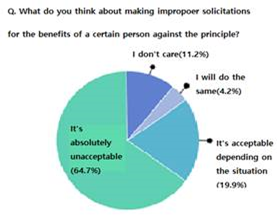
The result of a survey of 1,925 middle- and high-school students in the country on their perceptions of acts of improper solicitations for benefits of a certain person against the principle found that 64.7% of the students said “absolutely unacceptable”.
In addition, the greatest proportion of the students responded that strict detection and punishment of unfair acts are necessary to improve an awareness of integrity.
Anti-Corruption and Civil Rights Commission (ACRC, Chairperson Jeon Hyun-Heui) surveyed 1,925 students in 97 middle and high schools in the country on their integrity perceptions, etc. in order to establish anti-corruption policies reflecting perceptions of the future generation. The survey was conducted by an opinion research company, Hyundai R&C, for ACRC, with a margin of error of plus or minus 2.62%p at a 95 percent level of confidence.
ACRC asked students questions regarding their perceptions of a general level of corruption and fairness in our society and a few representative types of corrupt acts, such as improper solicitations, privileges given or accepted due to personal connections, and the private use of confidential information acquired in the course of performing duties, and collected their opinions by giving them detailed examples of acts they can encounter during their school life.
First, as for questions asking their perceptions of the level of corruption and fairness in the society, 49.8% of the students responded the society is corrupt (61.1% in 2020) and 45.3% said unfair (56.7% in 2020), indicating that the perceptions of the youth have been greatly improved compared to 2020.
Second, with regard to a question asking perceptions of different types of corrupt acts, students who said acts of improper solicitations for benefits of a certain person against the principle are “absolutely unacceptable” took up the biggest proportion at 64.7%, followed by students who said “acceptable according to circumstances (19.9%) and those who said “I will do the same (4.2%)”.
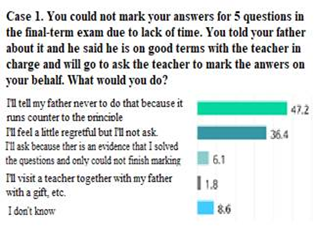
Regarding an exemplary case 1 suggested in the survey where a student could not mark answers on his/her answer sheet due to lack of time and his/her father asked a teacher to whom he/she has been close to mark the answers on behalf of his/her child, students who said “I will tell my father never to do it” stood at 47.2%, the highest, followed by those who said “I would feel a little regretful but will not ask my father (36.4%)”, “I will ask my father to make solicitations since there is an evidence that I solved the questions and only could not finish marking (6.1%)”, and “I will visit a teacher together with my father with a gift, etc. (1.8%)”, indicating the highest proportion of students (83.6%) responded they “will not make improper solicitations (never do it + will not ask)” where detailed exemplary cases are suggested.
< Perceptions of Improper Solicitations / Examplary Cases>
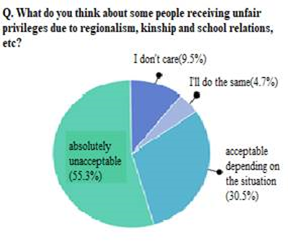
Regarding privileges being provided for some people due to regionalism, kinship and school relations, etc. 55.3% of the students surveyed answered “absolutely unacceptable”, 30.5% said “acceptable depending on the situation”, and 4.7% said “I will do the same.”
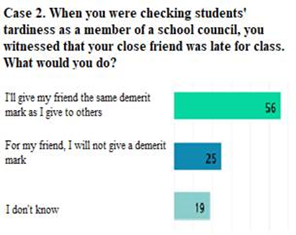
As for the case 2 where you noticed your close friend was late for class when you were checking students’ tardiness as a member of a student council, the highest rate of students surveyed responded “I
< Perceptions of Privileges Offered/Received Due to Personal Relations / Case >
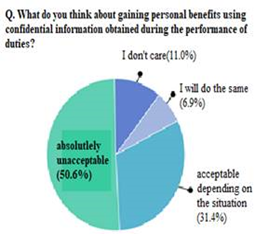
In respect of a question asking peceptions of the use of confidential information acquired during the performance of duties for private benefits, the students who said “absolutley unacceptable” stood at 50.6% while 31.4% and 6.9% said “acceptable depending on the situation” and “I will do the same,” respectively.
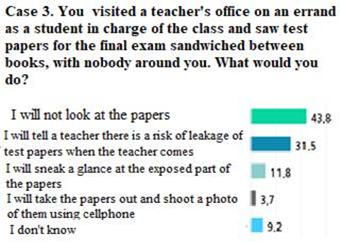
When students were suggested a case where they saw final-term test papers in teachers’ office as a person in charge of the class, students who answered they would not look at the paper took up the highest proportion of 43.8%, followed by those who said “I will tell a teacher that there is a risk of leakage of test papers (31.5%)”, “I will sneak a glance at exposed part of the papers (11.8%)”, “I will take a photo of test papers using my cellphone secretly (3.7%),” indicating that the proportion of
students who responded “I will not use duty-related confidential information for personal benefits
(I will not look + will tell a teacher)” was very high at 75.3%.
< Perceptions of Private Use of Duty-Related Confidential Information >
On the other hand, regarding what we need most to raise an awareness of integrity, the proportion of the youth who selected “strict detection and punishment of illegal acts (43.7%)” was the highest, followed by those who picked “taking an initiative and setting an example by adults (24.9%)” and “cultivation of a sense of community (17.5%)”.
Director General of the Anti-Corruption Bureau of the ACRC, Han Sam-Seok, said, “The ACRC will actively promote integrity and anti-corruption training, etc. for the youth, leaders of the future generation, to be able to feel the importance of integrity.”
OFFICE OF THE OMBUDSMAN ANNOUNCES RESULTS OF DIRECT INVESTIGATION INTO GOVERNMENT’S REGULATION OF ILLEGAL OCCUPATION OR OBSTRUCTION OF STREETS BY GOODS AND MISCELLANEOUS ARTICLES

The Ombudsman, Ms Winnie Chiu, announced at a press conference the results of the direct investigation into the Government’s regulation of illegal occupation or obstruction of streets by goods and miscellaneous articles, identifying three major areas for improvement; namely enforcement actions, inter-departmental joint operations and the complaint referral mechanism.
The investigation by the Office of The Ombudsman revealed that the Food and Environmental Hygiene Department (FEHD) enforcement actions were ineffective in curbing irregularities. As a result, in some street obstruction black spots with frequent inspections, the enforcement figure was not high but the obstruction of streets persisted. There was also a several fold variation in the FEHD’s inspection and enforcement statistics on different black spots, reflecting possible inconsistencies in the intensity of inspection and enforcement by different District Environmental Hygiene Offices. Moreover, the existing penalty is inadequate to deter repeated offenders and serious cases such as large-scale occupation of pavement areas by goods and miscellaneous articles.
The Office considers that the FEHD should use various data, including number and types of shops and past statistics on inspection and enforcement, as parameters for an holistic analysis in order to formulate effective plans for inspection and enforcement. The FEHD should also step up the monitoring at the central level of the arrangements for inspection and enforcement as well as resource utilisation across District Environmental Hygiene Offices, and identify any marked discrepancies requiring adjustment. To increase the non-compliance cost of street obstructions and for more effective control over repeated and persistent offenders, the Environment and Ecology Bureau and the FEHD should review comprehensively the existing penalties under the law, including raising the maximum penalty imposed by means of summons and the level of fixed penalty, and favourably exploring the introduction of a progressive penalty system under the fixed penalty provision.
On the other hand, in recent years, the FEHD and the Police have been progressively conducting joint operations in various districts. Apart from prosecuting offenders, they have seized and confiscated goods or miscellaneous articles in public places to strengthen the deterrent effect. The Office considers that the authorities should explore the feasibility of empowering FEHD staff to remove, seize and detain goods and miscellaneous articles causing illegal occupation or obstruction of streets, so as to allow greater flexibility in enforcement planning and better use of the Police’s manpower.
The investigation also revealed that when following up on cases of unauthorised occupation by high-mobility articles, the Lands Department (LandsD) merely focused on making referrals to other law enforcement departments without rendering assistance to them from the perspective of tackling illegal occupation of government land. Moreover, the LandsD’s enforcement figures on shop front platforms, which are among its major enforcement targets, has been on a downward trend in recent years. In this regard, the LandsD should establish a co-ordination mechanism enabling other departments to seek its assistance where necessary, and step up its enforcement against unauthorised extensions of business areas with shop front platforms.
District Offices under the Home Affairs Department (HAD) organise inter-departmental joint operations on a need basis. The investigation reveals that the practices of and the number of joint operations conducted by different District Offices varied considerably. While some District Offices organised over 100 joint operations over the past few years, some did not organise any operations in the same period. Furthermore, a case study reveals that even though the District Office concerned attempted to organise joint operations, the situation remained a stalemate when the District Office was unable to resolve expeditiously departments’ disputes on their enforcement responsibilities.
The Office reckons that the HAD should supervise District Offices with regards to a more active performance of their role in co-ordinating district affairs and problem solving among departments, and encourage other departments to make good use of their co-ordinating role, so as to ensure timely handling of inter-departmental cases of illegal occupation or obstruction of streets by goods and miscellaneous articles. As for unsettled irregularities or unresolved disputes on enforcement responsibilities after District Offices’ intervention, the HAD should decisively escalate the matter to the Steering Committee on District Administration (note) for early consensus building through high-level negotiation. At the same time, the Steering Committee on District Administration should favourably consider establishing a standing mechanism at the central level to regularly review completed inter-departmental cases requiring a longer processing time in various districts, with a view to ascertaining whether systemic issues are involved, and making improvements where necessary.
Complaints about illegal occupation or obstruction of streets are mainly received by 1823, which could refer most of the complaints to the appropriate departments for follow-up under the prevailing mechanism. Nevertheless, for cases with unclear demarcation of responsibilities, 1823 could only mediate between the departments with no power to instruct any of them to take follow-up actions. This was inevitably inefficient and cumbersome. The Office had earlier launched a direct investigation to examine the effectiveness of 1823 in handling complaints and enquiries, and will include the above observations in the investigation and explore improvement measures.
Ms Chiu said, “Illegal occupation or obstruction of streets by goods and miscellaneous articles has been an issue of wide public concern. The Office receives a large number of related complaints every year. We are pleased that the Government has earlier set up the District Matters Co-ordination Task Force, led by the Deputy Chief Secretary for Administration, to tackle illegal occupation or obstruction of streets more effectively by launching the Government Programme on Tackling Hygiene Black Spots and reviewing the existing penalties, and more, coupled with continuous education and publicity. The Office believes that, under the Task Force’s leadership, various departments can handle the problem more systematically. The Office hopes that the relevant bureaux and departments can implement our recommendations promptly so as to further enhance the effectiveness of regulation and enforcement.”
The Ombudsman has made 14 recommendations to the Government. Details can be found in paragraph 6.46 of Chapter 6 of the investigation report. The relevant bureaux and departments have generally accepted the Office’s recommendations.
The full investigation report has been uploaded to the website of the Office of The Ombudsman at www.ombudsman.hk for public viewing.
Note: Chaired by the Permanent Secretary for Home and Youth Affairs and comprising directorate officers of departments, the Steering Committee on District Administration is a standing inter-departmental co-ordination platform tasked to tackle district affairs such as street management issues, including environmental hygiene problems, illegal occupation of Government land and street obstruction by shops.
SABINA ALIYEVA PARTICIPATED IN THE INTERNATIONAL CONFERENCE ORGANIZED BY THE UZBEKISTAN OMBUDSMAN INSTITUTE
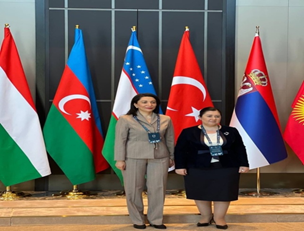
The Commissioner for Human Rights (Ombudsman) of the Republic of Azerbaijan Sabina Aliyeva participated in the international conference “Joint action and cooperation in the field of reliable protection of human rights and freedoms” held in the city of Samarkand, Uzbekistan, upon the invitation of the Commissioner for Human Rights (Ombudsman) of the Supreme Assembly of the Republic of Uzbekistan Feruza Eshmatova.
During her speech at the conference, S. Aliyeva gave extensive information about the activities of the Azerbaijani Ombudsman Institute. It was noted that the protection of the rights of everyone under the jurisdiction of the Republic of Azerbaijan, including children, women, persons with disabilities, the older people, as well as other vulnerable groups, without any discrimination, is one of the main directions of the Ombudsman’s activities.
Stating that she attaches special importance to international cooperation, the Ombudsman brought to the attention of the participants that more than twenty agreements of cooperation were signed with ombudsmen of foreign countries, national human rights institutions and international human rights organizations. S. Aliyeva emphasized the importance of studying international experience in various fields of human rights and strengthening cooperation in this regard.
Later, the Ombudsman gave information about the reports, as well as statements and appeals prepared based on the materials collected within the framework of the fact-finding missions carried out during the war and post-war periods.
The Ombudsman of Azerbaijan brought to the attention of the conference participants that Armenia, which massively polluted our territories with mines during the occupation, continues to commit environmental crimes and mine terrorism. She added that as a result of illegal exploitation and looting of our country’s natural resources by Armenia, serious damage was caused to the environment, and international structures have not yet taken any measures on this issue.
In the end, the Ombudsman wished success to the work of the conference and expressed her confidence that this event will make an important contribution to the effective protection of human rights and freedoms in and the strengthening of mutual cooperation between Azerbaijan and Uzbekistan, as well as other Turkic states.
The Commissioner for Human Rights (Ombudsman) of the Republic of Azerbaijan Sabina Aliyeva participated in the international conference “Joint action and cooperation in the field of reliable protection of human rights and freedoms” held in the city of Samarkand, Uzbekistan, upon the invitation of the Commissioner for Human Rights (Ombudsman) of the Supreme Assembly of the Republic of Uzbekistan Feruza Eshmatova.
During her speech at the conference, S. Aliyeva gave extensive information about the activities of the Azerbaijani Ombudsman Institute. It was noted that the protection of the rights of everyone under the jurisdiction of the Republic of Azerbaijan, including children, women, persons with disabilities, the older people, as well as other vulnerable groups, without any discrimination, is one of the main directions of the Ombudsman’s activities.
Stating that she attaches special importance to international cooperation, the Ombudsman brought to the attention of the participants that more than twenty agreements of cooperation were signed with ombudsmen of foreign countries, national human rights institutions and international human rights organizations. S. Aliyeva emphasized the importance of studying international experience in various fields of human rights and strengthening cooperation in this regard.
Later, the Ombudsman gave information about the reports, as well as statements and appeals prepared based on the materials collected within the framework of the fact-finding missions carried out during the war and post-war periods.
The Ombudsman of Azerbaijan brought to the attention of the conference participants that Armenia, which massively polluted our territories with mines during the occupation, continues to commit environmental crimes and mine terrorism. She added that as a result of illegal exploitation and looting of our country’s natural resources by Armenia, serious damage was caused to the environment, and international structures have not yet taken any measures on this issue.
In the end, the Ombudsman wished success to the work of the conference and expressed her confidence that this event will make an important contribution to the effective protection of human rights and freedoms in and the strengthening of mutual cooperation between Azerbaijan and Uzbekistan, as well as other Turkic states.