Category Archives: Related Links
WAFAQI MOHTASIB OPENS WEBINAR ON INFORMAL RESOLUTION OF DISPUTES (IRD)
OVER 1800 CASES WERE RESOLVED IN ONE YEAR THROUGH MEDIATION AND CONCILIATION
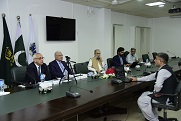
Wafaqi Mohtasib Secretariat organized a Webinar on Informal Resolution of Disputes (IRD): Pakistan’s Experience from the platform of Asian Ombudsman Association (AOA) on 14th June 2023. Inaugurating the Webinar, Wafaqi Mohtasib Mr. Ejaz Ahmad Qureshi highlighted the main features of the IRD system in administering free and expeditious justice to the general public through mediation and conciliation without the necessity of docketing any complaint or issuing any official notice. He stated that the Wafaqi Mohtasib’s institution being a Poor man’s court, was addressing complaints of maladministration by Federal agencies in large numbers. Mr. Qureshi said that the IRD initiative adds value to the services of this institution in addressing issues of maladministration and promoting thereby good governance, the rule of law and the fundamental freedoms.
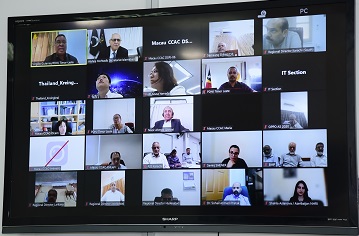
Addressing the participants, Wafaqi Mohtasib Mr. Ejaz Ahmad Qureshi added that the IRD mechanism involves resolution of disputes through mediation and persuasion rather than a decision arrived at through following a strict process or procedure. He emphasized that the IRD system responds to the dire needs of the general public for resolution of disputes at grass roots level without hiring the services of an advocate or waiting for lengthy legal processes. Mr. Qureshi stated that from April 2022 till today, 1911 complaints were received under IRD out of which 1837 have been resolved while 74 are under process.
The Webinar was attended by over 70 participants representing member institutions of the Asian Ombudsman Association including Azerbaijan, Thailand, Malaysia, Indonesia, Japan and other countries. It was also attended by the representatives of Ombudsman institutions functioning in the country including Provincial Ombudsman Sindh, Banking Mohtasib, Federal Tax Ombudsman and the Regional Offices of the Wafaqi Mohtasib Secretariat. The Webinar was addressed by Mr. Shahzar Ilahi, Associate Director, MICADR Centre for Arbitration and Dispute Resolution in Pakistan. Mr. Justice M. Raza Khan, formerly Chief Justice KPK High Court and the Federal Secretary, Law and Justice Division spoke about the practices and procedures of IRD in the context of Wafaqi Mohtasib’s institution.
Wafaqi Mohtasib Mr. Ejaz Ahmad Qureshi who is the current President of the Asian Ombudsman Association (AOA), further stated that the Webinar was part of the series of activities planned for promoting professionalism, cooperation and ombudsmanship in Asia and beyond. He offered that Pakistan remained ready to share its expertise and best practices on subjects of professional interest with members of other regional and international ombudsman associations.
PUBLIC DEFENDER MEETS WITH MEMBERS OF COUNCIL OF RELIGIONS
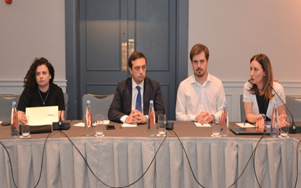
On May 30, 2023, Public Defender Levan Ioseliani met with members of the Council of Religions of the Public Defender of Georgia.
Those present at the meeting discussed challenges relating to the protection of the rights of religious minorities and spoke about the need to implement the recommendations developed by the Public Defender and the Council of Religions in order to strengthen the tolerant culture.
The Public Defender emphasized the importance of the activities of the Council of Religions and confirmed his full support to the members of the Council.
COOPERATION BETWEEN THE OMBUDSMEN OF UZBEKISTAN AND HUNGARY IN THE FIELD OF PROMOTION AND PROTECTION OF HUMAN RIGHTS.
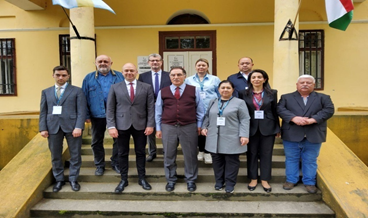
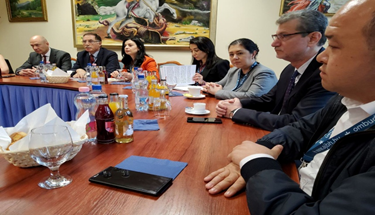
Authorized Person of the Oliy Majlis for Human Rights Feruza Eshmatova is currently in the Republic of Hungary on a working visit. A number of meetings are scheduled for May 16-19 within the framework of the first official conference of the heads of the Ombudsman institutions and national human rights institutions, organized by the Commissioner for Fundamental Rights of the Republic of Hungary Akos Kozma.
On May 16, 2023, members of the delegation consisting of representatives of the ombudsman institutions of the Republic of Uzbekistan, Turkey, Azerbaijan and Kazakhstan met with the Chairman of the Constitutional Court of the Republic of Hungary. The Hungarian Constitutional Court, composed of 15 judges, was established in 1990. During the meeting, the chairman of the court, introducing the guests to the activities of this institution, also touched upon a number of powers of the ombudsman institution. According to him, the Hungarian Ombudsman has the right to apply to the Constitutional Court in case of gross violations of the law in the interests of human rights. The Authorized Person of the Oliy Majlis of the Republic of Uzbekistan for Human Rights also has this authority.
On the same day, the Ombudsmen also met with the head of the National Prison Service of the Republic of Hungary. In Hungary, it is known that closed institutions such as penitentiaries and pre-trial detention centers operate independently of the Ministry of the Interior. At the meeting, information was given about the conditions created for convicts and prisoners, their training in professions, involvement in useful work, innovative technologies being introduced into practice.
The meeting reviewed the experience and results achieved by the countries of Uzbekistan, Azerbaijan, Turkey and Kazakhstan in relation to monitoring visits to closed institutions with limited freedom of movement under the leadership of the Ombudsman within the framework of the National Preventive Mechanism.
More than 150 employees work in the central office of the Hungarian Ombudsman. Since March 2022, 6 regional offices of the Ombudsman have started working.
On the second day of the visit, the guests visited the regional office of the Hungarian Ombudsman in Debrecen, which has 10 employees. The attention of the delegation was drawn to the creation in this department of a separate department for working with appeals from people with disabilities.
Also at the meetings, an exchange of experience took place regarding the role of ombudsman institutions in ensuring the rights of refugees and socially vulnerable groups of the population, as well as cooperation between national human rights institutions and law enforcement agencies.
HOLDING THE AWARDS CEREMONY OF PANEL OF ADVISORS FOR TEACHING MATERIALS CUM THEMATIC SHARING SESSION.
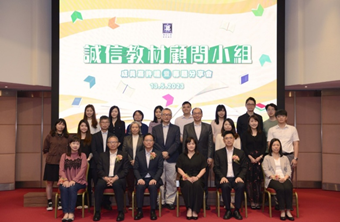
In the middle of May, the CCAC held the Awards Ceremony of “Panel of Advisors for Teaching Materials on Integrity of the CCAC” cum Thematic Sharing Session to award the members of the panel of advisors for writing, scrutinising and teaching trial lessons for the teaching materials for the CCAC. During the ceremony, it invited an expert representative of the members of the panel of advisors to discuss with the individuals of the education sector on the topic of “Integrity Education for Teenagers in the Era of Artificial Intelligence – Opportunities and Challenges”. Through this activity, it hopes to connect the education workers of Macao and continuously improves the integrity education work for teenagers.
OMBUDSMAN OFFICE ORGANIZED A SCIENTIFIC-PRACTICAL CONFERENCE DEDICATED TO THE NATIONAL LEADER HEYDAR ALIYEV.
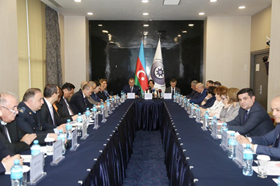
On 3 May, in Baku, a scientific-practical conference on the topic “The National Leader Heydar Aliyev and the Development of Human Rights in an Independent Azerbaijan”, dedicated to the 100th anniversary of the Great Leader Heydar Aliyev, was organized by the Ombudsman’s Office.
Opening the conference, the Ombudsman said that as a result of the initiative, attention, and concern of the Great Leader Heydar Aliyev, as a part of ensuring the implementation of those documents, comprehensive measures were implemented to improve human rights protection mechanisms in our country.
For the further information see the link https://bit.ly/3BaiN3E
INSTITUTIONAL BLIND SPOTS IN THE MANAGEMENT OF PUBLIC FINANCIAL LEAKAGE TO BE REMOVED BY PREVENTING FALSE CLAIMS FOR PUBLIC FUNDS.
ACRC held workshops for local government officers in charge of audit and subsidy project affairs
Three years on from the Implementation of the Public Fund Recovery Act … ACRC shared achievements and discussed ways to prevent public fund leakage
Local governments across the nation were provided with a venue for communication to share the achievements made in the course of the implementation of the Act on the Prohibition of False Claims for Public Funds and Recovery of Illicit Profits (herein after referred to as the “Public Fund Recovery Act”) for the last three years and to address the institutional blind spots of the public fund management.
The Anti-Corruption and Civil Rights Commission (ACRC, Chairperson Jeon Hyun-hui) held last month the workshop for improvement in transparency in public fund management and reinforcement of management capacity for officers from 203 local governments*, who are in charge of affairs related to audit and subsidy administration, at the Korea Press Center.
*local governments that received ACRC recommendations for implementation of illicit profit recovery rules in accordance with the fact-finding inspection result of Feb. 2023
During the workshop, the ACRC explained major provisions of the Public Fund Recovery Act, sharing the experience of the implementation of the Act over the last three years and discussing in depth measures to prevent subsidy frauds, including oil subsidies and public direct payments for agriculture and rural communities.
As the eradication of false claims for public funds is a matter that requires the government-wide cooperation, the ACRC invited officials of the Korea Fiscal Information Service, an affiliated organization under the Ministry of Finance and Economy, and the Ministry of Interior and Safety that are in charge of the administration of central and local government subsidies to the workshop for training regarding cases of subsidy frauds and responses.
With its 1st workshop held in Seoul, the Commission plans to organize workshops by region, making necessary adjustments to the scope of participants and the contents of training in accordance with needs of each institution.
The Public Fund Recovery Act was legislated in April 2019 to improve soundness and transparency in public finance and became effective in January 2020.
The Commission has distributed authoritative interpretation casebooks to public institutions for stable establishment of the public fund recovery system and improvement in the awareness of the general public and public servants and provided tailored education for officials in charge of the matter.
In addition, the Commission has been putting various efforts into eradicating subsidy frauds through stable implementation of the public fund recovery system, including distribution of promotional video and brochure to inform the general public of the system, fact-finding inspection of the status of recovery of payments from public finance by public institutions of various levels, and offering recommendations to public institutions found to have failed in administrating appropriate disposition of recovery and additional monetary sanctions.
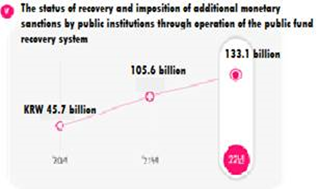 |
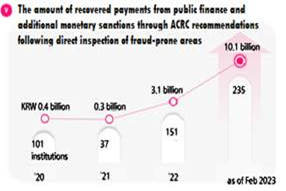 |
*the data for the status of imposition in 2022 is tentative and the finalized one is slated to be made public in the first half of 2023.
ACRC Chairperson Jeon Hyun-hui said, “Since the implementation of the Public Fund Recovery Act, we made some fruitful outcomes, such as increases in the amount of recovered payments from public finance and additional monetary sanctions and spread of the awareness of importance of eradication of subsidy frauds, thanks to the efforts put in by officials in charge at public institutions of various levels. The Commission will continue to faithfully manage the public fund recovery system, contributing to achieving the pan-governmental goal of sound fiscal management in cooperation with relevant agencies.”
THE OMBUDSMAN OF THE KINGDOM OF THAILAND AND THE ANTI CORRUPTION AND CIVIL RIGHTS COMMISSION OF THE REPUBLIC OF KOREA JOINTLY SIGN EXTENSION OF THE MOU.
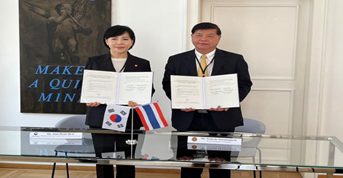
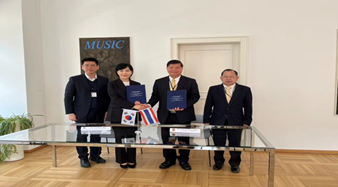
On 8 May 2023, the signing of the MOU on bilateral cooperation between the Chief Ombudsman of Thailand, Mr. Somsak Suwansujarit, and the Chairperson of the Anti-Corruption and Civil Rights Commission of the Republic of Korea, Ms. Jeon Hyun -Heui, took place at the Office of the Secretariat of the International Ombudsman Institute in Vienna, the Republic of Austria.
The MOU signing was the fourth extension of bilateral cooperation between the Ombudsman of Thailand and the Anti-Corruption and Civil Rights Commission of the Republic of Korea, which will be effective until 2028. This is to continue the collaborative activities that aim at jointly developing the complaint handling system, actively resolving difficulties and inconveniences encountered by their nationals, and promoting civil rights and acting in accordance with the prevailing laws and regulations of their countries.
After the signing of the MOU extension, the Chief Ombudsman (Mr. Somsak Suwansujarit) and Ombudsman of Thailand (Mr. Songsak Saicheua) attended a bilateral meeting with the Chairperson of the ACRC (Ms. Jeon Hyun-Heui) to discuss guidelines to holding future collaborative activities. Both sides decided to cooperate in order to create awareness of and access to the complaint handling system, through the public relation strategy of the embassies in their both countries. This is for the sake of finding solutions to the problems facing the people. Both parties also accepted to hold online meetings regularly to administer and discuss collaborations that will bring the two organisations closer together