Category Archives: Related Links
PERFORMANCE OF SPECIAL INVESTIGATION SERVICE IN GEORGIA
On June 27, 2023, First Deputy Public Defender Tamar Gvaramadze participated in the joint conference of the Special Investigation Service and the Council of Europe – “Ensuring the protection of victims’ rights and effective investigation of ill-treatment: the role of the Special Investigation Service”.
Tamar Gvaramadze spoke about the close cooperation between the Public Defender’s Office and the Special Investigation Service, noting that over the past year, the Office received detailed information about investigations into dozens of criminal cases, as well as terminated cases, and accessed investigation materials. “The thorough study of the cases showed that the investigations conducted by the Special Investigation Service mostly meet the standards of effective investigation, however, the Public Defender’s Office still identified certain problems that require attention.”
The First Deputy Public Defender also emphasized the need to change the legislative acts regulating the Special Investigation Service, noting that the expansion of the Service’s mandate to additional crimes and actions committed by any individual seriously reduced the agency’s focus on the fight against law enforcement impunity and that too broad jurisdiction might reduce the effectiveness of investigations and/or decrease attention to serious crimes. In addition, the recent legislative changes do not provide sufficient guarantees for effective investigation.
The one-year activity results of the Special Investigation Service, the draft strategy and the feedback received from the Council of Europe were also presented at the conference. In addition, the topics discussed included the strengthening of the victim-centered approach, witness protection process and measures to improve the rights situation of victims, effective participation of victims in the investigation of serious violations of human rights, as well as the investigation of crimes related to the violations identified by the European Court of Human Rights and the standards of new investigations launched, taking into account the practice of the Committee of Ministers, following the judgment of the European Court.
INFORMATION MEETINGS OF PUBLIC DEFENDER’S OFFICE ON EQUALITY ISSUES
In the period from March to June 2023, representatives of the Equality Department of the Public Defender’s Office held meetings with representatives of the city halls and city councils of the municipalities of Imereti, Guria, Samegrelo and Adjara, as well as teachers of public schools, private employers, representatives of civil society and members of the LGBT+ community.
The main topic of the meetings was the prohibition and prevention of sexual harassment. Other issues of discussion included equality and prevention of discrimination, the mandate and functions of the Public Defender as a mechanism for combating discrimination, and the role each group can play in the process of achieving equality in the country.
Public awareness raising meetings were carried out with the support of the Open Society Foundation project – “Supporting the Public Defender in the Fight against Far-Right Politics”, with the help of the Regional Division of the Public Defender’s Office. The mentioned meetings represent the continuation of the Public Defender’s educational activities on equality issues, the planning of which the Office will actively continue in the future.
AN EVENT WAS HELD IN THE REPUBLIC OF KARAKALPAKSTAN WITHIN THE FRAMEWORK OF THE OMBUDSMAN’S SCHOOL PROJECT AND THE OMBUDSMAN’S FIELD RECEPTION
Note 2 of Article 20 of the Law “On the Authorized Person of the Oliy Majlis of the Republic of Uzbekistan for Human Rights (Ombudsman)” states that the Authorized Person takes measures to increase awareness of citizens about laws, other regulatory legal acts and international treaties of the Republic of Uzbekistan, generally recognized principles and norms of international rights in the field of human rights and freedoms.
In addition, according to the Decree of the Head of State dated September 11, 2021 “On measures to improve the activities of the Authorized Person of the Oliy Majlis of the Republic of Uzbekistan for Human Rights (Ombudsman)”, as one of the most important tasks, the Ombudsman is called upon to ensure and protect the rights, freedoms and legitimate interests of the population, promote international and national legal norms in this area, as well as contribute to raising the legal awareness and legal culture of the population.
In this regard, the Ombudsman School project is being implemented throughout the country, aimed at raising the legal awareness of the population.
On June 20, 2023, in the Nukus region of the Republic of Karakalpakstan, the event “School of the Ombudsman” was held, dedicated to the issues of labor relations, the rights of women and children, as well as the reduction of poverty in the country.
It should be noted that the analysis of citizens’ appeals sent to the Authorized Person for Human Rights showed that the population is not aware of the ongoing reforms in our country to ensure human rights and interests, in particular, about the rights and privileges established for women, youth, the elderly, as well as persons with disabilities.
Based on the above, in the context of the regions, the Ombudsman Institute analyzed the appeals and selected areas where it is necessary to increase the legal awareness of the population.
The goal of implementing the Ombudsman School project is to raise public awareness of the fundamental changes in the field of protecting human rights and freedoms in our country. Because citizens do not know their rights well, they cannot properly claim them. As a result, cases of violation or evasion of the law may increase.
Activists of the region, women, girls and youth of the Nukus region took part in an open dialogue with the townspeople.
Within the framework of the event “School of the Ombudsman”, the Ombudsman’s field reception was held as well.
TRAINING WAS ORGANIZED BY THE OMBUDSMAN OFFICE IN NAKHCHIVAN
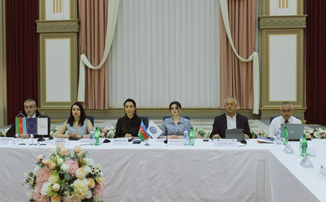
The Ombudsman of Azerbaijan, Sabina Aliyeva, participated in the training on the topic “The Protection of Rights of Migrants in Vulnerable Situations. Migration and Asylum Administration Monitoring Mechanism,” dedicated to the 100th anniversary of the National Leader Heydar Aliyev and June 18- Human Rights Day in Azerbaijan, held in Nakhchivan as a part of the “Support for the Implementation of the Mobility Partnership with Azerbaijan-MOBILAZE-2” Project.
During her opening speech at the event, attended by representatives of the Ombudsman Office of Azerbaijan, the State Migration Service, the Ombudsman Office of the Nakhchivan Autonomous Republic, and international experts, S. Aliyeva, said that during the period when the National Leader Heydar Aliyev led our independent state, special attention was paid to the provision of human rights and freedoms. The Ombudsman noted that the establishment of the Ombudsman institution in our country with the initiative of the Great Leader Heydar Aliyev is a manifestation of the attention paid to human rights and freedoms.
The Ombudsman stated that President Ilham Aliyev, as a successor of the political course of the National Leader, has always attached special importance to this field, and under his leadership, significant achievements have been made in the field of human rights in our country.
S. Aliyeva mentioned that during the previous period, important measures were implemented by the Ombudsman for the protection of migrants’ rights, their continuous integration into society, and the promotion of regular migration.
The Ombudsman noted that as a result of Armenia’s policy of occupation, nearly a million of our compatriots have lived as refugees and internally displaced persons for almost thirty years, and their rights and freedoms have been severely violated. S. Aliyeva highlighted that under the leadership of the Victorious Commander-in-Chief Ilham Aliyev, our territories were liberated by our Army, and the relevant UN Security Council Resolutions were implemented. She also said that the mine terror perpetrated by Armenia hinders the return of refugees and formerly displaced persons to their native lands and obstructs the full realization of their rights.
During the training, presentations were made by both local and international trainers on the role of the Ombudsman of Azerbaijan in the promotion and protection of the rights of migrants in vulnerable situations, the promotion and protection of the rights of migrants and asylum seekers, as well as other related topics, and an exchange of ideas was held with the participants.
THE OMBUDSPERSON RECEIVED THE CO-RAPPORTEURS OF THE PACE MONITORING COMMITTEE
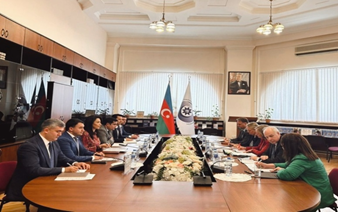
The Commissioner for Human Rights (Ombudsperson) of the Republic of Azerbaijan, Ms. Sabina Aliyeva, received Mr. Ian Liddell-Grainger and Ms. Liz Kristoffersen, the co-rapporteurs of the Parliamentary Assembly of the Council of Europe (PACE) Monitoring Committee. Mr. Kamal Jafarov, a member of the Parliament and the Azerbaijani delegation to PACE, also participated in the meeting.
During the meeting, S. Aliyeva gave broad information on the Ombudsman’s main activity directions in the field of protection of human rights and freedoms. The Ombudsperson spoke about the additions and amendments proposed to the Constitutional Law on the Commissioner for Human Rights (Ombudsperson) of the Republic of Azerbaijan regarding the broadening of the Ombudsperson’s mandate enshrined in the Constitutional Law in compliance with international best practices.
The Ombudsperson said that regular preventive visits are conducted to the places which persons cannot leave on their own will, together with the National Preventive Mechanism (NPM) Group. In addition, it was noted that annual reports about NPM activity have been published, and over 200 recommendations and suggestions for improving the legal framework have been reflected in the reports so far.
S. Aliyeva underlined that the protection of the rights of persons with disabilities, the elderly, children, refugees, former internally displaced persons, migrants, and other vulnerable groups of the population is always carefully approached.
The Ombudsperson stated that information about the fate of nearly 4,000 of our compatriots who went missing during the First Karabakh War has not been provided by Armenia to date. Furthermore, it was highlighted that Armenia carried out mine terrorism in the territories of Azerbaijan during the occupation period. It was also noted that the existence of the landmines delays the safe return to our liberated territories and seriously impedes the restoration and construction works there.
During the meeting, questions from the guests were answered, and a mutual exchange of ideas was conducted.
AN EDUCATIONAL OFFICE HAD HELD PAYMENT FOR SPECIAL NEEDS NANNIES. THE OMBUDSMAN SUGGESTED A PAYMENT SHOULD BE COMPENSATORY MADE FOLLOWING THEIR PRIMARY ENTITLEMENT.
The amount of 70 complainants – working as special needs nannies – had been affected by overdue payment from Songkla educational service area office during October – November 2018, which had caused them grievance.
The fact was discovered by the Ombudsman that they complained educational office had employed a special needs nanny as a monthly temporary worker, starting 1 April 2018 and ending 30 September 2018. Afterwards, the complained educational agency was informed the 62 qualified amount of special needs nanny as a temporary worker – that the agency was able to hire in the 2019 fiscal year – which were lessen about 10 positions comparing to the qualified amount of the 2018 fiscal year. Then, the agency delayed their action of employment and restarted the recruitment process of special needs nanny. The recruitment process ended and the employment began 26 November 2018. The employment contract ended 30 April 2019. Then, during the period of 1 October 2018 – 25 November 2019, none of special needs nannies was employed so there should be no payment made for special needs nannies during the aforementioned period.
However, the fact revealed that the special needs nannies had been actually on duty during the period of 1 October 2018 – 25 November 2018. Also, more discoveries were proved in the documents of other related offices that the action to reduce the special needs nanny’s hiring amount and the request to delay their employment were behind the end of employment contract. The Ombudsman had discussed with the complained and related offices to identify the solution in order to eliminate special needs nannies’ grievance. Additional point of fact was discovered in the discussion that the payment for special needs nanny as a temporary worker was usually approved retroactively while the employment contract had been constantly renewed for several years and the reduction of hiring amount in the 2019 fiscal year was unidentified beforehand.
RELEASE OF THE 2022 ANNUAL REPORT OF THE COMMISSION AGAINST CORRUPTION OF MACAO
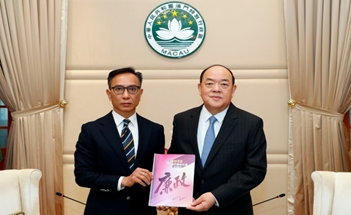
On 16th June, the 2022 Annual Report of the Commission Against Corruption of Macao was published in the Official Gazette of the Macao Special Administrative Region. Regarding ombudsman actions, last year the CCAC found that some public servants’ awareness of compliance with the principle of exclusivity, the duty of recusal, etc. seemed rather weak. Those who involved in all cases substantiated by investigation have already been subject to disciplinary sanctions by the respective departments. In addition, through intervention into the matters that widely concern the public, the CCAC co-operates with competent entities or departments to seek solutions, safeguard residents’ legitimate rights and interests and streamline administration work. Meanwhile, the CCAC continues to make good use of the “retrospective review” mechanism to continuously follow up the improvement and optimisation actions taken by relevant departments or entities through the review system. The Annual Report has been submitted to the Chief Executive, Ho Iat Seng,in accordance with the Organic Law of the Commission Against Corruption of the Macao Special Administrative Region. Summaries of some of the cases handled by the Anti-Corruption Bureau and the Ombudsman Bureau were included in the report.
(https://www.ccac.org.mo/en/news_details/article/liwvyxef.html)
THE OMBUDSMAN OF LAZIO VISITED PAKISTAN UPON INVITATION FROM PROVINCIAL OMBUDSMAN
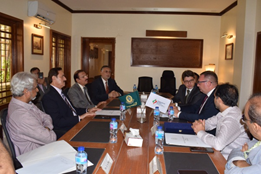
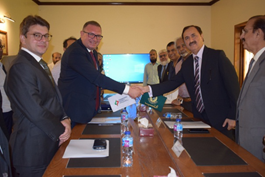
On Special invitation Mr. Ajaz Ali Khan, Honorable Ombudsman Sindh invited the Honorable Ombudsman of Lazio, Italy Mr. Marino Fardelli, who is also the President of the National Coordination council of Italian Civic Ombudsman and Mr. Danilo Giurdanella, Consul General of Italy in Karachi visit the office of Provincial Ombudsman Secretariat in Karachi on 12 th June, 2023. The honorable guest planted a sapling at Ombudsman office and was given a comprehensive briefing about the working of Provincial Ombudsman Secretariat by Mr. Ajaz Ali Khan.
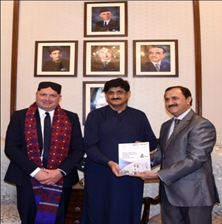
The honorable guest called on the Governor Sindh, Mr. Kamran Khan Tessori as well as Chief Minister Sindh Mr. Murad Ali Shah. The Governor welcomed and greeted the Honorable guests with great enthusiasm. The Provincial Ombudsman Sindh also presented the annual report 2022 to Chief Minister Sindh.
The distinguished guests also visited the Pakistan Institute of International Affairs (PIIA), where the visiting dignitary Mr. Marino Fardelli spoke about advancing of global justice and human rights and had a brief question answer session with the audience. The honorable Ombudsman Sindh Mr. Ajaz Ali Khan also spoke about achievements of Sindh Ombudsman office on the occasion.
A scrumptious dinner was hosted by Provincial Ombudsman for the honorable guest and the Italian Consul General at the Sindh Government Officers Club, which was an ideal way to cap off the hectic day of the visit.
GLOBAL SHARING OF KOREAN OMBUDSMAN EXPERIENCES
ACRC attended the International Ombudsman Institute (IOI)
Board of Directors’ meeting
Discussed and approved major issues, including IOI membership application and
financial status
Anti-Corruption and Civil Rights Commission (ACRC) attended the Board of Directors’ meeting of the International Ombudsman Institute (IOI) in her capacity as the Asian regional director, which was held on May 9 in Vienna, Austria, and engaged in discussions on major issues.
※ International Ombudsman Institute (IOI): A non-profit organization established in 1978 with 232 members from 125 countries, which aims to develop the system of ombudsman* and foster exchanges and cooperation among the ombudsmen worldwide. The Institute’s General Secretariat and Executive Committee are located in Vienna, Austria. The General Assembly and Board of Directors’ meeting are held on a four-year cycle and an annual basis, respectively.
* Ombudsman: the term refers to a mediator, arbitrator, and observer in Swedish, originating from the establishment of the Ombudsman in Sweden in 1809, which oversees legal compliance by the Judiciary and public officials from the Executive branch as representatives of the Parliament.
23 directors (ombudsmen) from 6 regions—Africa, Asia, Australasia, the Caribbean and Latin America, Europe, and North America—attended the meeting and engaged in discussions on a wide range of agenda items.
The major agenda items included assessment of membership applications, financial matters, including the Audit Report 2021/2022 and external audit for 2023/2024, regional subsidies 2023/2024 and IOI crisis fund, and By-laws reform with regard to the loss of membership, membership applications, and decision without meeting.
An ACRC Official said, “ACRC will make every effort to enhance the accountability of the government and public officials to the citizens and earn the trust of the people by actively serving as the Ombudsman in Korea, protecting the rights and interests of the people. Moreover, the Commission will provide guidance for the advancement of Asian and international ombudsmen and take the lead in the international community by fostering cooperation and sharing experiences of the Korean Ombudsman with other members of the IOI.”
“KOREA SHARED EXPERIENCE IN CONDUCTING INTEGRITY ASSESSMENT WITH SRI LANKA”
ACRC hosted an anti-corruption training course for the public officials of Sri Lanka
The Anti-Corruption and Civil Rights Commission (ACRC) of the Republic of Korea organized a training course to share Korea’s experience in implementing Integrity Assessment and Corruption Risk Assessment with Sri Lanka.
The training course took place on May 15 to 19 at the Anti-Corruption Training Institute of the ACRC in Cheongju for ten public officials from the Commission to Investigate Allegations of Bribery or Corruption (CIABOC) of Sri Lanka.
CIABOC is the constitutional anti-corruption body of Sri Lanka which has extensive mandates including investigation and prosecution of bribery, corruption and illegal accumulation of assets, and raising public awareness of corruption.
The government of Sri Lanka has been implementing the National Action Plan for Combatting Bribery and Corruption in Sri Lanka (2019-2023), which provides for the establishment of corruption prevention committees in public institutions, conduct of institutional corruption risk assessments, and legal amendments to include provisions on protect whistleblowers, witnesses and victims.
The National Integrity Council, comprising a panel of independent experts appointed by the President, will monitor and review the implementation of the national anti-corruption action plan next year.
The ACRC came up with a plan to host this training course to follow up on the official request made by the anti-corruption body of Sri Lanka which showed a keen interest in adopting Korea’s Integrity Assessment and Corruption Risk Assessment.
This tailored capacity-building program was aimed at helping Sri Lanka implement its anti-corruption action plan. Based on more than 20 years’ experience in conducting Integrity Assessment for public organizations in Korea, the ACRC provided intensive training and advice for Sri Lanka to introduce its first assessment of institutional anti-corruption activities.
Integrity Assessment is designed to measure the levels of integrity in individual public organizations, and identify and remove corruption risks in each organization.
It has gained international recognition as best practices in the anti-corruption field as the first place winner of 2012 UN Public Service Awards in the category of “preventing and combating corruption”. The assessment program has been introduced to five countries including Indonesia, Mongolia and Thailand.
The First “Integrity and Ethics Compliance Guideline for Business” is Planned to be Released
An ACRC Official said, “the ACRC will spare no efforts to help Sri Lanka improve its national integrity by adopting Korea’s anti-corruption systems such as Integrity Assessment and Corruption Risk Assessment.”
An ACRC Official added “the ACRC will continue to expand technical cooperation in the field of anti-corruption and governance to help countries in the Indo-Pacific region promote democracy and achieve sustainable development”.
