Category Archives: Related Links
FEDERAL OMBUDSMAN DIRECTS FEDERAL GOVERNMENT AGENCIES TO ENSURE IMPLEMENTATION OF HIS DECISIONS IN SPEEDY AND EFFICIENT MANNER
Federal Ombudsman (Wafaqi Mohtasib) Mr. Ejaz Ahmed Qureshi has urged the Federal Government Agencies of Bahawalpur Division to implement his decisions against maladministration and administrative excesses expeditiously so that the rights of the marginalized and poor strata of the society are protected.
He was presiding over a meeting of officers of Regional Office Bahawalpur where the implementation rate of Ombudsman’s decisions was around 76%. Mr. Ejaz Ahmad Qureshi said that most of the complaints of this region pertain to poor people and their speedy resolution by all concerned was the urgent need of the hour.
The increase in the receipt of complaints, in this region against mal-administration and administrative excesses is 20.26% whereas the increase in disposal of complaints is 24.689% which is quite reasonable but there is a need to improve the implementation rate .He also commended the role of the Regional Office, Bahawalpur in undertaking the initiative for resolution of complaints through the mechanism of Informal Resolution of Disputes (IRD) under which 130 cases were registered in the month of July, 2023. He further said that a manageable number of cases should be registered under IRD and they should be decided within 60 days.
He added that the IRD is a simple mechanism which is similar to age old panchayet and jirga system under which the decisions are made through mediation and conciliation. He informed that since its launching in April 2022, more than 2275 cases have been disposed of while127 cases are in process which is clear indication of its wider acceptability amongst the public. He advised the WM officers to visit the far flung areas under Outreach Complaint Resolution (OCR) program and resolve the people’s complaints at their doorsteps.
PRESENTATION OF REPORT ON THE ROLE OF GUARDIANSHIP AND CARE AUTHORITY IN IMPLEMENTATION OF CAPACITY REFORM.
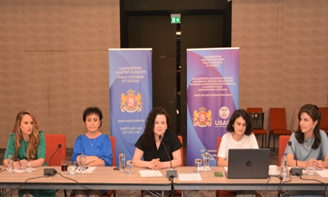
On July 19, 2023, the Public Defender’s Office of Georgia held a presentation of the Report on the Role of the Guardianship and Care Authority in the Implementation of the Capacity Reform.
Deputy Public Defender Natia Julakidze and USAID programme manager Rusudan Tabatadze delivered welcome speeches at the event. Expert Nana Gochiashvili spoke about the research findings and challenges.
Representatives of the guardianship and care authority and the organizations working on the topic were actively involved in the discussion held after the presentation relating to the main issues reflected in the report.
The event was supported by the US Development Agency (USAID).
THE HUMAN RIGHTS DEFENDER PARTICIPATED IN THE SOLEMN OPENING CEREMONY OF THE LORI REGIONAL SUBDIVISION.
There is no other method to build a stable and democratic society than the guarantee of rule of law and establishment of available structures for the protection of rights: The Human Rights Defender’s Office has been supplemented with another regional subdivision. On 4 July 2023, the solemn opening ceremony of the Lori regional subdivision of the Human Rights Defender’s Office took place in Vanadzor.
The Office is located in the central part of Vanadzor, at Tigran Mets 24/3. It will operate five days a week, but the issues of the residents of the region will be addressed on a round-the-clock schedule.
The Human Rights Defender, Ms. Anahit Manasyan, Head of the EU Delegation to Armenia, Ambassador Ms. Andrea Victorin, UNDP Resident Representative, Ms. Natia Natsvlishvili, and Governer of Lori province, Mr. Aram Khachatryan took part in the solemn ceremony and delivered opening remarks.
The opening ceremony was attended by representatives of international institutions, various state bodies and civil society.
Welcoming the guests, the Defender highlighted that the establishment of the regional subdivision is a significant step towards the promotion and protection of human rights.
In this context, she particularly emphasized that the protection of human rights should be available and affordable in all settlements of the Republic of Armenia.
“Shirak, Syunik, Tavush, Gegharkunik, and today Lori. I am proud to note that the territorial coverage of the Defender’s institution is expanding. The newly established subdivision will play significant role in the protection of human rights. I would like to express my gratitude to our international partners, in particular, honorable Ms. Andrea Victorin and Ms. Natia Natsvilishvili, who have diligently and devotedly supported the Human Rights Defender’s Office within the framework of various programs. Additionally, I express my gratitude to the Governor of the Lori province, Mr. Aram Khachatryan for participating in the opening ceremony of the subdivision,” stated the Defender.
At the same time, the Defender specially emphasized that the establishment of regional subdivisions is not merely a goal in itself, and in case of decent work it is an important guarantee from the point of view of implementation of the more effective protection of human rights. Ms. Anahit Manasyan further stressed that there is no other method to build a stable and democratic society than the guarantee of rule of law and establishment of available structures for the protection of rights.
Ms. Andrea Victorin and Ms. Natia Natsvlishvili extended congratulations on the occasion of opening of the regional subdivision, highlighting the importance of the development of human rights protection in the provinces.
In his turn, Mr. Tigran Madatyan, Head of the regional subdivision, presented the situation of human rights protection in the province, recorded issues, as well as the vision and directions of further activities. He assured that no effort or energy would be spared in fulfilling the mission of protecting the rights of the province’s population.
The opening of the Lori regional subdivision of the HRDO took place with support of the “Accountable Institutions and Human Rights Protection in Armenia” Project financed by the EU and implemented jointly UNDP, UNICEF, UNFPA and OSCE.
VULNERABLE SOCIAL GROUPS IN THE WELFARE AND LABOR SECTORS—MARRIED IMMIGRANTS AND MIGRANT WORKERS—GATHERING TOGETHER.
ACRC provides an “Onsite Outreach Program” tailored for Asan-si-
The Anti-Corruption and Civil Rights Commission (ACRC) is visiting Asan today to organize a place where the Commission can meet with married immigrants, migrant workers, and local residents who are experiencing grievances in the welfare and labor sectors to listen to their difficulties and provide resolutions.
< Operating Schedule for Onsite Outreach Program Tailored to the Welfare and Labor Sectors >
| Region | Asan, South Chungcheong Province |
| Time and Date | 10:00 – 15:30 Wed. June 28 |
| Place | Main Conference Room, 3rd floor, Onyang 4-dong Administrative Welfare Center |
| For whom | Multicultural families, migrant workers, and residents experiencing grievances in the welfare and labor sector |
The Onsite Outreach Program will, in particular, serve as a platform to provide counseling for the grievances experienced by vulnerable social groups, including foreign workers and multicultural families, and listen to their thoughts and opinions.
Migrant workers and married immigrants are institutionally marginalized groups, experiencing numerous grievances in the welfare and labor sectors, such as employment permission, health insurance, and emergency welfare support.
Accordingly, ACRC plans to establish a foundation for continued cooperation with local ombudsmen, organizations, and institutions in the region to address grievances through onsite meetings while resolving grievances experienced by marginalized groups on the spot.
Asan-si established the Asan Multicultural Immigration Plus Center in September 2017, marking the first of its kind in Korea, and has been providing support to multicultural families, foreign workers, international students, and expatriates, offering a one-stop service for a range of government services necessary for their life in Korea.
The Asan Multicultural Immigration Plus Center houses the Immigration Office of the Ministry of Justice and the Foreigner Employment Management Team of the Ministry of Employment and Labor. In addition, Korean language education and interpretation and translation services are provided through the operation of the Asan Multicultural Family Support Center and the Asan Migrant Workers Center.
ACRC will explore the current state of grievance complaints among multicultural families and foreign workers and discuss cooperative measures for the resolution of the grievance complaints through an onsite meeting with people from the Asan Multicultural Immigration Plus Center.
ACRC Deputy Director General for Complaints Deliberation LEE Sang-Don said, “We hope that today’s Onsite Outreach Program serves as a platform for onsite communication with local residents and helps resolve grievances experienced by vulnerable social groups in the welfare and labor sectors, such as issues concerning multicultural families and migrant workers. ACRC is committed to visiting vulnerable social groups and regions in blind zones within the welfare and labor sectors to listen to their grievances and difficulties and address them.”
THE AMENDMENTS TO THE CONSTITUTIONAL LAW ON THE COMMISSIONER FOR HUMAN RIGHTS (OMBUDSMAN) OF THE REPUBLIC OF AZERBAIJAN HAVE BEEN APPROVED.
The President of the Republic of Azerbaijan, Mr. Ilham Aliyev, has approved the Constitutional Law of the Republic of Azerbaijan on amending the Constitutional Law on the Commissioner for Human Rights (Ombudsman) of the Republic of Azerbaijan.
According to the document, the Ombudsman is authorized to implement the functions of an independent monitoring mechanism for the implementation of the Convention on the Rights of Persons with Disabilities (CRPD) and the Convention on the Rights of the Child (CRC), as well as for monitoring and promoting equal rights and non-discrimination.
In addition, the Ombudsman can conduct an analysis of the implementation process of state programs, strategies, national action plans, and concepts in the field of human rights and provide opinions and recommendations to the relevant authority for monitoring and evaluation in the respective area.
According to the amendments, the President of Azerbaijan presents the nominations of three candidates to the Parliament for the selection of a new Ombudsman within 30 days, until the expiration of the Ombudsman’s authority. The Parliament will make the relevant decision on the Ombudsman’s selection within 15 days.
Furthermore, the Ombudsman is empowered to conduct on-site investigations on complaints, document the results, and take measures to investigate complaints in the manner prescribed by Chapter II of this Constitutional Law. Also, the Ombudsman has the authority to take measures to prevent and alleviate human rights violations by inviting representatives of state bodies, municipalities, and other institutions during the implementation of the national preventive mechanism and the independent monitoring mechanism. The Ombudsman shall, within 10 working days, provide the complainant with written information about the actions and results taken regarding the examination of his/her complaint.
Besides, when investigating complaints about violations of the right of access to information, the Ombudsman may request essential information (documents, materials) or their copies from information owners.
The changes and other legal norms serve to ensure the reliable protection of human rights and freedoms in our country.
We express our heartfelt gratitude to the President of the Republic of Azerbaijan, Mr. Ilham Aliyev, on behalf of the Commissioner for Human Rights (Ombudsman) of Azerbaijan and its staff for the support provided in achieving a more effective protection of human rights and freedoms.
For the further information see the link: https://bit.ly/3QcSDWP
TURKISH DELEGATION PAYS WORKING VISIT TO PUBLIC DEFENDER’S OFFICE.
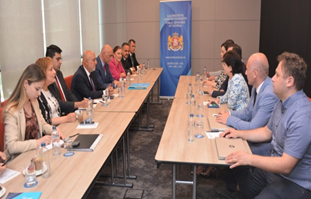
A Turkish delegation has paid a working visit to the Public Defender’s Office of Georgia. At the meeting held on July 25, representatives of the National Preventive Mechanism of the Public Defender’s Office and members of the Turkish delegation discussed issues of cooperation between the National Preventive Mechanisms, spoke about their professional activities and exchanged information about their work practices.
Within the framework of the visit, the parties will also visit the temporary detention center and Penitentiary Establishment No. 16.
The Turkish delegation includes the Deputy Head of the Turkish National Preventive Mechanism, Alişan Tirık, and other team members – Burhan Erkuş, Dilek Erturki, Ismail Ayaz, Tigce Doger and Mustafa Arslan.
OFFICE OF THE OMBUDSMAN ANNOUNCES RESULTS OF DIRECT INVESTIGATION INTO HANDLING OF COMPLAINTS INVOLVING TREES ON GOVERNMENT LAND.
The Ombudsman, Ms Winnie Chiu, announced at a press conference today (13 July) the completion of a direct investigation into the handling of complaints involving trees on government land, and made eight recommendations for improvement to the Tree Management Office (“TMO”) under the Development Bureau (“DEVB”).
The Government adopts an integrated approach for managing trees on government land, under which the department responsible for maintaining a Government facility or site takes care of the trees within the area. DEVB has promulgated a Technical Circular that sets out the division of responsibilities among tree management departments. TMO formulates comprehensive tree management strategies and measures for Hong Kong, and co-ordinates and supervises departments’ handling of tree complaints at the central level.
Investigation by the Office of The Ombudsman found that between 2018 and October 2022, each year 1823 received on average some 24,000 tree complaints, of which about 1,100 cases on average (or 3.3% to 5.9% over the annual total of complaints received) involved disputes over responsibilities among departments. Each year, in dozens of such cases, a complainant received a reply only after more than three months. TMO has established a mechanism under which it adjudicates on cases involving disputes over responsibilities. In some of the cases studied, when TMO intervened in the disputes according to the mechanism, about four to six months had already lapsed since the cases were received. In early 2022, TMO piloted an enhanced mechanism under which it would step in earlier to handle all cases that 1823 has taken to departmental complaint officers. Nevertheless, the cases might have been seriously delayed for different reasons when they were taken to the departmental complaint officers. This shows that if TMO bases its decision to intervene solely on the complaint handling stage, the disputes may not be settled in a timely manner.
The Office’s investigation also found that from time to time, there were divergent interpretations of the Technical Circular by departments and there was even recurrence of disputes over similar issues, and that some departments had failed to notify 1823 of their disagreement to take up a case within the specified time frame, or did not provide supplementary information in accordance with the mechanism. The overall progress of handling tree complaints was thereby affected.
Furthermore, none of the tree management departments has drawn up any internal time frame for carrying out ordinary tree work or set up any database recording the completion dates of tree work in response to complaints. Even if the departments have met their pledge in replying to the complainants, there is no objective information on whether they have actually carried out the tree work involved in the complaints in a timely manner.
Each month, 1823 submits to TMO a report comprising multiple categories of data to facilitate the monitoring of the departments’ handling of tree complaints. As regards tree complaints not received via 1823, TMO currently only requires the departments to report the total number of tree complaints received each year with no other information or analysis. This reflects TMO’s relatively limited understanding of the departments’ handling.
On the other hand, the Lands Department (“LandsD”) used to have a huge number of tree complaints with overdue replies. Since the second half of 2022, the TMO has strengthened the monitoring of tree complaint handling by LandsD; LandsD also set up an internal task force led by its Deputy Director to conduct a comprehensive review of the procedures for handling tree complaints. Improvement measures are being implemented progressively. Information showed that the backlog of cases has significantly shrunk. Nevertheless, the above only refers to cases in which LandsD had delayed in issuing replies. LandsD does not maintain figures on the actual number of tree complaints with clearance work to be completed. As such, there is no objective information on whether the trees involved in the backlog of complaint cases have been properly handled. The Office hopes that LandsD can make good use of the computer information system it is developing as an internal monitoring tool to facilitate case follow-up and data analysis.
Ms Chiu said, “The Government receives a large number of tree complaints every year. If not promptly addressed, problematic trees may cause environmental nuisances or even pose potential hazards to public safety. TMO under DEVB co-ordinates and supervises departments’ handling of tree complaints at the central level. Our investigation has identified room for improvement in TMO’s work, especially with regard to cases involving disputes over responsibilities. We are glad that in the course of our investigation, the TMO has implemented a series of improvement measures. We hope that TMO can implement our recommendations promptly for more effective handling of tree complaints.”
The Office’s major recommendations made to TMO under DEVB include:
- for tree complaint cases involving disputes over responsibilities among departments, consider using the overall handling time of a case as a criterion for intervention, so as to reduce the risk of a problematic tree becoming an environmental nuisance or even a safety hazard due to delayed handling;
- conduct systemic analysis on completed complaint cases involving disputes over responsibilities, collate information about departments’ common differences in opinions and misunderstanding and conduct exchanges and sharing with the departments regularly; review and update the content of the Technical Circular as appropriate in a timely manner by including the guiding principles from its decisions in previous cases for the departments to follow;
- supervise departments’ strict compliance with the requirements of the interdepartmental mechanism in handling complaint referrals, e. they should raise a request to 1823 for further referral within the specified time frame and provide sufficient information if they disagree to take up a case. TMO should also monitor the departments’ compliance to ensure timely referral of complaint cases;
- require departments to formulate a time frame for carrying out ordinary tree work in response to complaints based on the actual need, and to report related data to TMO regularly for monitoring to ensure proper handling of the tree problems under complaint;
- require departments to submit regularly data relating to tree complaints not received via 1823 for comprehensive monitoring of complaints received through various channels and follow-up actions by the departments; and
- continue to monitor LandsD’s performance in handling tree complaints and provide assistance where necessary to ensure proper handling of problematic trees.
DEVB has accepted all of the recommendations and is implementing them proactively.
The full investigation report has been uploaded to the website of the Office of The Ombudsman at www.ombudsman.hk for public viewing.
REPORTS ON IMPROPER SOLICITATIONS SAW GREAT REDUCTION FROM 3,330 CASES IN 2018 TO 369 CASES IN 2022.
- Reports on violations of the Improper Solicitation and Graft Act amounted to 1,404 cases last year of which 416 people received sanctions including criminal punishment
- ACRC requested relevant agencies take corrective measures for multiple reported cases of violations identified as improperly handled
- ACRC released the result of an inspection of 2022 operational status of the Improper Solicitation and Graft Act
ACRC revealed that 1,404 cases of reports on violations of the Improper Solicitation and Graft Act were received by public institutions of various levels, and 416 public officials faced sanctions including criminal punishment last year. In particular, violations of the Act reported last year amounted to 369 cases, a huge reduction compared to 3,330 cases reported in 2018.
The Anti-Corruption and Civil Rights Commission (ACRC) announced on 29th June the result of an inspection of 2022 operational status of the Improper Solicitation and Graft Act by public institutions. This inspection was conducted by the ACRC with a focus on the operational status of the Improper Solicitation and Graft Act by public institutions of various levels, including reports on violations received by public institutions up to last year since the first year of the implementation of the Act (28th Sep. 2016), contents of cases handled, and education/consulting services provided by public institutions.
Until the end of December last year since the Act came into force in 2016, public institutions of various levels have received a total of 13,524 cases of reports on violations. By type of violation, improper solicitation was the most frequent with 8,211 cases reported (60.7%) followed by receipt of money, goods, etc. amounting to 4,900 cases (36.2%), and excessive honoraria for outside lectures, etc. with 413 cases reported (3.1%).
Looking at the trend of reports on violations by year, the number of reports increased to a great extent from 1,568 cases in 2017 to 4,386 cases in 2018, but since then, reports have been continuously decreased. However, there was a slight increase last year with 1,404 cases reported.
In the case of reports related to receipt of money, goods, etc. the number of cases reported have been declining since the implementation of the Act, but last year, it saw a slight increase which seems attributable to stricter enforcement of the law by the incumbent administration.
On the other hand, ACRC has found that there was a great reduction in the number of improper solicitation-related reports, which saw a continuous drop since 2019, by 89% compared to 2018 when 3,330 cases were reported, with public institutions receiving 369 cases last year. This reduction seems to result from constant efforts from the government to eradicate hiring irregularities in public institutions.
CCAC UNVEILED A CASE WHERE CUSTOMS OFFICERS OF A CHECKPOINT ALLEGEDLY FABRICATED ATTENDANCE RECORDS TOGETHER FOR REMUNERATION FRAUD.
The CCAC has detected a case where the chief of the customs station at a checkpoint allegedly colluded with his subordinates to fabricate attendance records in order to defraud the Government over supplementary remuneration amounting to over MOP130,000.
In 2022, the CCAC received a report alleging that the chief of the customs station at a checkpoint copied his attendance card secretly and instructed his co-workers to punch in and out on his behalf. After receiving the report, the CCAC commenced an investigation. Following the investigation and evidence search, it was found that the chief of the customs station involved and a few customs officers of the office of the station had copies of work passes made secretly and colluded with each other. The one who arrived at the customs station the earliest punched in on behalf of those who had not yet arrived by using the copies. They also used the copies to punch out on behalf of those who had already left the station in order to create false attendance records in the electronic attendance system of the Macao Customs Service showing that they arrived at work and left on time. Afterwards, the said individuals, who took advantages of having the competences as the persons responsible for making the shift schedules, the inspectors and the reviewing officials, even produced and submitted to relevant departments the attendance registration information which contained their false attendance records in order to harbour the irregular acts of relevant individuals who arrived late or left early for work, which resulted in affecting the Macao Customs Service to calculate their salaries. During the period when the offences were allegedly committed, they successfully defrauded the Government over supplementary remuneration amounting to over MOP130,000.
The case involved a customs superintendent, a customs inspector, a customs sub-inspector, a customs principal officer and three customs officers. Among them, one was found by the Macao Customs Service on its own initiative upon the investigation of the CCAC. The seven said individuals allegedly committed the offences of forgery committed by public servant, computer forgery and fraud involving a high value. The said case has been referred to the Public Prosecutions Office for handling. The CCAC reminds all public servants that they should know and abide by the law. Moreover, the chiefs should even take the lead by being strict to their own disciplines in order to serve as role models.
THE OMBUDSMAN AND THE PROSECUTOR GENERAL ORGANIZED AN INTERNATIONAL CONFERENCE ON BUSINESS AND HUMAN RIGHTS.
A conference on “Ensuring Transparency in the Context of Business and Human Rights” was organized jointly by the Office of the Commissioner for Human Rights (Ombudsman) of the Republic of Azerbaijan and the Office of the Prosecutor-General of the Republic of Azerbaijan. The event has brought together the representatives of the Ombudsman Office, the Office of the Prosecutor-General, international organizations, business entities, and non-governmental organizations.
Sabina Aliyeva, the Ombudsman of Azerbaijan, delivered an opening speech at the event and gave information about the activities carried out by the Ombudsman Institution in the field of business and human rights in our country.
The Ombudsman noted that continuous efforts have been made in the implementation of the “Guiding Principles on Business and Human Rights” adopted by the United Nations and in the preparation of the relevant National Action Plan.
The Ombudsman said that based on the provisions of the Edinburgh Declaration, which determine the directions of activity for national human rights institutions in the field of business and human rights, it has been identified as one of the main activity directions in the respective area.
She also noted the successful continuation of collaboration with the Office of the Prosecutor-General in terms of improvement of the legislation and awareness-raising activities.
Subsequently, the publication titled “Overview of the Guiding Principles on Business and Human Rights,” prepared by the Ombudsman Office upon the initiative of Sabina Aliyeva and with the support of the UN Development Program (UNDP), was presented to the participants of the event.
Kamran Aliyev, the Prosecutor-General of the Republic of Azerbaijan, in his speech at the event, provided information about the institutional reforms carried out in our country in the field of business and human rights, as well as the measures implemented in this area and the existing legislative framework.
Zahid Oruj, the Chairperson of the Human Rights Committee of the Parliament, spoke about the progressive reforms carried out by President Ilham Aliyev in the field of business and human rights and highlighted the decisions adopted regarding our country’s economic development, which have been welcomed by the population.
Afterwards, Orkhan Mammadov, the Chairperson of the Management Board of the Agency for the Development of Small and Medium-sized Enterprises (KOBIA), and Mammad Musayev, the President of the National Confederation of Entrepreneurs (Employers’) Organizations of the Republic of Azerbaijan, delivered speeches on the topics of “Transparency in Business Activities and Appropriate Support Mechanisms” and “Responsible Business in the Context of Sustainable Development”, respectively.
In the conference, moderated by the Ombudsman, Sabina Aliyeva, Irakli Kotetishvili, Policy Advisor to the UNDP Istanbul Regional Hub, and Brook Horowitz, the CEO of “IBLF Global,” a non-governmental organization, delivered presentations on the topics of “Doing Business with Integrity: Key to Sustainable Development” and “Building Business with Integrity: New Approaches for the Private Sector to Combat Corruption and Protect Human Rights.” During the presentations, information was given on principles of integrity in business, addressing challenges in combating corruption, and the implementation of international standards at the national level.
At the end, speeches were made on ensuring human rights in entrepreneurship, the development of women’s entrepreneurship, and ensuring transparency, as well as in-depth discussions and exchanges of ideas on these topics were held.