Category Archives: Related Links
LABOR AND MANAGEMENT MEETING TO IMPROVE THE EMPLOYMENT OF FOREIGN SEAFARERS
– ACRC hosts a panel discussion on institutional improvement for “ways of rationalizing the employment of foreign seafarers.”
A place for discussion on measures for institutional improvement will be organized to address issues related to the employment of foreign seafarers in the era of low birth rates and an aging population.
The Anti-Corruption and Civil Rights Commission (ACRC, Chairperson Kim Hong-Il) will host a panel discussion at “Space share,” located near Seoul Station, at 10 a.m. on July 7, inviting experts from relevant organizations, including the Ministry of Oceans and Fisheries (MOF), Korea Shipping Association, National Federation of Fisheries Cooperatives, and Federation of Korean Seafarers’ Union.
The discussion aims to lay the foundation for the advancement of the marine and fishery industry by resolving issues regarding the supply and demand of seafarers manpower in industrial fields resulting from the sharp decline in the working-age population due to low birth rates and an aging population and bridging the opinion gap between labor and management related to such issue.
The marine and fishery industry is currently one of the industries that people tend to avoid, where the number of seafarers is continuously decreasing, and has no choice but to depend on foreign seafarers.
According to the Korea Seafarer’s Statistical Yearbook, as of late 2021, the number of seafarers employed in Korea reached 59,843, among which 27,333 were foreign seafarers, accounting for nearly half the total.
However, some have pointed out that the legal basis for the “Guidelines of Foreign Seafarers Management,” which stipulate decisions regarding the size of employment of foreign seafarers or employment reporting, remains unclear, and relevant shipowner groups* and seafarers’ unions in Korea** have been reaching agreements prior to the government’s policy decisions, resulting in mutual conflicts.
PUBLIC DEFENDER MEETS WITH REPRESENTATIVES OF NGOS AND JOURNALISTS WORKING IN AKHALKALAKI

On August 24, 2023, Public Defender Levan Ioseliani met with representatives of the non-governmental sector operating in Akhalkalaki and local journalists in order to receive information about the challenges in the Samtskhe-Javakheti region.
The topics discussed at the meeting included the issues of obtaining quality education in the official language and the migration of young people caused by it, intensified anti-Western propaganda, and lack of jobs.
Road infrastructure and access to transport were identified as challenges at the meeting. According to the representatives of non-governmental organizations, children in some villages cannot go to school precisely because of the above problem. The supply of food and bare essentials is also complicated.
It was noted at the meeting that the existence of a day center for persons with disabilities, as well as improvement in access to state services, was an essential need in the region; Problems related to obtaining citizenship were also emphasized.
Regarding the challenges in the region, Public Defender Levan Ioseliani also met Ninotsminda Mayor Anivard Misoani and received information about the municipality’s activities and planned programmes in detail.
RESULTS OF INVESTIGATION INTO PILOT SCHEME ON COMMUNITY CARE SERVICE VOUCHER FOR THE ELDERLY ANNOUNCED
The Ombudsman, Ms Winnie Chiu, announced at a press conference, the completion of a direct investigation into the Pilot Scheme on Community Care Service Voucher for the Elderly (“the Pilot Scheme”) and made 11 recommendations to the Social Welfare Department (“SWD”) for improvement.
In September 2013, the Government introduced the Pilot Scheme to support frail elderly persons to age in place under the “money-following-the-user” mode. With its second and third phases entered upon in October 2016 and October 2020 respectively, the Pilot Scheme has been in operation for about a decade. Based on their individual needs, holders of community care service vouchers (“CCS vouchers”) can receive day care service and home care service offered by service providers recognised by SWD. The Chief Executive has stated in the 2022 Policy Address that the Pilot Scheme will be regularised in the third quarter of 2023 and the number of beneficiaries will increase in phases, from 8,000 at present to 12,000 in 2025/26. The coverage of the Pilot Scheme will also be expanded to include the rental of assistive technology products.
An investigation by the Office of The Ombudsman revealed that as the operation of the Pilot Scheme is essentially different from that of traditional subsidised services, both the market and elderly participants needed time to understand and familiarise themselves with it. In the second and third phases of the Pilot Scheme, SWD introduced various enhancement measures. Some of these measures, for example, extending the eligibility of recognised service providers (RSPs) to include private organisations, and expanding the coverage of the Pilot Scheme from eight districts to all 18 districts throughout the territory could not be achieved immediately. Hence, it is understandable that SWD has taken a relatively long period of time to test the measures and operation of the Pilot Scheme for enhancement.
The Office’s investigation also found that SWD’s proactive steps to send invitation letters to eligible elderly persons and issue CCS vouchers have helped lift the utilisation rate (i.e. the percentage of the number of voucher holders actively using the services over the quota of vouchers) from around 60 per cent in the second phase to 86 per cent near the end of the third phase (as at the end of December 2022). SWD’s practice has improved the utilisation of the voucher quota and is worthy of recognition. The Office’s findings revealed that many elderly persons waitlisted for community care services (“CCS”) on the Central Waiting List for Subsidised Long Term Care (“LTC”) Services (Central Waiting List) actually applied for CCS vouchers to meet potential needs before they were granted traditional subsidised services. In fact, this is in line with SWD’s positioning of CCS vouchers as an additional option for elderly persons on the Central Waiting List to receive assistance with the vouchers issued when necessary. Under the Pilot Scheme, RSPs apply for reimbursement on an accountable basis. Unused CCS vouchers, therefore, will not waste public money or occupy resources of RSPs.
Regarding the local supply and demand of services, information showed that the supply and demand of home-based services in different districts could generally maintain a balance. As for services provided by day care centers (i.e. centre-based services), there was a deficit of service places in six districts, namely the Eastern District, the Southern District, Wong Tai Sin District, Sha Tin District, Islands District and Yuen Long District, assuming that one service place could accommodate 1.5 elderly persons. It is necessary for SWD to invite more organisations to provide or extend services in districts with keen demand. Moreover, SWD currently takes into account various pieces of data and information when analysing the demand and supply of services at the district level. The Office is of the view that SWD should incorporate more data to ensure a comprehensive analysis.
In the second phase of the Pilot Scheme, SWD set up a centralised team to support voucher holders, in collaboration with their responsible workers (Note), to help them better utilise voucher services by assisting them to resolve problems encountered, including providing assistance on service matching. In recent years, the centralised team has received fewer enquiries, indicating that elderly persons and stakeholders concerned have become more familiar with the operation and usage of CCS vouchers. There have also been fewer complaints against RSPs of late. Between April 2018 and December 2022, SWD received only 18 complaints, of which only nine were substantiated or partially substantiated. Nevertheless, many elderly persons in Hong Kong do not have children or carers, and they are in need of greater assistance when using CCS vouchers.
On the other hand, SWD conducts annual service monitoring visits at day care centres under RSPs and the homes of users receiving home care services to monitor the service quality of RSPs, with a view to ensuring their compliance with all SWD’s requirements. The Office’s investigation revealed that SWD’s mechanism of conducting service monitoring visits has generally operated well and served its purpose. However, SWD randomly interviewed only one voucher holder of centre-based services in nearly all the service monitoring visits conducted between April 2021 and December 2022. Regarding home-based services, two voucher holders were randomly interviewed in only about 20 per cent to 30 per cent of the visits.
Information of SWD showed that between April 2017 and December 2022, about 200 to 500 voucher holders had switched RSPs each year, but SWD had not maintained statistical information on the reasons for their change. During the direct investigation, the Office had used the search engine on SWD’s Elderly Information website to randomly check the information of some RSPs. The Office found that information on the number of service places and vacancy of some of these RSPs were last updated three months to more than two years ago. Although the vacancy for service places might remained unchanged for a relatively long period of time due to the COVID-19 pandemic, the situation might have caused a misunderstanding that the vacancy information had expired. The Office is pleased to note that SWD will upgrade the information technology system in the third quarter of 2023, so as to allow voucher holders to process real-time checks on information about their vouchers and service records as well as vacancies for service places of RSPs.
Ms Chiu said, “In conclusion, the operational arrangements for the Pilot Scheme on Community Care Service Voucher for the Elderly have been enhanced in various ways with more obvious progress in recent years. That said, there are still areas for improvement. As the Government will regularise the Pilot Scheme and progressively increase the quota, we hope that SWD can implement our recommendations promptly to further enhance its utilisation rate and service quality.”
The Office’s major recommendations made to SWD include:
- Continue with its endeavours to encourage eligible elderly persons newly added to the Central Waiting List to apply for CCS vouchers, and regularly (e.g. once every year) approach those voucher holders who have not used the vouchers received in order to identify potential areas for service improvement and re-examine elderly persons’ service needs in collaboration with responsible workers and help them choose suitable RSPs or service packages;
- Obtain from RSPs the list of elderly persons waiting for their services, approach other RSPs and the voucher holders on the list and attempt to make matching suggestions so that those elderly persons can receive necessary services as soon as possible;
- Expedite its study and test on allowing voucher holders to purchase services from more than one RSP concurrently for early implementation so that elderly persons can enjoy services under the scheme more flexibly;
- Continue to regularly provide up-to-date statistics and information about the supply and demand of CCS voucher services in each district to existing and potential RSPs, and invite more organisations to offer services or extend the modes and coverage of services in districts with keen demand so that more centre-based service places can be provided to local or cross-district elderly users;
- Incorporate the number of active voucher holders residing in each district (including elderly persons using local services and those using cross-district services) in the analysis of the demand and supply of services at district level for a more comprehensive result;
- Provide more support to voucher holders without children or carers by, for example, proactively telephoning them on occasions other than the standard contact time points so as to understand how they have been using the vouchers and offer assistance where necessary;
- Instruct its staff to conduct random interviews with at least two users or their carers during service monitoring visits for both centre-based services and home-based services so as to step up the monitoring of the service quality;
- Upon receiving notification of voucher holders’ leaving the original RSPs, approach the voucher holders concerned to understand their reasons for switching RSPs. In case it is due to the service quality of the original RSPs, SWD should duly follow up on the matters;
- Require RSPs to provide timely updates on the vacancy for service places and step up the monitoring of their compliance with the requirement. As a further measure, SWD should modify the functions of the Elderly Information website to allow voucher holders or carers to check the real-time vacancy for service places, saving them the trouble of calling individual RSPs for such information; and
- Consider arranging more newspaper or television interviews with real cases cited to promote voucher services among elderly persons and carers, so as to attract more eligible elderly persons to use such services.
SWD has generally accepted the Office’s recommendations and is taking positive steps to implement them.
The full investigation report has been uploaded to the website of the Office of The Ombudsman for public viewing.
Note: Responsible workers refer to social workers working for the service units under the Government or non-governmental organisations, which are responsible for assisting elderly persons by following up on their registration and allocation of LTC services.
OMBUDSMAN CONDUCTED VISIT WITHIN THE FRAMEWORK OF NPM ACTIVITIES
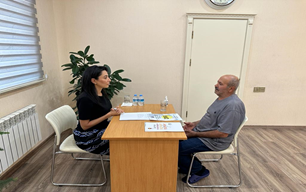
The Commissioner for Human Rights (Ombudsman) of the Republic of Azerbaijan Sabina Aliyeva and the members of the Ombudsman’s National Preventive Group against Torture conducted visits to the detention places, which persons cannot leave at their own will, without prior notice.
During the next visit conducted within the National Preventive Mechanism activity on the basis of the requirements of national and international legal norms, including the OPCAT, the Ombudsman received in a private manner Vagif Khachatryan, who was arrested by the staff of the State Border Service of the Republic of Azerbaijan at the Lachin border checkpoint of the Azerbaijan-Armenia state border on July 29, 2023.
During the visit, V. Khachatryan’s appeal was heard by the Ombudsman in the presence of the members of the National Preventive Group against Torture, including the physician and psychologist specialists. He expressed his satisfaction with the humane approach shown from the very first moment of the arrest and the quality medical care provided and mentioned that there’re positive changes in his health status. V. Khachatryan expressed his gratitude to the state of Azerbaijan for this all, as well as for his treatment, detention conditions, and the creation of the opportunity to contact his family.
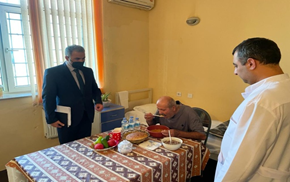
Within the framework of the visit, the conditions of detention in the facility – issues related to personal hygiene and sanitation, healthcare services, nutrition were investigated. It was established that the rights of this individual arising from the national legislation and international documents and the necessary medical-psychological services were provided without any discrimination, and there’re literature and useful informational materials in his ward as well.
- Khachatryan was also given legislative acts and international tools in his own language related to appeal mechanisms on his rights and the educational print materials on how to apply to the Ombudsman and the Call Center 916.
The information, as well as video and photo materials about this individual received during the visit have also been sent to the relevant international organizations.
COMMISSIONER AGAINST CORRUPTION CHAN TSZ KING RECEIVED COMMISSIONER OF HONG KONG ICAC WOO YING-MING
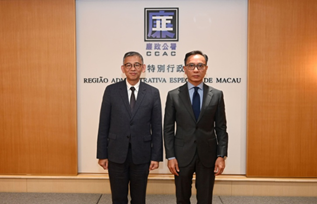
The Commissioner Against Corruption, Chan Tsz King, received the delegation of the Independent Commission Against Corruption (ICAC) of Hong Kong who visited Macao today (28th July) and had a meeting with the Commissioner of the ICAC, Woo Ying-ming. Both sides agreed to reinforce cooperation on the basis of the current foundation and join hands together to enhance practical exchange and personnel connection among the anti-corruption agencies of Guangdong, Hong Kong and Macao in order to proactively take forward the integrity building of the Greater Bay Area.
Chan Tsz King welcomed the delegation of the ICAC and pointed out that Macao and Hong Kong had been maintaining good partnership in graft fighting, especially mutual case assistance and intelligence exchange. In terms of corruption prevention promotion and personnel training, the ICAC is an example that is worth learning from and therefore the partnership with the ICAC will be consolidated. Moreover, he also agreed that both sides should join hands together to enhance the exchange and cooperation among the anti-corruption agencies of the Greater Bay Area.
Woo Ying-ming agreed that the continuous cooperation between the ICAC and the CCAC should be strengthened. Moreover, he put forward numerous suggestions on promoting the cooperation among the anti-graft agencies in the Guangdong-Hong Kong-Macao Greater Bay Area such as the holding of seminars, exchange and training for personnel, etc. He also introduced the achievements made during the visit to several cities in the Greater Bay Area prior to the visit to Macao.
The persons who attended the meeting also included the Assistant Director of the Operations Department of the ICAC, Wong Wai-kit, the Assistant Director of the Corruption Prevention Department of the ICAC, Cheung Chin-kit, the Chief of the Cabinet of the Commissioner Against Corruption of Macao, Chan In Chio and personnel from the Anti-Corruption Bureau of the CCAC.

RESULTS OF INVESTIGATION INTO GOVERNMENT’S ENFORCEMENT AGAINST DEFECTIVE SEWAGE WORKS ANNOUNCED
The Ombudsman, Ms Winnie Chiu, today announced at a press conference the completion of a direct investigation into the Government’s enforcement against defective sewage works of New Territories Exempted Houses (“NTEHs”) and made 10 recommendations for improvement to the Environmental Protection Department (“EPD”), the Food and Environmental Hygiene Department (“FEHD”) and the Lands Department (“LandsD”).
NTEHs built in accordance with the Buildings Ordinance (Application to the New Territories) Ordinance are generally exempted from certain provisions of the Buildings Ordinance. Certificates of exemption, in respect of drainage works among other items, must be obtained from the Director of Lands before NTEHs are built. The certificate of exemption in respect of drainage works stipulates that the works should comply with the Drainage and Health Requirements for Village Type Houses. In rural areas where no public sewers are available, applicants for construction of NTEHs should build sewage disposal systems including septic tanks and soakage pits pursuant to the above requirements.
To address complaints about defective sewage works of NTEHs, EPD enforces the Water Pollution Control Ordinance from the perspective of identifying any pollution caused to the waters of Hong Kong or sewage discharged into storm water drains; FEHD investigates the existence of any nuisance specified in the Public Health and Municipal Services Ordinance; LandsD takes lease enforcement action, where appropriate, after examining whether the defects are in breach of the sewage provisions in the land leases.
An investigation by the Office of The Ombudsman (the Office) found that EPD, FEHD and LandsD all have constraints in handling complaints about defective sewage works of NTEHs, resulting in their inclination to refer complaints to other departments, but they only have a limited understanding of the constraints faced by the others. As a result, complaints remain unresolved even after repeated shuffling among departments. At present, there are neither established guidelines among the departments on how to pursue this type of complaint under different scenarios, nor a mechanism for information exchange, thereby compromising the enforcement efficiency. Meanwhile, EPD and FEHD focus on whether they can enforce their respective legislation and seldom consider joint enforcement actions.
The Office’s case studies also revealed that LandsD merely focuses on referring complaints to EPD and FEHD without fully discharging its enforcement role. Moreover, LandsD has only recorded the total number of complaints received without any breakdown or further statistics, making it difficult to monitor the progress of complaint cases effectively. According to the prevailing land grant provisions and the Drainage and Health Requirements for Village Type Houses, NTEH owners are responsible for proper treatment and disposal of sewage, as well as periodic inspection of sewage works. However, under the prevailing regulatory regime, no substantive measures are in place to ensure NTEH owners’ fulfilment of their maintenance responsibility.
Ms Chiu said, “Defective sewage works of NTEHs, such as rupture or leakage of septic tanks, may cause serious environmental pollution and nuisance, and even spread diseases. Although the Government has been constructing village sewerage systems throughout the territory, more than 40 per cent of villages yet to be covered by the village sewerage programme will have to continue to rely on septic tank systems for sewage treatment in the foreseeable future. As the enforcement responsibilities in respect of NTEH sewage works scatter among departments, inter-departmental collaboration is of paramount importance. In light of our findings, EPD, FEHD and LandsD should reinforce collaboration and complement one another, as well as rationalise the responsibilities and procedures for inter-departmental cases. The Office hopes that the three departments can implement our recommendations as soon as possible for more effective control over NTEH sewage works.”
The Office’s recommendations made to EPD, FEHD and LandsD are:
- Set up an inter-departmental working group to provide a communication platform regarding their respective functions and constraints, with a view to complementing one another and discussing solutions to complicated cases at an early stage to achieve synergy;
- Draw up operational guidelines for frontline staff specifying concrete follow-up and referral actions in typical scenarios of complaints, thereby rationalising the responsibilities and procedures for inter-departmental cases;
- Devise a proper mechanism for information exchange so as to enhance the effectiveness and efficiency of complaint handling;
- For cases of sewage discharged into storm water drains, EPD and FEHD to explore room for enforcement co-operation, such as identifying the circumstances for taking joint actions to enhance the effectiveness;
- LandsD to formulate a monitoring mechanism for complaint cases, conduct data analysis and proactively assist other departments where necessary; if a breach of land lease provisions is confirmed, take lease enforcement action decisively;
- LandsD to strengthen the training of District Lands Offices’ staff through experience sharing by EPD and FEHD, such that they are well equipped to inspect sewage works upon the completion of NTEHs to prevent possible environmental hygiene problems at root;
- LandsD to step up publicity and education on the environmental hygiene problems caused by improper alteration of sewage pipes. On one hand, NTEH owners should be reminded to obtain prior permission from relevant departments, where applicable under the prevailing requirements, for any alteration of sewage pipes for monitoring by the departments. On the other hand, even where no prior permission from departments is required, owners should be advised to seek assistance from professionals to ensure proper alterations;
- LandsD to explore formulating concrete measures to ensure NTEH owners know how to effectively fulfil their responsibility for proper sewage treatment and maintenance of sewage works in order to comply with the requirements of the land lease and the certificate of exemption;
- EPD to further utilise electronic means and social media, produce promotional videos, etc to raise NTEH owners’ awareness of the importance of the correct use and proper maintenance of septic tanks and related information; and
- EPD to consider more extensive use of new technology in due course for more effective detection of the seepage source, with a view to enhancing the effectiveness of complaint handling and investigation.
EPD, FEHD and LandsD have accepted all of the recommendations.
The full investigation report is available on the website of the Office of The Ombudsman for public viewing.
THAILAND SEAOF SENIOR OFFICIAL MEETING CONVENES IN BALI
The beautiful island of Bali played host to the Southeast Asian Ombudsman Forum (SEAOF) Senior Official Meeting (SOM) from August 10 to 11, 2023. Organized under the Chairmanship of the Ombudsman of the Republic of Indonesia, the meeting welcomed delegates from SEAOF three founding members, including the representatives from Indonesia, the host country, Thailand, and the Philippines.

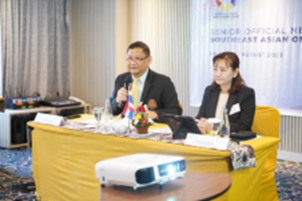
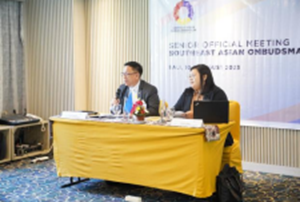
During the 2-day meeting, Deputy General Secretary of the Office of the Ombudsman of Thailand led the Thai delegation in a productive exchange of ideas with SEAOF counterparts to review and discuss the important topics, covering expected deliverables of SEAOF Activities in 2023 and Strategic Work Plan 2024 to implement continued projects.
The meeting included the membership proposals submitted by the Ombudsman of Timor-Leste and the Ombudsman of New Zealand, highlighting a step forward in expanding SEAOF’s collaborative network. Besides, the preparations for the SEAOF Ombudsman-level Meeting in November 2023 also took center stage. The outcomes of this anticipated meeting aim to bring together the Ombudsman institutions and relevant stakeholders both inside and outside the Asian region to drive positive impacts on complaint- handling mechanism and the process of investigation.
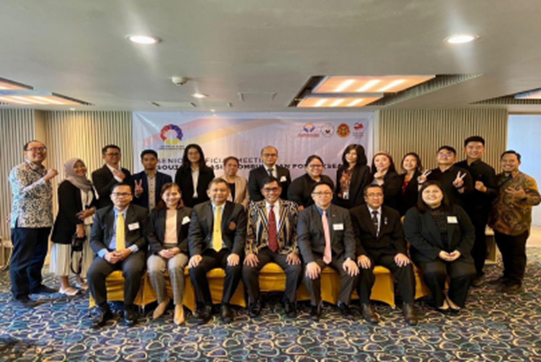
On the sidelines of the meeting, Thai delegates engaged in bilateral discussions with senior officials from the Office of the Ombudsman of Indonesia. The discussions focused on a strengthened cooperation between two offices especially the extension to the current Memorandum of Understanding (MoU) to shape the activities and projects in the years to come.
ACRC ACTIVELY RELIEVES FOREIGN WORKERS APPEALING AGAINST THE INJUSTICE OF UNFAIR DISMISSAL
– Allowing the “change of workplace” to enable reemployment for those at the risk of deportation due to actions by farm owners
A judgment has been made that it is inappropriate to disallow the change of workplace due to the overdue period of application for the change, even though a farm owner terminated a labor contract without agreement with foreign workers.
The Anti-Corruption and Civil Rights Commission (ACRC, Chairperson Kim Hong-Il) expressed its opinion to the head of the Regional Employment and Labor Administration that in cases where business owners unfairly terminated labor contracts with foreign workers who entered Korea through the Employment Permit System, these workers should be allowed to change the workplace to enable them to continue their job search during their stay in Korea.
While the Employment Permit System disallows changing the workplace in principle, the application for change of workplace is allowed up to three times within one month of the termination of a labor contract with the business owner.
Worker A and Worker B who entered Korea through the Employment Permit System signed
three-year labor contracts with a farm owner in December 2021 and April 2021, respectively.
However, the farm owner violated the Employment Permit System by illegally sending Worker A and Worker B to work at the farm of the owner’s brother.
Moreover, the farm owner falsely reported to the Regional Employment and Labor Administration that the termination of the labor contract was “an early termination based on autonomous agreement” even though there was no attributable reasons for the termination.
Worker A and Worker B discovered the termination of their labor contracts two months later following the aforementioned report when they visited the Immigration Office to obtain a certificate of alien registration.
The Regional Employment and Labor Administration imposed a one-year employment restriction against the farm that illegally sent workers and a two-year employment restriction against the one that employed those workers.
Furthermore, the Administration disallowed Worker A and Worker B from changing their workplace as the period of application for change of workplace has expired, and they did not apply for it despite being aware that they were illegally sent to another farm.
With regard to the aforementioned disposition, Worker A and Worker B filed grievance complaints with ACRC in December 2022, stating that they are at the risk of deportation to their home country due to being classified as illegal immigrants as a consequence of actions by the farm owner.
ACRC expressed its opinion to the Regional Employment and Labor Administration, suggesting that it may consider allowing the change of workplace based on the comprehensive consideration of facts that ▴the farm owner faced employment restrictions due to illegally sending Worker A and Worker B to another farm, ▴Worker A and Worker B were unaware of the termination of their labor contracts, as it was done unilaterally by the farm owner without agreement, and ▴the delay in wage payment for Worker A and Worker B is among the reasons for changing the workplace.
Regional Employment and Labor Administration actively accepted the opinion expressed by ACRC and allowed Worker A and Worker B to change their workplace so that they recover their qualification for stay and contribute to domestic business through their labor participation.
ACRC Vice Chairperson Kim Tae-Gyu said, “We will establish improvement measures through the fact-finding research of the Employment Permit System and take the lead to contribute to resolve manpower shortage issues in Korea by actively redressing grievances of foreign workers facing difficulties caused by social discrimination.”
OMBUDSMAN PROBES ENFORCEMENT BY PLANNING DEPARTMENT AND LANDS DEPARTMENT AGAINST UNAUTHORISED LAND DEVELOPMENTS
The Ombudsman, Ms Winnie Chiu, announced the launch of a direct investigation to examine the enforcement by the Planning Department (“PlanD”) and the Lands Department (“LandsD”) against unauthorised land developments.
Currently, PlanD takes enforcement action against unauthorised developments in the rural New Territories within a development permission area (“DPA”) (Note 1) pursuant to the Town Planning Ordinance (“TPO”). Specifically, developments within the DPA, including such operations as pond filling or land excavation and change of land use (such as using agricultural land for warehouses or workshops), are unauthorised unless the development is an “existing use” (Note 2) as defined by the TPO, or covered by permission granted by the Town Planning Board (“TPB”), or permitted under the statutory plan. For cases involving government land, LandsD may enforce the Land (Miscellaneous Provisions) Ordinance against illegal occupation of government land depending on the actual circumstances. Meanwhile, the land uses of urban areas and new towns not covered by DPA plans are mainly regulated by land lease provisions, building plans and various licences.
A preliminary inquiry by the Office of The Ombudsman revealed that PlanD receives over 1,500 complaints about unauthorised developments each year. Among them, hundreds have been confirmed after investigation to be non-compliant cases including repeated ones. There have also been cases involving both government and private land which required inter-departmental collaboration between PlanD and LandsD. Moreover, the media has reported from time to time on allegedly unauthorised uses of rural land in the New Territories for storage, temporary parking, etc.
Ms Chiu said, “Land is a valuable social resource requiring the Government’s prudent planning and monitoring over its use. Enforcement against unauthorised developments within a DPA aims at protecting the rural environment in the New Territories. Our Office notes that PlanD identifies hundreds of unauthorised development cases every year, some of which have come under the purview of different departments or occurred in conservation zones. Without timely rectification, these irregularities could be detrimental to social development and even the ecosystem. Our Office has received 30 related complaints over the past three years, reflecting public concern about this topic. Hence, I have decided to launch a direct investigation to examine the enforcement by PlanD and LandsD against unauthorised land developments, including their responsibilities and collaboration in handling those cases, and whether the existing mechanism is proper and effective in preventing unauthorised developments and handling relevant complaints, with a view to making recommendations to the Government for improvement where necessary.”
The Ombudsman welcomes information and views from members of the public on this topic. Written submissions should reach the Office of The Ombudsman by 3 September 2023:
Address: 30/F, China Merchants Tower, Shun Tak Centre, 168–200 Connaught Road Central, Hong Kong
Fax: 2882 8149
Email: complaints@ombudsman.hk
Note 1: DPA means an area so designated in a plan prepared under sections 3(1) (b) and 20 of the TPO, but excludes land included in a plan of an interim DPA.
Note 2: The development was in existence before the first gazettal of the statutory plans covering the interim DPA (if any) or DPA.
FEDERAL OMBUDSMAN TOUR OF FAISLABAD DECISION TO START IRD PROGRAM IN FAISLABAD
Federal Ombudsman, Ejaz Ahmad Qureshi, presided over a meeting of Regional Heads of Federal Government Departments and Investigation Officers of Regional Office during his tour to Faislabad on 22-8-2023 in which he announced the start of Informal Resolution of Disputes (IRD) program to resolve the disputes between parties through mediation and conciliation. He added that IRD program was started in some offices of Federal Ombudsman Secretariat in April, 2022 which has been very successful as 2275 cases have been resolved, whereas 127 cases are in process. Based on the success of this program, it is now being started in Faislabad.
Earlier, Federal Ombudsman was briefed that 84%of his decisions have been implemented. He appreciated the effort of the Officers of Regional Office Faislabad and cooperation of the federal government agencies in achieving this milestone and urged that this process should continue.