Category Archives: AOA News Letter
THE MEMBERS OF THE PUBLIC COUNCIL ON CHILDREN’S AND YOUTH RIGHTS ADJACENT TO THE DEFENDER TOOK PART IN THE CABINET SESSION TODAY.
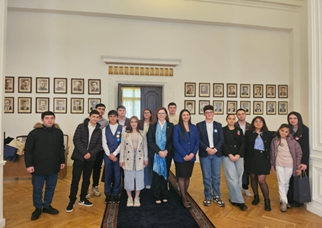
Thirteen members of the public council on children’s and youth rights adjacent to the Human Rights Defender joined Anahit Manasyan, HRD, today, 23 November, to participate in the Cabinet meeting.
Children and young people voiced their questions to the Prime Minister and members of the Government.
Among them, support for forcibly displaced persons from Nagorno-Karabakh, provision of housing, real estate sale and rental prices, accessibility of electronic platforms, issues with regard to the ‘Academic city’, such as engagement of private universities and academic institutions, ensuring necessary conditions for children with disabilities in academic institutions, including existence of ramps and other measures.
The session was also attended by Christine Weigand, UNICEF Representative in Armenia. The participation of children in this session is symbolic. The initiative was dedicated to the adoption of the United Nations Convention on the Rights of the Child, marked on 20 November.
The Human Rights Defender places importance in the active participation of children and young people in matters concerning the protection of their rights and in decision-making processes.
To this end, the members of the public council on children’s and youth rights adjacent to HRD hold regular discussions with the Defender and HRD office, present their questions and issues of concern to them and offer feedback on matters concerning protection of children’s rights.
THE “OMBUDSMAN CLUB” HAS ALSO BEEN ESTABLISHED AT THE UNIVERSITY OF WORLD ECONOMY AND DIPLOMACY.
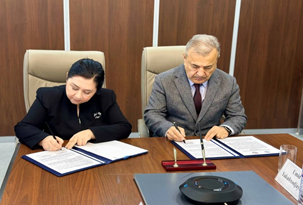
On 2 November 2023, a Memorandum of Cooperation was signed between the Authorized Person of the Oliy Majlis for Human Rights (Ombudsman) and the University of World Economy and Diplomacy, within which an “Ombudsman Club” has been established under the Authorized Person of the Oliy Majlis for Human Rights (Ombudsman).
At the meeting, the sides discussed cooperation on training highly qualified legal personnel, ensuring linkages between theoretical and practical training of students, forming a skills set necessary for practical work, as well as wide involvement of scientific researchers and students in studying the best practices of ombudsmen’s work in Uzbekistan and foreign countries.
Also within the framework of the Memorandum, a “Roadmap” aimed at increasing the capacity of students and researchers in human rights, organising joint events and master classes in relevant areas of cooperation, attracting students for internships, and developing practical skills were approved.
On the same day, a Roundtable discussion was organised to familiarise students with the activities of the Ombudsman. There information on the Ombudsman institution’s mandate and areas of activities’, work with appeals, combating torture and improving legislation was provided.
As it was noted at the event, members of the “Ombudsman Club” will be able to improve their qualifications by being attached to the specialists of the Ombudsman institute after the university classes and work with appeals, participate at meetings with citizens, observe monitoring visits to penitentiary institutions.
THE REPRESENTATIVE OF THE OMBUDSMAN OFFICE PARTICIPATED IN THE EVENT ABOUT THE FIGHT AGAINST DRUG ADDICTION.
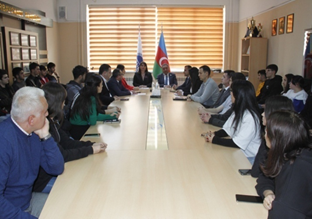
Shahla Aslanova, Chief Adviser in the Department for Cooperation with International and Civil Society Organizations of the Ombudsman Office, participated in an awareness-raising event held at the Azerbaijan Tourism and Management University by the Youth Anti-Drug Addiction Public Union under the motto “Value your life”.
The management and students of the noted University, deputies of the Parliament, and representatives of the Main Drug Enforcement Department of the Ministry of Internal Affairs, the Working Group of the State Commission for Combating Drug Abuse and Illicit Drug Trafficking, the State Committee for Family, Women and Children Affairs, and the State Committee on the Work with Religious Associations delivered speeches at the event. During the speeches, attention was drawn to the social consequences caused by drug addiction, and the existing statistical data reflecting the current situation in this area in the country were highlighted. Furthermore, it was stressed that it is important for young people to focus on their education and personal development, as well as the effective organization of their leisure time.
In her speech, the representative of the Ombudsman Office provided information about the Ombudsman’s awareness-raising activities in the fight against drug addiction, events held with the participation of children and youth in the regions, the investigation of related complaints, as well as the recommendations for the fight against drug addiction included in the annual reports. In addition, the importance of measures to prevent social isolation and adaptation of persons suffering from drug addiction in society was emphasized.
A social video clip prepared by the Youth Anti-Drug Addiction Public Union was demonstrated.
CHIEF OMBUDSMAN JOIN THE SOUTHEAST ASIAN OMBUDSMAN FORUM (SEAOF) MEETING 2023 HELD IN YOGYAKARTA.
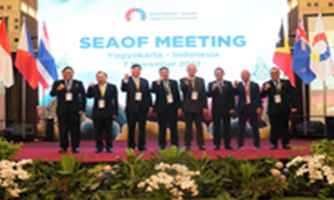
On 8th November 2023, in a landmark event at the Royal Ambarrukmo Yogyakarta, the SEAOF Meeting brought together member institutions of the South East Asian Ombudsman Forum (SEAOF) and representatives from notable organizations. Invited participants included the Ombudsman of Hong Kong, Commonwealth Ombudsman, Public Complaints Bureau (PCB) Malaysia, and the National SDGs Secretariat of Indonesia.
The meeting, held with a firm commitment to serve as a regional platform for knowledge sharing, experiences, and best practices, aimed to foster collaboration within the Ombudsman community, both within and outside the Southeast Asian Region.
Distinguished representatives from each organisation took the opportunity to share insights into their complaint-handling mechanisms, case studies, areas of interest, and their organizational activities.
The Chief Ombudsman of Thailand stressed the importance of SEAOF focusing on cooperative activities that enhance the efficiency of Ombudsman work. He specifically highlighted the development of the fact-finding process and innovative tools resulting from Comparative Studies. Emphasizing adaptability, he suggested tailoring such knowledge to suit the specific working contexts of each organization.
A representative from the National SDGs Secretariat of Indonesia contributed by introducing the framework and essential processes for developing the Voluntary National Review (VNR) of the Republic of Indonesia. Encouraging Ombudsman institutions with mandates involving SDG Goal 16 (Peace, Justice, and Strong Institutions), they urged active participation in suggesting government operations align with the goals and indicators of the SDGs.
Concluding the SEAOF Meeting and SEAOF+ Meeting, the Thai Ombudsmen, alongside SEAOF member institutions, issued a joint press statement. This declaration underscored their collective dedication to promoting peaceful and inclusive societies for sustainable development, with a primary goal of providing access to justice for all and benefiting the rights of citizens in each country.
LISTENING TO THE OPINIONS OF EXPERTS FROM LEGAL AND ACADEMIC CIRCLES ON THE “INTEGRATION OF ADMINISTRATIVE APPEALS”.
– Launch of the Administrative Appeals Integration Advisory Council, offering consultation on the scale and direction of the integration and various issues –
Opinions of experts from legal and academic circles will be heard regarding the ways to integrate 123 administrative appeals agencies to ensure that citizens can utilize the administrative appeals services more conveniently and efficiently.
On October 11, the Anti-Corruption and Civil Rights Commission (ACRC, Chairperson Kim Hong-Il) launched “Administrative Appeals Integration Advisory Council,” consisting of experts from legal and academic circles, at the Government Complex Seoul.
The council is organized into six divisions, including ▴general management, ▴taxation, ▴rewards and insurance, ▴labor, ▴land, and ▴personnel. Council members of each division will provide expert consultations on the scale and direction of the integration of administrative appeals and various issues.
Administrative appeal is an institution through which citizens whose rights and interests have been violated due to illegal and unreasonable dispositions seek assistance from administrative agencies before filing a lawsuit with the court. This institution offers advantages, such as simple procedures, handling, and being cost-free.
However, citizens face challenges regarding where and by when they should file administrative appeals since there are 57 general administrative appeals agencies* and 66 special administrative appeals agencies**, each with distinct competent authorities and procedures.
*Established under the Administrative Appeals Act, such as Central Administrative Appeals
Commission, Municipal and Provincial Administrative Appeals Commission, etc.
**Established under individual laws rather than the Administrative Appeals Act, such as Tax Tribunal, Appeals Committee, etc.
In addition, there have been inefficiencies within government operations, such as organizational overlaps and personnel redundancies, due to the establishment and functioning of multiple administrative appeals agencies.
Previously, ACRC conducted a survey on the integration of 123 administrative appeals agencies through the People’s Idea Box from July 24 to August 6. According to the survey result, 3,486 out of 4,424 respondents (78.8%) supported the integration of administrative appeals.
In light of this, ACRC will devise measures to integrate administrative appeals by December of this year in order to ensure that the rights of citizens are protected in a more convenient and efficient manner.
ACRC Chairperson Kim Hong-Il said, “I express my deepest gratitude to the council members for their collaborative efforts in devising methods to integrate administrative appeals that citizens can recognize and relate to. We will actively support the activities of the council members.”
BRIEFING ON THE ACTIVITIES OF THE AUTHORIZED PERSON OF THE OLIY MAJLIS FOR HUMAN RIGHTS (OMBUDSMAN) IN DETECTING AND PREVENTING CASES OF TORTURE IN THE PERIOD OF 10 MONTHS OF 2023.
Over 10 months of 2023, the Ombudsman and Public Groups conducted 452 monitoring visits to places of detention. In the period of 10 months of 2022, this figure was 297.
114 of the monitoring visits were carried out to penal colonies, 102 to pre-trial detention centers, 98 to temporary detention centers, 35 to special reception rooms, 17 to rehabilitation centers, 23 to branches of narcological scientific-practical medical centers, 19 to psychiatric hospitals, 25 to “Sakhovat” and “Muruvvat” houses, 12 to medical points for persons under the influence of alcohol, 7 to district (city) departments of the Ministry of Internal Affairs.
During the monitoring visits, more than 8,000 group meetings and about 3,000 individual meetings were conducted with accused and convicts. During the visits, living conditions, food, labour, medical care and quality, cultural and educational activities organised for persons held at these institutions, as well as compliance with sanitary and hygienic requirements and other similar matters were reviewed.
Based on the shortcomings identified during the monitoring, over 10 months the Ombudsman sent 7 position submissions, 2 advisory opinions, 6 requests and 2 analytical memos to the responsible and relevant ministries and departments.
Also, the Ombudsman submitted 4 analytical papers to the chambers of the Oliy Majlis.
Over the 10 months of this year, the Ombudsman received 1,809 applications from persons held in the places of detention, as well as from their close relatives and defenders (lawyers). Of these, 644 applications were sent by mail, 312 received during the on-site visits and 271 during individual meetings, 309 through “Ombudsman Boxes”, 227 in electronic form and 46 through the Ombudsman’s hotline. It should be noted that 49 percent of all applications were sent directly by accused and convicted persons.
During the review of applications, 14 accused were transferred to the penal institutions close to their places of residence.
Benefits were paid to 3 accused serving their sentences at settlement-colonies.
Practical assistance in obtaining ID cards was provided to 119 persons kept at the “Muruvvat” house and 3 persons kept in psychiatric dispensaries, as well as to 42 accused in penal colonies and 3 children of 2 female convicts.
Based on the application from accused and convicts to the Ombudsman, 27 people serving their sentences underwent a medical examination and were placed in hospitals for treatment.
With the support of the local administration, more than 100 million soums of financial assistance were allocated to the family members of 62 accused, and medical services were provided to the close relatives of 17 accused persons.
Also, medical examinations were carried out by specialists as a cardiologist, neurologist, ophthalmologist, ENT for persons held in pre-trial detention center No. 7, colony settlements No. 37 and 38 of the Samarkand region, colony settlement No. 27 of the Republic of Karakalpakstan, as well as in correctional colonies No. 4 and 5 located in the Navoi region.
The Ombudsman received 147 complaints about mental, psychological, physical or other pressure on persons held at the places of detention by law enforcement officers. Of these, 28 were received during individual meetings conducted during monitoring visits, 23 through the “Ombudsman Boxes”, 46 from the administration of penitentiary institutions and close relatives of accused persons (convicted) via mail, 22 during receptions of the Ombudsman and the Secretariat’s respective staff, 22 in electronic form and 6 through the Ombudsman’s hotline.
It is important to note that 21 messages about mental, psychological, physical or other pressure posted on social networks were reviewed and positions were expressed. 9 requests from the Ombudsman were submitted to the responsible ministries and departments.
COMMISSIONER CHAN TSZ KING MEETS PROSECUTOR DELEGATION OF INDONESIA.
On 3 November 2023, the Commissioner Against Corruption, Chan Tsz King, met with the visiting prosecutor delegation of Indonesia at the headquarters of the CCAC to exchange views on law enforcement work related to anti-corruption criminal cases, etc.
During the meeting, the CCAC introduced to the delegation the history and functions of the CCAC, types of corruption crimes in the laws of Macao, case investigation procedures and measures and some cases that were previously investigated by the CCAC, among others. The Consul of the Legal Affairs Section of the Consulate General of the Republic of Indonesia in Hong Kong, Raymond Ali introduced the anti-corruption work of Indonesia and the handling of criminal cases by the procuratorial organs of Indonesia, etc.
Other participants from the CCAC included the Deputy Commissioner Against Corruption cum Director of the Anti-Corruption Bureau, Ao Ieong Seong, the Chief of the Cabinet, Chan In Chio, the Advisors, Fong Pak Ian and Wong Hio Nam, and the Chief of Investigation Department 2 of the Anti-Corruption Bureau, Lei Tong Leong. The representatives from the prosecutor delegation of Indonesia included the Head of Section of Monitoring and Evaluation of Legal Regulation at Bureau of Legal and International Affairs, Yuris Rawando, the Head of Section of Crimes involving Narcotics and Other Addictive Substance at High Prosecution Office of Special Capital Region of Jakarta, Setyo Adhi Wicaksono, and the Head of Section of Evaluation and Reporting at Directorate on Civil Affairs cum Deputy Attorney General on Civil and State Administrative Affairs, Nindya Asih Martha Utami.
MOU EXTENSION SIGNED BETWEEN THE OMBUDSMAN OF THE REPUBLIC OF INDONESIA AND THE OMBUDSMAN OF THE KINGDOM OF THAILAND.
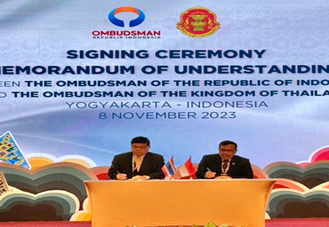
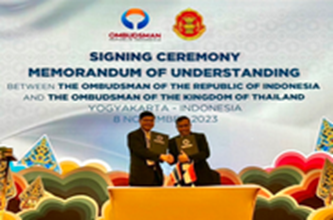
On 8 November 2023, Mr. Somsak Suwansujarit, Chief Ombudsman of the Kingdom of Thailand, and Mr. Mokhammad Najih, Chairman of the Ombudsman of the Republic of Indonesia, signed the extension of the Memorandum of Understanding on bilateral cooperation between the two sides in Yogyakarta, Republic of Indonesia.
This MOU extension reflects the intention of the Ombudsmen of the two nations to continue active cooperation. They eager to improve their systems of handling complaints, exchange experiences, seek to collaborate in areas of common interest, and resolve the maladministration of the public services practice encountered by the other country’s overseas nationals in their lives, in the territory of the other side.
Before the signing ceremony, the Ombudsmen of the two countries had met bilaterally on 7 November 2023 to discuss the cooperation policy for implementation in the next phase. Both sides have accepted to involve the cooperation with the government of both countries through the diplomatic channels in an effort to support in resolving issues and difficulties encountered by each side’s nationals living in the another country, in accordance with the MOU and their legal framework.
PROVINCIAL OMBUDSMAN SINDH DIRECTS CHIEF SECRETARY TO ENSURE TIMELY PAYMENT OF SERVICE DUES TO THE RETIREES AND WIDOWS OF DECEASED GOVERNMENT EMPLOYEES.
The directives were issued by Mr. Ajaz Ali Khan Provincial Ombudsman Sindh while disposing of the complaint of Mst. Aisha Khatoon who was able to get service dues of Rs. 31,19,864/-, on his intervention, after six years of death of her husband.
The above named complainant filed a complaint stating that her husband Muhammad Ibrahim Ansari was Draftsman in the office of Executive Engineer, Highways Division, Sujawal and died during service on 07-03-2018 but family pension and other service dues were not paid despite her approaches to the authorities and, therefore, solicited intervention.
The complainant was admitted and assigned to Regional Director Provincial Ombudsman Regional Office, Hyderabad who issued notices to authorities concerned. In response, the Executive Engineer, Highways Division, Sujawal, Reported that an amount of Rs. 14,19,864/- towards leave encashment and gratuity/commutation has been paid and cases regarding payment of dues of G.P. Fund, Group Insurance and financial assistance, forwarded to competent authority for further action.
During further proceedings the Executive Engineer, Highways Division Sujawal, further informed that son of the deceased employee has appointed as Tracer (BPS-5) against deceased quota whereas the Assistant manager, State Life Insurance Corporation, Hyderabad, produced cheque of Rs.350,000/- on account Group Insurance, which was handed over to the widow complainant. Lastly the District Accounts Officer, Sujawal reported that dues of Rs.900,000/- towards financial assistance has also been paid to the complainant who confirmed payment of total Rs.31,19,864/- and appointment of her son against deceased quota besides payment of monthly pension.
The Honourable Ombudsman Sindh observed that it was distressful that authorities took six years to pay the admissible dues to a widow which should have been done much earlier to avoid the problems faced by the lady, therefore, he directed the Chief Secretary to ensure timely payment of legitimate service dues to the retired and deceased employees.
RESOLVING A 40-YEAR-LONG STANDING ISSUE CONCERNING “PUBLICLY OWNED LAND” AT SEJONG LEPER COLONY.
– Enabling the land to be used as public parking lots free of charge through the consultation and mediation with Sejong-si and the Korea Land and Geospatial Informatix Corporation –
A long-standing issue regarding publicly owned land, which had persisted for over 40 years among the settlers of Sejong Leper Colony, has been resolved through mediation conducted by the Anti-Corruption and Civil Rights Commission (ACRC, Chairperson Kim Hong-Il).
ACRC resolved a collective complaint filed by the settlers of Sejong Chunggwang maeul, a leper colony, demanding the resolution of the publicly owned land conflict within the town, during an onsite mediation meeting, presided over by Chairperson Kim Hong-Il, held on October 12 at Sejong City Hall.
Due to the government’s isolation policy and social discrimination, people living with leprosy began residing in the abandoned mining area at San 143, Deunggok-ri, Bugang-myun, Sejong-si (formerly known as Buyong-myun Cheongwon-gun) by refurbishing “worksite restaurants” and cultivating forests and fields, after around 1973. A relatively large leper colony (Chunggwang maeul) was created with the increasing number of leprosy population migrating to the area following the establishment of Chunggwang Church around 1977.
The settlers of Chunggwang maeul built livestock sheds and sustained themselves through the livestock industry. However, at present, most of them are the elderly without a particular income, who receive government grants, living in poor welfare conditions and environment.
The settlers lodged a grievance complaint with ACRC, demanding “the sale or free usage of the city land, specifically 400-12 and 400-13 Deunggok-ri, Bugang-myun, Sejong-si (hereinafter referred to as the concerned land), which they have used for years by paying fees to cultivate forests and fields in order to create parking lots.”
ACRC developed mediated plans by conducting a range of on-site investigations, consulting with relevant agencies, and gathering opinions.
Sejong City has decided to address matters, including the alteration of land category and land registration ledger, to transfer the concerned land into the property of the administration and manage it. The city will directly manage the concerned land by itself by ensuring that the land is used without fees through public projects, including building public parking lots, in order to bolster the rights and interests of settlers and their welfare.
The Korea Land and Geospatial Informatix Corporation decided to promote housing stability within the leper colony by conducting measurements of the concerned land in accordance with the MOU signed with ACRC and the ombudsman operational plans and to actively cooperate in resolving the complaint, including reducing the measurement expenses.
The settlers will be committed to proactively cooperating to ensure that the concerned land is managed as the property of the administration through the seamless implementation of public projects.
ACRC Chairperson Kim Hong-Il said, “It is considerably meaningful that the recent mediation contributed to resolving the grievances of the residents of Chunggwang maeul, a leper colony, who have faced challenging lives due to social bias and discrimination. We urge relevant bodies in central and local governments, as well as individuals across all social strata, to show their interest and support as understanding towards people affected by leprosy and pan-governmental collaboration and participation are necessary in order to address issues, such as the poor environment and welfare condition within the colony.”