Category Archives: AOA News Letter
OMBUDSMAN PROBES RESPITE SERVICES FOR SUPPORTING CARERS OF ELDERLY PERSONS AND PERSONS WITH DISABILITIES.
The Ombudsman, Mr Jack Chan, today (9 August) announced the launch of a direct investigation to carefully examine the respite services for supporting carers of elderly persons and persons with disabilities.
In recent years, there have been tragic incidents from time to time when carers succumb to unbearable pressure. Failure to rescue in cases involving “the elderly caring for the elderly”, “the elderly caring for the disabled”, and “the disabled caring for the disabled” have also resulted in tragic incidents. The hardships of life and immense pressure faced by carers are long-standing livelihood problems. Meanwhile, the Office of The Ombudsman has noticed that the current-term Government has put in place various targeted support measures for carers, including expanding the network of respite services and launching the designated hotline for carer support.
The Social Welfare Department is responsible for planning and overseeing respite services, which provide short-term day and residential respite services to elderly persons and persons with disabilities in need, to temporarily relieve carers both physically and mentally. However, government statistics showed that the respite services may be under utilised. The Office has also noted that there are concerns over existing respite services, including location spread imbalance, complicated application procedures and lack of support.
Mr. Chan said, “Carers are the life pillars for the elderly and persons with disabilities. Their care giving role is crucial and indispensable for the survival of the care recipients. Although the Government has adopted a multipronged approach in rendering support for the carers, I want to carefully examine whether there is room for further enhancement of the existing support measures, in order to better alleviate the difficulties faced by the carers and improve their living standards. Hence, I have decided to launch a direct investigation operation to examine the operational arrangements for respite services for the elderly and persons with disabilities, including service planning, application procedures, support and information provided for carers, monitoring on usage and service quality, as well as promotion and publicity, with a view to making targeted recommendations to the Government for improvement where necessary.”
FEDERAL OMBUDSMAN MEETS WITH REPRESENTATIVES OF ELECTRONIC AND PRINT MEDIA.
- New offices at AJ & K and Gilgit Baltistan to be opened.
- A record number of 127.000 complaints have been resolved as of today.
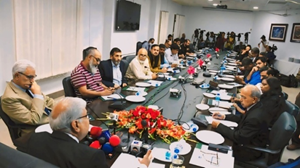
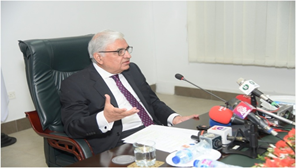
Islamabad, August 20, 2024: Mr. Ejaz Ahmad Qureshi, Wafaqi Mohtasib speaking with the Media Persons, in an informal meeting, stated that new offices are being established soon in AJ&K and Gilgit Baltistan regions. This will ensure presence of this Office in 24 cities and shall enable the general public to fully avail its services closer to their homes. Wafaqi Mohtasib, Mr. Ejaz Ahmad Qureshi stated that over 132,000 cases were received till yesterday, out of which 127,000 cases have already been resolved. During the current year the investigation officers visited remote areas and resolved 2210 complaints on the spot. This measure greatly enhanced the outreach and accessibility of this office and ensured free and expeditious relief to the general public. He further added that the heads of federal agencies have been duly instructed to address the grievances of the poor and marginalised segments of society and take necessary steps to follow high standards of efficiency and propriety in the discharge of their official duties. Wafaqi Mohtasib further stated that his officers are working hard within the given resources. Their commitment to provide selfless services to the general public has certainly contributed in addressing the complaints in large numbers. During 2023 the number of complaints has been increased to 194,990 which reflected confidence of the people in the performance of this Office. Initiatives including Informal Resolution of Disputes (IRD) and inspection of various public sector agencies have further contributed in providing much needed relief to the general public.
Mr. Ejaz Ahmad Qureshi invited the media persons to extend full support in raising awareness about the role, scope of work and activities of the Wafaqi Mohtasib Institution so that the larger number of people can get free and expeditious relief from this poor man’s court.
CONTINUOUS TRAINING ON WORKING METHODS OF NATIONAL PREVENTIVE MECHANISM.
On July 17-19, 2024, within the framework of the European Union project – “Support to the Public Defender’s Office of Georgia”, a training was held for the employees of the Office and members of the Special Preventive Group on the working methods of the National Preventive Mechanism.
Working methodology, existing challenges and solutions were discussed at the meetings. The training was led by Viktor Zakharia, an international expert and member of the UN Subcommittee on Prevention of Torture and the European Committee for the Prevention of Torture.
It should be noted here that the National Preventive Mechanism of Georgia turned 15 years old on July 16, 2024. According to the amendments made to the Organic Law of Georgia on the Public Defender of Georgia on July 16, 2009, the Public Defender of Georgia performs the functions of the national mechanism provided for by the Optional Protocol to the UN Convention against Torture and Other Cruel, Inhuman or Degrading Treatmentor Punishment. For this purpose, a Special Preventive Group was created at the Public Defender’s Office of Georgia, the activities of which are coordinated by the Department of the National Preventive Mechanism of the Public Defender’s Office. The National Preventive Mechanism regularly checks the situation of persons detained, imprisoned or otherwise restricted in their liberty, with a view to protecting them from torture and other cruel, inhuman or degrading treatment or punishment. In 2009-2023, the National Preventive Mechanism carried out 2045 preventive visits. The results of the preventive visits are reflected in reports following visits, as well as special and annual reports. In order to implement the recommendations contained in the mentioned reports, the National Preventive Mechanism conducts a constructive dialogue with stakeholders and, in accordance with the Optional Protocol to the UN Convention against Torture and Other Cruel, Inhuman or Degrading Treatment or Punishment, cooperates with the UN Subcommittee on Prevention of Torture, which positively evaluates the mechanism’s operation in Georgia. In particular, the press release following the visit to Georgia in 2023 states that the National Preventive Mechanism systematically and professionally monitors prisons and other places of restriction of liberty.
PDHJ TIMOR-LESTE HOSTS SEANF’S SECOND TECHNICAL WORKING GROUP MEETING ON HUMAN RIGHTS.
From July 10-11, 2024, the Ombudsman for Human Rights and Justice (PDHJ) Timor-Leste hosted the Second Technical Working Group Meeting (TWG) of the Southeast Asia National Human Rights Institution Forum (SEANF) in Dili. Under the theme “Human Rights for All, Especially in Southeast Asia: Respected, Protected, and Enjoyed Equally by All,” the meeting welcomed SEANF members both in person and online.
Virgílio da Silva Guterres ‘Lamukan’, Chairperson of the Ombudsman for Human Rights and Justice (PDHJ), delivered the opening remarks, expressing anticipation for productive discussions on critical human rights issues such as land rights, livelihoods, and overall human rights conditions. He emphasized that the outcomes of this meeting would be pivotal for presentation at the annual SEANF conference scheduled for November 2024.
SEANF, which includes the National Human Rights Commission of Indonesia (KOMNAS HAM), Human Rights Commission of Malaysia (SUHAKAM), Myanmar National Human Rights Commission (MNHRC), Commission on Human Rights of the Philippines (CHRP), National Human Rights Commission of Thailand (NHRCT), and Timor-Leste’s PDHJ, collaborates to advance human rights in the region.
Discussions during the meeting addressed various pressing issues including human rights in business, prevention of torture and other forms of cruel, inhuman, degrading treatment or punishment, human trafficking, and transboundary human rights issues. Members shared updates on major developments since the first TWG meeting in April 2024.
The meeting also saw participation from Non-Governmental Organizations (NGOs) such as the Asian NGO Coalition for Agrarian Reform and Rural Development (ANGOC) and Rede Ba Rai from Timor-Leste, who contributed insights on monitoring mechanisms and advocacy efforts related to land conflicts. Additionally, FORUM-ASIA/ANNI discussed human rights developments in Southeast Asia and potential collaborations with SEANF.
The results of the Second SEANF TWG Meeting will be used to guide discussions at the upcoming annual SEANF meeting in November 2024 in Dili, advancing efforts to promote and safeguard human rights throughout Southeast Asia.
OMBUDSMAN SABINA ALIYEVA SPOKE AT THE INTERNATIONAL CONFERENCE HELD IN ALBANIA.
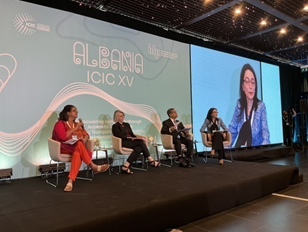
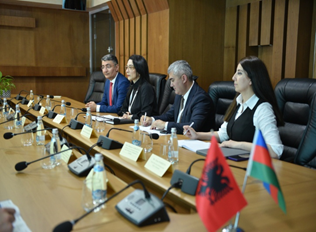
The Commissioner for Human Rights (Ombudsman) of Azerbaijan, Sabina Aliyeva, participated at the XV Edition of the International Conference of Information Commissioners (ICIC), attended by information commissioners from various countries, at the invitation of Besnik Dervishi, Information and Data Protection Commissioner of the Republic of Albania.
Sabina Aliyeva, making a presentation at the first panel session of the conference held under the theme “Empowering Individuals through Access to Information: Ensuring Transparency and Inclusivity in an Interconnected World,” provided information about the Ombudsman’s activities in the field of protecting and ensuring the right of access to information, public awareness-raising activities in this field, pointing out that safeguarding the rights of vulnerable population groups receives special attention.
Underscoring that this year, Azerbaijan will host the 29th session of the UN Climate Change Conference of the Parties (UNFCCC COP29), the Ombudsman also emphasized that in this context, an international symposium, in which ombudspersons and national human rights institutions (NHRIs) from other countries will discuss issues of access to information, will be held.
Within the framework of the visit, the Ombudsman had meetings with several state officials of Albania, including the Minister of Justice, Ulsi Manja, the Deputy Speaker of the Parliament, Ermonela Valikaj Felaj, and Information and Data Protection Commissioner Besnik Dervishi.
During those meetings, S. Aliyeva gave detailed information to the participants about the activities of the Ombudsman Office, measures taken to protect the right to information, and expanding the Ombudsman’s mandate by virtue of the latest amendments made to the relevant Constitutional Law. Also, outlining the human rights reforms implemented at the national level, S. Aliyeva added that the Ombudsman has established close cooperation with the Parliament in improving the legislation and actively participates in the gatherings of the parliamentary comittees. The Ombudsman stressed that women in our country actively participate in decision-making processes and occupy management positions at different levels.
In addition, information was given on monitoring visits conducted to places which persons cannot leave at their own will, including education, health, and penitentiary institutions under the national preventive mechanism jurisdiction of the Ombudsman, as well as relevant recommendations made.
Ombudsman S. Aliyeva spoke about serious obstacles created by the landmines buried by Armenia in our territories during the occupation last about thirty years, the large-scale building and re-construction works carried out in those areas, the return of our former IDPs to their native lands, and endanger the lives and health of civilians there. Furthermore, it was noted that the Ombudsman carried out fact-finding missions (FFM) to those liberated areas during the war and post-war period, as a result of which related reports, appeals, and statements have been submitted to the corresponding international organizations, foreign NHRIs, and ombudspersons. The hard copies of the FFM reports were presented to the officials of that country.
The Ombudsman also said that good experiences gained within bilateral cooperation will contribute to effectively protecting and ensuring human rights and freedoms.
It should be noted that during the visit, in order to develop bilateral cooperation between two countries in the field of human rights, as well as safeguarding the right to information, the Commissioner for Human Rights (Ombudsman) of Azerbaijan, Sabina Aliyeva, and the Information and Data Protection Commissioner of the Republic of Albania, Besnik Dervishi, signed a Memorandum of Understanding.
PROGRAM « HELLO! ».
«Hello!» – Morning informational program with tips for all occasions that can be useful not only in the morning hours.
Saria Saburskaya told about the “People’s Control” system, its innovations and many other things. For example, with the help of «People’s Control» you can report on the quality of provision of medical services to the population during preventive examinations, examination in health institutions.
The general term of consideration of the notification in the system “People’s control” may not exceed 10 calendar days, for categories “Public services”, “Current repair of the house”, “Maintenance of the house” – three calendar days.
OMBUDSMAN URGES GOVERNMENT ACTION ON HEALTH ISSUES AMID CONCERNS.
Virgílio da Silva Guterres ‘Lamukan’, Ombudsman for Human Rights and Justice, has urgently called upon the Minister of Health and her team to address pressing issues affecting hospitals in Timor-Leste. Speaking at Hotel Timor on July 10th, Guterres emphasized the severity of the situation, stating, “We cannot afford to let the situation in hospitals deteriorate further.” He expressed deep concern over the current state of hospitals, echoing sentiments from other entities: “The President of the Republic and other entities have also voiced their concerns.”
Guterres disclosed that a working group established by PDHJ is actively investigating the matter and anticipates providing recommendations to the government soon. He highlighted the seriousness of the situation, noting, “Our interviews with doctors and former managers have provided valuable insights.” Guterres underscored the importance of immediate government attention, emphasizing, “PDHJ will finalize its recommendations based on the findings of the investigative team.”
Regarding medicine shortages, Guterres pointed out past successful management strategies: “In the past, a network of at least four to five permanent suppliers was established to ensure the availability of medicines.” However, recent changes in procurement methods have disrupted this network, leading to challenges in medicine distribution. He stressed, “The issue is not only about availability but also about ensuring that hospitals receive the medicines they urgently require.”
In conclusion, Virgílio da Silva Guterres highlighted the critical need for swift governmental action to address these healthcare challenges, ensuring hospitals receive the necessary support to improve their operational conditions and provide adequate care nationwide.
“VETERAN FAMILY STATUS” FOR FOREIGN NATIONALS SHOULD BE JUDGED WITH REASONABLE STANDARDS.
– Response to inquiry about registering a foreign spouse for veterans’ compensation: “Foreigners cannot be registered.”
– ACRC expressed the opinion that “it is harsh to recognize only those who have Korean nationality as veterans’ compensation family members, even when substantial conditions for simplified naturalization, such as language and culture, are met.”
Anti-Corruption & Civil Rights Commission (ACRC, Chairperson Ryu Chul Whan) has determined that it is desirable to register foreign spouses who have met the residency period requirements and established a solid living foundation in Korea, including language and cultural integration, as eligible family members for veterans’ compensation.
Mr. Kim registered as a soldier wounded by disaster under the Act on Support for Persons Eligible for Veteran’s Compensation in June 2017 due to an injury sustained during his military service. In February 2023, he married Ms. A, a foreign national, who had been in a relationship with him for seven years. Ms. A obtained a marriage immigrant visa, thereby officially establishing them as an international couple.
Upon inquiring about employment support for the family members of veteran compensation recipients, Mr. Kim was informed by the Regional Office of Patriots and Veterans Affairs that foreign nationals could not be registered as family members unless they acquired Korean nationality.
*Article 6, Paragraph 2, Sub paragraph 1 of the Nationality Act stipulates that a person may be granted naturalization if he/she has maintained a residence in the Republic of Korea for at least two consecutive years while married to a Korean national.
In response, Mr. Kim filed a complaint with the ACRC, arguing that it was unreasonable for the government to deny recognition of foreign spouses as family members when providing employment support for stable economic activities of veteran compensation recipients. He emphasized the need for proactive administrative service as society increasingly supports multicultural families.
ACRC’s investigation revealed that:
- Ms. A has been residing at the same address as Mr. Kim since 2019 and has lived in Korea for at least five years.
- Ms. A graduated from a four-year university in Busan in February 2023.
- Ms. A demonstrated proficiency in listening, writing, and reading Korean at a level sufficient for daily life activities by passing the Test of Proficiency in Korean (TOPIK II) in November 2022.
ACRC has received feedback from the Ministry of Justice indicating that the requirement for foreigners to reside in Korea for a certain period before obtaining Korean citizenship ensures their adaptation to the Korean community and the establishment of a stable living foundation.
ACRC expressed its opinion to the Ministry of Patriots and Veterans Affairs to reconsider Ms. A’s status as a family member eligible for veterans’ compensation. This recommendation takes into account her residence period exceeding five years, graduating from a four-year university, and her proficiency in Korean as demonstrated by the TOPIC results. These aspects indicate that she meets the conditions for simplified naturalization under the Nationality Act.
Furthermore, ACRC recommended the establishment of specific and reasonable criteria for registering family members of veteran compensation recipients. It is deemed undesirable to uniformly require foreign spouses to meet the conditions for simplified naturalization when they already fulfill the substantial requirements.
Vice Chairperson Kim Tae-Gyu of the ACRC stated, “Given the growing presence of multicultural families, it is essential to carefully examine and enhance awareness and standards for recognizing, supporting, and treating veteran families to prevent any neglect.”
COMMISSIONER FOR HUMAN RIGHTS ADDRESES NTERREGIONAL CONFERENCE ON “TRANSFORMING DETENTION AND THE FUTURE OF HUMAN RIGHTS IN ISOLATION”.
The Commissioner for Human Rights in the Republic of Tatarstan addressed the Interregional Conference “Transformation of Detention and Future of Human Rights in Isolation” in Moscow.
The main objective of the conference is to consolidate the efforts of human rights commissioners, as well as other institutions of civil society, in order to solve urgent problems related to ensuring the rights, freedoms and legitimate interests of suspects, accused and convicted persons. Its participants will consider improving mechanisms to ensure and protect the rights of citizens in places of detention, Present the most interesting and effective practices in protecting human rights in isolation.
One of the effective mechanisms for implementing the principles of the rule of law and ensuring the rights, freedoms and legitimate interests of citizens in isolation is the institution of the Ombudsman, which brings together the efforts of the State and civil society. The Ombudsmen have accumulated considerable experience at both the federal and regional levels.
THE OMBUDSMAN OF AZERBAIJAN PARTICIPATED ONLINE IN THE IV SAMARKAND FORUM ON HUMAN RIGHTS.
Sabina Aliyeva, the Commissioner for Human Rights (Ombudsman) of the Republic of Azerbaijan, participated online in the IV Samarkand Forum on Human Rights and made a presentation on the topic ‘Environmental Challenges: Ensuring Sustainable Solutions for the Future of Human Rights in a Changing World.
During her speech, the Ombudsman stated that the current global climate issues raise several concerns regarding the future of human rights. S. Aliyeva emphasized the need for the implementation of global strategies to protect human rights in the context of climate change, as well as the necessity of further strengthening cooperation.
Noting that 2024 has been declared the ‘Year of Solidarity for a Green World’ in Azerbaijan, the Ombudsman informed the forum participants that this year our country will host the 29th session of the Conference of the Parties to the UN Framework Convention on Climate Change (COP29). Moreover, it was highlighted that significant efforts are being made in Azerbaijan regarding environmental protection and the efficient use of natural resources, including the adoption and implementation of state programs, action plans, and strategies.
In her speech, S. Aliyeva also drew attention to the issue that armed conflicts are one of the main factors causing environmental pollution. The Ombudsman, highlighting that our country has suffered from illegal occupation for many years, stated that facts of serious damage to biodiversity, water sources, and flora and fauna were seen during visits to the liberated territories.
Furthermore, the Ombudsman said that the hundreds of thousands of unexploded mines and military ordnance buried by Armenia during the occupation period are currently delaying the return of former IDPs to those areas, posing a serious threat to human life and health. She also noted that since the end of the Second Karabakh War, 361 of our citizens, most of whom are civilians, have fallen victim to mines, and the restoration of the destroyed infrastructure, as well as the ecosystem, requires a long time and significant financial resources.
Also, the Ombudsman stated that special reports, statements, and appeals prepared from the outcomes of the fact-finding missions carried out during the war and post-war periods have been submitted to relevant international organizations, national human rights institutions, and ombudspersons of other countries.
In conclusion, the Ombudsman of Azerbaijan underlined the critical importance of new approaches and joint cooperation for the protection and promotion of environmental rights.