
25TH ANNIVERSARY OF COMPREHENSIVE INTEGRITY ASSESSMENT, ACRC DISCUSSES FUTURE DIRECTIONS WITH THE KOREAN ASSOCIATION FOR PUBLIC ADMINISTRATION.
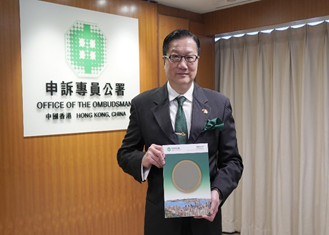
The Ombudsman, Mr Jack Chan, presented this year’s Annual Report of the Ombudsman to the public. In the reporting year, the Office achieved remarkable results in all three areas managed by the Ombudsman, and stepped up its supervisory role to bring about tangible improvements in public administration. This year marks the 29th anniversary of the Hong Kong Special Administrative Region (“HKSAR”)’s return to the motherland; it is also the first year of the country’s 15th Five-Year Plan, and a pivotal year for Hong Kong to move from stability towards prosperity.
Co-hosted by KAPA, the National Research Council for Economics, Humanities and Social Sciences (NRC), the Ministry of Oceans and Fisheries, and the Busan Tourism Organization, the conference runs for three days from to the 22nd to the 24th at the Busan Port International Exhibition & Convention Center (BPEX) under the theme, “Public Administration for the People, Public Administration Looking to the Future: Technology, Growth, Balance, and Government.”
The event brought together around 2,000 public administration scholars and policy experts from 20 countries to review the academic achievements of Korean public administration and design future national governance paradigms through various discussions.
Today (the 22nd), the ACRC hosted two special sessions in collaboration with the Korean Association for Corruption Studies and the Korea Institute of Integrity. These sessions aimed to share the primary achievements and policy significance of the Comprehensive Integrity Assessment system while gathering diverse feedback from academia and field practitioners regarding its future development.
In the first session, participants focused on “An AI-Driven Integrity Assessment System and the Establishment of Dedicated Assessment Governance.” The discussion covered innovative approaches to the Comprehensive Integrity Assessment using new technologies, alongside the necessity of establishing a specialized institution dedicated to the assessment.
In the following second session, participants took stock of the achievements made over the 25-year history of the public institution integrity assessment system.