Category Archives: Related Links
TELEPHONE & QUOT; HOTLINE & QUOT; ORGANIZED BY THE OMBUDSMAN OF TATARSTAN
In order to identify problem areas and for active interaction with citizens, the Commissioner for Human Rights in the Republic of Tatarstan systematically conducts telephone “hotlines”.
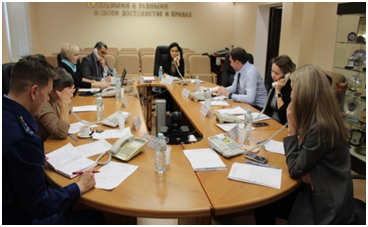
The practice of holding telephone & quot; hotlines & quot; has long been popular among residents of Tatarstan. Another telephone & quot; hotline & quot; was devoted to the issues of observance of the rights of disabled people and people with disabilities. Citizens were given the opportunity to ask questions and get legal explanations of various aspects of law enforcement.
A total of 123 calls were received, which is statistically more than the number of calls in previous hotlines. Most of the applicants were concerned about the issue of providing the necessary technical means of rehabilitation for people with disabilities, increasing the number of vital medicines provided, and, of course, questions related to social security were often raised: subsidies, benefits and allowances.
THAI OMBUDSMAN HANDS OVER THE SEAOF CHAIRMANSHIP AND HELD THE SEAOF BANGKOK DECLARATION
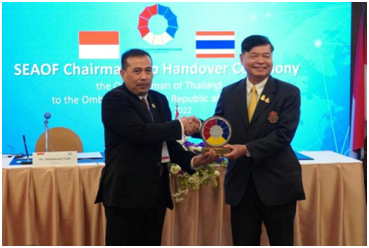
At the closing ceremony of the SEAOF Meeting and the SEAOF+ Meeting on 2nd November 2022, the Chief Ombudsman of Thailand, Mr. Somsak Suwansujarit, handed over the symbol of the SEAOF Chairmanship to Mr. Mokhammad Najih, Chairman of the Ombudsman of the Republic of Indonesia and wished the organisation a great success in steering the forum contributing to the development of Ombudsmanship in the region for qualified life of the citizen.
As endorsed in the TOR; an assumption of the SEAOF Chairmanship shall rotate every two years, based on alphabetical order of the English names of Southeast Asian member States,
Mr. Najih will be presiding two-year term of the Chairmanship (8th December 2022–7th December 2024).
In this event, the founding members of the SEAOF also jointly signed the SEAOF Bangkok Declaration to emphasize the purposes and principles of the SEAOF, the role of Ombudsman in international and regional cooperation to effectively deliver legal mandates in the region.
The declaration presented the SEAOF’s main purposes: (a) serve as a platform to contribute to transparent public administration, the protection and promotion of human rights, and the rule of law by sharing together experiences and expertise within and outside of Southeast Asia; and
(b) enhance the capacity of Ombudsman institutions and public complaint agencies in Southeast Asia to operate in accordance with relevant international instruments, including the Venice Principles, in order to strengthen their independence and autonomy.
PROVINCIAL OMBUDSMAN SINDH INITIATED A RESEARCH STUDY ON “ASSESSMENT OF MALNUTRITION (STUNTING) IN DISTRICT THARPARKAR”
Education and Health, being basic human rights and ensuring improved service delivery to the people, fall within the domain of Ombudsman Sindh. The Provincial Ombudsman Sindh initiated a research study on “Assessment of Malnutrition (Stunting) in District Tharparkar”. The study is funded by the IOI under the Regional Subsidy Programme 2021/2022. It is worth mentioning that access to food and nutrition is fundamental right to Pakistani citizens as enshrined in Article 38-D of the country’s constitution which states that “ The State shall provide basic necessities of life, such as food, clothing, housing, education and medical relief.
The key objectives of the study were to depict the nutrition-specific programs in the last five years in Tharparkar along with nutrition indicators, the dynamics of strengths, weaknesses, opportunities, and threats (SWOT) in the nutrition landscape to offer prescriptions for the improvement of nutrition outcomes in Sindh. The study hinged mainly on desk research consisting of secondary data from local and global literature, reports, and surveys. However, primary data from in-depth key informant interviews and focus-group discussions with key stakeholders in Tharparkar has also been gathered and analysed. The report discusses key findings on the status of malnutrition, especially stunting, in particular. Towards the end, based on the key findings, actionable recommendations have been given to improve service delivery and nutrition outcomes in Tharparkar.
The key findings and recommendation of the research study are following:
FINDINGS
- The first and foremost issue in Tharparkar is the persistent poverty.
- Lack of clean drinking water was cited as major reason for the poor nutrition of Thar community.
- Seasonal migration, nomadic lifestyle, and scattered population makes service provision a problem.
- Early marriages and low/poor birth spacing another problem that perpetuates the malnutrition vicious cycle.
- The widespread presence of NGOs in Tharparkar can be better harnessed through effective coordination.
- Lack of connectivity / transportation cost was often cited as a binding constraint that inhibits health service utilization, especially for females.
- The healthcare staff perspective, the major issue was termed as the lack of human resources to cater to the local population. Shortage of doctors and allied staff often meant that the existing pool of human resources was overburdened.
- The widespread presence of NGOs in Tharparkar can be better harnessed through effective coordination.
RECOMMENDATIONS
- One of major cross-cutting issues that need to be addressed in the region of Tharparkar is “Overall Poverty”.
- Impactful interventions implemented in one Taluka should be replicated across all Talukas of District Tharparkar.
- Provincial steering Committee for Nutrition headed by Chairman P&D Board, is tasked to provide policy-level, support and strategic oversight to the nutrition-related interventions across Sindh, including Tharparkar.
- ‘Conditional Cash Transfers’ might be an effective tool for reducing stunting.
- The number of Nutrition Stabilization Centers can be expanded to all the Talukas of Tharparkar.
- Provision of clean drinking water for the community must be ensured by developing water-supply schemes with effective operations & maintenance mechanisms for sustainability.
- Local cost-effective solutions, like high nutritious value recipes from local ingredients, must be sought for context-specific prescriptions.
THE ROUND TABLE ON THE EDUCATION OF CHILDREN WITH DISABILITIES
On December 1, a decade dedicated to the disabled and the protection of their rights began in the Russian Federation. This is the time to discuss and publicize the problematic issues of ensuring favorable conditions for the life of the disabled and people with disabilities.
As of September 1, 2022, 285.09 thousand people with disabilities live in the Republic of Tatarstan, which is 7.3% of the population of the entire republic. For the Ombudsman, these are not just numbers. These are markers that make us pay attention to important and urgent issues.
Relevant issues of education and upbringing of children with disabilities in a secondary school On December 1, for example, they were reflected and discussed within the framework of a round table organized by the Commissioner for Human Rights in the Republic of Tatarstan together with the Civic Chamber of the Republic of Tatarstan.
The round table was received by Airat Farrakhov, deputy of the State Duma of the Russian Federation of the eighth convocation, member of the State Duma Committee on Budget and Taxes, as well as representatives the State Council of the Republic of Tatarstan, the Civic Chamber of the Republic of Tatarstan, the Ministry of Education and Science of the Republic of Tatarstan, the Prosecutor's Office of the Republic of Tatarstan, the Central Psychological, Medical and Pedagogical Commission, as well as representatives of local governments, educational organizations, socially oriented non-profit organizations and public assistants of the ombudsman in municipal districts and city districts.
The decision on the need to hold this round table was made on the basis of an analysis of incoming applications from citizens, as well as trips to educational institutions.
The Commissioner for Human Rights in the Republic of Tatarstan thanked all colleagues who took the time and took part in the discussion of such important issues in speech. Yes, indeed, the topic is very important and complex, requiring close attention of bodies and organizations at all levels of public authority.
Special conditions for the education and upbringing of special children are not a mere formality. The position of the child depends on the availability of all necessary conditions. And the observance of his constitutional rights depends accordingly on the position.
Within the framework of the round table, many interesting, practice-oriented proposals were made, many forms and ways of overcoming existing problems were voiced.
During the meeting, the speakers also voiced the problematic issues of legal regulation of educational relations.
Of course, this is not the first and not the last meeting in such a format and composition, work in this area will continue.
CONVENING THE WORK MEETING FOR THE “PANEL OF ADVISORS FOR TEACHING MATERIALS ON INTEGRITY”
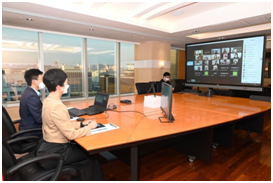
In 2021, the CCAC formed the “panel of advisors for teaching materials on integrity” to collect views from the education sector. In 2022, it recruited members again. At present, there are nearly 100 members in the panel, covering different educational stages of non-tertiary education. The CCAC recently convened the work meeting for the “panel of advisors for teaching materials on integrity” online to introduce to the members about the operation of the panel and relevant work arrangement so as to facilitate them to commence the work for the panel in a timely manner.
THE OMBUDSPERSON SPOKE AT THE INTERNATIONAL SCIENTIFIC-PRACTICAL CONFERENCE HELD AT THE POLICE ACADEMY
The Commissioner for Human Rights (Ombudsperson) of the Republic of Azerbaijan Sabina Aliyeva participated in the international scientific-practical conference entitled “Current Topics of Human Rights in the Modern Era” dedicated to the 74th anniversary of the Universal Declaration of Human Rights held at Police Academy of the Ministry of Internal Affairs.
The conference was attended by representatives of government agencies, public legal entities, local and foreign higher education institutions, and international organizations.
Speaking at the conference, the Ombudsperson recalled the care that National Leader Heydar Aliyev showed to the police agencies during the years when he led our country in the Soviet period, and that thanks to the Great Leader’s demands, the Baku Special Secondary Police School and its material and technical base developed, strengthened in terms of personnel, and it became the Academy after the country regained its independence. S. Aliyeva added that the Academy is always surrounded by the attention and care of the President of the Republic of Azerbaijan, Commander-in-Chief of the Armed Forces Mr. Ilham Aliyev.
Touching upon the importance of the adoption of the Universal Declaration of Human Rights by the UN General Assembly, S. Aliyeva said that on the eve of December 10 – International Human Rights Day, events and contests were held by the Ombudsman Office.
In her speech, the Ombudsperson highlighted the establishment of human and civil rights and freedoms, as well as the provision of a decent standard of living for citizens, as the supreme goal of the statein the Constitution of the Republic of Azerbaijan, the improvement of the national legislative framework in accordance with the requirements of the modern eraas a result of large-scale legal reforms implemented in our country for the effective provision of human rights, adoption of new state programs and reconstruction of the system of institutional mechanisms.
- Aliyeva gave detailed information to the participants of the conference about the multifaceted activity of the Ombudsman institution and the importance of the recently adopted Draft Amendments to the Constitutional Law on the Human Rights Commissioner of the Republic of Azerbaijan (Ombudsman) by the Milli Majlis.
The Ombudsperson also spoke about the on-site investigations carried out in our liberated territories from occupation as a result of the 44-day Patriotic War.
At the conference, the participants were presented the teaching-methodical material “Practicum on the subject of human rights” prepared with the joint participation of the employees of the Ombudsman Office and Police Academy under the general editing by S. Aliyeva, PhD in Law.
Employees of the Ombudsman Office also made presentations on the topic at the conference and certificates were given to the participants at the end.
ACRC SUPPORTS INDONESIA HOLDING G20 PRESIDENCY TO OPERATE CORRUPTION RISK ASSESSMENT SYSTEM
– Held a workshop on anti-corruption technical assistance for 2 days from November 22 at the request of KPK of Indonesia –
A place was provided to share experiences of operation and major cases of “Corruption Risk Assessment,” representative of anti-corruption policies in Korea, at the request of Corruption Eradication Commission (KPK) of Indonesia, a country holding 2022 G20 Presidency.
The Anti-Corruption and Civil Rights Commission (Chairperson Jeon Hyun-Heui, ACRC) held a two-day workshop from November 22 on anti-corruption technical assistance to support the operation of the “Corruption Risk Assessment” of Indonesia.
“Corruption Risk Assessment” is a system that prevents corrupt acts by detecting corruption-causing factors, followed by implementing improvement measures and recommending them to the relevant agencies. The workshop was designed at the request of Indonesia during the discussion about the anti-corruption policy exchange at the G20 Anti-Corruption Working Group meeting held in July.
The ACRC shared experiences and major cases that are most needed to operate “Corruption Risk Assessment” system with working-level officials from the monitoring division of KPK, an Indonesian government agency for anti-corruption policies.
Indonesia discussed ways to improve guidelines for Corruption Risk Assessment in Indonesia published in 2020 based on the “Corruption Risk Assessment” system of Korea at the workshop.
Indonesia has made efforts for stable operation and implementation of the system in the country ever since the ACRC initiated the “Corruption Risk Assessment” into Indonesia in 2009.
ACRC Assistant Chairperson of Planning and Coordination Office Lim Yoon-Ju said, “The importance of exchange of anti-corruption policies between Korea and ASEAN countries has been growing within the Indo-Pacific region. The ACRC will continuously strengthen the cooperation with countries that need Korea’s experiences and policies of anti-corruption.”
2021 ANNUAL REPORT OF THE OMBUDSMAN INSTITUTION OF TÜRKİYE NOW AVAILABLE
We are pleased to share with you the abridged English version of the 2021 Annual Report of the Ombudsman Institution of the Republic of Türkiye.
As you will see in the Chapter “Statistics” of the Report, the year 2021 was marked by significant number of complaint applications, which reached 18.843. And the total number of complaint applications since the establishment of the Institution is 189.587.
Attaching great importance to resolving complaints through amicable settlement in a short period, we resolved 1.604 complaints through amicable settlement in 2021. The compliance rate of the administrations with our recommendations was 20% in 2013, whereas it increased to %79,50 in 2021.
You may reach the Report at the Institution’s website:
https://english.ombudsman.gov.tr/kdk-pdf/2021-Yillik-Rapor-Ingilizce/mobile/index.html
THAI OMBUDSMAN HOSTS THE SOUTH EAST ASIAN OMBUDSMAN FORUM (SEAOF) MEETING 2022
The Chief Ombudsman of Thailand, Mr. Somsak Suwansujarit, along with the Thai Ombudsmen, hosted the first occasion of the Southeast Asian Ombudsman Forum Meeting (SEAOF Meeting) from 31st October- 2nd November 2022 at the Centara Grand Hotel Central Plaza Ladprao in Bangkok. The meeting brought together representatives of the SEAOF founding members; Mr. Mokhammad Najih, Chairman of the Ombudsman of the Republic of Indonesia and Mr. Asryman Rafanan, Assistant Ombudsman for the Office of Legal Affairs of the Office of the Ombudsman of the Republic of the Philippines.
The meeting focused on formal endorsement of the SEAOF documentations, including Terms of reference (TOR), Guidelines on Admission of New Members and discussions about SEAOF activities in the following years which would be navigated by the activity framework, namely Vision Statement 2023 – 2024. Purposefully, the results expected from this meeting aimed to enhance the capacity of SEAOF members with the jurisdiction of their institutions and the proposed cooperative activities, including development of coordinated complaint-handling mechanism, capacity building workshops, researches and studies and expanding of the membership.

LAUNCH OF “THE MESSENGER BEAR WILLIAM TELLS YOU A STORY – A COLLECTION OF KIDS’ STORIES ABOUT INTEGRITY”
To inculcate morals of integrity and honesty into families, the CCAC published “The Messenger Bear William Tells You a Story – A Collection of Kids’ Stories about Integrity” and held the book launch cum storytelling skill sharing session in December, which attracted quite a number of people from the education sector and parents to attend. The collection, which comprises five fun stories embodying the theme of integrity, encourages kids to develop virtues of self-discipline, taking responsibility, non-greed, righteousness, law-abidingness, trustworthiness and honesty.

